China's South-to-North Water Diversion Project has transferred 88 billion cubic meters of water to the country's drier northern regions since its eastern and central routes became operational more than a decade ago, the project's operator said Thursday.
The water supply has given a vital boost to economic and social development across the north, where water resources have long been stretched. To date, 195 million people across seven provinces and municipalities along the routes have benefited from a steady flow of high-quality southern water.
In Beijing's urban districts, water from the diversion now makes up more than 80 percent of supply. That has helped reduce tap water hardness from 380 milligrams per liter to just 120 milligrams per liter. In Tianjin, the entire main urban area runs on water from the south. And in the Heilonggang River basin of Hebei Province, more than 5 million people have ended their long-standing reliance on high-fluoride and brackish water.
"The project has consistently delivered water that meets the required standards.The eastern route has remained at or above Grade III (considered fairly good), while the central route consistently reaches Grade II or above," said Yu Zizhong, deputy director of the Construction and Operation Management Department at China South-to-North Water Diversion Corporation.
At the Danjiangkou Reservoir in central China, the project's primary water source, a smart inspection system spanning from space to underground is now monitoring the northward flow. The "Tianhe" model, an AI-powered "smart brain" for the project, has been deployed to enhance water quality protection and operations management. Meanwhile, a digital twin of the physical water network allows operators to fine-tune water distribution and speed up emergency responses.
Beyond securing drinking water, the diversion project also puts surplus flood-season flows to use, replenishing more than 50 rivers along its path and breathing new life into waterways such as the Yongding River and Baiyangdian Lake.
Along the Yongding River, what was once barren riverbank is being transformed into a 9.1-kilometer leisure path lined with blooming flowers, drawing crowds of residents who come to camp or take a stroll.
Construction is also accelerating on a key replenishment link of the broader diversion network, which transfers water from the Yangtze River to the Hanjiang River. With powerful tunnel boring machines now in operation, the main tunnel for the Yangtze-to-Hanjiang project has been excavated to a length of 24 kilometers.
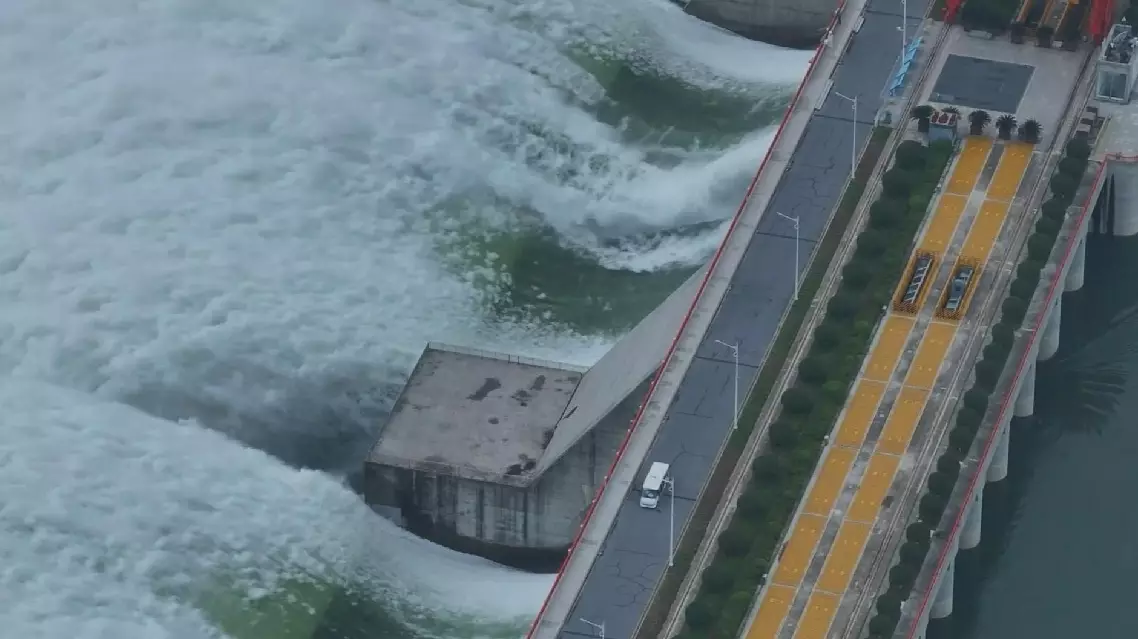
Mega project in China diverts 88 billion cubic meters of water to north