OAKLAND, Calif. (AP) — Lawyers for Elon Musk and OpenAI began closing arguments Thursday in the landmark trial whose outcome could shape the future of artificial intelligence.
Musk, the world's richest man, was a co-founder of OpenAI, which started as a nonprofit in 2015 and went on to create ChatGPT. After Musk invested $38 million in its first years, his lawsuit filed in 2024 accused OpenAI CEO Sam Altman and his top deputy of shifting into a moneymaking mode behind his back.
The trial’s outcome could sway the balance of power in AI — breakthrough technology that is increasingly feared as a threat to humanity’s survival. Scrutiny of Altman’s leadership comes at a crucial time for the company and its competitors, Musk’s own AI firm and Anthropic, formed by a group of seven ex-OpenAI leaders.
All three firms are moving toward planned initial public offerings that are expected to be among the largest ever. In addition to damages, Musk is seeking Altman’s ouster from OpenAI’s board. If Musk wins, it could derail OpenAI’s IPO plans.
One of the jury’s tasks is to decide if Musk filed his lawsuit in time. Much of the testimony has centered on OpenAI’s early years after its 2015 founding, but there’s a relatively short timeline to allege the claims Musk is making of breach of charitable trust and unjust enrichment.
OpenAI has argued that Musk waited too long and cannot claim harms that occurred before August 2021.
The judge wrote in a court filing last month that “if the jury finds that Musk failed to file his action within the statute of limitations, it is highly likely” that she will “accept that finding and direct verdict to the defendants.”
If the jury decides that the lawsuit was filed in time, they then have to decide if OpenAI had a “charitable trust” and that OpenAI and its executives broke that trust. Musk's other claim means jurors must determine whether Altman, Greg Brockman — co-founder and president — and OpenAI unjustly enriched themselves at Musk's expense.
For Microsoft, a co-defendant in the trial, the jury has to decide whether the company aided and abetted that breach.
Musk's attorney, Steven Molo, told jurors Thursday morning that the Tesla CEO is “sorry he could not be here.”
Musk is in China with President Donald Trump and other prominent tech executives.
Molo began making his case doubling down on claims of Altman's untrustworthiness, pointing to testimony from five witnesses who called the OpenAI CEO a “liar.”
"I confronted Sam Altman with the fact that five witnesses in this trial, all people that he’s known for years and worked with, called him a liar under oath. Liar’s a very powerful word in a courtroom.”
Those five people were Musk and another co-founder Ilya Sutskever, who was OpenAI’s chief scientist, as well as OpenAI’s former chief technology officer Mira Murati and two ex-board members, Helen Toner and Tasha McCauley.
“Sam Altman’s credibility is directly at issue in this case. He’s the defendants' main witness. The defendants absolutely need you to believe Sam Altman. If you cannot trust him, if you don’t believe him, they cannot win. It’s that simple,” he said.
Because Musk, Altman and Brockman never signed an actual contract that could show they had a charitable trust that OpenAI then broke, Musk's side has made the case that jurors should consider emails and other communication between them — along with everything from OpenAI's website to press interviews — that constituted such a trust.
“The evidence proves Elon donated those funds for a specific charitable purpose,” he said, adding that this purpose was to create a nonprofit for the development of safe AI that would be open-source when applicable.
In a terse exchange while jurors were out of the room, U.S. District Judge Yvonne Gonzalez Rogers sharply criticized Musk’s attorney for suggesting to jurors in his closing arguments that Musk wasn’t seeking any money in the lawsuit.
While Musk, before the trial, abandoned a bid for damages for himself, he is still seeking an unspecified amount of money to be paid to fund the altruistic efforts of OpenAI’s charitable arm.
Musk is seeking “billions of dollars of disgorgement,” the judge said, ordering Molo to either retract his statement or “drop your claim for billions of dollars.” They later agreed that the judge would correct the statement to jurors.
O'Brien reported from Providence, Rhode Island.
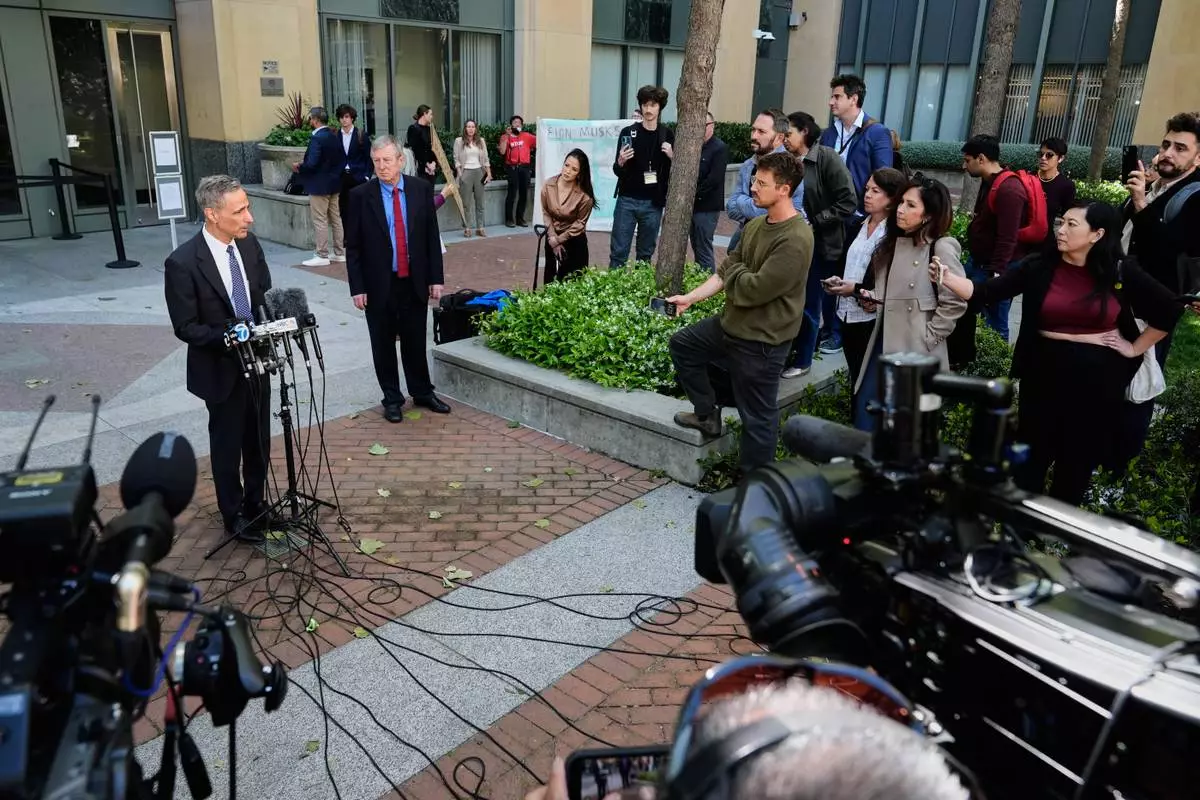
William Savitt, attorney representing OpenAI, left, speaks during a press conference outside the U.S. District Court in Oakland, Calif., Thursday, April 30, 2026. (AP Photo/Godofredo A. Vásquez)
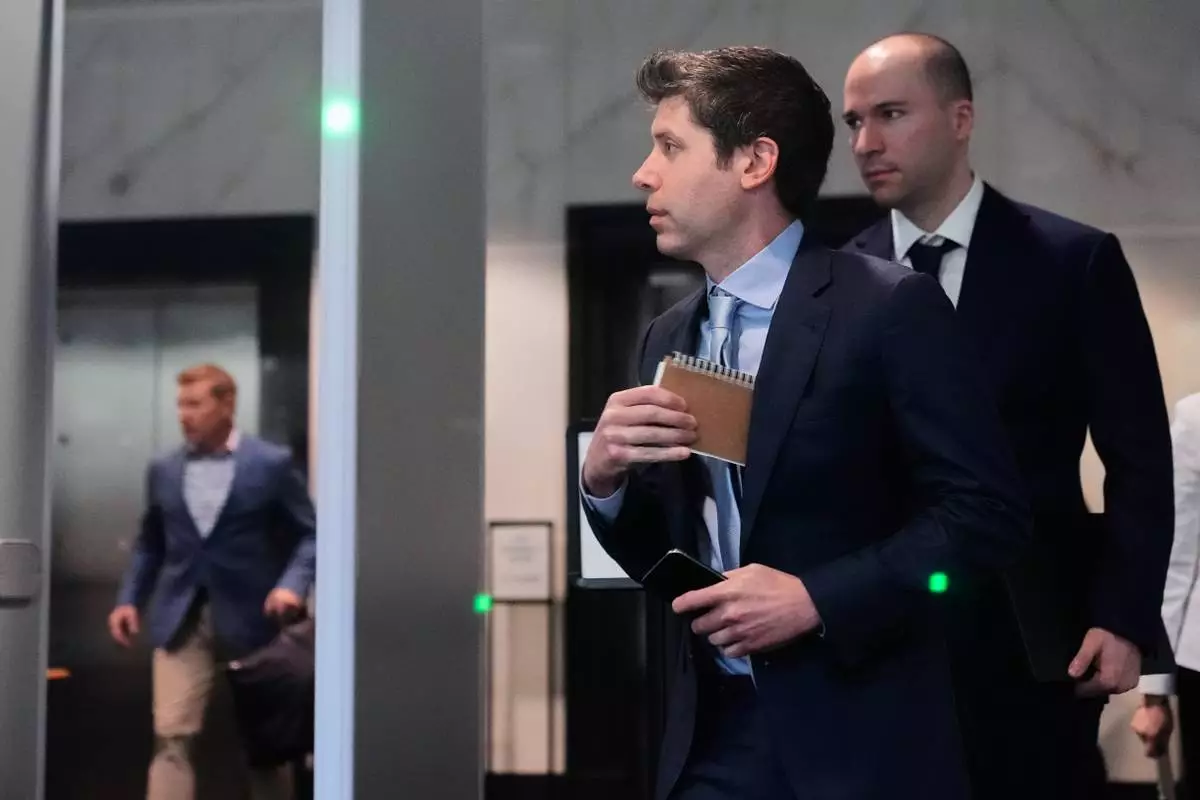
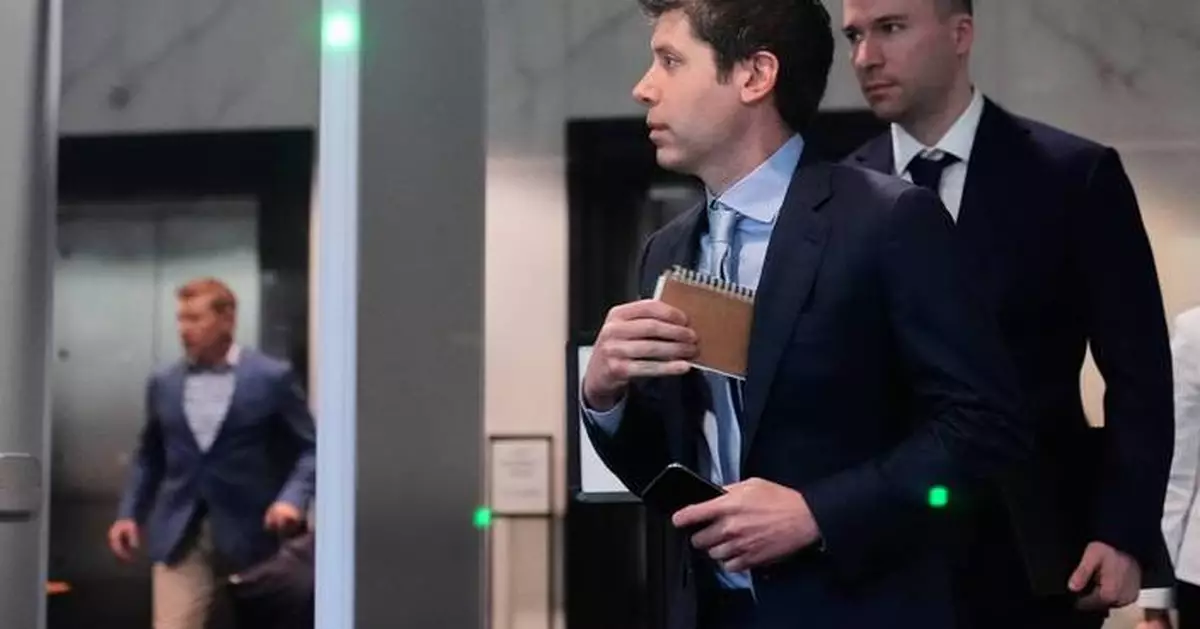
Sam Altman, center, and OpenAI president Greg Brockman, right, arrive at the U.S. District Court in Oakland, Calif., Thursday, April 30, 2026. (AP Photo/Godofredo A. Vásquez)
NEW YORK (AP) — The U.S. stock market is rising toward more records Thursday after Cisco Systems joined the parade of U.S. companies reporting fatter profits for the start of 2026 than analysts expected.
The S&P 500 added 0.8% to its all-time high set the day before. The Dow Jones Industrial Average climbed 379 points, or 0.8%, and is on track to finish the day above 50,000 for the first time since the war with Iran began. The Nasdaq composite was 1% higher and adding to its own record, as of 1:53 p.m. Eastern time.
Cisco helped lead the market after jumping 13% in what could be its best day in nearly 15 years. The tech giant reported better profit and revenue for the latest quarter than analysts expected, and CEO Chuck Robbins said it saw “very strong, broad-based demand for our products.”
Big Tech behemoths in particular are pouring cash into artificial-intelligence technology, and Cisco gave a forecast for profit in the current quarter that easily topped analysts' expectations.
Such voracious demand for AI, and the big profits it's producing, have been major reasons the U.S. stock market has set records throughout this year. Cerebras Systems, an AI processor company, raised $5.55 billion after selling its stock in an initial public offering, and its shares surged 71% to about $317 shortly after it began trading on Nasdaq Thursday.
Corporate earnings reported so far this season have “reinforced that this is still an AI-led market, but one where the impact is broadening quickly,” according to Gargi Pal Chaudhuri, chief investment and portfolio strategist at BlackRock.
“What started with a handful of companies is now driving earnings growth across semiconductors, infrastructure, and even parts of the industrial economy,” she said.
Outside of AI, other stocks rallying after delivering better-than-expected profit reports included StubHub Holdings, up 18.5%, Viking Holdings, up 8.3% and Yeti Holdings, up 5.9%.
All three companies sell products that aren’t day-to-day essentials, such as concert tickets, river cruises and insulated water bottles. Strong results from them could be an indicator that customers are still willing to spend even though U.S. consumers have been telling surveys they're feeling discouraged about the economy.
Whether U.S. households will keep spending and support the economy is a big question because pressure has been rising on them due to high oil prices and inflation created by the Iran war. A report released Thursday said that shoppers overall spent less at U.S. retailers last month than economists expected. But the deceleration after factoring out gasoline and automobile sales wasn’t quite as bad as economists thought it would be.
A separate report, meanwhile, said more U.S. workers filed for unemployment benefits last week, which could be an indication of more layoffs. The number, though, remains relatively low compared with history.
Treasury yields flitted up and down in the bond market immediately after the reports, but they largely remained steady. The yield on the 10-year Treasury edged down to 4.45% from 4.46% late Wednesday.
In stock markets abroad, indexes rose in Europe following a mixed finish in Asia. Japan's Nikkei 225 fell 1%, while South Korea's Kospi jumped 1.8% to another record thanks to gains for AI-related stocks.
Stocks were nearly flat in Hong Kong and down 1.5% in Shanghai as Chinese leader Xi Jinping met with U.S. President Donald Trump in Beijing.
Some investors hope Trump could encourage Xi to use China’s close economic ties with Iran to get it to reopen the Strait of Hormuz. The strait’s closure because of the war has kept oil tankers pent up in the Persian Gulf instead of delivering crude to customers worldwide, which has driven up crude prices.
The price for a barrel of Brent crude oil, the international standard, rose 0.1% to $105.72 Thursday, and it remains well above its price of roughly $70 from before the war.
AP Business Writers Chan Ho-him and Matt Ott contributed to this report.
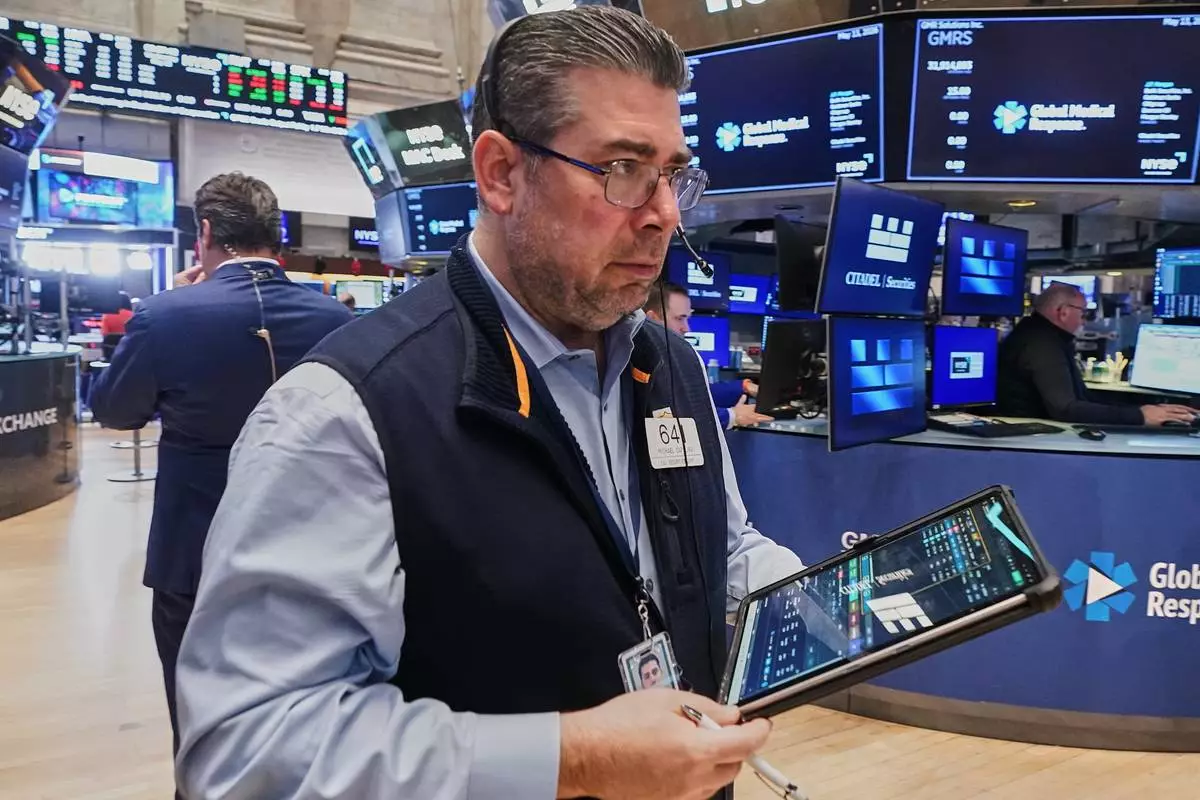
Trader Michael Capolino works on the floor of the New York Stock Exchange, Wednesday, May 13, 2026. (AP Photo/Richard Drew)
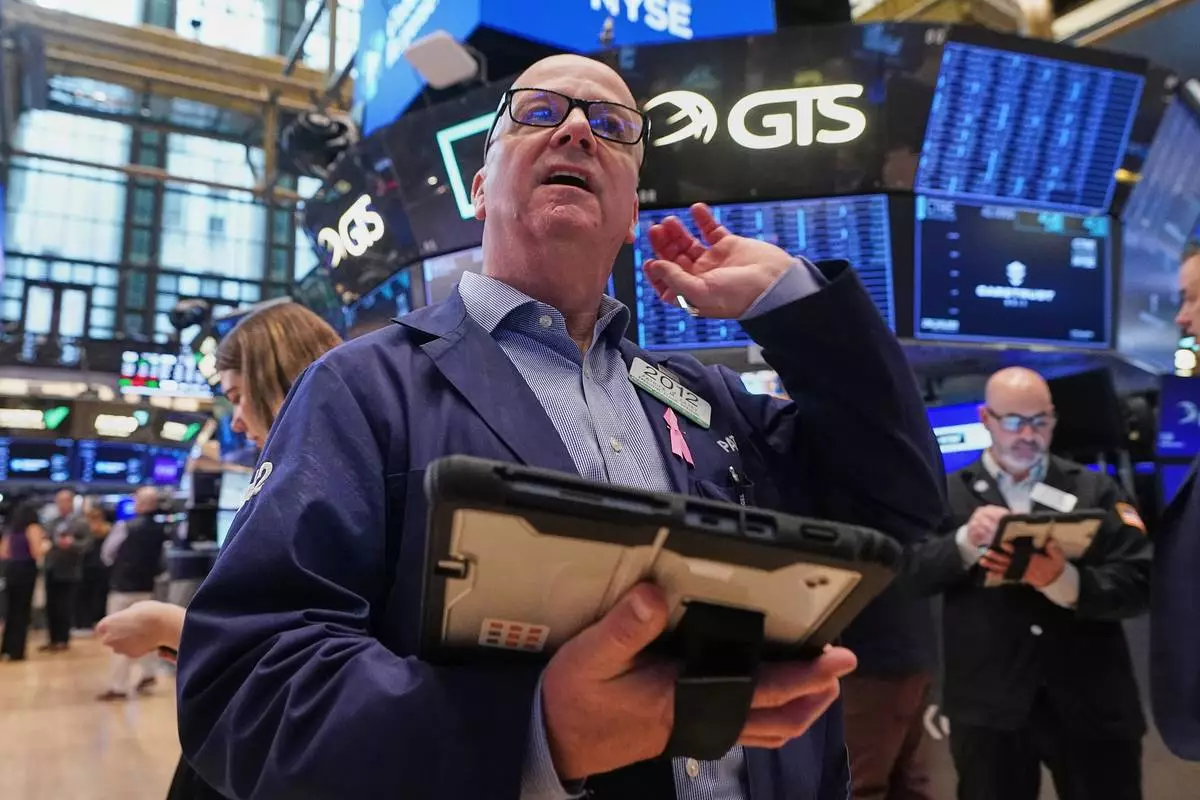
Trader Patrick Casey works on the floor of the New York Stock Exchange, Wednesday, May 13, 2026. (AP Photo/Richard Drew)
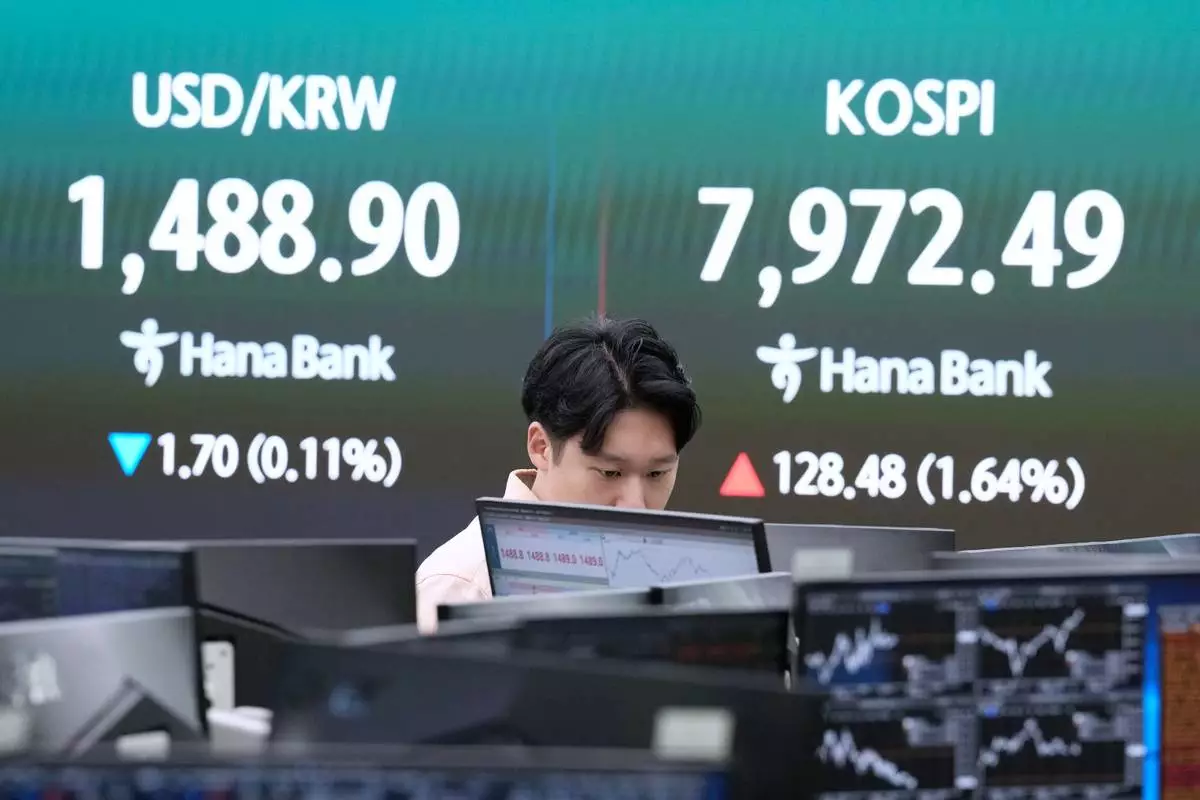
A currency trader watches monitors near a screen showing the Korea Composite Stock Price Index (KOSPI), right, and the foreign exchange rate between U.S. dollar and South Korean won at the foreign exchange dealing room of the Hana Bank headquarters in Seoul, South Korea, Thursday, May 14, 2026. (AP Photo/Ahn Young-joon)
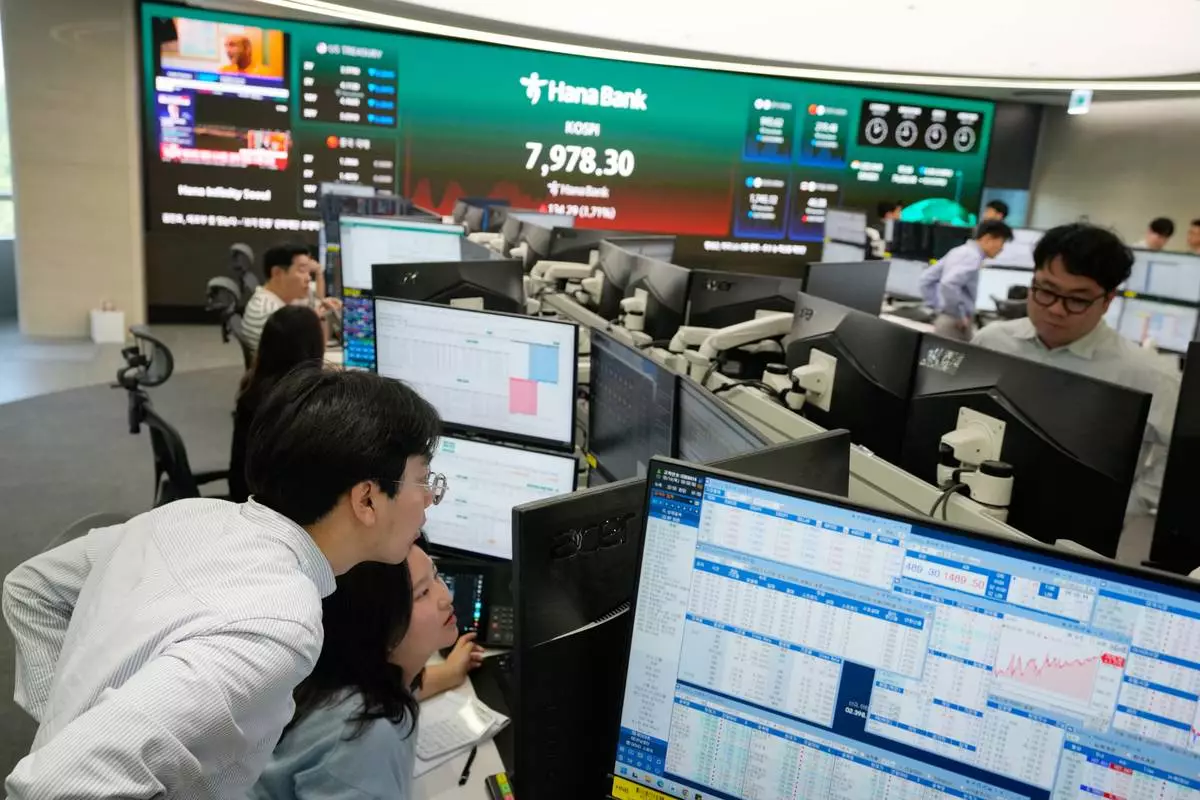
Currency traders work at the foreign exchange dealing room of the Hana Bank headquarters in Seoul, South Korea, Thursday, May 14, 2026. (AP Photo/Ahn Young-joon)
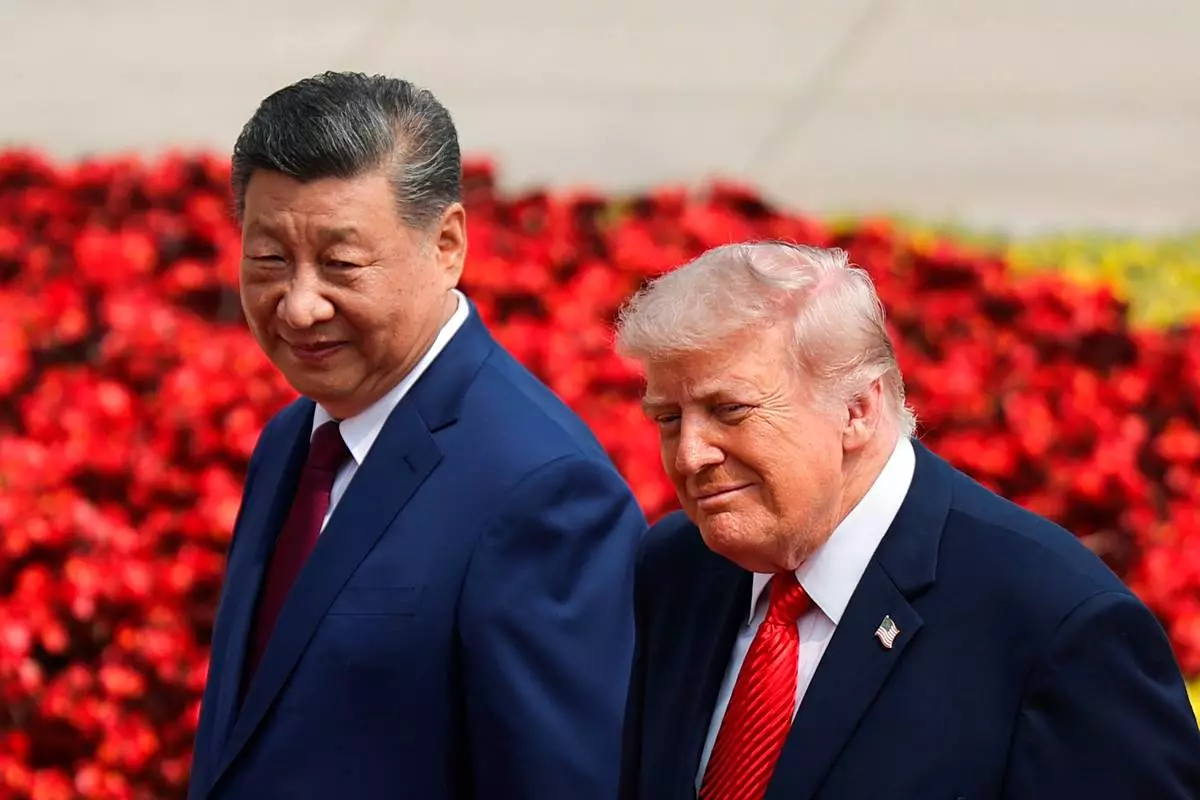
U.S. President Donald Trump, right, and Chinese President Xi Jinping attend a welcome ceremony at the Great Hall of the People in Beijing, Thursday, May 14, 2026. (Maxim Shemetov/Pool Photo via AP)
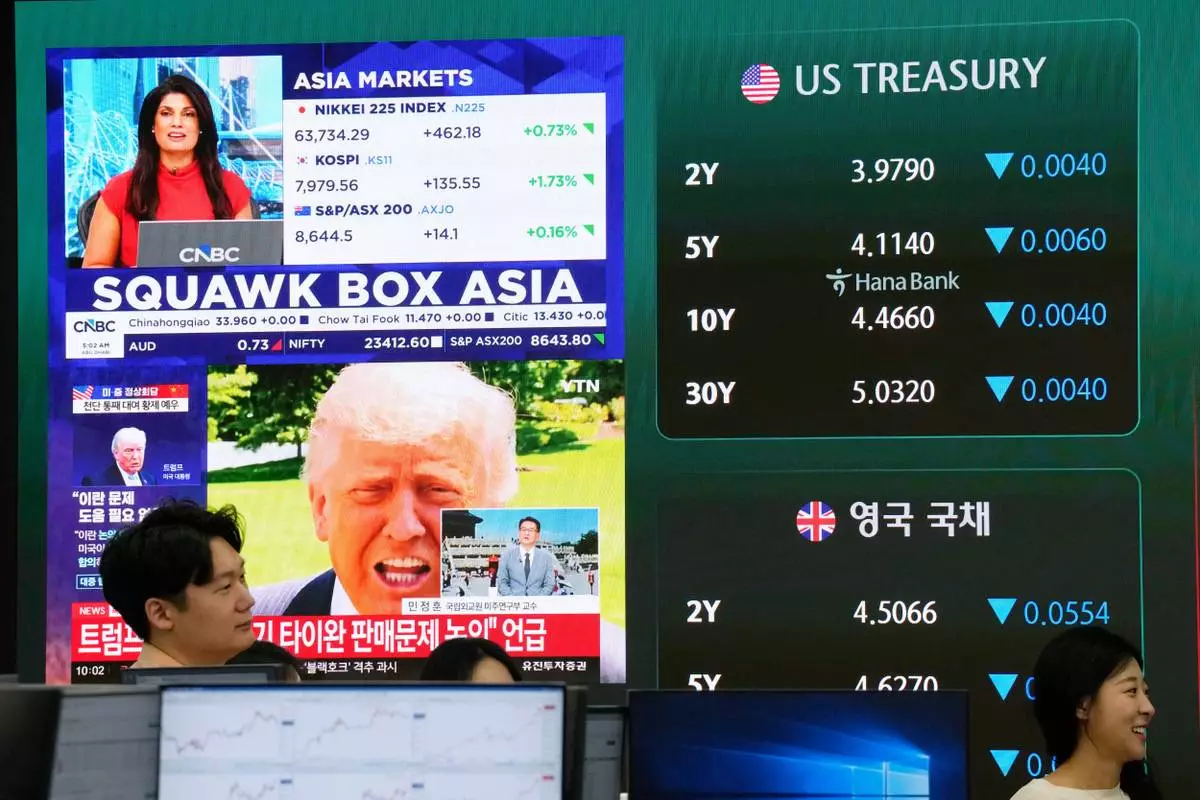
Asia markets index of Japan, South Korea and Australia is seen on a screen at the foreign exchange dealing room of the Hana Bank headquarters in Seoul, South Korea, Thursday, May 14, 2026. (AP Photo/Ahn Young-joon)