Skip to Content Facebook Feature Image

T&E Report: Singapore's Green Hub Ambitions at Risk: Changi Airport Among World's Highest-Emitting as Asia-Pacific Leads Global Aviation Pollution

Business

T&E Report: Singapore's Green Hub Ambitions at Risk: Changi Airport Among World's Highest-Emitting as Asia-Pacific Leads Global Aviation Pollution
Business

Business

T&E Report: Singapore's Green Hub Ambitions at Risk: Changi Airport Among World's Highest-Emitting as Asia-Pacific Leads Global Aviation Pollution

2026-05-15 17:08 Last Updated At:17:20

SINGAPORE--(BUSINESS WIRE)--May 15, 2026--

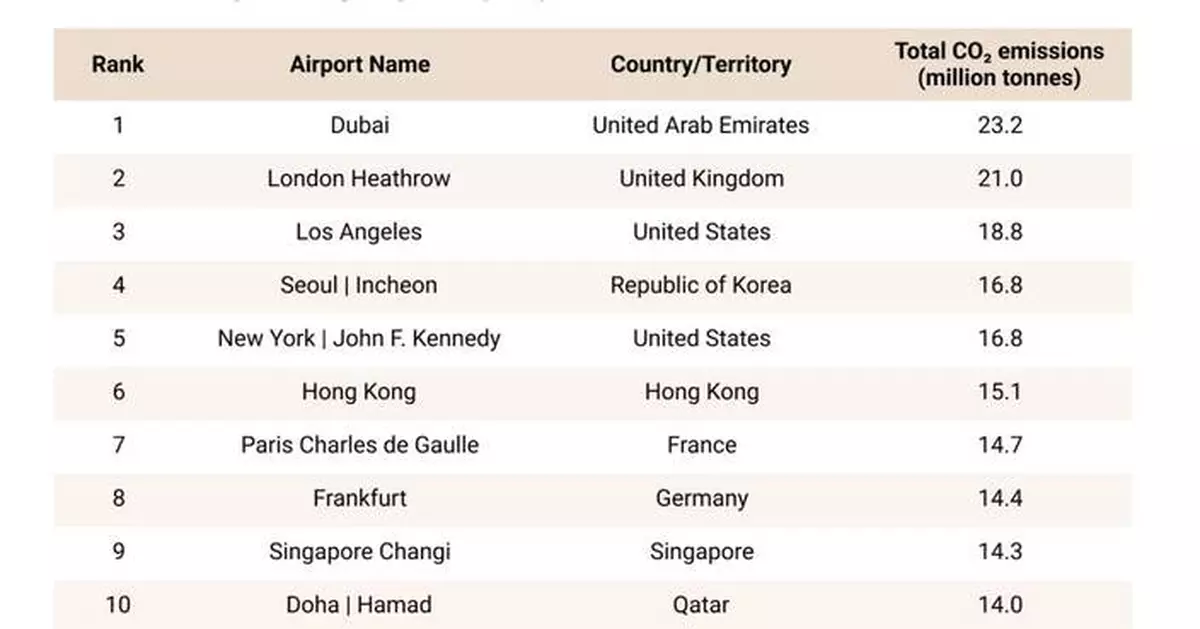
Singapore has set its sights on becoming Asia's leading hub for sustainable finance and next-generation aviation fuels. However, new data released today tells a more complicated story. Singapore Changi Airport ranked 9th among the world's most carbon-intensive airports in 2023, generating 14.3 million tonnes of CO₂ — equivalent to the emissions produced by more than 20 coal-fired power stations.

This press release features multimedia. View the full release here: https://www.businesswire.com/news/home/20260515821105/en/

The findings come from the 2026 Airport Tracker, published today by ODI Global in partnership with T&E (Transport & Environment), and are based on data provided by the ICCT. The tracker covers 1,300 airports worldwide and reveals that Asia-Pacific has overtaken all other regions to become the largest contributor to aviation emissions, accounting for 32% of global aviation CO₂ — more than Latin America, the Middle East, and Africa combined. Globally, just 100 airports are responsible for approximately two-thirds of total passenger flight emissions. Furthermore, fewer than 2.3% of airports have a credible net-zero Scope 3 emissions plan — the category covering over 90% of an airport's actual climate footprint.

Jude Lee, Regional Policy and Program Director, APAC, T&E (Transport & Environment), said,"Singapore is positioning itself as a hub for sustainable finance and future fuels, and that ambition makes transparent disclosure of aviation's real emissions all the more critical. The race among global aviation hubs is no longer just about passenger volumes. It is increasingly about who can demonstrate the most credible, MRV-backed decarbonisation pathway."

Sam Pickard, Research Associate, ODI Global, said,"Since the Paris Agreement, aviation emissions have risen steadily while other sectors have begun to decarbonise. A genuine strategy that includes demand management is sorely needed."

Denise Auclair, Head of Travel Smart Campaign, T&E, said,"It's high time to align airport capacity with our climate, air quality and noise protection goals — and prioritise citizens' health over unchecked expansion."

As the European Union moves to extend carbon pricing to all departing international flights — a policy that could generate over €12.7 billion annually — the question for Singapore and its Asia-Pacific peers is no longer whether aviation emissions will carry a price, but whether they are ready when they do.

Attached: Policy Brief Airports and aviationemissions.pdf
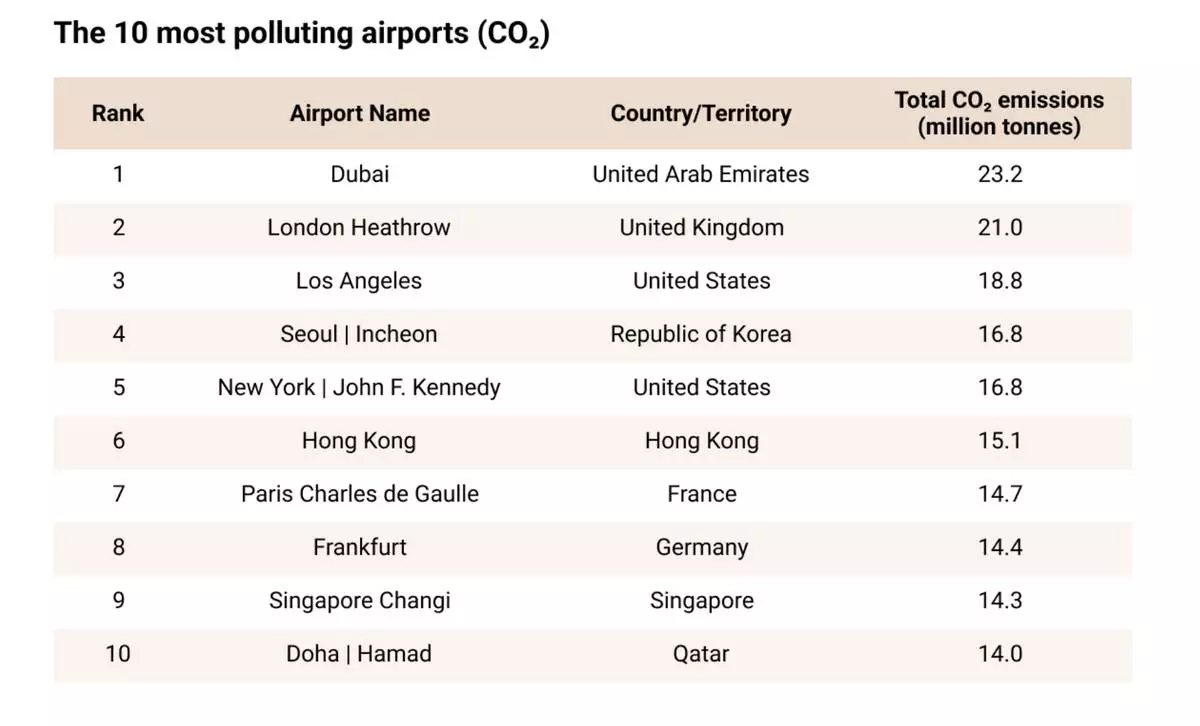
Top airports ranked by total CO₂ emissions (Image: T&E)

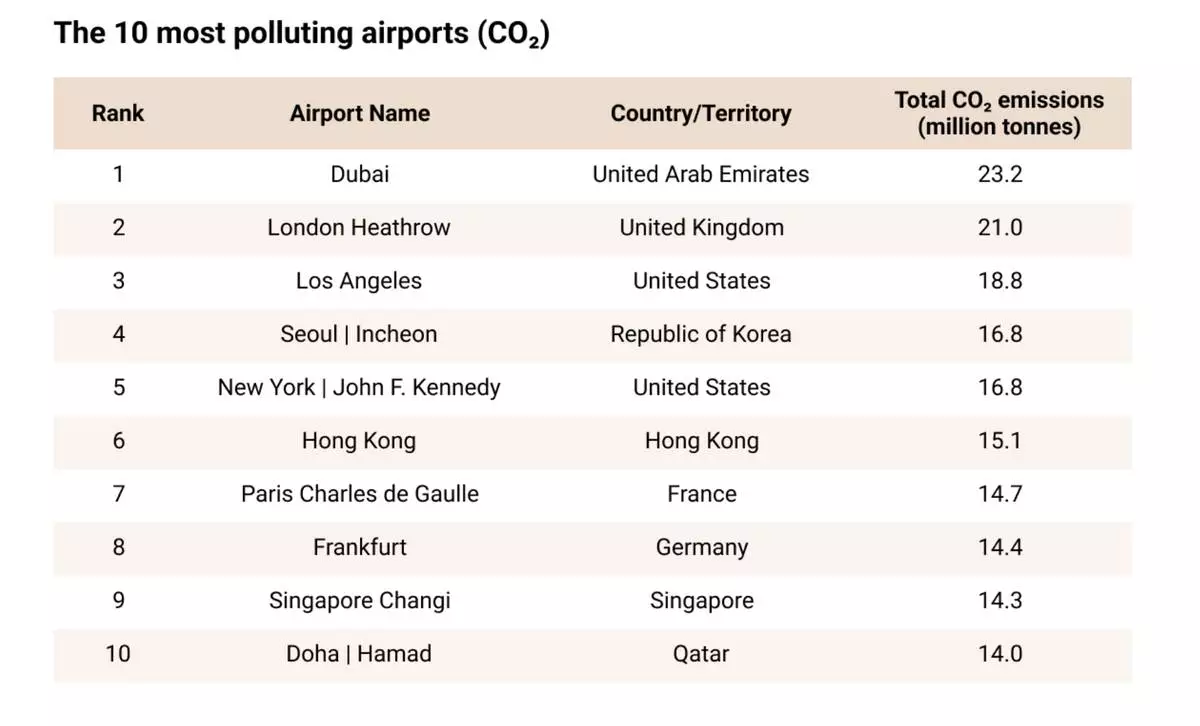
Top airports ranked by total CO₂ emissions (Image: T&E)

SYDNEY--(BUSINESS WIRE)--May 15, 2026--

Australia has positioned itself as a committed player in the global net-zero transition. But new data released today raises urgent questions about one of its fastest-growing sources of emissions. Sydney Kingsford Smith Airport generated 8.2 million tonnes of CO₂ in 2023 — more than seven times the total greenhouse gas emissions of the entire city of Stockholm.

This press release features multimedia. View the full release here: https://www.businesswire.com/news/home/20260515941815/en/

The findings come from the 2026 Airport Tracker, published today by ODI Global in partnership with T&E (Transport & Environment), and are based on data provided by the ICCT. The tracker covers 1,300 airports worldwide and reveals that Asia-Pacific has overtaken all other regions to become the largest contributor to aviation emissions, accounting for 32% of global aviation CO₂ — more than Latin America, the Middle East, and Africa combined. Globally, just 100 airports are responsible for approximately two-thirds of total passenger flight emissions. Furthermore, fewer than 2.3% of airports have a credible net-zero Scope 3 emissions plan — the category covering over 90% of an airport's actual climate footprint.

Jude Lee, Regional Policy and Program Director, APAC,T&E (Transport & Environment),said,"Australia is one of the world's most heavily reliant nations on long-haul aviation — and at the same time, one of the most exposed to global fuel price shocks. Australia has the potential to scale up green e-fuel and e-hydrogen production, backed by its ambition to reach 80% renewable energy by 2030. Yet an integrated net-zero blueprint that connects aviation, energy, and industrial transition remains missing. Decarbonising aviation is not just a climate issue — it is a question of Australia's energy security and economic resilience."

Sam Pickard, Research Associate, ODI Global, said,"Since the Paris Agreement, aviation emissions have risen steadily while other sectors have begun to decarbonise. A genuine strategy that includes demand management is sorely needed."

Denise Auclair, Head of Travel Smart Campaign, T&E, said,"It's high time to align airport capacity with our climate, air quality and noise protection goals — and prioritise citizens' health over unchecked expansion."

Attached: Policy Brief Airports and aviationemissions.pdf

Top airports ranked by total CO₂ emissions (Image: T&E)

Top airports ranked by total CO₂ emissions (Image: T&E)

Recommended Articles