China's Lijian-1 carrier rocket now could deliver satellites into orbit with the ability of sustained, stable and rapid high-frequency launches, which marks another technological breakthrough, representing a shift from customized production to industrialized mass manufacturing, enabling the rocket to support dense launch schedules.
The achievement comes as the Lijian-1 Y13 carrier rocket blasted off Friday, sending five satellites into space from the Dongfeng commercial space innovation pilot zone in northwest China.
It was the 13th flight of the Lijian-1 carrier rocket and the 14th launch of the Lijian series. To date, the Lijian series has successfully sent a total of 100 satellites into space, with the total mass of payloads placed into orbit exceeding 18 tons.
The Lijian-1, developed by CAS Space, is a solid-fuel carrier rocket featuring rapid-response capabilities. It adopts a universal platform-based design, enabling diversified adaptation between the rocket body and satellite missions, said the company.
According to the research team, the rocket's solid-fuel design allows long-term storage without refueling, giving it natural advantages for rapid response. More importantly, systemic changes in production and launch terminals have provided the foundation for high-density missions.
"In terms of production organization, we have achieved mass production capacity of up to 30 rockets a year by applying pulse-line, rhythm-based production and parallel assembly in the automotive industry. In the launch process, dedicated technical workshops and launch pads we built on our own allow rockets to be pre-assembled and tested before being transferred as a whole for launch, greatly shortening preparation cycles and making flight-like launch operation possible," said Meng Xiangfu, deputy chief commander of the Lijian-1 program.
The launch site itself has been optimized for rapid reuse. Mobile insulation shelters expose the rocket and erection system before liftoff, while ground equipment can be quickly restored afterward, enabling fast turnaround at a single launch pad, Meng said.
Following the milestone of sending 100 satellites into orbit, the research team said the next steps will focus on expanding sea-launch capability, increasing production frequency, and optimizing costs across the industrial chain to enhance the adaptability and competitiveness of the Lijian series.
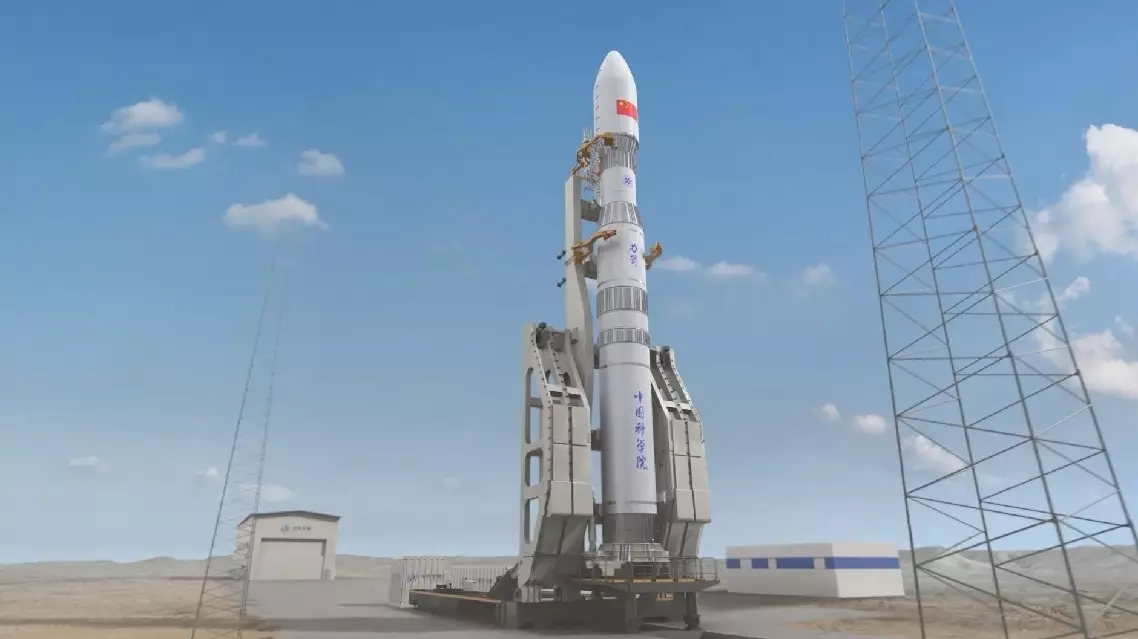
Lijian-1 rocket achieves high-frequency launch
The landmark meeting between Chinese President Xi Jinping and U.S. President Donald Trump has demonstrated the two leaders are willing to get bilateral ties back on the right track and deliver greater stability to benefit both countries and the world at large, according to experts.
Trump on Friday concluded a three-day state visit to China at the invitation of Xi, which marked the first such U.S. presidential visit in nine years.
In a meeting closely watched by the world, Xi and Trump held talks on Thursday in which they agreed on a new vision of building a constructive bilateral relationship of strategic stability.
Xi said in their talks that he looks forward to working together with Trump to set the course and steer the giant ship of China-U.S. relations, so as to make 2026 a historic, landmark year that opens up a new chapter in China-U.S. relations.
Trump said it was a great honor to pay a state visit to China, calling Xi a "great leader" and China a great country, expressing his willingness to work with Xi to strengthen communication and cooperation, properly handle differences, make bilateral relations better than ever before and embrace a "fantastic future."
Analysts noted the significance of the exchange of these warm words at the Great Hall of the People as a sign that the two leaders wish to steer relations to a better place following past disagreements.
"Now, if you look at the two leaders, they wanted to put that relationship back on track. And one term President Donald Trump used frequently is 'friend' and 'friendship' to refer to China and to refer to the Chinese leader," said Li Cheng, founding director of the Center on Contemporary China and the World at the University of Hong Kong.
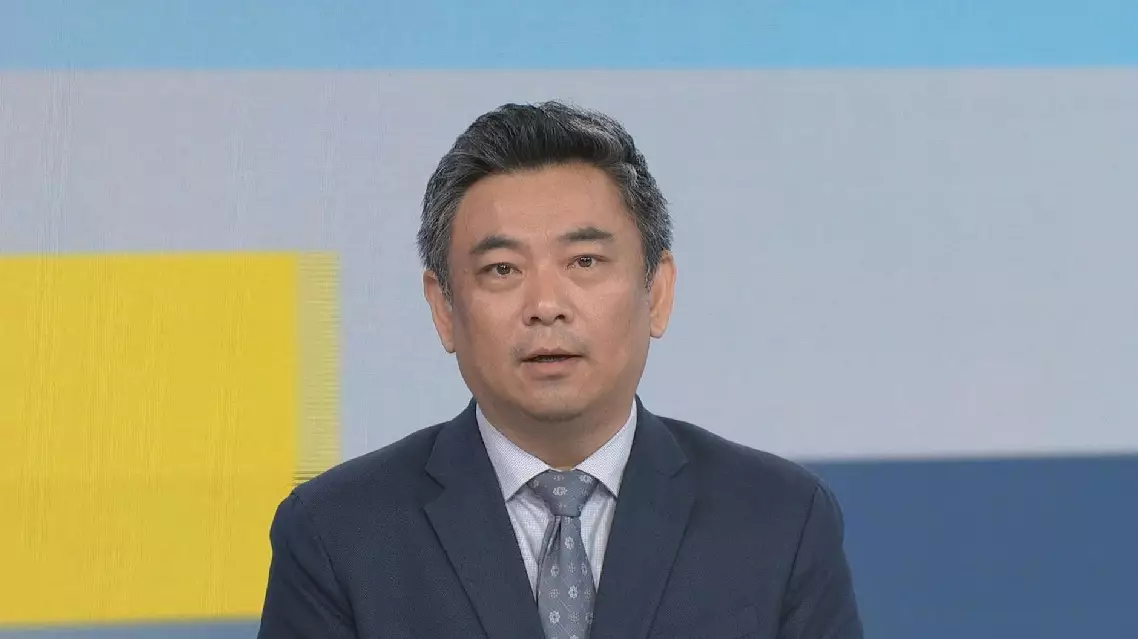
"I think that shows that both leaders of the two countries sort of pay a great respect to each other and also deem this a very important and historical meeting as a critical juncture, a landmark, or a watershed, whatever you call it, a very critical moment in history that will define the future of the bilateral relationship,"said Zhao Hai, director of international political studies at the National Institute for Global Strategy under the Chinese Academy of Social Sciences.
"The world is watching and everybody is worried about and concerned about because of last year's [trade dispute which saw] both countries' frictions with each other. They are looking forward to a more stable and future forward-looking China-U.S. relationship because this has importance around the world, has implications around the world. And I think the beginning words (opening remarks) from both leaders show that they have the willingness and they understand the importance of this bilateral relationship moving forward that has not only very important implications bilaterally, but also regionally and globally," he continued.
The Chinese Ministry of Foreign Affairs said that Xi and Trump reached a series of new common understandings and have pledged to work to promote the steady, sound and sustainable development of China-U.S. relations, and bring more peace, prosperity and progress to the world.
Given the wider global implications of the relationship between the world's two biggest economies, Zhao said it is important that China and the U.S. will work together in order to maintain stability and ensure global supply chains can be more reliable.
"Moving forward, I think it's critically important that China and the U.S. reach a deal not only on purchasing but also on tariffs, on technology, on many of the important issues so that they maintain stability, that is really beneficial to both countries. And other [parts of the] world are looking at whether now the two countries can work out a solution to maintain stability because the global supply chain really depends on the two countries looking at each other and not really upsetting the relationship," he said.
Landmark Xi-Trump summit shows leaders keen to put bilateral ties back on track: experts