WASHINGTON--(BUSINESS WIRE)--May 15, 2026--
Today’s military families want more than housing – they want connection, community and a sense of belonging.
This press release features multimedia. View the full release here: https://www.businesswire.com/news/home/20260515696631/en/
That was a central message from Denise Hauck, President, Department of War (DOW) Business, Corvias, during a panel discussion at the 2026 Association of Defense Communities (ADC) Summit this week in Washington, D.C. Hundreds of industry leaders met to discuss issues shaping the future of more than 700 American military bases globally.
Speaking on the panel “Building Great Places for Military Families to Call Home” with Armed Services YMCA CEO Vice Adm. (Ret.) Bill French, Hauck emphasized that military housing must continue evolving to meet the changing needs of military families.
What Military Families Want Now
“Families always want something that’s well maintained and provides them with a good living experience,” Hauck said. “But the soldier of today also wants a community. They want their families to feel like they are part of something.”
Hauck highlighted the importance of long-term infrastructure investment through the Military Housing Privatization Initiative (MHPI), which enables modernization across military housing while creating opportunities to advance innovation.
Corvias has invested hundreds of millions of dollars in ongoing renovations and infrastructure upgrades for service member homes, while also pioneering installation energy modernization and indoor environmental programs – a first for military housing.
“MHPI allows us to make those investments in long-term improvements in infrastructure to make sure that we’re taking care of the things that we need today, but also thinking about tomorrow,” Hauck said. “How can we take innovation and apply it in ways we haven’t even thought of yet, using our strength in innovation?”
Connecting Residents and Resources
She also reinforced the importance of seeing military housing as part of a larger community ecosystem.
“The first step is really realizing we’re not doing this in a bubble,” Hauck said. “Seventy percent of residents live off-post, so you have to realize you’re not just part of the installation community – you’re part of that broader community.”
Hauck emphasized the importance of connecting residents with resources and support services available outside the gate.
Throughout the conversation, Hauck focused on how thoughtful military housing community design and clear resident communication can improve the day-to-day experience for military families. She pointed to creating more “walkable, connected communities that strengthen resident experience” as an example.
Spotlight on Indoor Spaces
Looking ahead, Hauck identified in-home environmental quality as essential to resilience.
The company’s industry-first Wellness at Home program – deployed in thousands of Corvias homes across Fort Meade, Fort Riley and Fort Bragg – supports soldier and family wellbeing through indoor wellness technologies that meet rigorous, third-party performance standards.
“People spend the majority of their time in their home,” Hauck said. “How those environments shape how we can perform in our daily responsibilities is extremely important.”
Corvias recently announced that more than 800 homes across its portfolio have achieved WELL Residence Certification, with nearly 5,000 residences targeted for indoor enhancements this year.
About Corvias
Corvias partners with the Department of War (DOW) and higher education institutions to solve infrastructure and energy resiliency challenges and to create long-term, sustainable value through our unique Solutions Through Partnerships® approach. Corvias partnerships support energy resilience and quality of indoor environments through renewable energy projects, energy savings projects, and WELL for Residential certified enhancements in homes across our communities. Our more than 72,000 residents consistently highly rank the courtesy and professionalism of our maintenance and leasing personnel. Learn more at: www.corvias.com.
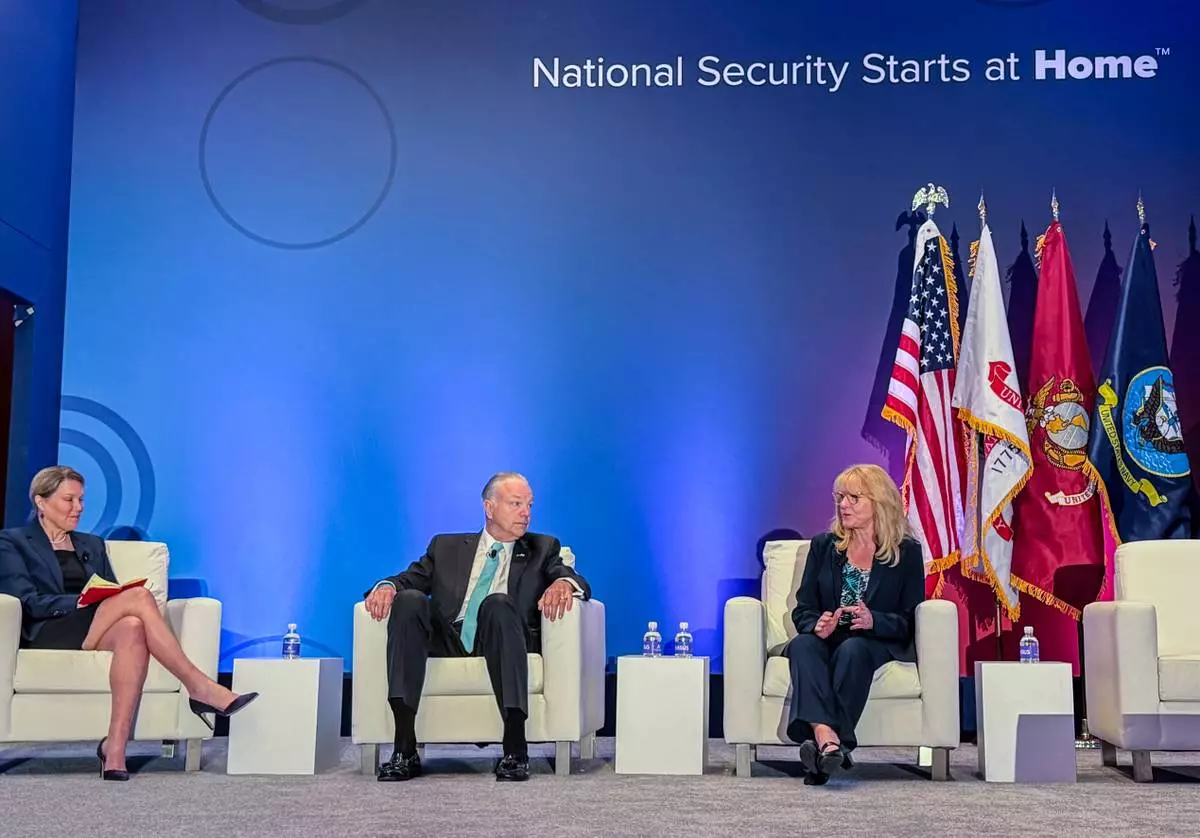
Corvias’ Denise Hauck (right), spoke on “Building Great Places for Military Families to Call Home” at the 2026 ADC Summit.
WASHINGTON (AP) — President Donald Trump plans to build an exhibit of statues featuring prominent Americans in a tightly regulated park along the Potomac River, potentially opening a new legal fight over whether his administration is ignoring the approvals process that typically governs Washington's monumental core as he muscles through a dramatic overhaul of the nation's capital.
In a Friday morning social media post, Trump said the National Garden of American Heroes would be built in West Potomac Park, a space near the National Mall that includes the Korean War Veterans Memorial, the Jefferson Memorial, the Franklin Delano Roosevelt Memorial and the Martin Luther King Jr. Memorial. The area is also home to several fields and volleyball courts regularly used by local sports groups.
Trump described the area in his post as a “totally BARREN field of Prime Waterfront Real Estate along our Mighty Potomac River.”
The president has said the garden would commemorate America's 250th anniversary with sculptures recognizing 250 prominent Americans who have made significant cultural, political and other historical contributions to the country. He first raised the idea during Fourth of July celebrations in 2020 and has framed it as a response to protests that resulted in the removal of controversial monuments, including those that commemorated slave owners and Confederate leaders.
In the final days of his first term, Trump, a Republican, signed an executive order naming 244 people including Ronald Reagan and Jackie Robinson who should be honored with statues in the garden. The idea languished under President Joe Biden, a Democrat, but Congress provided $40 million under Trump's big tax and spending cuts law last year to procure the statues included in his executive orders.
That may not be enough, however, to constitute the type of approval typically needed for major projects on or near the National Mall. Federal law requires projects and memorials to get a sign-off from multiple design and planning groups.
White House spokesman Davis Ingle said the garden will “ be built to reflect the awesome splendor of our country’s timeless exceptionalism.”
“President Trump continues to beautify and honor our Nation’s Capital during America’s historic semiquincentennial celebration,” he said.
He didn't comment on whether the administration was seeking the relevant approvals or had already awarded contracts for the statues.
Washington's monumental core is one of the nation's most closely regulated spaces, with the goal of protecting sight lines and preventing new construction that would undermine the area's history. Between the approvals process, design disputes and funding challenges, changes in the area can take years — or even decades — to reach completion. One of the newest additions near the National Mall, the Dwight D. Eisenhower Memorial, took 21 years to finish after Congress initially approved it in 1999.
Trump and his supporters have shown little interest in following such procedures. He moved quickly this month to drain and repaint the Lincoln Memorial Reflecting Pool. He suddenly demolished the East Wing of the White House last year to build a ballroom. Trump's name has been added to the facade of the Kennedy Center, which he plans to close later this summer for a two-year renovation.
Just this week, workers began preliminary surveys and testing of the proposed site of a triumphal arch Trump is seeking between the Lincoln Memorial and Arlington National Cemetery. Part of the site was fenced off, and pink flags typically used as survey markings were planted in the grass.
And the Trump administration is moving forward with plans to transform East Potomac Park from an accessible public golf course into what Trump has described as a “U.S. Open-caliber course.” Interior Secretary Doug Burgum on Thursday released a design plan for the new course that he said would provide “championship-quality golf at affordable, highly discounted rates.”
The plan provided few details on how open the park, which is frequently used by local runners and bikers, would remain to the general public.
Virtually all of the projects have become subject to litigation.
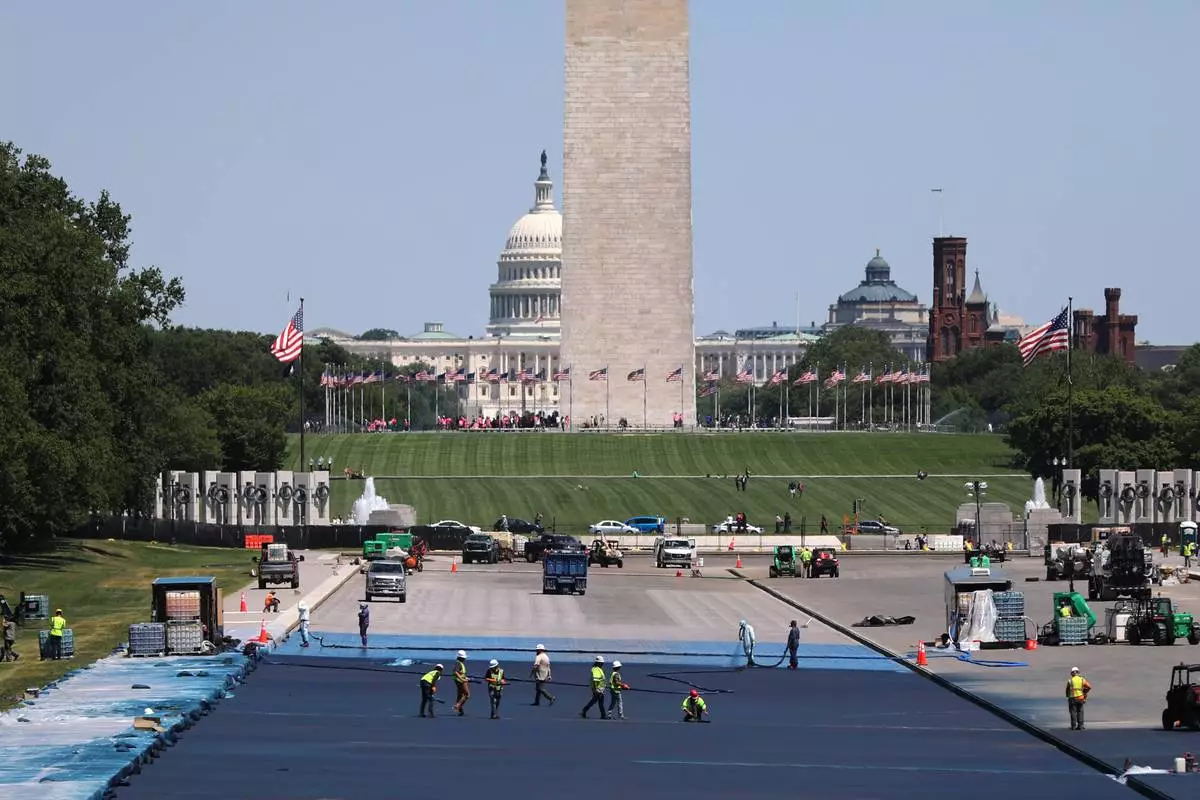
Workers apply a blue protective coating as part of a renovation project to the Lincoln Memorial Reflecting Pool, Tuesday, May 12, 2026, on the National Mall in Washington. (AP Photo/Rahmat Gul)
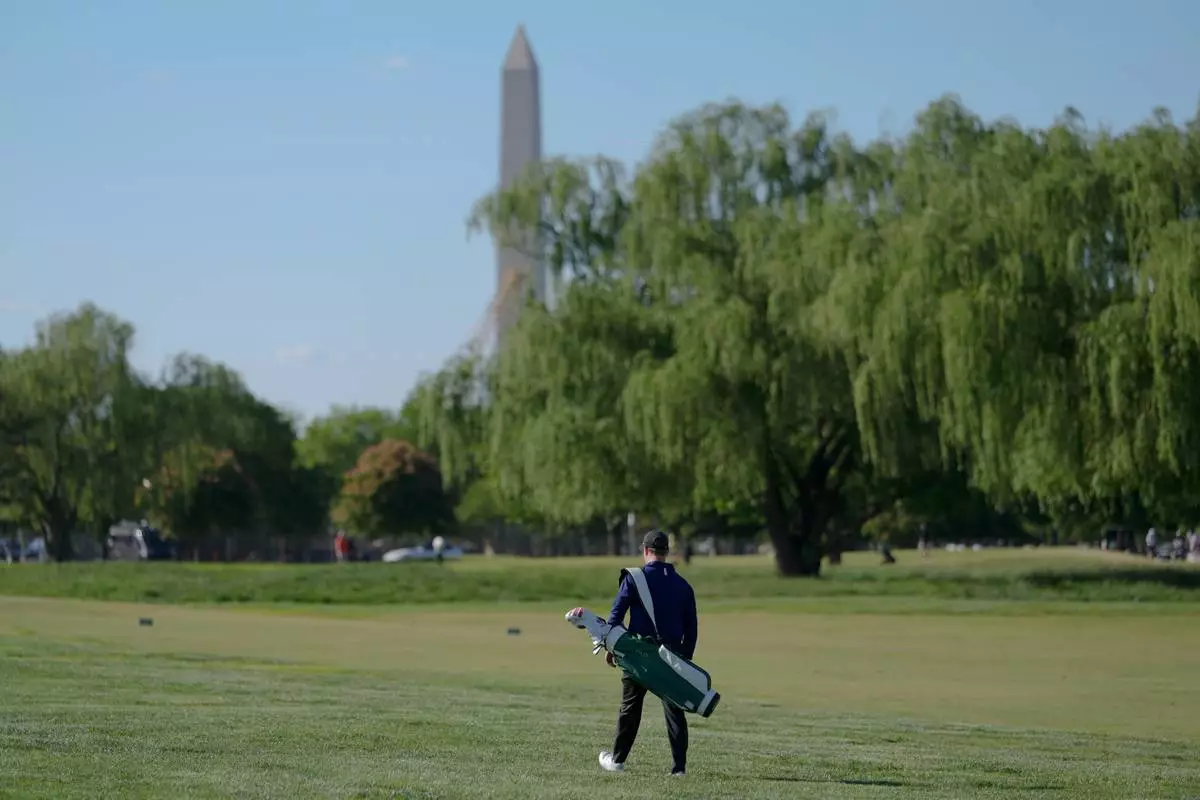
The Washington Monument stands in the background as a golfer walks the East Potomac Golf Course, Sunday, May 3, 2026, in Washington. (AP Photo/Julia Demaree Nikhinson)
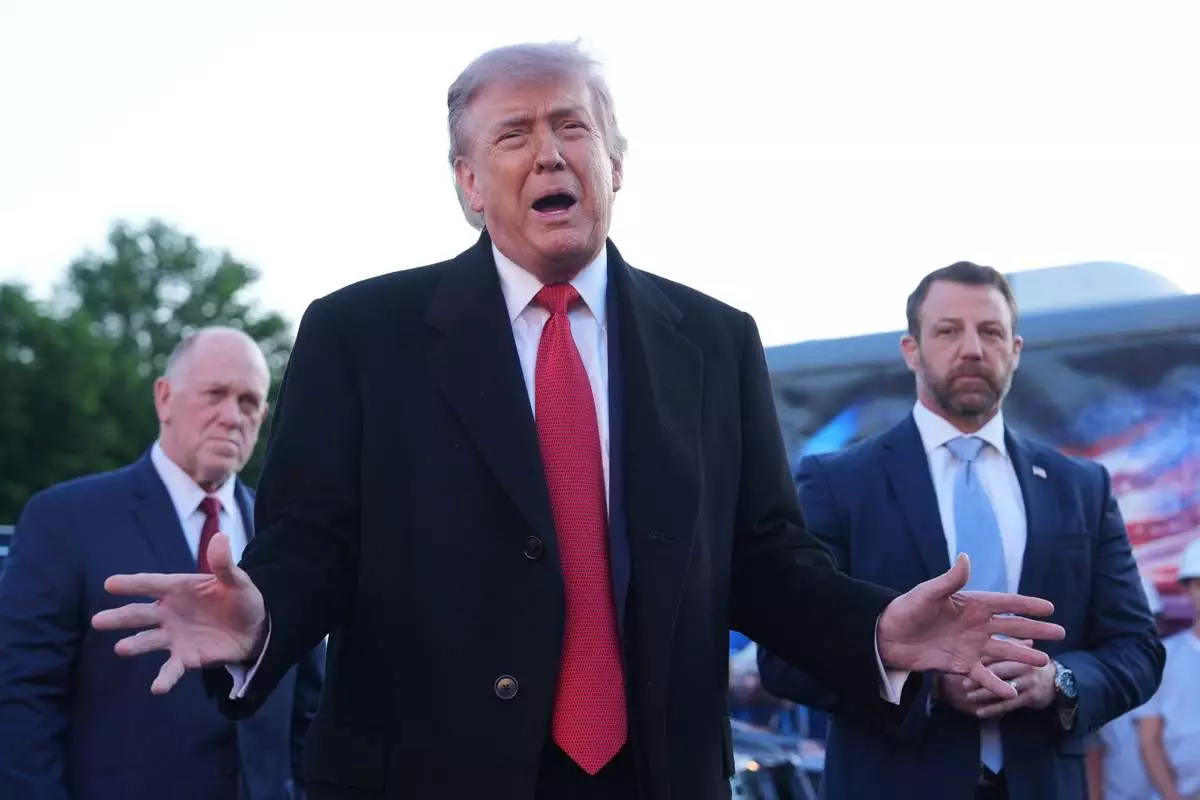
President Donald Trump speaks as he visits the Lincoln Memorial Reflecting Pool to see the new blue protective coating being applied as part of a renovation project, Thursday, May 7, 2026, in Washington, as White House boarder czar Tom Homan and Homeland Security Secretary Markwayne Mullin listen. (AP Photo/Mark Schiefelbein)