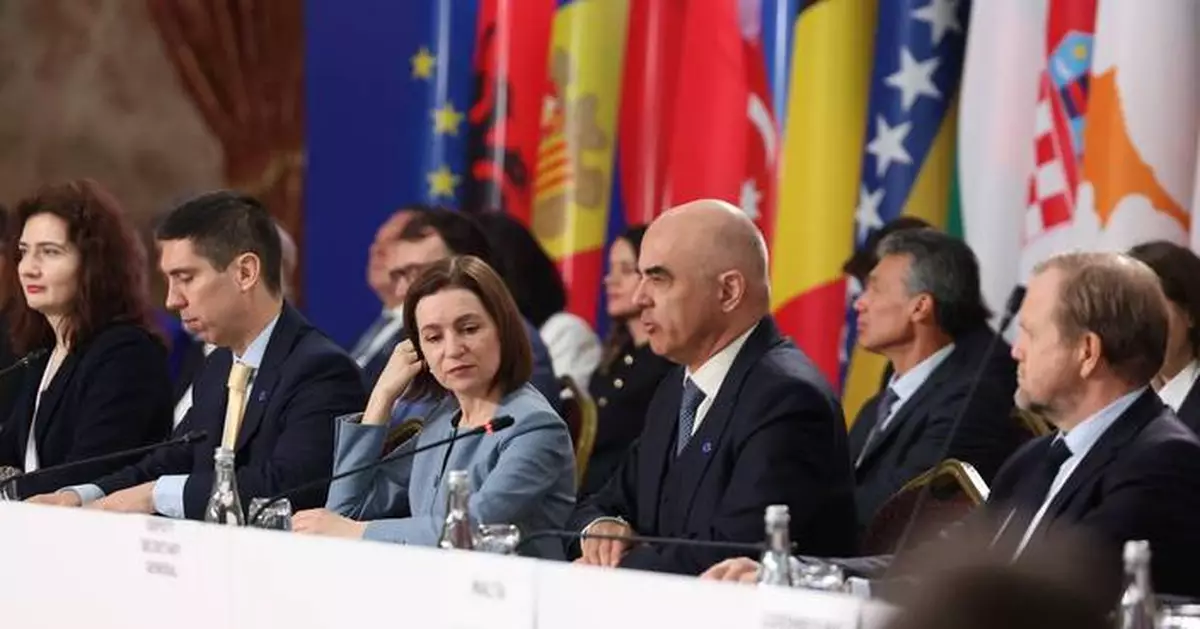
BRUSSELS (AP) — Forty-six nations in Europe and beyond agreed Friday on a new interpretation of the European Convention on Human Rights in migration cases, including how it applied to the controversial use of deportation centers set up in third countries.
The political declaration came after calls from some member states for stricter approaches to fight irregular migration and facilitate deportations.
Click to Gallery
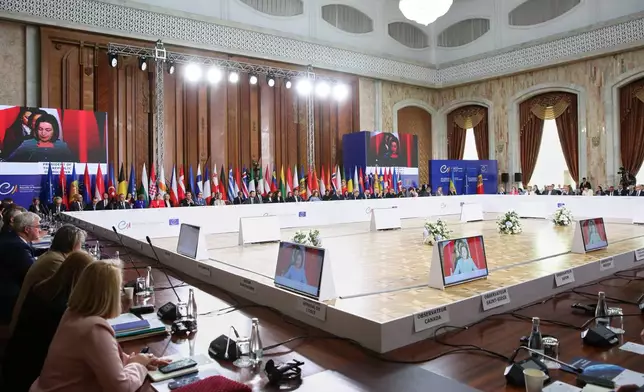
Participants attend the opening session of the 135th Ministerial Session of the Committee of Ministers of the Council of Europe in Chisinau, Moldova, Friday, May 15, 2026. (AP Photo/Elena Covalenco)
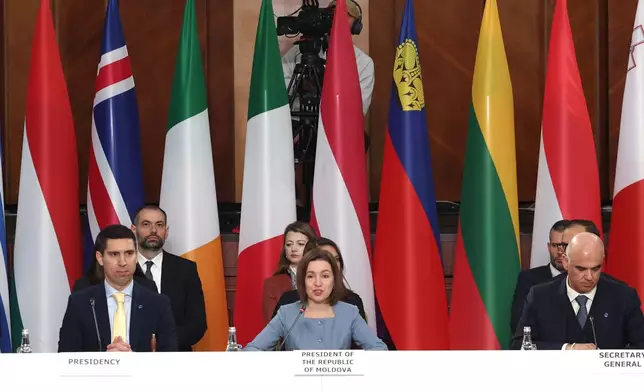
Moldova's President Maia Sandu, center, Secretary General of the Council of Europe Alain Berset, right, and Moldova's Deputy Prime Minister and Minister of Foreign Affairs Mihai Popsoi attend the 135th Ministerial Session of the Committee of Ministers of the Council of Europe in Chisinau, Moldova, Friday, May 15, 2026. (AP Photo/Elena Covalenco)

Participants attend the opening session of the 135th Ministerial Session of the Committee of Ministers of the Council of Europe in Chisinau, Moldova, Friday, May 15, 2026. (AP Photo/Elena Covalenco)
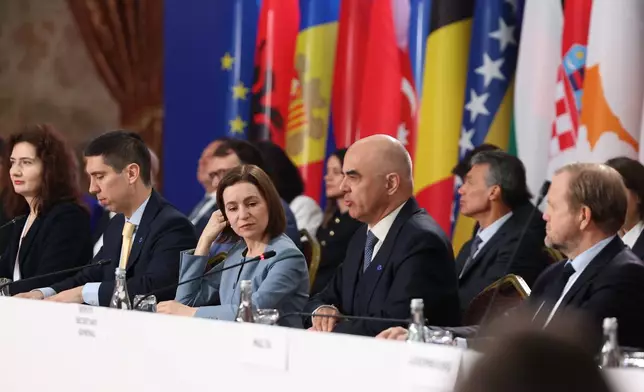
Moldova's President Maia Sandu, center, Secretary General of the Council of Europe Alain Berset, right, and Moldova's Deputy Prime Minister and Minister of Foreign Affairs Mihai Popsoi attend the 135th Ministerial Session of the Committee of Ministers of the Council of Europe in Chisinau, Moldova, Friday, May 15, 2026. (AP Photo/Elena Covalenco)
Rights groups criticized the political declaration, saying it could loosen prohibitions on torture and weaken Europe’s human rights protections for migrants.
“The declaration underlines that states have the undeniable sovereign right to control the entry and residence of foreign nationals, and that it is both an obligation and a necessity for states to protect their borders in compliance with the Convention,” the Council of Europe said in a statement after the non-binding declaration was adopted all of its 46 members' foreign ministers Friday at a meeting in Chisinau, the Moldovan capital.
It said that nations “exposed to mass arrivals” can pursue new approaches to deter irregular migration including "third country 'return hubs', and cooperation with countries of transit."
The Council oversees the European Court of Human Rights, the top court that protects the continent's human rights convention.
The declaration could weaken both the court and convention, said Chiara Catelli, a spokesperson for the Brussels-based rights group PICUM.
“Governments are effectively seeking to pressure an independent Court into weakening long-established human rights protections in order to facilitate deportations, with the risk of deporting people where they could face torture, inhuman or degrading treatment, or where they would stop receiving life-saving medical care,” she said.
“A two-tier human rights system based on migration status is an affront to the basic principle that human rights are universal,” said Eve Geddie, director of Amnesty International’s European Institutions Office.
Italy sent several dozen migrants with no permission to remain in the country to a “return hub” in Albania last year, becoming the first European Union country to send rejected migrants to a nation outside the EU that is neither their own nor a country they had transited on their journey.
Rights campaigners have said such policies are inhumane and compare them to the deportation policies of United States President Donald Trump.
The EU has steadily tightened migration policies after right-wing parties took power in some countries in 2024.
Last year the leaders of nine European Union countries — Austria, Belgium, the Czech Republic, Denmark, Estonia, Italy, Latvia, Lithuania and Poland — signed an open letter claiming the rights convention prevented them from expelling foreign criminals.
The nations argued that the court’s interpretation of the convention in “cases concerning the expulsion of criminal foreign nationals” has protected the “wrong people” and placed too many limits on deciding who can be expelled.
European Union migration commission Magnus Brunner hailed the declaration as “an important step” toward unified migration policy.
“It strengthens our approach to a fair and firm migration policy in Europe. Migration is a shared challenge that requires shared solutions,” he said.
After the declaration was signed, the Council’s Secretary General Alain Berset said the Chisinau Declaration “will help to guide our own work as well as that of national authorities and domestic courts.”
—
McGrath reported from Leamington Spa, England.
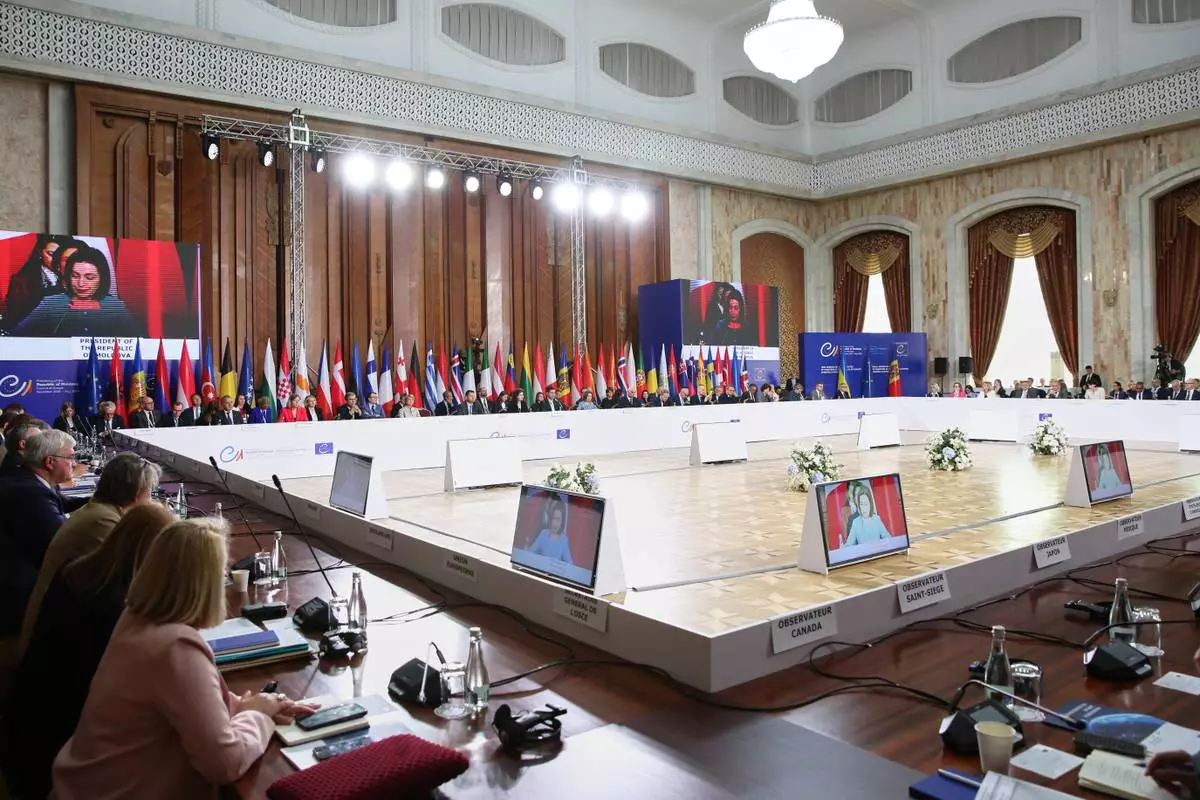
Participants attend the opening session of the 135th Ministerial Session of the Committee of Ministers of the Council of Europe in Chisinau, Moldova, Friday, May 15, 2026. (AP Photo/Elena Covalenco)
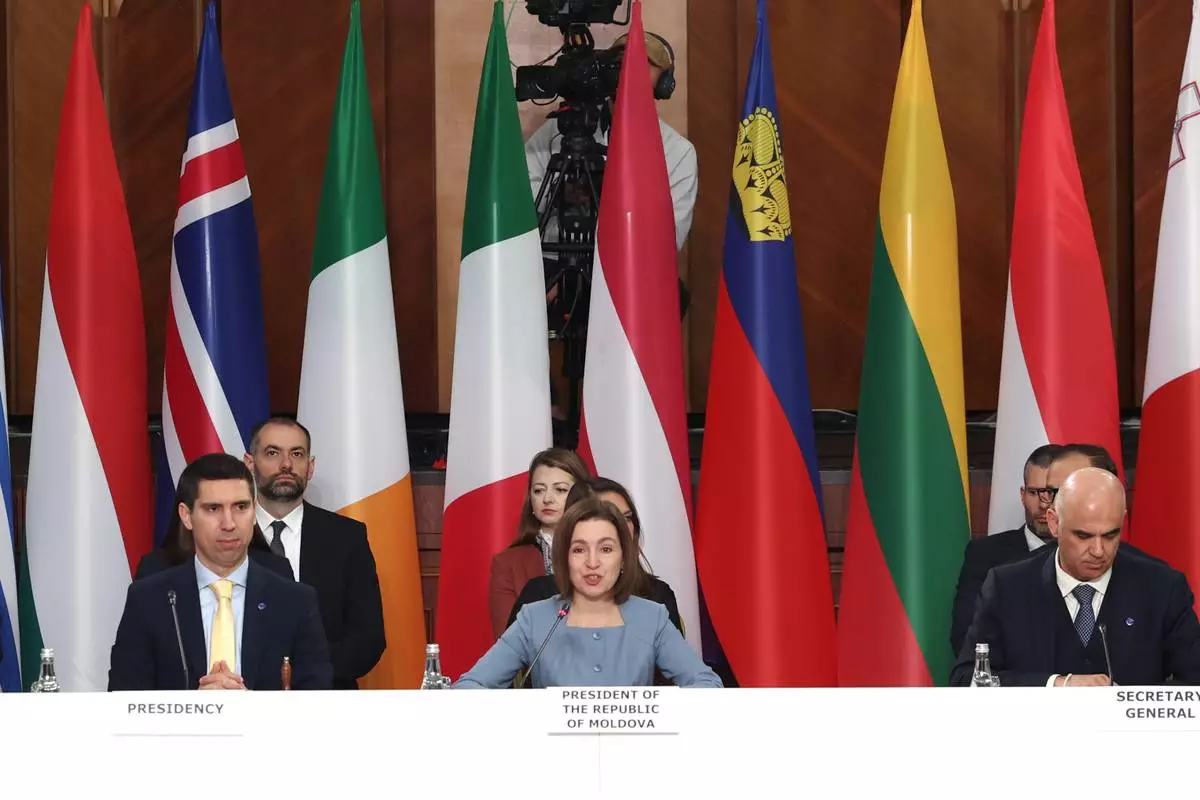
Moldova's President Maia Sandu, center, Secretary General of the Council of Europe Alain Berset, right, and Moldova's Deputy Prime Minister and Minister of Foreign Affairs Mihai Popsoi attend the 135th Ministerial Session of the Committee of Ministers of the Council of Europe in Chisinau, Moldova, Friday, May 15, 2026. (AP Photo/Elena Covalenco)

Participants attend the opening session of the 135th Ministerial Session of the Committee of Ministers of the Council of Europe in Chisinau, Moldova, Friday, May 15, 2026. (AP Photo/Elena Covalenco)
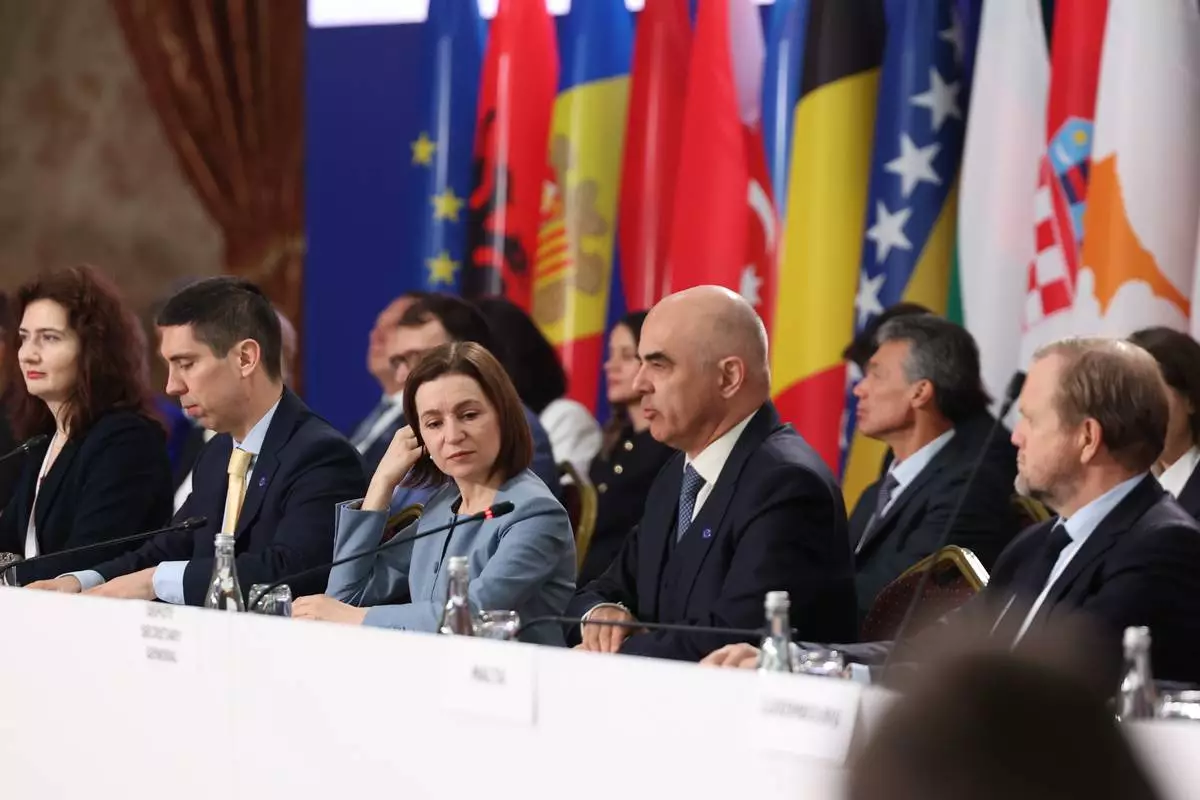
Moldova's President Maia Sandu, center, Secretary General of the Council of Europe Alain Berset, right, and Moldova's Deputy Prime Minister and Minister of Foreign Affairs Mihai Popsoi attend the 135th Ministerial Session of the Committee of Ministers of the Council of Europe in Chisinau, Moldova, Friday, May 15, 2026. (AP Photo/Elena Covalenco)