Hong Kong Customs alerts public to two models of unsafe toys
Hong Kong Customs today (May 16) urged members of the public to stay alert to a model of unsafe slingshot toy and a model of unsafe tangram. Test results indicated that the slingshot toy could pose an injury risk to children's or other people's eyes or faces, and that the components of the tangram may pose suffocation risks to children. To avoid accidents, parents should immediately stop letting their children play with the slingshot and tangram toys. Traders should also remove the slingshot and tangram toys from their shelves.
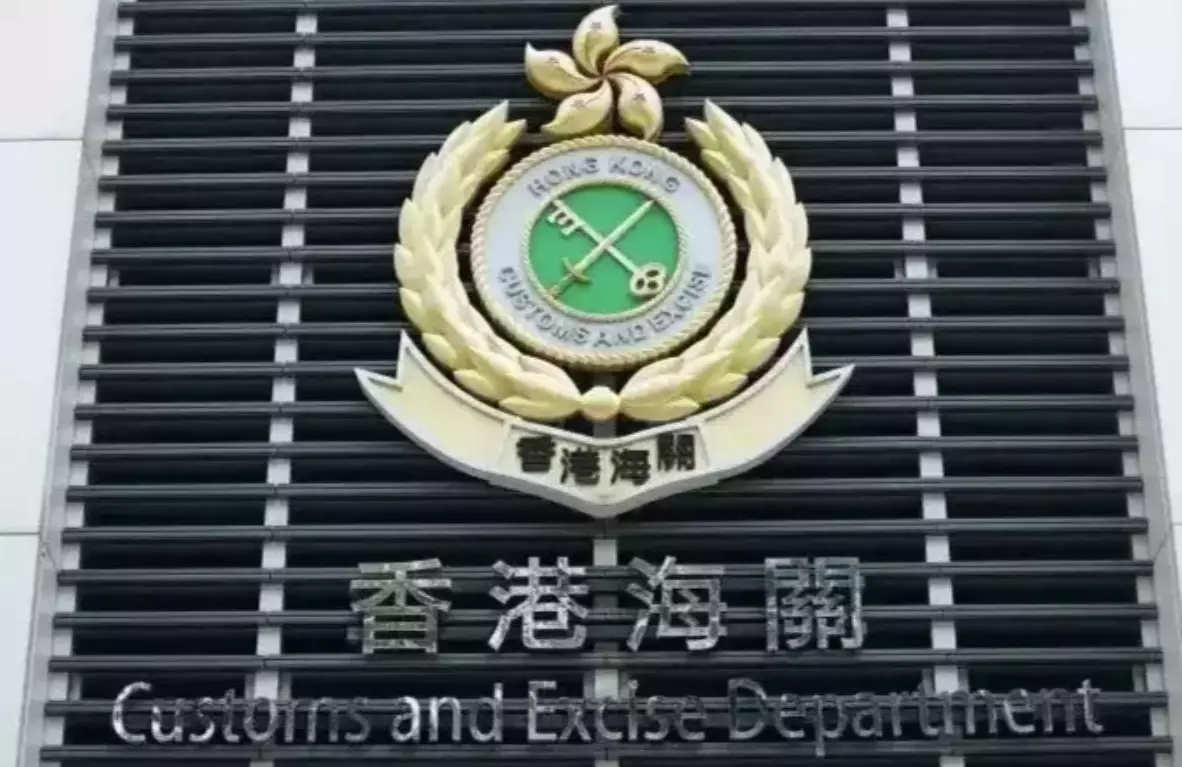
Hong Kong Customs, Photo source: reference image
Customs officers earlier test-purchased various toys from the Lunar New Year fair stalls for safety testing. Test results revealed that one model of slingshot toy had a projectile with a certain amount of kinetic energy but did not have a leading part made of a resilient material. It also did not carry the required warnings and cautions about the potential hazards, nor did it carry the required identification markings under the Toys and Children's Products Safety Ordinance (TCPSO). It could cause injuries to other people if the object was aimed at the eyes or the face.
Customs also discovered one model of tangram contained small components but lacked the required warnings and cautions about age recommendations and the potential hazards. It also did not carry the required identification markings under the TCPSO. It could pose a danger of suffocation for children if accidentally swallowed.
In the operation, Customs seized a total of about 700slingshot toys and tangrams. A prohibition notice on the related person was also served to prohibit the continued sale of the unsafe toys by the retailer. Customs officers also conducted a territory-wide surveillance of the toys, but no such toys were found available for sale.
An investigation is ongoing.
Customs reminds members of the public to observe the following safety tips when purchasing and playing with slingshot toys and tangram toys:
- Pay attention to age recommendations shown on labels;
- Pay attention to and follow the instructions associated with the toys;
- Do not put items other than original accessories into toys for shooting;
- Do not shoot items into eyes or faces; and
- Beware of whether the small parts of toys are easily detachable. Detached small parts may block a child's throat and lead to suffocation if swallowed.
Customs is committed to the protection of consumer interests and regularly conducts spot checks and safety tests on toys and children's products to ensure that they are reasonably safe for use by consumers.
Under the TCPSO it is an offence to supply, manufacture or import unsafe toys or children's products. The maximum penalty upon conviction is a fine of $100,000 and imprisonment for one year on first conviction, and a fine of $500,000 and imprisonment for two years on a subsequent conviction.
Members of the public may report information relating to suspected unsafe toys or children's products via Customs' 24-hour hotline182 8080 or its dedicated crime-reporting email account (crimereport@customs.gov.hk) or online form (eform.cefs.gov.hk/form/ced002).

Hong Kong Customs today (May 16) urged members of the public to stay alert to a model of unsafe sling shot toy and a model of unsafe tangram. Photo shows two of the components of the unsafe tangram concerned, which could pose a danger of suffocation for children if accidentally swallowed. Source: HKSAR Government Press Releases

Hong Kong Customs today (May 16) urged members of the public to stay alert to a model of unsafe slingshot toy and a model of unsafe tangram. Photo shows the slingshot toy concerned; test results indicate that the toy could pose an injury risk to children's or other people's eyes or faces. Source: HKSAR Government Press Releases
Full text of "The Chief Executive's 2026 Policy Address" (10)
(E) Enhance Transport and Commuting Convenience
Transport Infrastructure
335. The Central Kowloon Bypass (Kowloon Bay Section) project will be completed this year, marking the full commissioning of Route 6 (including the Central Kowloon Bypass and Tseung Kwan O-Lam Tin Tunnel). It is anticipated that the journey time between Tseung Kwan O and Yau Ma Tei during peak hours will be substantially reduced from about 65 minutes before the commissioning of Route 6, to about 12 minutes.
336. The implementation milestones of smart and green mass transit systems are to:
(i) Award the contract for the Kai Tak project this year for completion in 2031.
(ii) Award the contract for the Hung Shui Kiu/Ha Tsuen NDA project next year for first-phase completion in 2031.
(iii) Award the contract for the East Kowloon project next year for completion by 2033.
Regulatory Regime for Ride-hailing Services
337. The current-term Government has successfully introduced the regulatory regime for ride-hailing services, with most of the legal provisions coming into effect on August 3 this year. The Government is now inviting applications for ride-hailing service licences, and will issue driving permits to drivers and vehicles beginning from the fourth quarter this year, providing the public with safe and compliant ride-hailing services. The TD is pressing ahead with the development of a ride hailing vehicle data management system to monitor the compliance of operation, and comprehensively safeguard data security. We will also oversee market development and collect relevant data for the dynamic assessment of supply and demand to enhance personalised, point-to-point transport service.
Promote the Use of Automated Parking Systems
338. With a view to expanding the use of automated parking systems, the TD will establish a one-stop co-ordination office to co-ordinate the efforts of relevant departments in expediting the approval of automated parking-system applications submitted by operators of short-term tenancy car parks.
(F) Deepen the Integrated Development of Culture, Sports and Tourism
339. The Culture, Sports and Tourism Bureau (CSTB) is pressing ahead with the integrated and synergised development of culture, sports and tourism. It fosters sports development by promoting sports in the community, supporting elite sports, maintaining Hong Kong as a centre for major international sports events, advancing professionalism in sports and developing sports as an industry. In building facilities, implementing system reform, optimising resource allocation, nurturing talent and hosting mega events, the CSTB is deepening the integration of culture, sports and tourism to drive economic development.
Shape Tourism with Cultural Activities and Promote Culture through Tourism
340. Hong Kong is blessed with a unique cultural vision, shaped by both Chinese and foreign influences. We will continue to engage and collaborate with Mainland and overseas culture, arts and creative sectors to consolidate Hong Kong's role as a hub for the exchange, collaboration and promotion of culture, arts and creativity. We will also host international cultural and arts exhibitions and performances to attract visitors to Hong Kong.
Support Hong Kong's Film Industry and Promote "Film + Tourism"
341. We will conduct a comprehensive review of the Film Development Fund with a view to attracting more private investment to ensure sustainable development. We will also explore venue provision for constructing film sets to encourage local filming. The Cultural and Creative Industries Development Agency will set up the Support Unit for Non-local Film Productions, which will provide one stop services for Mainland and overseas film crews filming in Hong Kong, attracting the production of more quality films to promote Hong Kong.
342. The HKTB will offer visitors an immersive experience of Hong Kong's unique urban landscape and lifestyle, weaving together classic Hong Kong films, district characteristics and local culture, including a route in Yau Ma Tei that integrates memorable scenes and locations from classic Hong Kong police-and-crime films, complemented by authentic local night markets and dining experiences.
Sports Development
Support the Kai Tak Sports Park to Promote "Sports + Mega Events"
343. The KTSP has substantially expanded Hong Kong's capacity to host international mega events. To date, more than 170 sessions of international and local sports and cultural entertainment mega events have been held there, attracting over 2.6 million spectators. In 2025, the KTSP's main stadium achieved the highest gross revenue and ticket sales in Asia.
344. To strengthen the promotion of "sports + mega events", we will explore the redevelopment of Victoria Park Centre Court and other ancillary facilities into an iconic all-weather, multi-purpose venue for holding larger-scale and higher-level sports events, as well as performance activities as required.
Training for Sports Executives
345. The Hong Kong Sports Institute will introduce a new three-year Sports Executive Training Programme. The programme will provide transformation opportunities for and expand the career ladder of retired athletes, while helping train professional management for the sports sector.
Promote Sports for All
346. To encourage the general public to exercise regularly, the Government will enhance outdoor basketball facilities and the content of the Hong Kong Games.
Participate in Our Country's Sports Events and Boost Co-operation and Exchanges
347. We will continue to send delegations and teams to participate in our country's sports events and promote sports exchange within the GBA, including supporting NSAs in the organisation of GBA leagues.
Strengthen the Governance of National Sports Associations
348. Early next year, the Sports Federation and Olympic Committee of Hong Kong, China will, taking into account NSAs' implementation of the Code of Governance promulgated earlier, issue certificates of compliance to NSAs meeting the governance standards. Future government funding will be linked to the compliance status to establish a fairer, more impartial and more transparent system for promoting sports development.
Tourism Development
349. Hong Kong's tourism industry is performing well. In 2025, the total number of visitor arrivals reached 49.9 million, a 12% year on year increase. Total tourism expenditure associated with inbound tourism is estimated at $238.1 billion this year, an increase of about 10% over last year.
350. The proportion of overseas visitors travelling onwards to the Mainland via Hong Kong has continued to rise, exceeding 20% in the first half of 2026. We will continue to capitalise on measures introduced by the Central Government to facilitate visits by foreign travellers to the Mainland, deepen collaboration with Mainland provinces and municipalities, and explore with the country additional immigration facilitation arrangements for international visitors. The HKTB will promote multi destination travel itineraries to overseas visitors, partner with airlines to roll out relevant tourism products and promotional offers, and intensify publicity overseas.
Take Forward "+ Tourism" Joint Initiatives
351. We will integrate various events with tourism to raise their appeal, aiming to extend visitor stays in Hong Kong and generate value-adding momentum:
(i) "Mega Events + Tourism": To solidify Hong Kong's reputation as the Events Capital of Asia, the HKTB will demarcate a period each year for the International Arts Season¹ (February to May), the Chinese Arts Season&su2; (June to September) and the Festive Mega Events Season³ (October to February the following year), setting a mega-event framework under these three themes to boost visitor spending and extend their stay in Hong Kong. Flagship events hosted by the HKTB attract millions of citizens and visitors each year. The Government will regularise the additional annual funding currently provided for hosting flagship events, allowing the HKTB to draw up and implement sustainable and forward-looking market promotion strategies in a more systematic manner.
(ii) "Finance + Tourism": The refurbishment of the HKEX Connect Hall and the Museum of Finance at the HKEX is scheduled for completion next year. The Government will link up key financial landmarks around Central to create an urban landmark that showcases Hong Kong's status as an international financial centre and the city's cultural appeal.
(iii) "Industrial brand + Tourism": We will continue to develop Hong Kong's industrial brand tourism routes with varying themes to promote more in depth tour experiences.
(iv) "Ecological conservation + Green tourism": The Government promotes eco-tourism that advances tourism alongside conservation, enabling the public to get close to and appreciate Hong Kong’s unique and precious scenery in the countryside. In early September this year, the Government launched a trial online reservation system for visitors going to the High Island Geo Trail-Po Pin Chau Section of the High Island Reservoir East Dam in Sai Kung during weekends and long holidays. A visitor cap is set to alleviate ecological pressure while enhancing visitor experience. The pilot reservation arrangement will continue during the Golden Week in October this year. We will review the trial outcome and develop a long-term country park management strategy.
(v) "Heritage + Tourism": The Government has opened over 200 Government-owned declared monuments and graded historic buildings to the public. It will upload more information to its websites and step up publicity, enabling the trade to develop and promote signature tourism products.
Ticket Stub Economy
352. We will promote ticket stub offers as a means of attracting visitors to extend their stay and increase their spending in Hong Kong, including announcing the calendar of mega events as soon as practicable. The HKTB will provide one-stop contact services to connect event organisers, retail and catering associations and tourism related organisations, fostering a consumption chain that extends from the event venue to the community.
353. The HKTB will enhance Discover Hong Kong's digital platform, consolidate the ticket stub discounts of mega events hosted and promoted by the HKTB and launch a new mobile application to facilitate visitor access to, and merchant provision of, ticket stub offers.
Yacht Economy
354. Last year's Policy Address put forward the development of yacht economy. A variety of new yacht berth projects are now moving ahead, including the tender for the composite development project in Aberdeen comprising a marina, recreational facilities and residential development scheduled for the first half of 2027, and the yacht bay project under the Airport City "SKYTOPIA". In addition, starting from May, Hong Kong and Macao yachts may navigate in nine GBA cities, with the requirement for guarantee exempted and under temporary ship nationality registration. The first northbound travel of yachts from Hong Kong set sail in June. The Marine Department will soon sign an MoU with the Guangdong Maritime Safety Administration for the implementation of southbound travel for yachts from Guangdong, adding impetus to cross-boundary leisure consumption.
355. Following the introduction of the Marine Department's three facilitation measures , the first batch of Mainland yacht masters completed the examination and assessment in mid June. We will extend our online, short-term training courses to overseas, enabling yacht masters of visiting yachts to obtain qualifications from abroad to navigate Hong Kong waters.
Renewal of Central
356. Phase 1 of the Lan Kwai Fong Streetscape Beautification Works will be gradually completed, beginning in October. The consultancy study for Phase 2 will start soon. We encourage private developers to participate in the renewal of Central, which will give Hong Kong's first-generation central business district a fresh face while preserving its heritage.
Muslim Tourism
357. Hong Kong's ranking as a Muslim-friendly destination has risen for two consecutive years, securing second place among non-Organisation of Islamic Co-operation destinations, according to the latest Global Muslim Travel Index. The HKTB will extend the Hong Kong Restaurants Halal Certification Funding Scheme to the end of 2027, encouraging the industry to provide more Muslim friendly food options.
Facilitate the Operation of Home-stay Lodgings on the Outlying Islands
358. To facilitate the operation of home-stay lodgings on the outlying islands, the HAD will remove barriers by exempting consideration of use restrictions on guesthouse purposes in the deeds of mutual covenant of the buildings, when processing guesthouse licence applications for buildings of three storeys or less on the outlying islands.
Enhance the Professional Standards of Tourism Practitioners
359. To increase the supply of professional tourist guides, the Travel Industry Authority has launched the "specialised tourist guide licensing programme" this year for Geopark guides and reception services. The programme will be expanded to cover other fields, such as in-depth tours focusing on history and culture at the next stage.
Enhance Passenger Clearance Experience
360. The Immigration Department will launch the Automated Transportation On-board Clearance System ("AUTOS") Pilot Scheme at the Hong Kong-Zhuhai-Macao Bridge Hong Kong Port in December. It will use AI and facial recognition technology to automatically verify the identities of registered, eligible, cross-boundary private car drivers and passengers, enabling "contactless on-board clearance".
361. The redeveloped Huanggang Port is expected to come into operation in the fourth quarter of this year, implementing the co-location arrangement and the novel "collaborative inspection and joint clearance" mode, to significantly enhance passenger clearance experience and efficiency.
¹During the International Arts Season, cultural mega events such as the Hong Kong Arts Festival, Art Basel, Art Central, the Hong Kong International Film Festival and the French May Arts Festival will be hosted, consolidating Hong Kong’s position as the East meets West centre for international cultural exchange.
²The Chinese Arts Season will cover the Chinese Culture Festival and the Hong Kong Intangible Cultural Heritage Month, promoting the sophisticated traditional Chinese culture for citizens and visitors to experience its charm.
³The Festive Mega Event Season will offer a line up of festive events such as Mid Autumn Festival and Halloween mega events, the Hong Kong Wine and Dine Festival, Hong Kong Winterfest, immersive light shows, Hong Kong New Year Countdown Celebrations and the International Chinese New Year Night Parade, showcasing Hong Kong’s festive ambiance and convergence of Chinese and international cultures to visitors from around the world.
These include enhancing the Electronic Business System to allow one stop online completion of arrival and port formalities, setting up designated anchorage areas and relaxing berthing requirements, and authorising Mainland institutions to conduct examinations and provide training for yacht masters.
br />
(To be continued.)
Source: AI-found images