CJ's address at Ceremony for Admission of New Senior Counsel
The following is issued on behalf of the Judiciary:
The following is the full text of an address by Chief Justice Andrew Cheung, Chief Justice of the Court of Final Appeal, at the Ceremony for the Admission of the New Senior Counsel today (May 16):
Secretary for Justice, Chairman of the Bar, President of the Law Society, fellow judges, ladies and gentlemen,
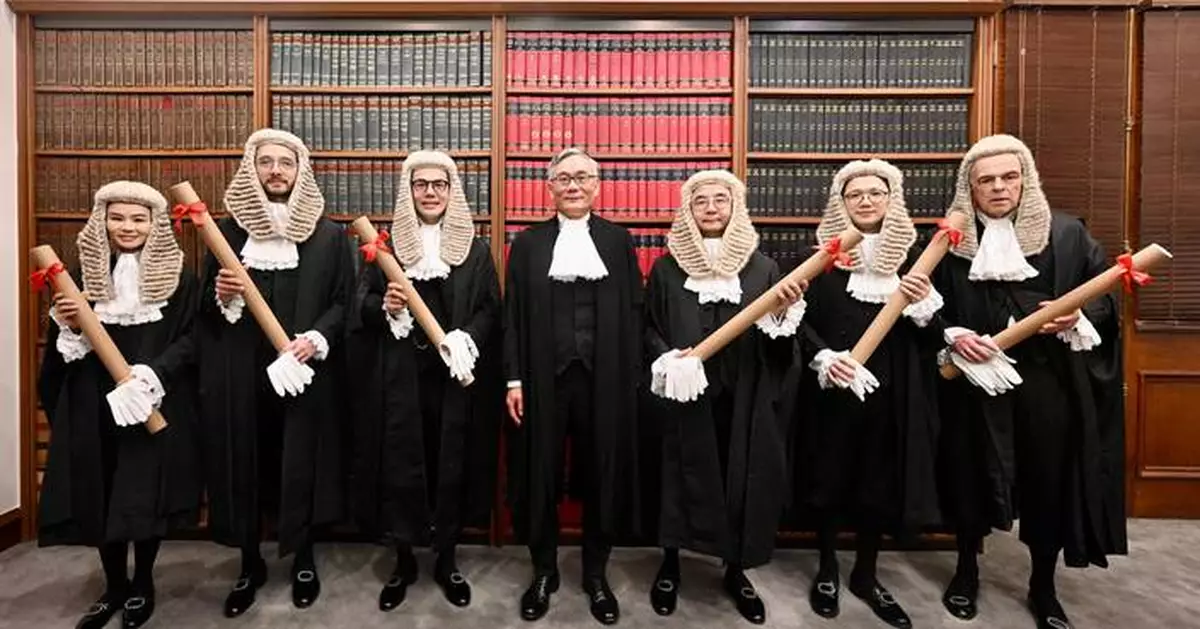
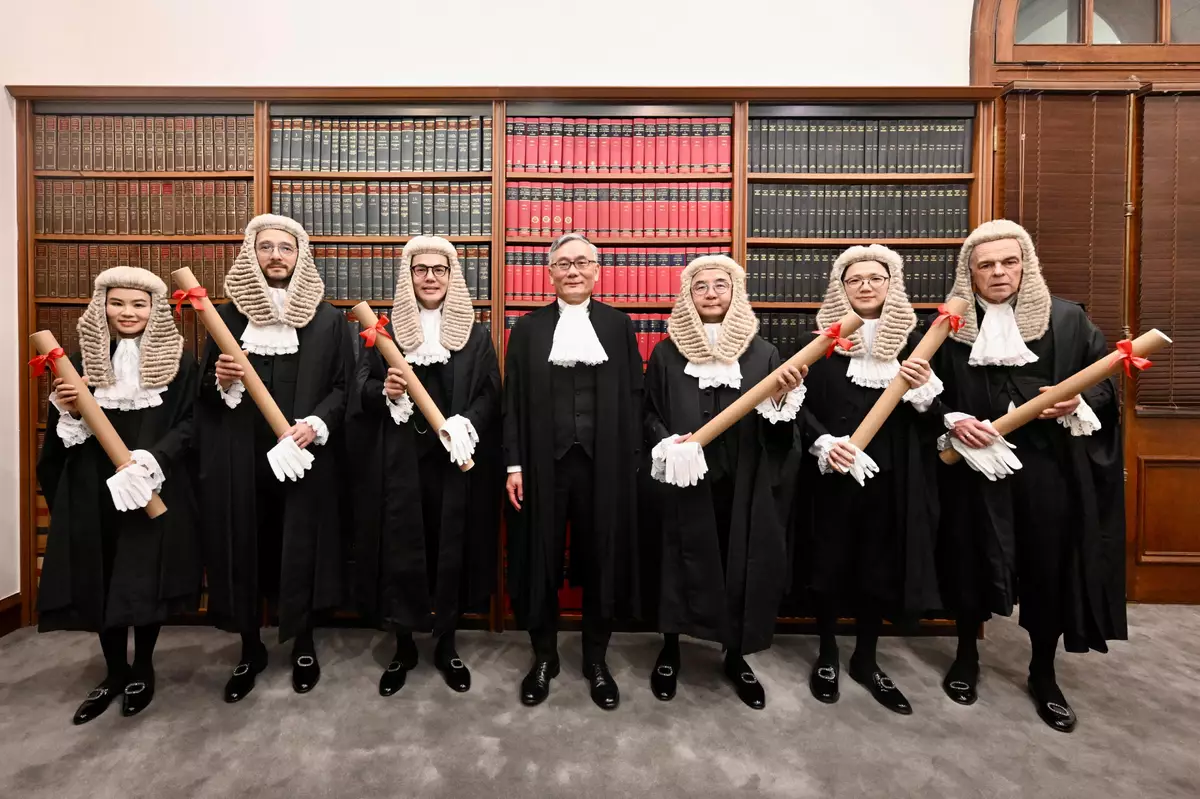
On behalf of the Judiciary and of all my colleagues present today, I extend a very warm welcome to you all. We are gathered today for this year's Ceremony for the admission to the rank of Senior Counsel of Mr Charles Chan, Mr Eugene Yim, Mr Martin Wong, Mr Calvin Cheuk, Ms Bonnie Cheng, and Mr Charles Hollander.
Success as an advocate is rarely an individual achievement alone. Behind each of those admitted today stand others whose contributions are essential, though often unseen. There are mentors who gave time and guidance; leaders and instructing solicitors who provided opportunities; colleagues who offered advice and support; and families who sustained long and demanding careers. The contribution of those people deserves acknowledgment. I am therefore particularly glad to see so many of them here today, sharing in and bearing witness to this joyous and well earned occasion.
This is also an event of real importance in the life of the Bar and of the court. The admission of counsel to the rank of Senior Counsel is an occasion that calls not only for celebration, but also for seriousness, reflection, and a clear appreciation of both what is being recognised and what is being undertaken.
The conferral of Silk is among the most distinguished forms of recognition open to an advocate. It is not bestowed by seniority alone, nor does it follow merely from a large or successful practice. It is conferred selectively, and for good reason. The appointment reflects the considered judgment of the Chief Justice that the advocate concerned has achieved a standard of excellence such as to command the confidence of the court and place him or her among the leading members of the Bar within their areas of practice. It is a judgment reached only after careful and rigorous consideration. The Chief Justice consults the Chairman of the Bar and the President of the Law Society, as well as senior judges and others who are well placed to assess the quality of the applicant's work over time. Save for exceptional cases involving particular areas of practice, the fact that appointees practise advocacy in open court is of particular significance. It ensures that such appointments are transparent, publicly verifiable, and subject in practice to scrutiny by professional peers.
The assessment of applications is not confined to technical competence, important though that is. Particular attention is paid to legal learning, areas of expertise, advocacy skills, judgment grounded in experience, and integrity consistently demonstrated over time. What is looked for is consistency of conduct, independence of mind, and fidelity to the court and to the law. It requires the capacity to maintain professional standards even when doing so is inconvenient, unpopular, or personally disadvantageous. It requires judgment exercised not only in argument, but in restraint.
An appointment, however, is not solely about recognition of the past. Admission to the rank of Senior Counsel is also a commitment to the future. It marks the assumption of new responsibilities, both formal and informal, and of expectations that extend well beyond any particular brief.
Senior Counsel are looked to for leadership within the Bar. They are expected to set an example through their conduct, their advocacy, and the way in which they deal with others. The manner in which Senior Counsel practise has an influence not only on those who appear with them, but also on the culture of the Bar as a whole. Standards are shaped as much by example as by rule.
Those admitted today will be expected to uphold those standards in their daily work. That includes fairness and courtesy to the court, to opponents, and to junior lawyers. It includes clarity and restraint in advocacy, and respect for the limits of proper argument. It also includes a responsibility to those who look to lawyers for representation.
Under our common law system, the proper functioning of the courts depends upon advocates who are able to present their clients' cases fully and fearlessly, while at the same time discharging their duties to the court with honesty and restraint. Public confidence in the administration of justice depends in significant part upon confidence in those who appear before the courts. Senior Counsel bear particular responsibility in that regard. They are expected to demonstrate, by their conduct, that independence and integrity are not merely asserted, but upheld in practice.
Senior Counsel are also expected to contribute more broadly to public service. Many do so through service in part-time judicial and quasi-judicial roles, professional and disciplinary bodies, law reform, legal education, and work undertaken in the public interest. Such service is not peripheral to practice, but an important aspect of professional responsibility. Those who hold this rank are expected to be among those prepared to generously give of their time and experience for the wider good.
It is against that background that I turn to the six appointees today.
Mr Charles Chan practises principally in criminal law. He has particular experience in appellate work and in complex cases involving fraud and corruption. In addition to his practice at the Bar, he has served the community in judicial office as a Deputy Magistrate and a Deputy District Judge. He has also contributed to the profession through his work on the Bar Council and its Standing Committees.
Mr Eugene Yim specialises in family law. His practice includes matrimonial finance, children matters, and probate. He has served as a Deputy District Judge and has played a significant role in the administration of the profession as Honorary Secretary and Treasurer of the Bar Council. He has also contributed to the development of family law through his work on several committees in that field.
Mr Martin Wong has a broad civil practice, with particular experience in medical negligence and complex cross-border commercial disputes. He has sat as a Deputy District Judge and as a Temporary Deputy Registrar of the High Court. He currently serves as Honorary Secretary and Treasurer of the Bar Council.
Mr Calvin Cheuk focuses on construction disputes and major infrastructure projects. He has served as a Deputy District Judge and as Chairman of the Bar Association's Committee on Construction Law. His appointment recognises his standing in an important and highly specialised field in which the conferral of Senior Counsel is particularly appropriate.
Ms Bonnie Cheng has an exceptionally successful and wide-ranging civil practice, spanning commercial, family, tax, and public law. She has sat as a Deputy District Judge and as a Temporary Deputy Registrar of the High Court.
Mr Charles Hollander, a London silk since 1999, was generally admitted to the local Bar in 2015. He is a highly experienced commercial and chancery practitioner. He has sat as a Recorder and Deputy Judge in the courts of England. His appointment in Hong Kong reflects not only his individual distinction, but also the value of experience drawn from a wider common law context.
I congratulate each of you on your admission to the Inner Bar today. The distinction conferred upon you reflects credit not only upon you individually, but also upon the Bar, of which you are now senior members, and upon the solicitors' profession, which has provided you not only with work, but with indispensable support and the opportunity to excel. With this distinction comes responsibility. The years ahead will offer opportunities to influence, to lead, and to uphold the standards upon which the administration of justice depends. It is my sincere hope that the responsibilities you now assume will be discharged with care, seriousness, and unwavering dedication.
On behalf of the Judiciary, I extend to each of you our sincere congratulations and our very best wishes.
Thank you.
CJ's address at Ceremony for Admission of New Senior Counsel Source: HKSAR Government Press Releases