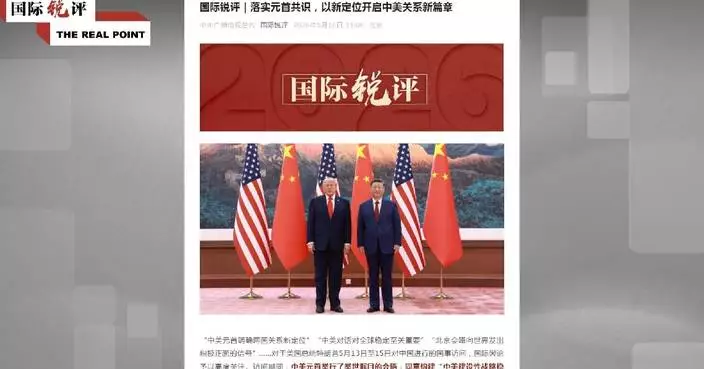
Both China and the United States stand to gain from improved bilateral stability and should embrace strategic stability with positive momentum, Sean Stein, president of the U.S.-China Business Council, said on Friday.
During talks with U.S. President Donald Trump in Beijing, Chinese President Xi Jinping said China will open its door wider. He welcomed the U.S. to enhance mutually beneficial cooperation with China.
Both countries agreed to build a constructive relationship of strategic stability, steering the giant ship of China-U.S. relations in the right direction, and injecting greater stability and certainty into a world marked by turbulence and transformation.
Stein said stability was essential for business and investment, and the term "constructive strategic stability" reflects China' s thoughtful assessment that the previous China-U.S. dynamics were shaped more by caution and leverage than by collaboration.
"We have a stability-first policy, which I think is really important, because [there is] nothing else we need to make sure that the relationship stays stable. We need that for business. We need that for investment. That's great for both countries to have stability," said Stein.
"But I think this idea of 'constructive strategic stability' is an interesting one. And I think it reflects something very thoughtful on the Chinese side. I think it very actively and accurately assesses the right now: We've had stability since at least [the meeting between Xi and Trump in] Busan, but that stability maybe not be a constructive stability. And what do I mean? It means that the U.S. has been very cautious since Busan, because they have realized that China does have a lot of potential leverage in the form of rare earths, critical minerals and other things that could have a great effect on the U.S. economy, so the U.S. has to be careful. That brings the stability. At the same time, the U.S. believes it has got a lot of leverage over China's economy, which may cause China to be a little more careful. And so that's a strategic stability, but not a constructive strategic stability," Stein continued.
Stein also said that the notion of "constructive strategic stability" is well received by Trump, and that both countries can reap benefits from the constructive strategic stability.
"And so I think what the Chinese side was saying and I think was well received by President Trump, is why does our stability have to be based on this negative fear of what might happen? Why can we not have stability based on the idea of doing things together, of cooperating, but also competing within bounds and creating some positive momentum that creates a better, more positive basis for stability? In other words, we both have something to gain from the relationship, so we want to maintain stability and improve it, not we want to have stability because we have so much to lose. I think that's what they mean," said Stein.
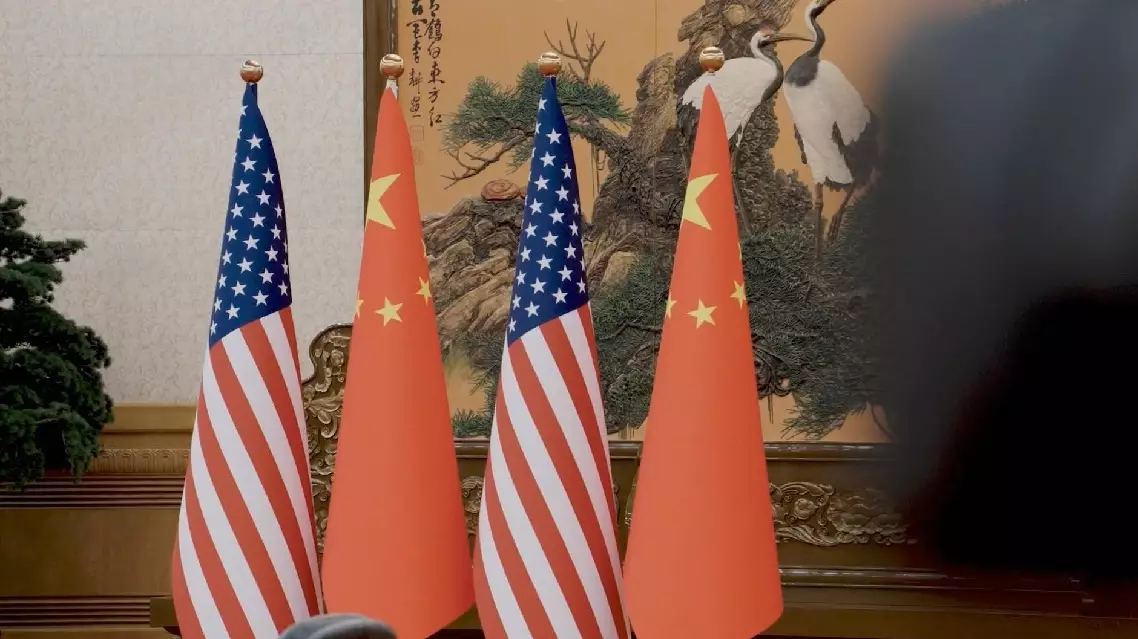
China, US stand to gain from improved bilateral stability: business council leader