WASHINGTON (AP) — President Donald Trump returned from the spectacle of a Chinese state visit to a less than welcoming U.S. economy — with the military band and garden tour in Beijing giving way to pressure over how to fix America's escalating inflation rate.
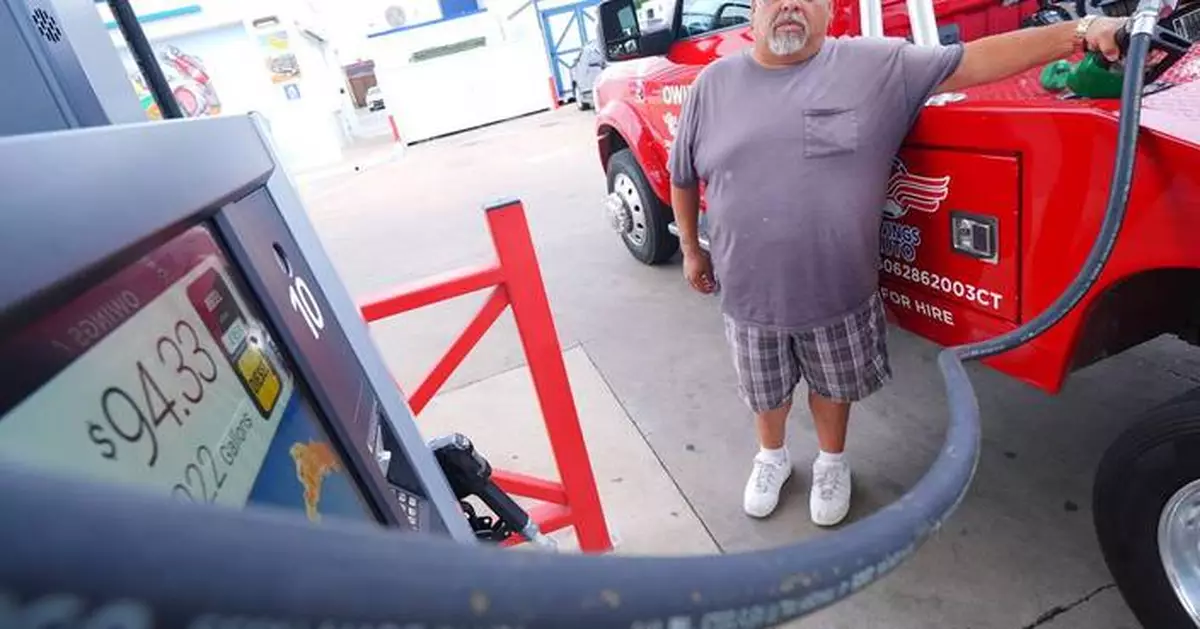
Consumer inflation in the United States increased to 3.8% annually in April, higher than what he inherited as the Iran war and the Republican president’s own tariffs have pushed up prices. Inflation is now outpacing wage gains and effectively making workers poorer. The Cleveland Federal Reserve estimates that annual inflation could reach 4.2% in May as the war has kept oil and gasoline prices high.
Trump’s time with Chinese leader Xi Jinping appears unlikely to help the U.S. economy much, despite Trump's claims of coming trade deals. The trip occurred as many people are voting in primaries leading into the November general election while having to absorb the rising costs of gasoline, groceries, utility bills, jewelry, women’s clothing, airplane tickets and delivery services. Democrats see the moment as a political opportunity.
“He’s returning to a dumpster fire,” said Lindsay Owens, executive director of Groundwork Collaborative, a liberal think tank focused on economic issues. “The president will not have the faith and confidence of the American people — the economy is their top issue and the president is saying, ‘You’re on your own.’”
The president’s trip to Beijing and his recent comments that indicated a tone-deafness to voters' concerns about rising prices have suggested his focus is not on the American public and have undermined Republicans who had intended to campaign on last year’s tax cuts as helping families.
Trump described the trip as a victory, saying on social media that Xi “congratulated me on so many tremendous successes," as the U.S. president has praised their relationship.
Trump told reporters that Boeing would be selling 200 aircraft — and maybe even 750 “if they do a good job” — to the Chinese. He said American farmers would be “very happy” because China would be "buying billions of dollars of soybeans.”
"We had an amazing time," Trump said as he flew home on Air Force One, and told Fox News' Bret Baier in an interview that gasoline prices were just some “short-term pain” and would “drop like a rock” once the war ends.
Trump departed from the White House for China by saying the negotiations over the Iran war depended on stopping Tehran from developing nuclear weapons. “I don’t think about Americans’ financial situation. I don’t think about anybody. I think about one thing: We cannot let Iran have a nuclear weapon,” Trump said.
That remark prompted blowback because it suggested to some that Trump cared more about challenging Iran than fighting inflation at home. Trump defended his words, telling Fox News: “That’s a perfect statement. I’d make it again.”
The White House has since stressed that Trump is focused on inflation.
Asked later about the president's words, Vice President JD Vance said there had been a “misrepresentation” of the remarks. White House spokesman Kush Desai said the “administration remains laser-focused on delivering growth and affordability on the homefront" while indicating actions would be taken on grocery prices.
But as Trump appeared alongside Xi, new reports back home showed inflation rising for businesses and interest rates climbing on U.S. government debt.
His comments that Boeing would sell 200 jets to China caused the company’s stock price to fall because investors had expected a larger number. There was little concrete information offered about any trade agreements reached during the summit, including Chinese purchases of U.S. exports such as liquefied natural gas and beef.
“Foreign policy wins can matter politically, but only if voters feel stability and affordability in their daily lives,” said Brittany Martinez, a former Republican congressional aide who is the executive director of Principles First, a center-right advocacy group focused on democracy issues.
“Midterms are almost always a referendum on cost of living and public frustration, and Republicans are not immune from the same inflation and affordability pressures that hurt Democrats in recent cycles,” she added.
Democratic lawmakers are seizing on Trump’s comments before his trip as proof of his indifference to lowering costs. There is potential staying power of his remarks as Americans head into Memorial Day weekend facing rising prices for the hamburgers and hot dogs to be grilled.
“What Americans do not see is any sympathy, any support, or any plan from Trump and congressional Republicans to lower costs – in fact, they see the opposite,” Senate Democratic leader Chuck Schumer of New York said Thursday.
Vance faulted the Biden administration for the inflation problem even though the inflation rate is now higher than it was when Trump returned to the White House in January 2025 with a specific mandate to fix it.
“The inflation number last month was not great,” Vance said Wednesday, but he then stressed, "We’re not seeing anything like what we saw under the Biden administration.”
Inflation peaked at 9.1% in June 2022 under Biden, a Democrat. By the time Trump took the oath of office, it was a far more modest 3%.
The data tells a different story as higher inflation is spreading into the cost of servicing the national debt.
Over the past week, the interest rate charged on 10-year U.S. government debt jumped from 4.36% to 4.6%, an increase that implies higher costs for auto loans and mortgages.
“My fear is that the layers of supply shocks that are affecting the U.S. economy will only further feed into inflationary pressures,” said Gregory Daco, chief economist at EY-Parthenon.
Daco noted that last year’s tariff increases were now translating into higher clothing prices. With the Supreme Court ruling against Trump’s ability to impose tariffs by declaring an economic emergency, his administration is preparing a new set of import taxes for this summer.
Daco stressed that there have been a series of supply shocks. First, tariffs cut into the supply of imports. In addition, Trump’s immigration crackdown cut into the supply of foreign-born workers. Now, the effective closure of the Strait of Hormuz has cut off the vital waterway used to ship 20% of global oil supplies.
“We’re seeing an erosion of growth,” Daco said.
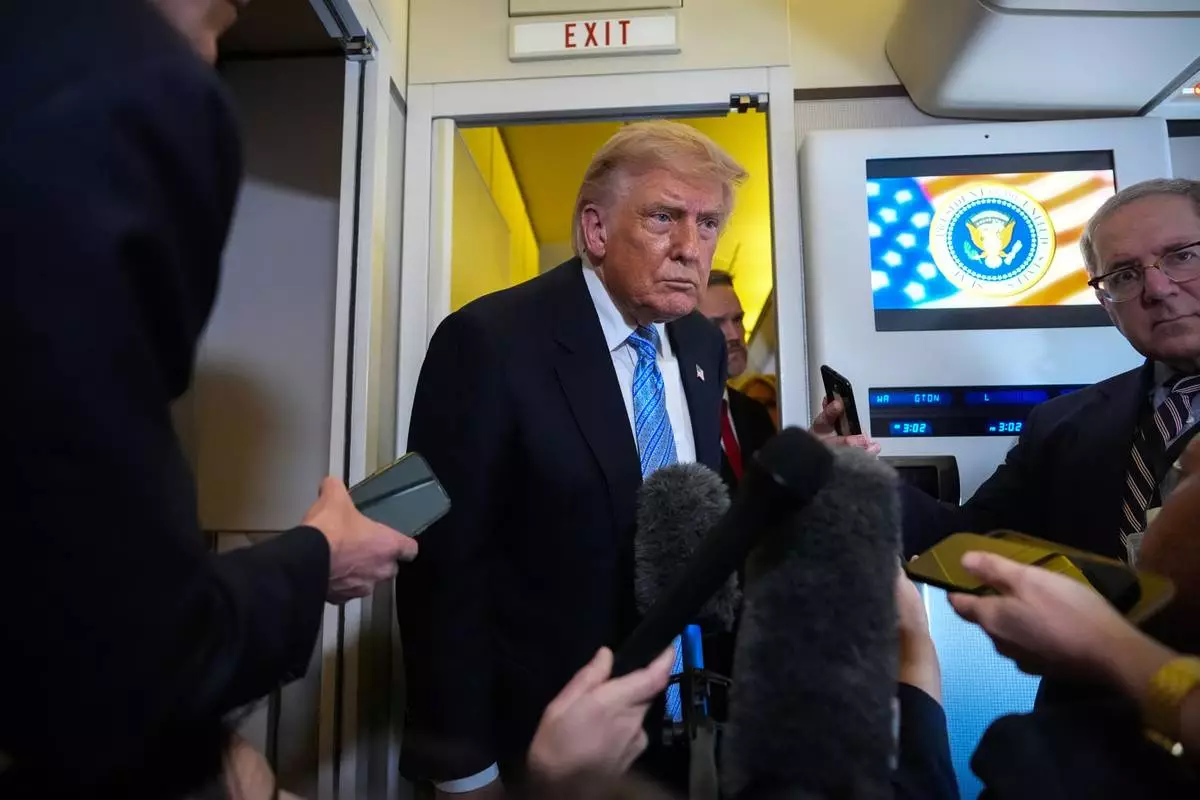
President Donald Trump speaks to reporters aboard Air Force One, Friday, May 15, 2026, as he returns from a trip to Beijing, China. (AP Photo/Mark Schiefelbein)
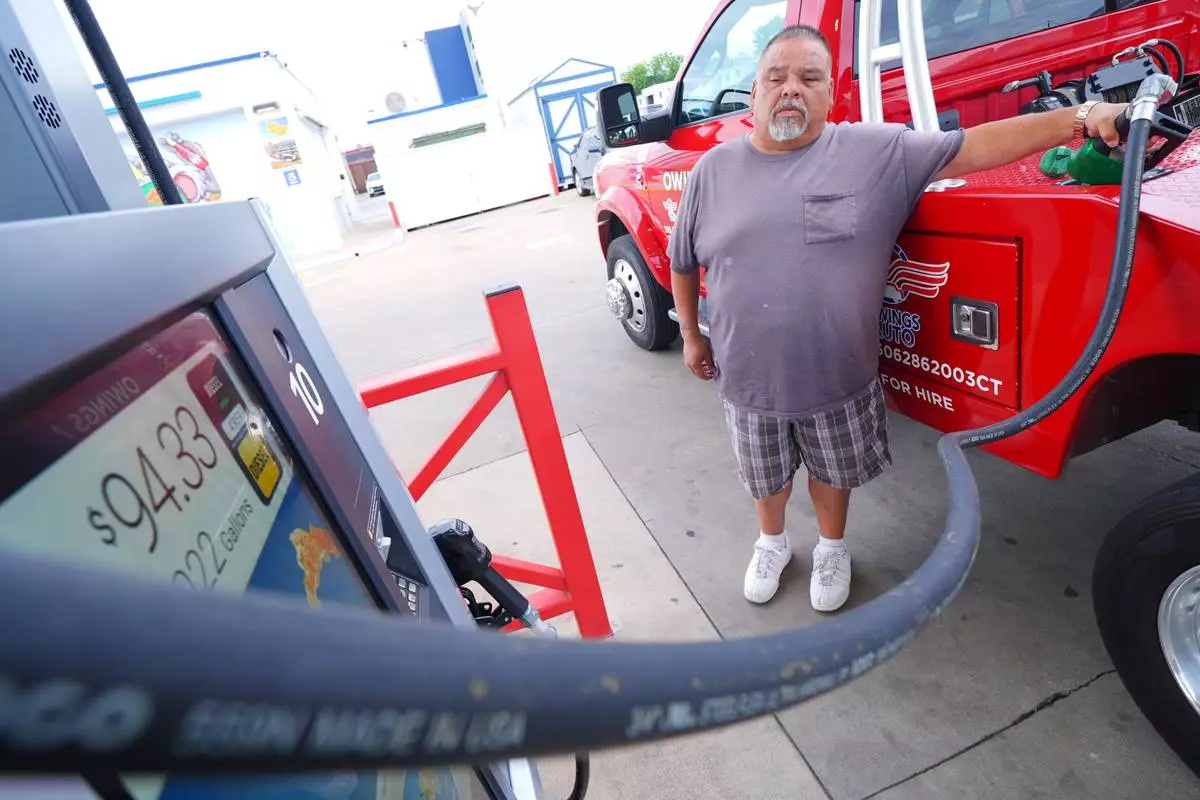
A ticker shows diesel gas charges as James Navarro fuels his tow truck Friday, May 15, 2026, in Arlington, Texas. (AP Photo/Julio Cortez)
VIENNA (AP) — The Eurovision Song Contest reached its sequin-drenched final on Saturday, with tight security and rainy weather failing to dent the enthusiasm of fans, or the opposition of critics who think Israel shouldn’t be invited to the party.
After a week’s buildup, acts from 25 countries took to the stage at the Wiener Stadthalle arena in Vienna to battle for the continent’s pop crown. Millions of viewers around the world will cast judgment on a fiery Finnish violinist, a Moldovan folk rapper, a Serbian metal band and many more at Eurovision’s 70th anniversary event.
The campy, colorful contest has been likened to the World Cup with songs instead of soccer. And like global sports, it often becomes entangled in politics. The contest has been clouded for a third year by calls for Israel to be excluded over its conflicts in Gaza and elsewhere, with five longtime participants — Spain, the Netherlands, Ireland, Iceland and Slovenia — boycotting in protest.
The show opened with a performance by last year’s winner, the operatically trained Austrian singer JJ, and an Olympics-style flag parade of the 25 finalists. Then it was on to performances by the musicians, who had just 3 minutes to win over millions of viewers who, along with national juries of music professionals, pick the winner.
First up was Denmark’s Søren Torpegaard Lund, among the contest favorites for the sultry “Før Vi Går Hjem” (“Before We Go Home”), followed by Germany’s Sarah Engels with the power ballad “Fire,” the first of doubtless several performances to make liberal use of jets of flame.
Israeli competitor Noam Bettan was cheered as he performed “Michelle,” a rock ballad in Hebrew, French and English. Earlier in the week, four people were ejected for trying to disrupt his semifinal performance. Then came “Dancing on the Ice,” a techno-ballad by Belgium's Essyla.
Ukrainian singer Leléka offered the ethereal, beautiful "Ridnym,” and Australian star Delta Goodrem showed what a diva should be like with her slick midtempo ballad “Eclipse” — and a bravura performance that sees her raised into the air above a glittery piano. A European country would likely host for Australia next year if she wins.
Serbian metal band Lavina provided a dramatic change of pace with the angsty “Kraj Mene” — the sort of head-spinning variety that is the joy of Eurovision.
Pleasant ballads like “Bella” by Aidan from Malta alternated with the five-part vocal harmonies of Croatian folk-pop group Lelek, the operatic voice of France's Monroe and British act Look Mum No Computer’s jokey oddity “Eins, Zwei, Drei.”
Newcomers looking to grasp the essence of Eurovision and its interplay of pop and politics should look no further than two of the fan favorites. Rapper Satoshi’s ebullient “Viva, Moldova” is a bouncy, pro-European song from a country moving toward the European Union after decades in Moscow’s orbit. Greek artist Akylas’ song “Ferto,” or “Bring It,” provides a playful take on conspicuous consumption in a country still scarred by the economic wounds of the 2008 financial crisis.
Both are likely to score highly with viewers, though national juries, which tend to be more impressed by technical excellence, may be less impressed. Winners are chosen by a mix of votes from the two, translated into points by a system confusing even to Eurovision fans. The act with the most points wins, and their country gets to host the competition next year.
Finland is the favorite in betting odds with “Liekinheitin,” or “Flamethrower,” a fiery duet between the singing of pop star Pete Parkkonen and the fiddling of classical violinist Linda Lampenius.
But Eurovision often produces surprises.
“Eurovision has never really been a contest for big stars. It’s largely been a contest for underdogs,” said Eurovision historian Dean Vuletic. “People like to see the underdog on stage. They like to the artist-in-the-making on stage or an artist from a smaller, poorer country on stage.”
Viewers around the world can vote for their favorites during and for a short time after the performances, before the results are tallied. Viewers in participating countries can vote up to 10 times but aren’t allowed to vote for their own country’s act. Viewers in the U.S. and other nonparticipating countries can vote online at www.esc.vote.
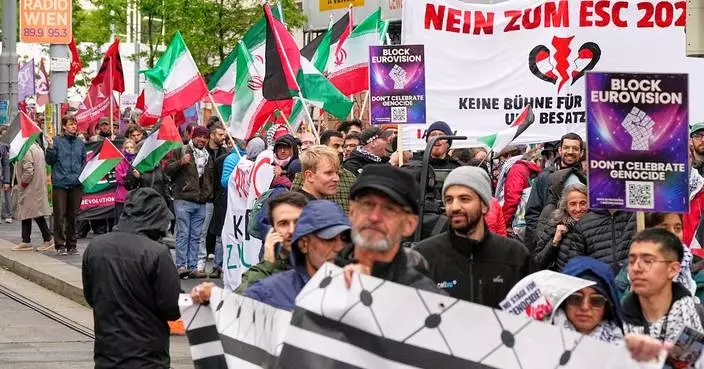
Street protests opposing Israel’s inclusion over the conduct of its war against Hamas in Gaza have been smaller in Vienna than at the 2024 contest in Malmo, Sweden and last year’s event in Basel, Switzerland.
Hundreds marched near the contest arena before Saturday's final, some holding placards saying “Block Eurovision.” Pro-Palestinian groups also staged an outdoor concert on Friday under the banner “No stage for genocide.”
“Inviting Israel on such a beautiful stage as the Eurovision Song Contest stage is an affront to all the people who believe in humanity, who believe in love and togetherness,” said Congolese-Austrian artist Patrick Bongola, one of the organizers.
The five-nation boycott is a revenue and viewership blow to an event that organizers say was watched by 166 million people around the world last year.
Still, Eurovision is eyeing expansion, with a spinoff Eurovision Song Contest Asia due to take place in Bangkok in November.
Eurovision director Martin Green urged viewers to put politics aside and enjoy the “brilliant, wonderful, heartfelt show.”
Vuletic says political controversy is nothing new. The first Eurovision boycott was in 1969 — ironically, by Austria, which refused to send a delegation to Spain under dictator Francisco Franco.
“We’ve seen very politicized editions of the contest in the recent past,” Vuletic said. “All of them were very much mired in political controversy, yet Eurovision continues."
Associated Press writers Hilary Fox and Philipp Jenne in Vienna contributed to this report.

Noam Bettan from Israel performs the song "Michelle" during the Grand Final of the 70th Eurovision Song Contest in Vienna, Austria, Saturday, May 16, 2026. (AP Photo/Martin Meissner)
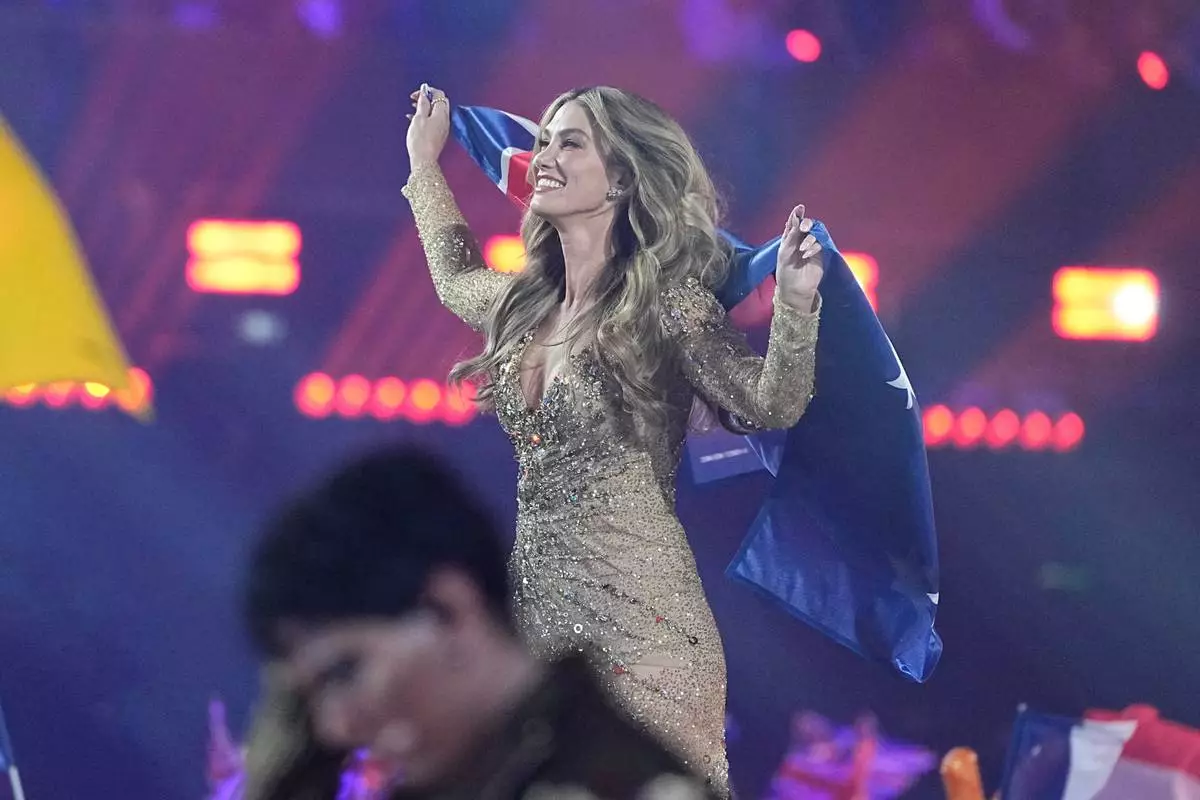
Delta Goodrem from Australia who will perform the song "Eclipse" walks onstage with her counties flag during the Grand Final of the 70th Eurovision Song Contest in Vienna, Austria, Saturday, May 16, 2026. (AP Photo/Martin Meissner)

Noam Bettan from Israel walks onto the stage carrying his countries flag ahead of the Grand Final of the 70th Eurovision Song Contest in Vienna, Austria, Saturday, May 16, 2026. (AP Photo/Martin Meissner)

Soren Torpegaard Lund from Denmark performs the song "For Vi Gar Hjem" during the Grand Final of the 70th Eurovision Song Contest in Vienna, Austria, Saturday, May 16, 2026. (AP Photo/Martin Meissner)

Demonstrators protest against Israel ahead of the Grand Final of the 70th Eurovision Song Contest in Vienna, Austria, Saturday, May 16, 2026. (AP Photo/Martin Meissner)
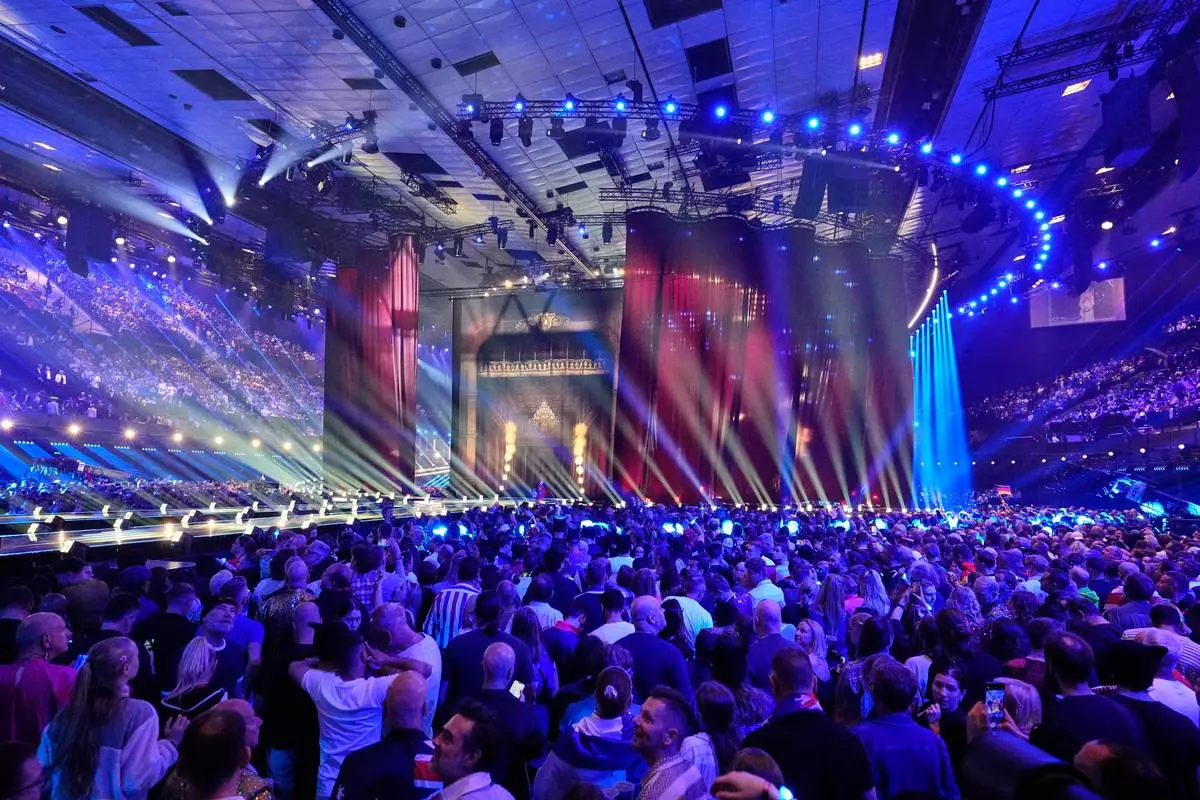
Spectators wait for the start of the Grand Final of the 70th Eurovision Song Contest in Vienna, Austria, Saturday, May 16, 2026. (AP Photo/Martin Meissner)
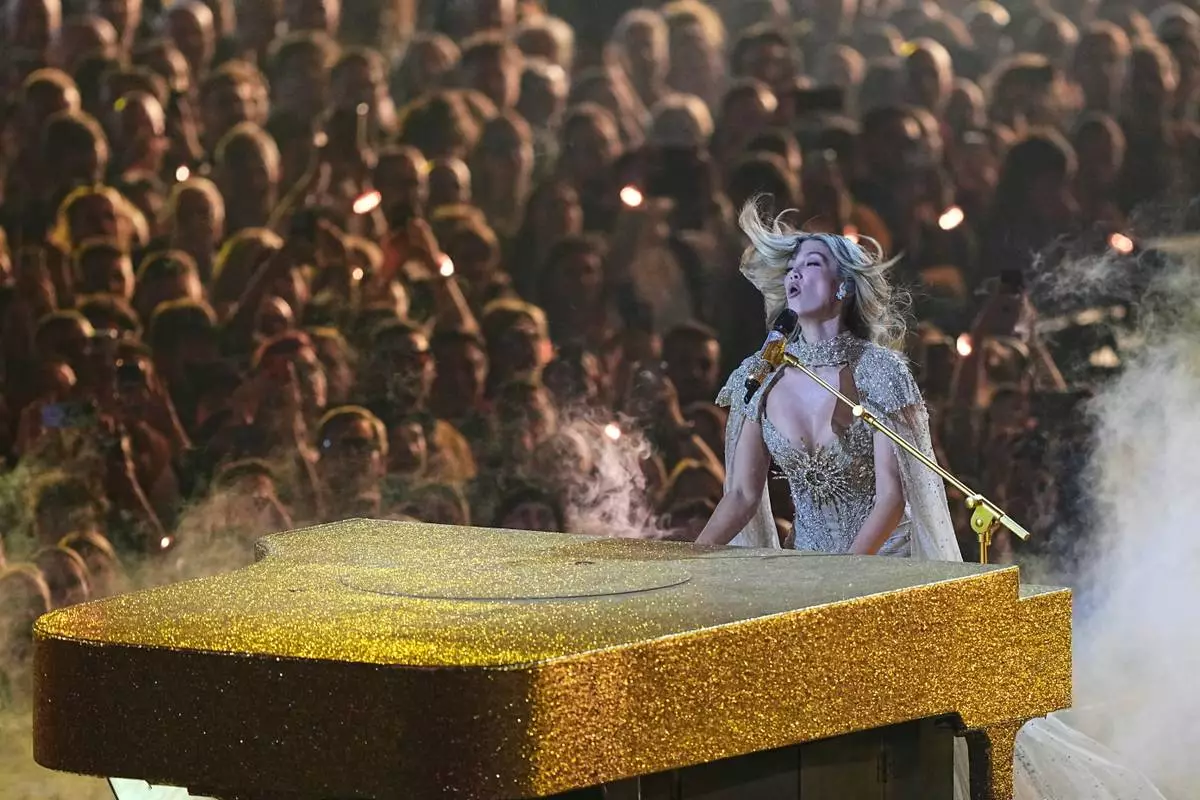
Delta Goodrem from Australia performs the song "Eclipse" during the dress rehearsal for the Grand Final of the 70th Eurovision Song Contest in Vienna, Austria, Friday, May 15, 2026. (AP Photo/Martin Meissner)
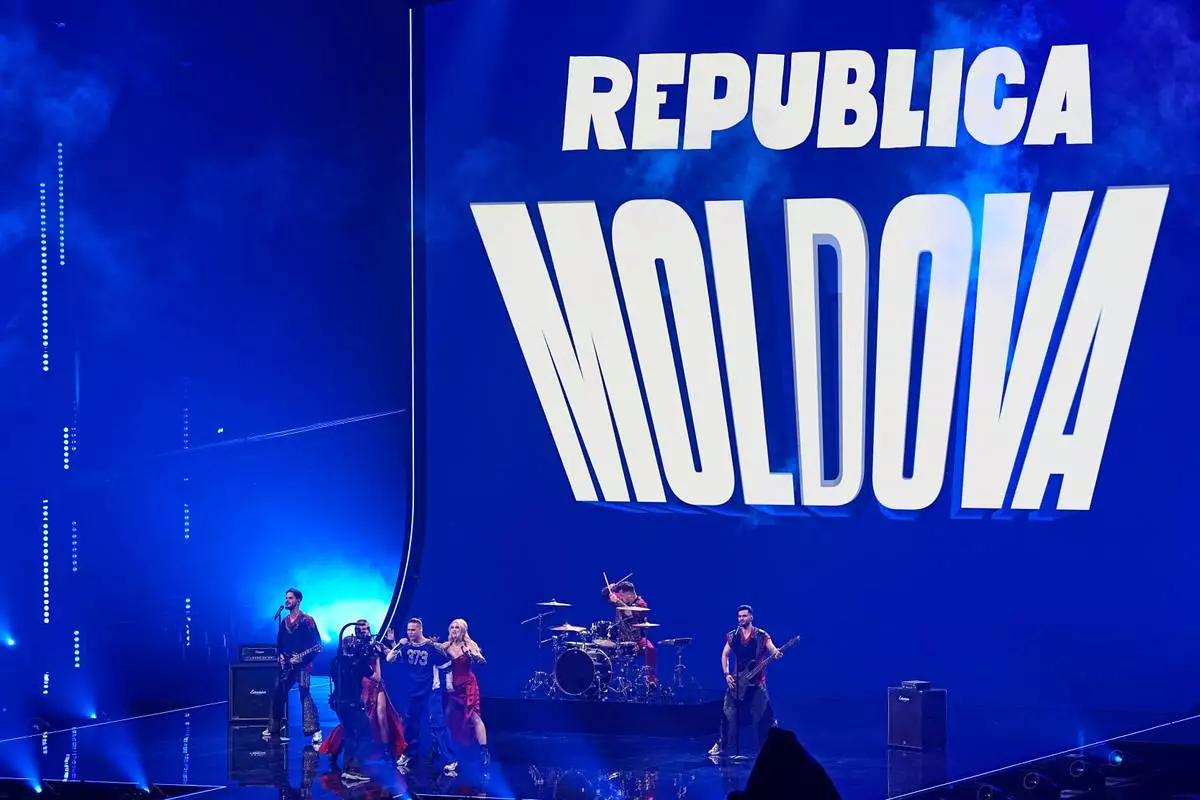
Satoshi from Moldova performs the song "Viva, Moldova!" during the dress rehearsal for the Grand Final of the 70th Eurovision Song Contest in Vienna, Austria, Friday, May 15, 2026. (AP Photo/Martin Meissner)

Akylas from Greece performs the song "Ferto" during the dress rehearsal for the Grand Final of the 70th Eurovision Song Contest in Vienna, Austria, Friday, May 15, 2026. (AP Photo/Martin Meissner)
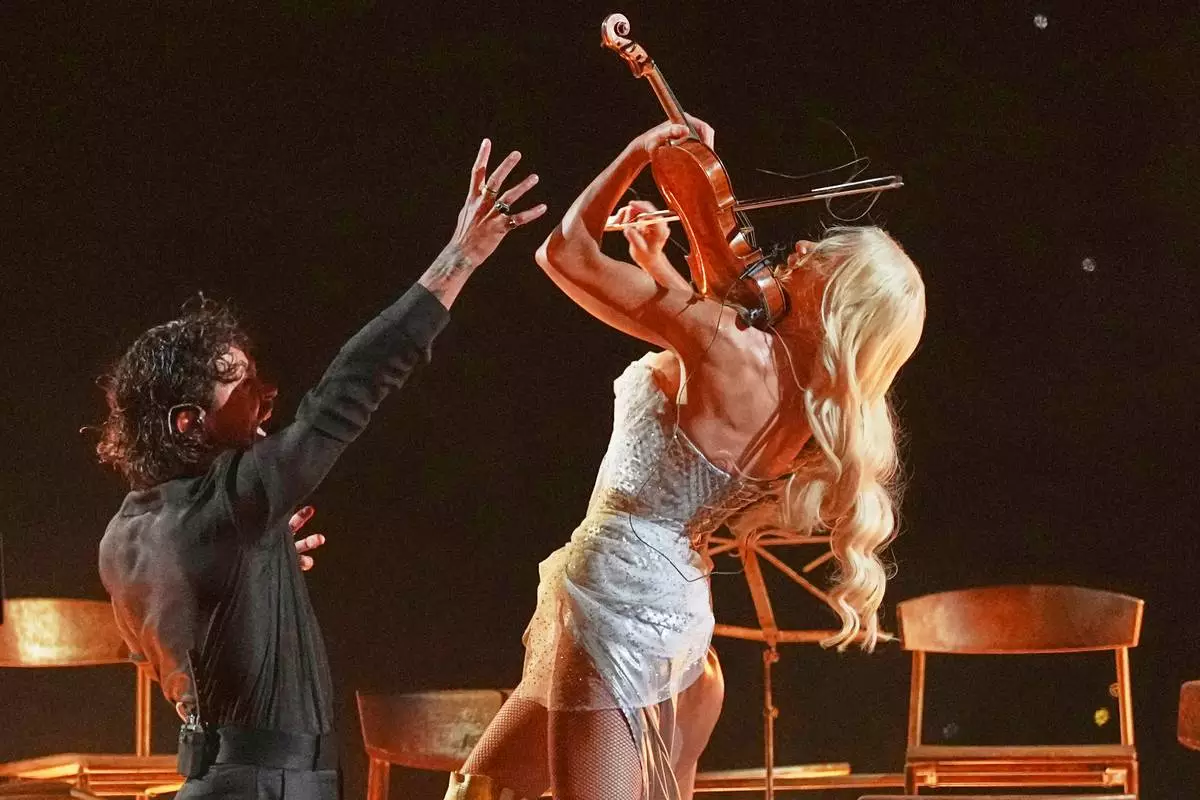
Linda Lampenius and Pete Parkkonen from Finland perform the song "Liekinheitin" during the first semifinal of the 70th Eurovision Song Contest in Vienna, Austria, Tuesday, May 12, 2026. (AP Photo/Martin Meissner)
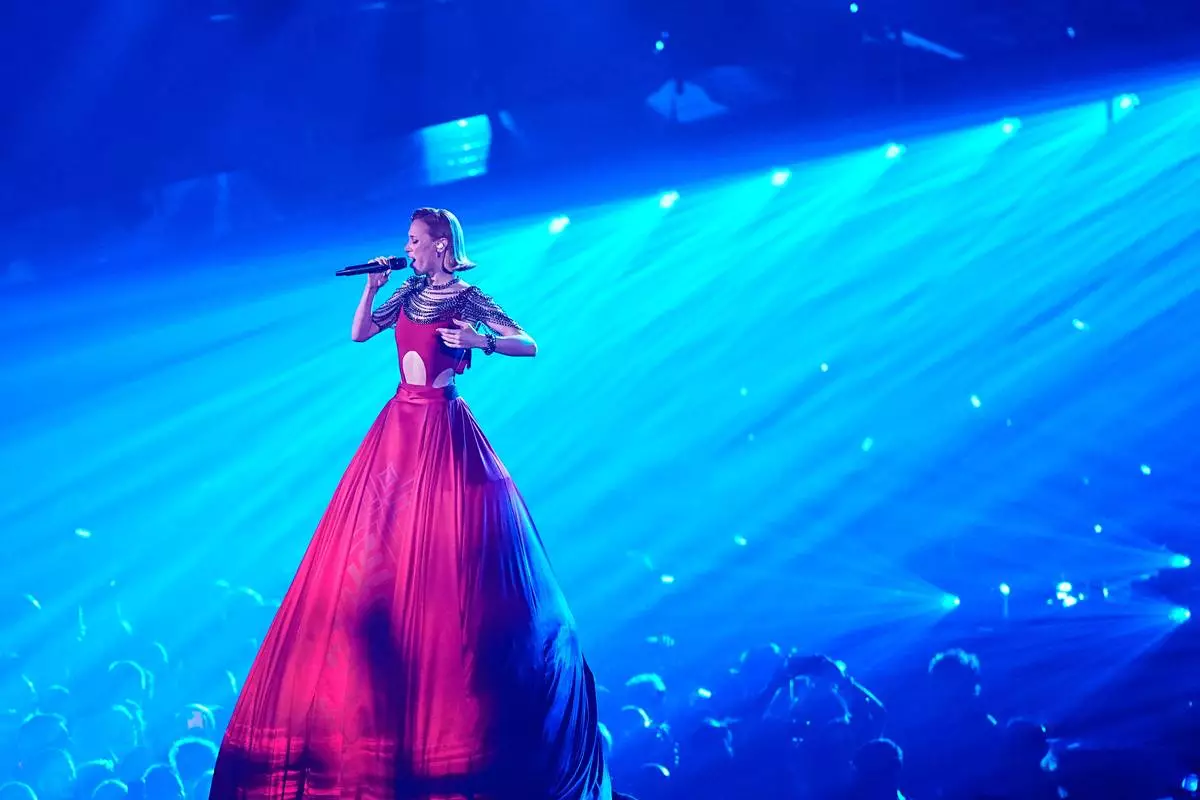
Aliona Moon sings "Viva Moldova" during her featured performance with Satoshi from Moldova during the dress rehearsal for the Grand Final of the 70th Eurovision Song Contest in Vienna, Austria, Friday, May 15, 2026. CORRECTS PERFORMERS NAME TO ALIONA MOON FROM SATOSHI. (AP Photo/Martin Meissner)