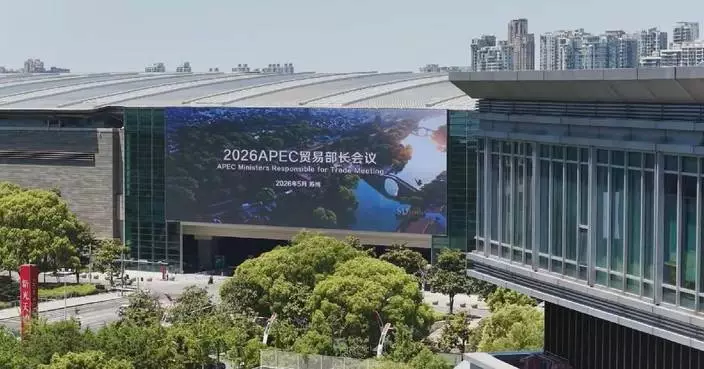
The China Pavilion at the ongoing London Craft Week 2026 presented traditional Chinese crafts infused with contemporary design and integrated with other techniques.
From goldsmithing to embroidery, craftsmen explored innovative presentations of traditional arts at the annual event which brings together the best of British and international creativity.
Hong Kong-based goldsmith Anson Lai demonstrated the art of gilding to visitors in London. Gold leaf has long been used in China in temples and on Buddha statues. Now working in collaboration with a leading gilder, he is using the gold as a decorative art form for the 3D-printed flowers he designed.
"I think it's a really transformative journey for me because I learned and I know about the history and the culture of the gilding in Hong Kong. So we collaborate and we did it together," said Lai.
Running from May 11 to 17, London Craft Week is an annual city-wide festival celebrating exceptional craftsmanship across a wide range of disciplines from around the world.
China is a regular contributor and this year's theme, curated by Hong Kong-based charity Crafts on Peel, is about reimagining ancestral Chinese crafts. Scholarships are provided to up and coming designers to collaborate with some of China's most skilled conventional craftsmen.
"We believe it is so important in the modern days to keep these traditional artistry alive. So by simply preserving it, it may not work this way. So we believe by reinterpreting and also perpetuating through exchange of techniques, that will be one of the best way to keep it alive," said Penelope Luk, creative director of Crafts on Peel.
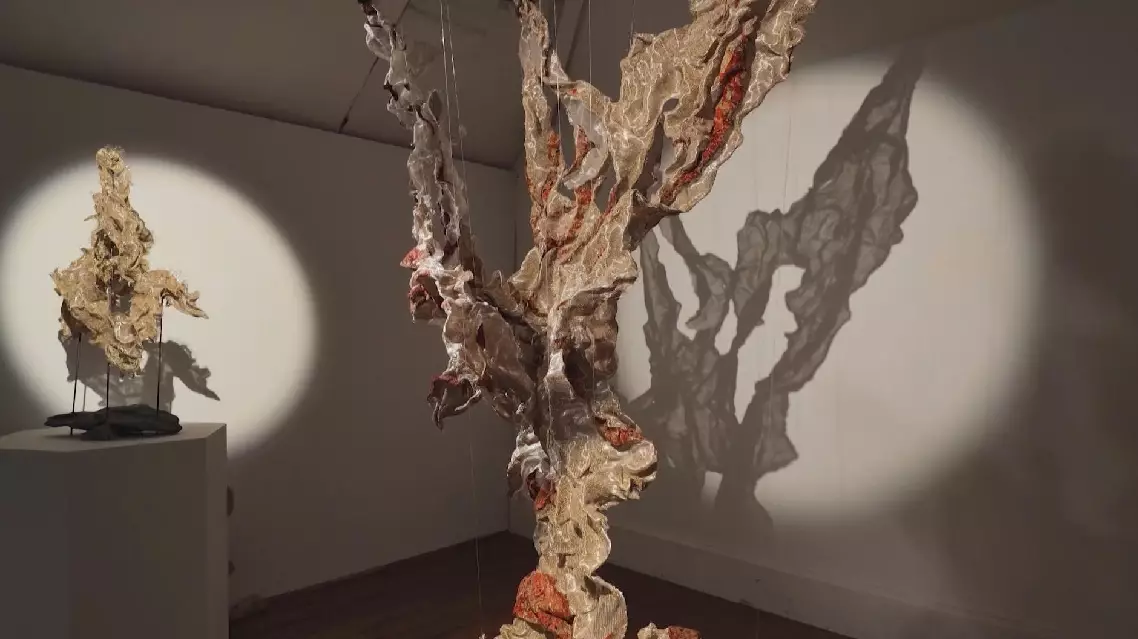
The exhibition also collaborated with modern artists to turn Guangzhou embroidery, which was popular in England 600 years ago, into sculptures. For instance, the work of a master embroiderer has been integrated into a large scale woven installation, giving depth and texture.
"So important and crucial to keep traditional work alive, because most of the time in Chinese culture, a lot of the traditional work has been seen as souvenirs' trade," said Elaine Yan Ling Ng, a contemporary textile designer.
The organizers hope that such collaborations will help keep heritage crafts alive for generations to come.
"In a world where we're ever increasingly digital, this is an interesting blend between the digital arts, because precision is required in order to be able to get to a finished shape, and taking the traditional skill sets, which are sort of disappearing, really, in this age of sort of mass automation," said a visitor.
"The idea of taking traditional craft and mixing modern materials, or maybe even techniques with it - I like that idea. I think that's great. So very original," said another.
Traditional Chinese crafts shine in London Craft Week
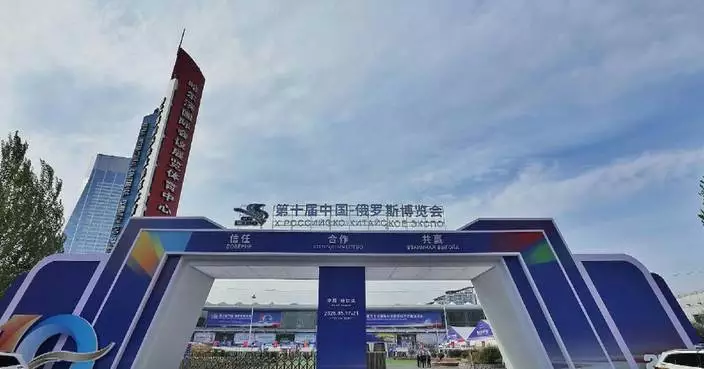
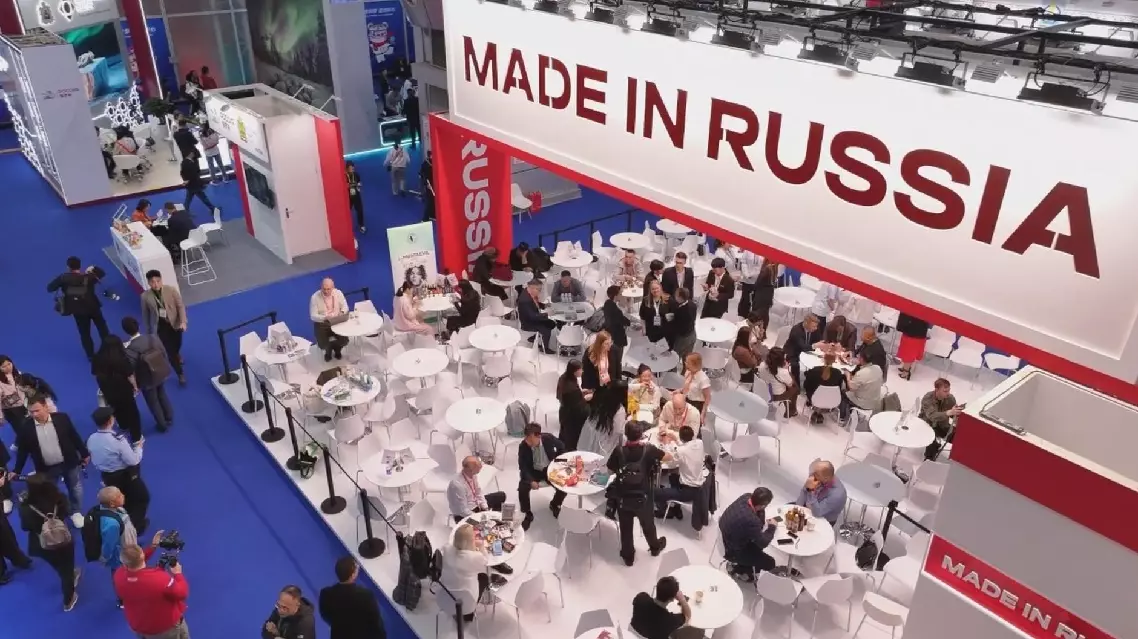
The 10th China-Russia Expo opened on Sunday in Harbin, the provincial capital of Heilongjiang in northeast China, highlighting the resilience, vitality and mutual benefits of China-Russia economic ties.
Held from May 17 to 21, this year's expo covers a floor space of 55,000 square meters, with more than 1,500 companies from 46 countries and regions taking part. Nearly 300 Russian companies are attending, while over 5,000 buyers are expected.
Since 2014, the event has attracted more than 7,200 Chinese and Russian companies and over a million visitors.
The China-Russia Expo is the largest comprehensive exhibition platform between the two countries.
President Xi Jinping and Russian President Vladimir Putin each sent congratulatory letters to the event, encouraging all sectors from both countries to seize the opportunity, make full use of their geographical proximity and economic complementarity, and further expand all-round practical cooperation.
"Leaders of the two countries have signed agreements to deepen practical cooperation, which we fully support. Russia and China stand side by side for common development, benefiting young people and all people. Such cooperation is timely and far-reaching. We are here in Harbin for the China-Russia Expo, coming from Russia's Sakha Republic. Our region is dominated by agriculture. We are seeking advanced farming technologies including irrigation equipment and harvesters. We hope to reach deals in the coming days to boost local development," said Vasiliy Petrovich Alexeev, head of Ust-Aidan Region of the Russian Federation.
"We are greatly inspired by the congratulatory letters from the heads of state of China and Russia. We will keep building targeted and efficient cooperation platforms, and smooth channels for sub-national exchanges between China and Russia," said Chen Shijun, president of Heilongjiang Council for the Promotion of International Trade.
China-Russia trade volume has surpassed 200 billion U.S. dollars for three consecutive years. China has been Russia's largest trading partner for 16 years running.
In the first quarter of this year, bilateral trade volume hit 60 billion U.S. dollars, a year-on-year increase of more than 14 percent.
This year's Expo features eight major exhibition zones. Beyond the exhibition halls, Russian delegations have also conducted field visits to Chinese companies. A delegation from the Republic of Buryatia visited one of northeast China's largest building materials distribution centers to explore potential areas of cooperation.
"Regular China-Russia economic and trade events continuously bring fresh cooperation opportunities for both sides. This field trip to Xilong Building Materials Market has helped us explore more practical directions and modes for bilateral cooperation," said Alexei Tsydenov, head of the Republic of Buryatia of the Russian Federation.
"Relying on Buryatia's abundant mineral resources and sound logistics conditions, we plan to build industrial parks focusing on home building materials, mineral resources and energy sectors in Russia. We will introduce advanced Chinese technologies and management models to drive coordinated industrial upgrading between the two countries," said Wu Jinrong, vice president of Harbin Xilong International Trade and Logistics Park.
From everyday consumer goods to advanced helicopters, and from mineral resources to intelligent robotics, China-Russia cooperation now spans a wide range of sectors. Economic ties and people-to-people exchanges between the two countries continue to advance toward higher-quality development and broader prospects.
China-Russia Expo promotes trust, cooperation, mutual benefit