BUFFALO, N.Y. (AP) — Buffalo Sabres coach Lindy Ruff’s bid to relinquish home-ice advantage has fallen on deaf ears. Montreal Canadiens coach Martin St. Louis, meantime, was busy citing physics in looking forward.
Odd as it might sound, the comments were befitting of a logic-defying, momentum-elusive NHL second-round playoff series that comes down to Game 7 on Monday night at Buffalo (7:30 p.m. EDT, ESPN) — as much as Ruff would’ve welcomed a change of venue.
Click to Gallery

Buffalo Sabres head coach Lindy Ruff, top right, gives instructions from the bench during the third period of Game 6 in a second-round NHL hockey Stanley Cup playoff series against the Montreal Canadiens in Montreal, Saturday, May 16, 2026. (Christinne Muschi/The Canadian Press via AP)

Montreal Canadiens' Ivan Demidov (93), Nick Suzuki (14) and head coach Martin St. Louis, right, watch the final minutes of play against the Buffalo Sabres in Game 6 of a second-round NHL hockey Stanley Cup playoff series in Montreal, Saturday, May 16, 2026. (Christinne Muschi/The Canadian Press via AP)

Montreal Canadiens' Mike Matheson (8) and Alexandre Carrier (45) rough it up with Buffalo Sabres' Tage Thompson (72) and Zach Benson, top, during the third period of Game 6 in a second-round NHL hockey Stanley Cup playoff series in Montreal, Saturday, May 16, 2026. (Christinne Muschi/The Canadian Press via AP)

Buffalo Sabres' Rasmus Dahlin (26) celebrates his goal over Montreal Canadiens during first period second round, Game 6, NHL playoff action in Montreal on Saturday, May 16, 2026. (Christinne Muschi/The Canadian Press via AP)
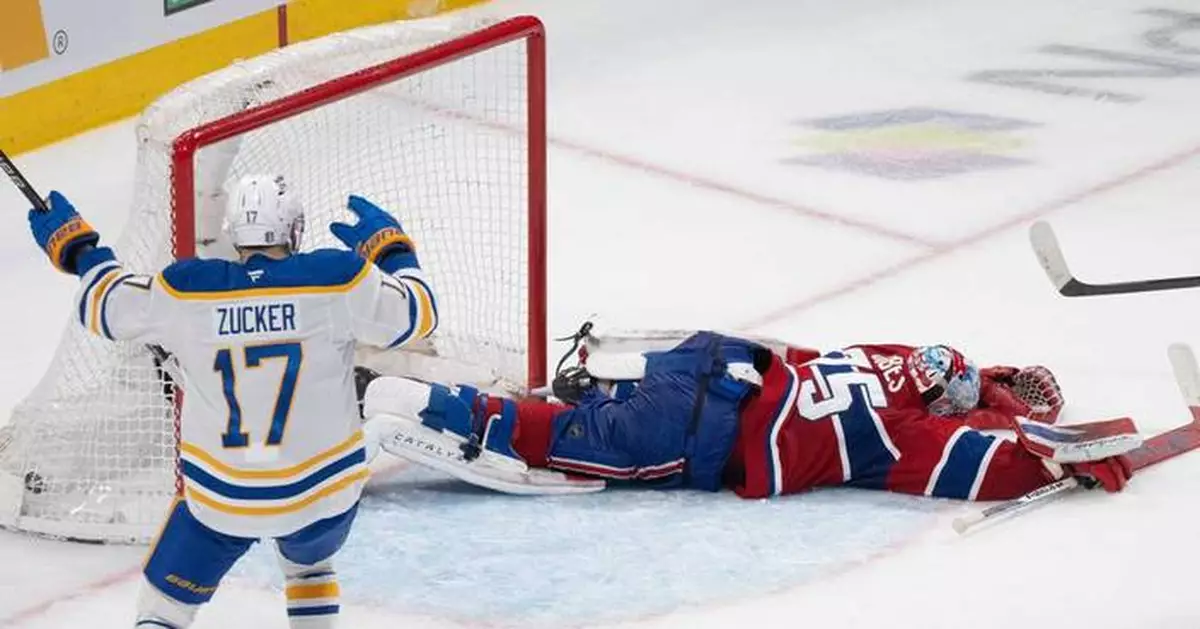
Buffalo Sabres' Jason Zucker (17) celebrates a goal by teammate Konsta Helenius in front of Montreal Canadiens goaltender Jakub Dobes (75) during the second period in Game 6 in a second-round NHL hockey Stanley Cup playoff series in Montreal, Saturday, May 16, 2026. (Christinne Muschi/The Canadian Press via AP)
“It didn’t get switched,” Ruff said on Sunday with a chuckle, referring to Buffalo’s 2-4 home record this postseason. “But we’re looking forward to giving our fans our best game.”
As for Montreal, St. Louis turned to science in explaining why he prefers having the Canadiens “bounce forward” as opposed to bounce back following an 8-3 loss in Game 6 at home on Saturday night.
“I just feel bounce back, you come back to where you were,” St. Louis said. “Bounce forward, you’re actually further than where you were. Physics.”
Einstein aside, someone’s going to advance, with the well-rested Carolina Hurricanes awaiting who they’ll host in opening the Eastern Conference finals on Thursday night. Carolina swept both its series, and has been off since a 3-2 overtime win over Philadelphia on May 9.
It’s anyone’s guess who they’ll face based on a series that has so far favored the road team, involved 20 of the 45 goals scored in the first period, featured a carousel of in-game goalie shuffles, and rewarded Buffalo for not practicing after not skating in the days leading to Game 6.
Saturday's outcome, perhaps, best captured the topsy-turvy essence with Montreal jumping to a 3-1 lead by the 10:14 mark of the first period, before giving up seven straight goals. The opposite happened in Game 5, in which the Sabres led 3-2 by the 10:15 mark of the first period, before losing 6-3 in Buffalo.
Ruff is so focused on making Game 7 feel like a road outing, he’s considered the Sabres spend Sunday night in a Buffalo hotel.
“I don’t know the answer. I can try to make one up,” Ruff said of his team’s 5-1 road record.
The Canadiens are drawing upon replicating their first-round series win over the Lightning. After a 1-0 loss at home in Game 6, the Canadiens followed with a 2-1 series-clinching win at Tampa Bay.
“It’s disappointing to have this effort on home ice. We can’t let that be our last game,” captain Nick Suzuki said of dropping to 2-4 at Montreal. “We’ve been in this situation already, so we have experience, and we just got to win one game.”
Montreal and Buffalo are the two youngest teams by average age still in contention, and both relative recent playoff newcomers. The Sabres are in the postseason for the first time in 15 years, while the Canadiens are making their fourth appearance in nine years.
Montreal has the Game 7 experience edge by virtue of beating Tampa Bay. Buffalo’s lineup features just eight players who have appeared in a Game 7.
They include forward Alex Tuch, who previously went 2-1 in seventh games during his four-year tenure with Vegas. The loss stands out most, given how the Golden Knights allowed four third-period power-play goals in an 5-4 overtime loss to San Jose in a 2019 first-round series.
“I’m going to try to give some of my wisdom, but at the same time, I don’t want to talk too much about my past experiences or what could go right or what can go wrong,” Tuch said.
“I’ve said it a hundred times, you got to go out there and just play hockey,” he added. “I think we’re the better team. I think we’re going to come out and compete hard, and that’s all we can control.”
Overall, the Sabres are 1-6 in Game 7, with their only series victory coming in a 1997 first-round matchup over Ottawa. Montreal is 16-9, tied for the NHL lead with Boston in Game 7 wins.
Goaltending is a question, with Ukko-Pekka Luukkonen expected to start after being pulled in Game 5. On Saturday, he stopped all 18 shots in taking over after Alex Lyon allowed three goals on four shots.
Jakub Dobes is Montreal’s expected starter. The rookie was yanked after allowing six goals on 33 shots in Game 6.
“Every loss is hard to sleep on, but in playoffs, it’s really after midnight you move on,” Canadiens veteran forward Phillip Danault said. “I know we’re young, but there’s no excuses. We know how we can play and we know how good we can be.”
The Canadian Press contributed to this report.
AP NHL: https://apnews.com/hub/stanley-cup and https://apnews.com/hub/nhl
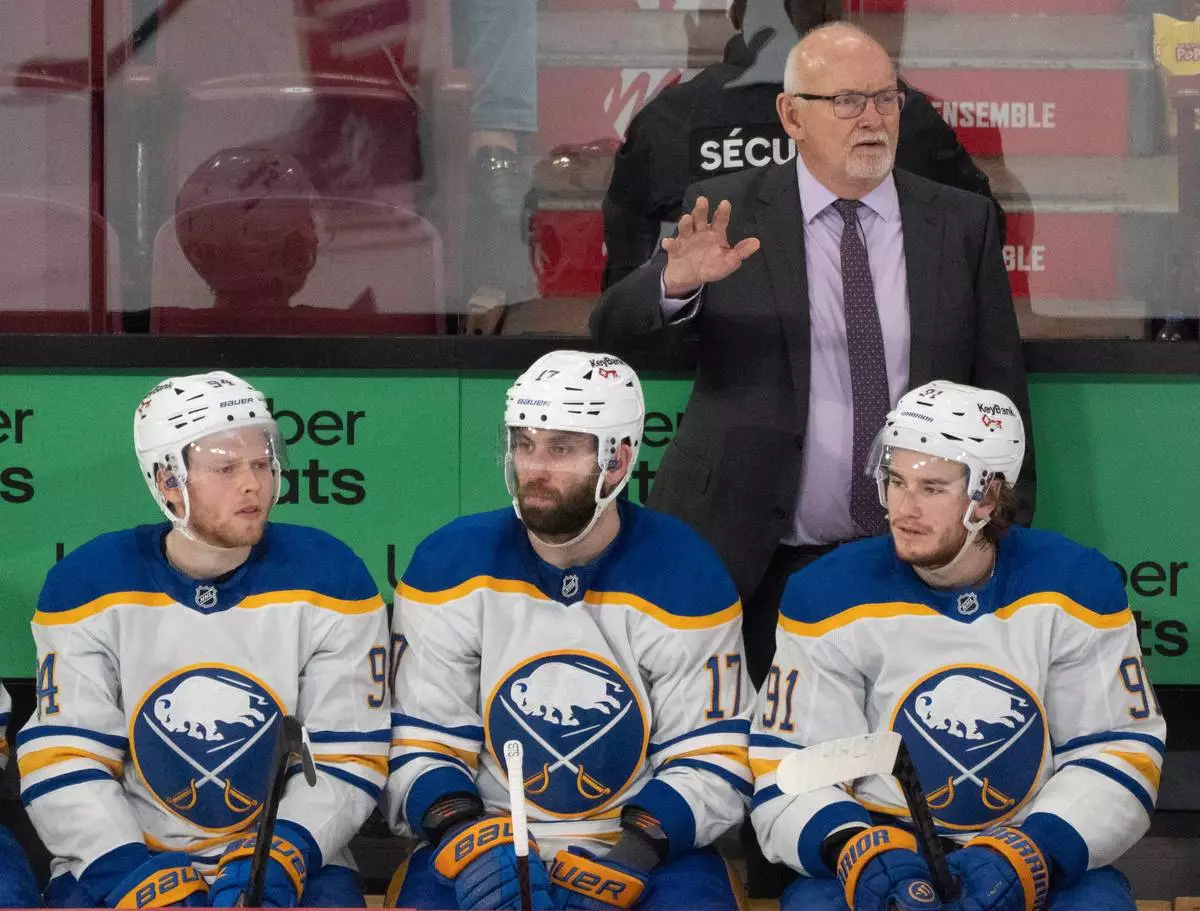
Buffalo Sabres head coach Lindy Ruff, top right, gives instructions from the bench during the third period of Game 6 in a second-round NHL hockey Stanley Cup playoff series against the Montreal Canadiens in Montreal, Saturday, May 16, 2026. (Christinne Muschi/The Canadian Press via AP)
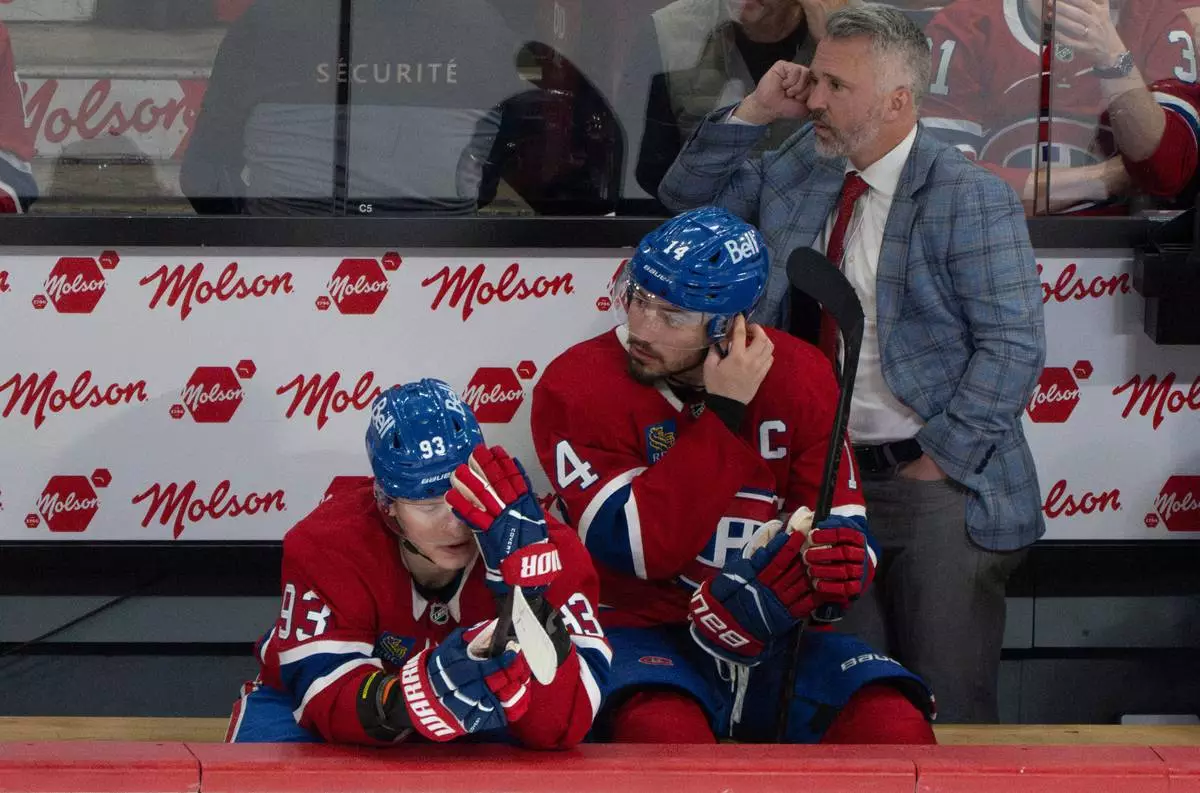
Montreal Canadiens' Ivan Demidov (93), Nick Suzuki (14) and head coach Martin St. Louis, right, watch the final minutes of play against the Buffalo Sabres in Game 6 of a second-round NHL hockey Stanley Cup playoff series in Montreal, Saturday, May 16, 2026. (Christinne Muschi/The Canadian Press via AP)

Montreal Canadiens' Mike Matheson (8) and Alexandre Carrier (45) rough it up with Buffalo Sabres' Tage Thompson (72) and Zach Benson, top, during the third period of Game 6 in a second-round NHL hockey Stanley Cup playoff series in Montreal, Saturday, May 16, 2026. (Christinne Muschi/The Canadian Press via AP)
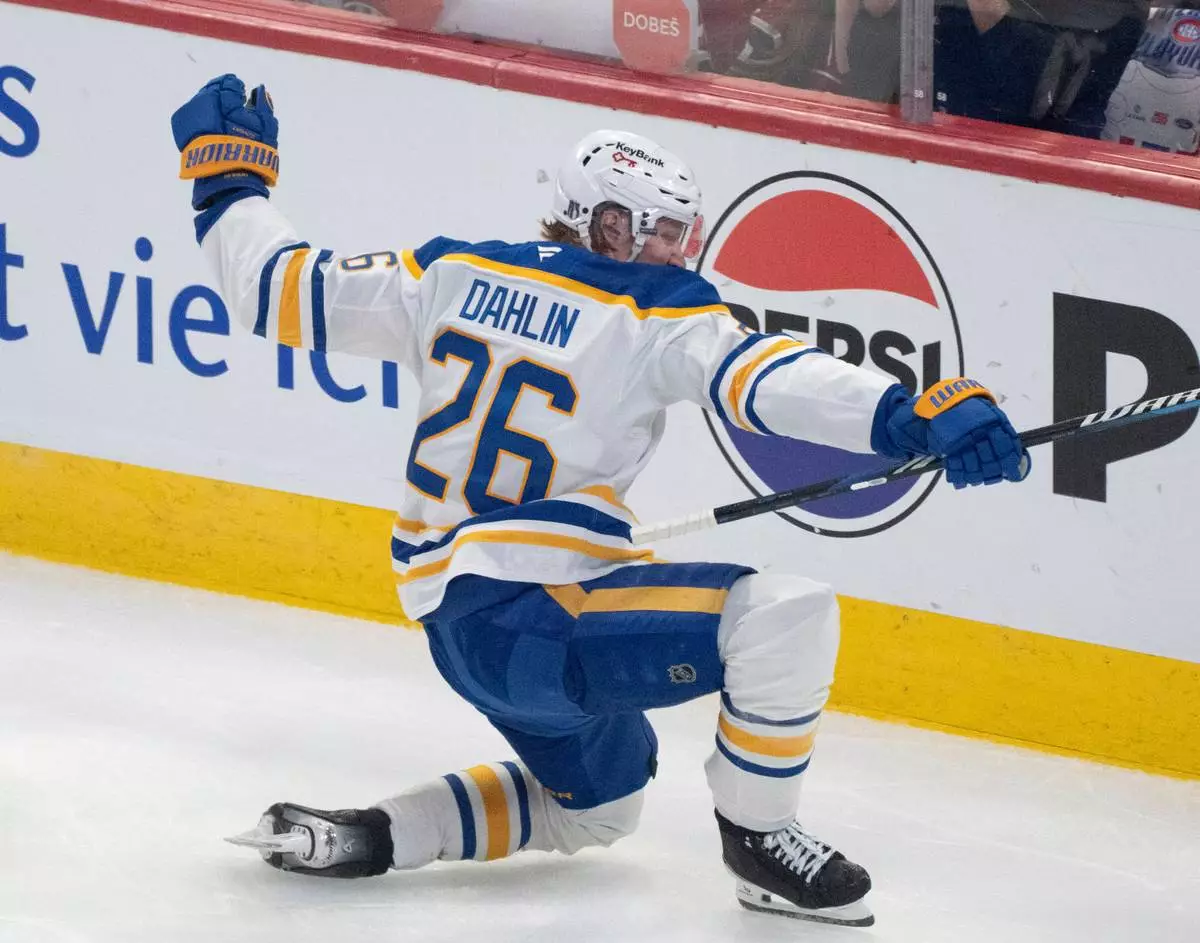
Buffalo Sabres' Rasmus Dahlin (26) celebrates his goal over Montreal Canadiens during first period second round, Game 6, NHL playoff action in Montreal on Saturday, May 16, 2026. (Christinne Muschi/The Canadian Press via AP)
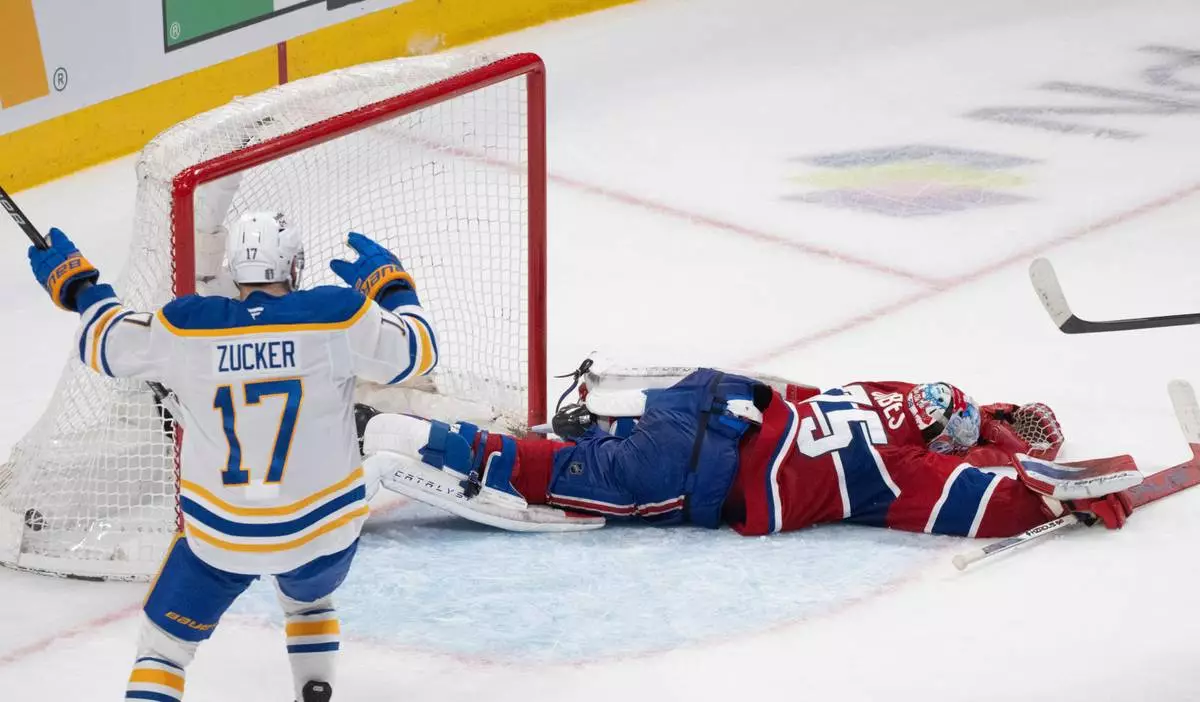
Buffalo Sabres' Jason Zucker (17) celebrates a goal by teammate Konsta Helenius in front of Montreal Canadiens goaltender Jakub Dobes (75) during the second period in Game 6 in a second-round NHL hockey Stanley Cup playoff series in Montreal, Saturday, May 16, 2026. (Christinne Muschi/The Canadian Press via AP)