China has achieved a breakthrough in high-performance fuel technology with the official launch of its first domestically produced 103-octane racing-grade gasoline, marking a significant leap in the nation's fuel refining capabilities.
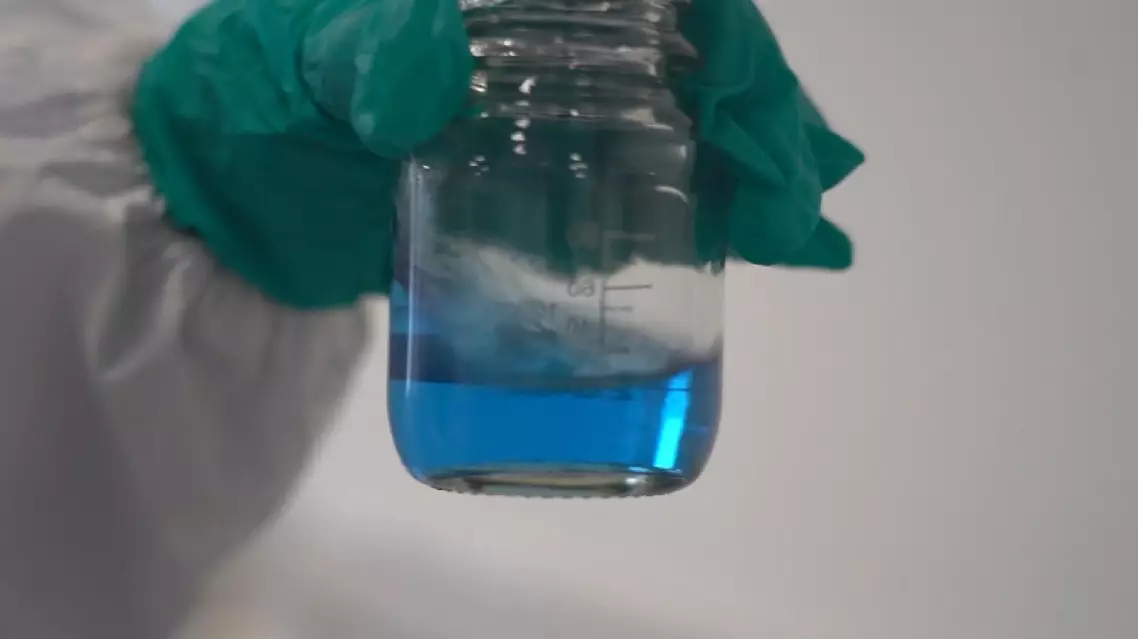
The journey from crude oil to this competition-grade fuel involves a complex refining process of distillation, deep processing, and blending. The research and development team began by selecting premium crude oil fractions and applying advanced deep hydrofining technology to maximize the removal of sulfur, nitrogen, and aromatic impurities - laying the foundation for ultra-high-quality fuel.
"Combustion response is another key indicator for racing fuel. For this product, the 90 percent distillation temperature is controlled within 110 degrees Celsius, which is approximately 50 degrees Celsius lower than conventional 98-octane gasoline. This allows the fuel to evaporate faster and burn more completely, enhancing the racing engine's power response," said Li Zhongdan, deputy director of the New Materials Research Institute, Sinopec Ningbo Zhenhai Refining and Chemical Co., Ltd.
On the production side, the research and development team conducted thousands of iterative tests to optimize performance under extreme high-temperature and high-load conditions.
Leveraging China's self-developed continuous reforming, isomerization, and alkylation technologies, the team precisely regulated the molecular composition of the gasoline to construct an ideal hydrocarbon structure. This breakthrough achieved a substantial increase in octane rating without adding any metallic anti-knock agents - a significant technical accomplishment.
The development of 103-octane racing fuel caps more than two decades of rapid advancement in China's fuel quality standards.
The country progressed from leaded gasoline elimination and the China I emission standard in 2000 through to the full implementation of China VI-b standards in 2023 - a journey that took developed nations in Europe and North America more than half a century.
Each standard upgrade delivered dramatic pollution reductions. Compared with China I, China VI-b gasoline has reduced sulfur content by 97 percent (from 1,000 ppm to 30 ppm), olefin content by 75 percent (from 35 percent to below 18 percent), and aromatic hydrocarbons content by 40 percent (from 40 percent to below 35 percent).
These improvements have significantly cut particulate matter and nitrogen oxide emissions from vehicle exhaust, contributing to markedly improved air quality.
Launch of 103 octanes marks significant leap in China's fuel refining capabilities