WASHINGTON (AP) — Voting concludes in the swing state of Georgia on Tuesday in competitive primaries for governor and a U.S. Senate seat that could decide control of the closely divided chamber.
The nomination contests will set the stage for two of November’s marquee races that could have long-lasting political implications far beyond the state’s borders.
Georgia voters will also pick nominees for U.S. House, the state Legislature and a long list of statewide offices, such as lieutenant governor, secretary of state, and state attorney general. Also on the ballot are nonpartisan judicial races, including two competitive contests for state Supreme Court.
Eight Republicans are vying for the nomination to succeed term-limited GOP Gov. Brian Kemp, including state Attorney General Chris Carr, health care executive Rick Jackson, Lt. Gov. Burt Jones and Georgia Secretary of State Brad Raffensperger.
Jones has President Donald Trump’s endorsement, but Jackson is testing the value of the president’s backing by pouring more than $83 million into the race from his personal fortune.
The Democratic field includes former Atlanta Mayor Keisha Lance Bottoms, former Republican Lt. Gov. Geoff Duncan, former state Sen. Jason Esteves, state Rep. Derrick Jackson, and former state labor commissioner and former DeKalb County CEO Mike Thurmond.
If no candidate receives a majority of the primary vote, the top two vote-getters will advance to a June 16 runoff.
Whoever succeeds Kemp will be in office in 2028 and could emerge as a key figure in the next presidential election if Georgia remains as competitive as it was in 2020 and 2024. Trump blamed Kemp for refusing to help overturn his 2020 loss in Georgia to Democrat Joe Biden, but the two reached a détente in 2024 ahead of Trump’s reelection victory.
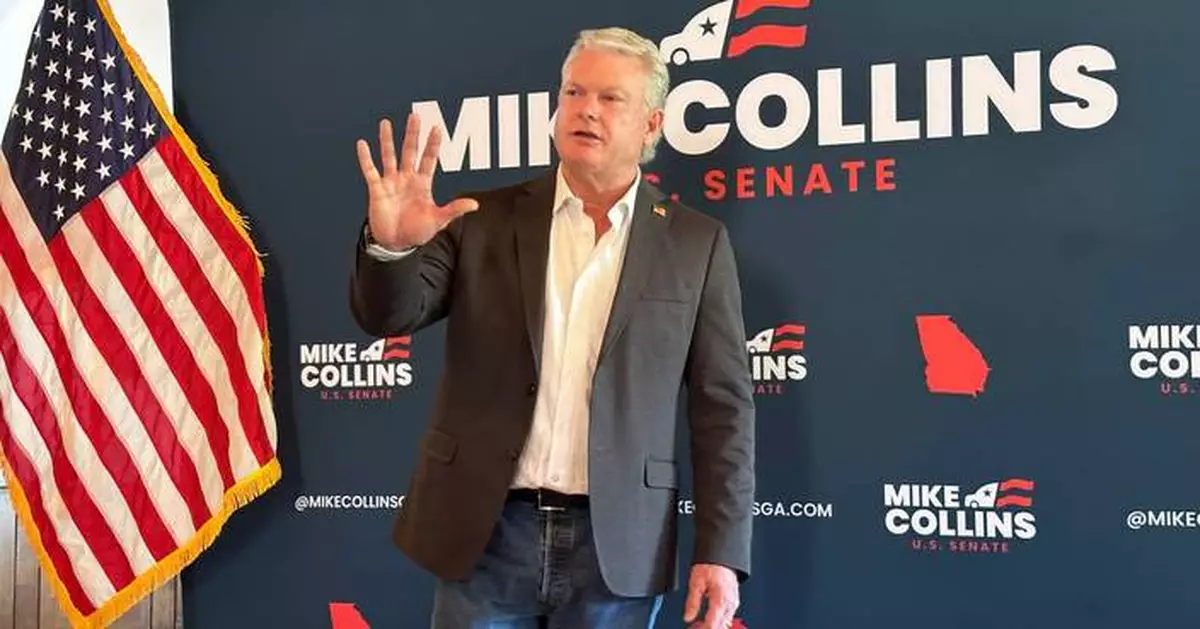
In the U.S. Senate race, five Republicans are running to take on first-term Democratic U.S. Sen. Jon Ossoff, who is unopposed for renomination. The field includes U.S. Reps. Buddy Carter and Mike Collins, as well as former University of Tennessee football coach Derek Dooley, who has Kemp's endorsement.
Carter has outraised and outspent the rest of the GOP field, but he, Collins and Dooley began the month on roughly equal financial footing with campaign war chests of about $1.7 million each.
An Ossoff reelection victory in November is critical to Democratic hopes of retaking the chamber.
The Atlanta-area counties of Fulton, Gwinnett, Cobb and DeKalb are the most populous in the state and play important roles in both Democratic and Republican statewide primaries. Fulton and DeKalb tend to be more influential in Democratic primaries, while Cobb and Gwinnett tend to contribute a larger share of the total vote in Republican contests. Cherokee and Forsyth counties are also in the greater Atlanta metro area and tend to be bigger players in Republican primaries than in Democratic ones. The two counties went heavily for Trump in all three of his presidential campaigns.
Here are some of the key facts about the election and data points the AP Decision Team will monitor as the votes are tallied:
Polls close at 7 p.m. ET.
The AP will provide vote results and declare winners in contested primaries for U.S. Senate, U.S. House, governor, lieutenant governor, secretary of state, attorney general, agriculture commissioner, insurance commissioner, state school superintendent, labor commissioner, Public Service Commission, state Senate and state House, as well as nonpartisan elections for state Supreme Court and Court of Appeals.
Any registered voter may participate in either primary. Voters in Georgia do not register by party.
As of Thursday, there were about 8.1 million registered voters in Georgia.
In 2022, roughly 1.2 million votes were cast in the Republican primaries for governor and U.S. Senate, while about 730,000 votes were cast in the Democratic primaries.
About 51% of the 2022 Democratic primary vote and about 41% of the Republican primary vote was cast before primary day.
As of Thursday, about 696,000 ballots had already been cast in Tuesday’s election, including about 381,000 in the Democratic primary and about 305,000 in the Republican primary.
Counties release results from mail and early in-person at the start of the night. More than half the counties tend to release all or almost all their mail and early in-person results in the first vote update.
In the 2022 primary, the AP first reported results at 7:13 p.m. ET, or 13 minutes after polls closed. The last vote update of the night was at 3:29 a.m. ET with about 99% of total votes counted.
The Associated Press does not make projections and will declare a winner only when it’s determined there is no scenario that would allow a trailing candidate to close the gap. If a race has not been called, the AP will continue to cover any newsworthy developments, such as candidate concessions or declarations of victory. In doing so, the AP will make clear that it has not yet declared a winner and explain why.
There is no automatic recount provision in Georgia, but a losing candidate may request a recount if the margin is less than or equal to 0.5% of the total vote. The AP may declare a winner in a race that is subject to a recount if it can determine the lead is too large for a recount or legal challenge to change the outcome.
As of Tuesday, there will be 28 days until the June 16 primary runoff and 168 days until the 2026 midterm elections.
Follow the AP’s coverage of the 2026 election at https://apnews.com/projects/elections-2026/.

Democratic candidate for governor, Keisha Lance Bottoms, walks to vote early with her son, Langston Bottoms, in the Georgia Primary Election, Thursday, May 7, 2026, in Atlanta. (AP Photo/Brynn Anderson)

Republican gubernatorial candidate Rick Jackson speaks to voters during a campaign stop, Wednesday, May 13, 2026, in Hiram, Ga. (AP Photo/Mike Stewart)
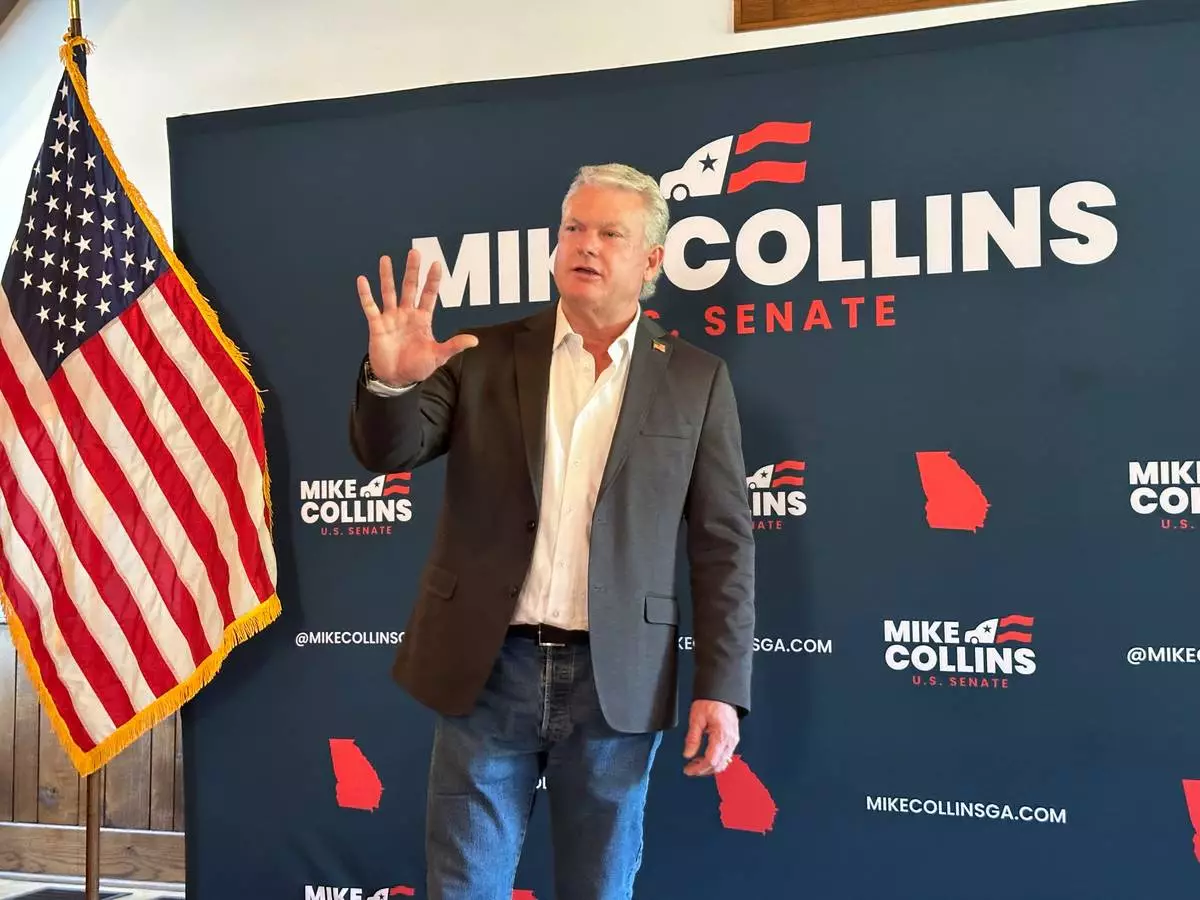
U.S. Rep. Mike Collins, R-Ga., speaks to supporters in Acworth, Ga., on Monday, May 4, 2026. (AP Photo/Jeff Amy)
ANKARA, Turkey (AP) — The Israeli military intercepted Monday boats off the coast of Cyprus, part of the latest wave of flotilla activists attempting to break Israel's naval blockade of Gaza.
More than 50 vessels departed from the port in Marmaris, Turkey, last week in what the organizers of the Global Sumud Flotilla described as the final leg of their planned journey to Gaza’s shores.
The organization’s livestream on Monday showed activists aboard several vessels putting on life jackets and raising their hands before a boat carrying Israeli troops approached. Wearing tactical gear, they boarded the ship, and the livestream abruptly ended. Many of the ships are currently off the coast of Cyprus.
Other footage showed Israeli forces on speedboats approaching and instructing the activists to move to the front of the boat. At least 17 boats were intercepted in the first three hours of the operation, according to Global Sumud Flotilla's tracker.
Organizers said the boats were intercepted 250 nautical miles from the shores of Gaza. Unlike previous interceptions, which mostly took place under the cover of night, the Israeli military boarded the boats in broad daylight.
Israel has maintained a blockade over Gaza since Hamas took control of the territory in 2007, a year after winning Palestinian parliamentary elections. The blockade restricts the movement of goods and people in and out of Gaza. Egypt has also occasionally closed the Rafah crossing, which, before the current war, was the only border crossing not under Israel’s control.
Critics consider it collective punishment.
The flotilla organizers said they expect the activists to be taken to the port of Ashdod, in southern Israel. Activists on previous flotillas were brought to the same port, where some were processed and immediately deported, while others requested a trial and were detained.
An hour prior to the interception, Israel’s Foreign Ministry called on activists to “change course and turn back immediately.”
“Once again, a provocation for the sake of provocation: another so-called “humanitarian aid flotilla” with no humanitarian aid,” the Foreign Ministry posted on X.
The Israeli military declined to comment on the ongoing operation.
Prime Minister Benjamin Netanyahu, watching the operation from the military headquarters in Tel Aviv, commended the soldiers for “thwarting a malicious plan designed to break the isolation we are imposing on Hamas terrorists in Gaza.”
Netanyahu was supposed to be in court on Monday to testify in his ongoing corruption trial, but requested a cancellation due to all-day security meetings.
Hamas has condemned Israel’s attack on the flotilla as a “full-fledged crime of piracy.” The militant group called on the international community to pressure Israel to end its blockade of Gaza.
Turkey echoed Hamas' piracy accusation and called on Israel to immediately halt the operation and release the flotilla participants.
“Israel’s attacks and intimidation policies will in no way prevent the international community’s pursuit of justice or its solidarity with the Palestinian people,” the Turkish Foreign Ministry said in a statement. Turkey was working to secure the safe return of its own citizens taking part in the flotilla, the ministry added.
On April 30, Israeli forces intercepted more than 20 boats from a flotilla near the southern Greek island of Crete, initially holding about 175 activists. Israeli officials said they had to act early because of the high number of boats involved.
Israel took two of the activists — a Spanish-Swedish citizen of Palestinian origin, Saif Abukeshek, and Brazilian citizen Thiago Ávila — back to Israel, where they were interrogated and detained for several days. The activists accused Israeli forces of torture, which Israel denied. Brazil and Spain condemned Israel for “kidnapping” their citizens. The two were deported from Israel after about a week in detention.
Organizers say the latest efforts involved a regrouped fleet joined by additional boats. Nearly 500 activists from 45 countries were taking part.
The activists’ attempt comes less than a year after Israeli authorities foiled a previous effort by the group to reach Gaza, which involved about 50 vessels and around 500 activists, including Swedish climate activist Greta Thunberg, Nelson Mandela’s grandson Mandla Mandela and several European lawmakers.
Israel arrested, detained and later deported the participants, who claimed Israeli authorities abused them while in detention. Israeli authorities denied the accusations.
The Israeli action raised questions about what any nation can legally do to enforce a blockade in international waters. Several world leaders and human rights groups have condemned Israel, saying it violated international law.
Previous efforts to breach the blockade have also failed. In 2010, Israeli commandos raided the Turkish boat Mavi Marmara, which had been participating in an aid flotilla attempting to reach Gaza. Nine Turkish citizens and one Turkish-American on board were killed. The last time an activist boat succeeded in reaching Gaza was in 2008.
The ceasefire between Israel and Hamas remains fragile, and the top diplomat overseeing it says it has stalled because of the deadlock over disarming Hamas. Both sides have traded accusations of violations. Gaza has seen near-daily Israeli fire with more than 850 people killed in the Palestinian territory since the ceasefire went into effect in October, according to Gaza’s Health Ministry.
The ministry is part of Gaza’s Hamas-run government, but staffed by medical professionals who maintain and publish detailed records viewed as generally reliable by the international community. The ministry says Israel’s retaliatory strikes in the war have devastated the Palestinian enclave and killed more than 72,700 people.
The flotillas have been criticized for bringing minute amounts of aid on tiny ships. The Israeli defense body overseeing humanitarian aid to Gaza claims that sufficient aid is entering Gaza, with around 600 trucks carrying humanitarian aid entering Gaza daily, similar to prewar levels.
Nonetheless, around 2 million Gaza residents are still living with severe shortages of housing, food and medicine.
Flotilla organizers have said they hope their latest attempt to reach Gaza will help highlight the living conditions endured by Palestinians in the territory, particularly as global attention has shifted its focus to the U.S. and Israel’s war against Iran.
__
Lidman reported from Tel Aviv, Israel. Samy Magdy contributed from Cairo.
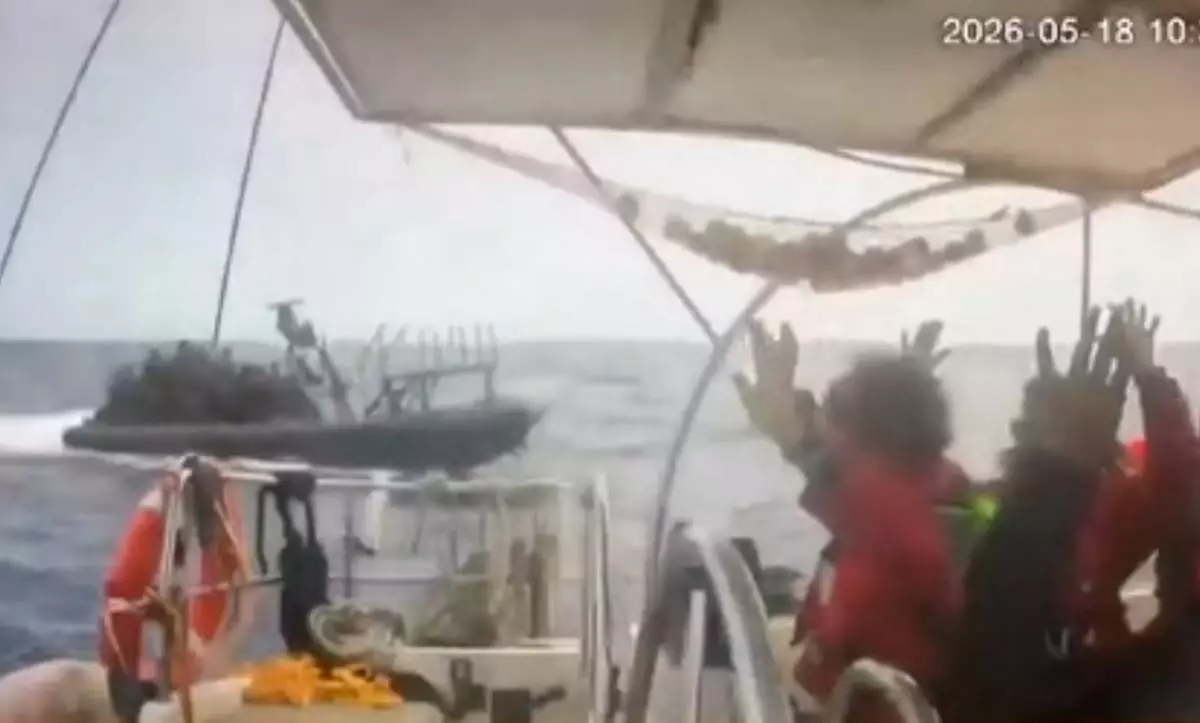
This grab from CCTV footage shows activists aboard a flotilla boat with their hands in the air as a boat approaches one of more than 50 vessels that departed from the port of Marmaris, Turkey, last week in what organizers of the Global Sumud Flotilla described as the final leg of their planned journey to Gaza's shores, in international waters Monday, May 18, 2026. (Global Sumud Flotilla via AP)
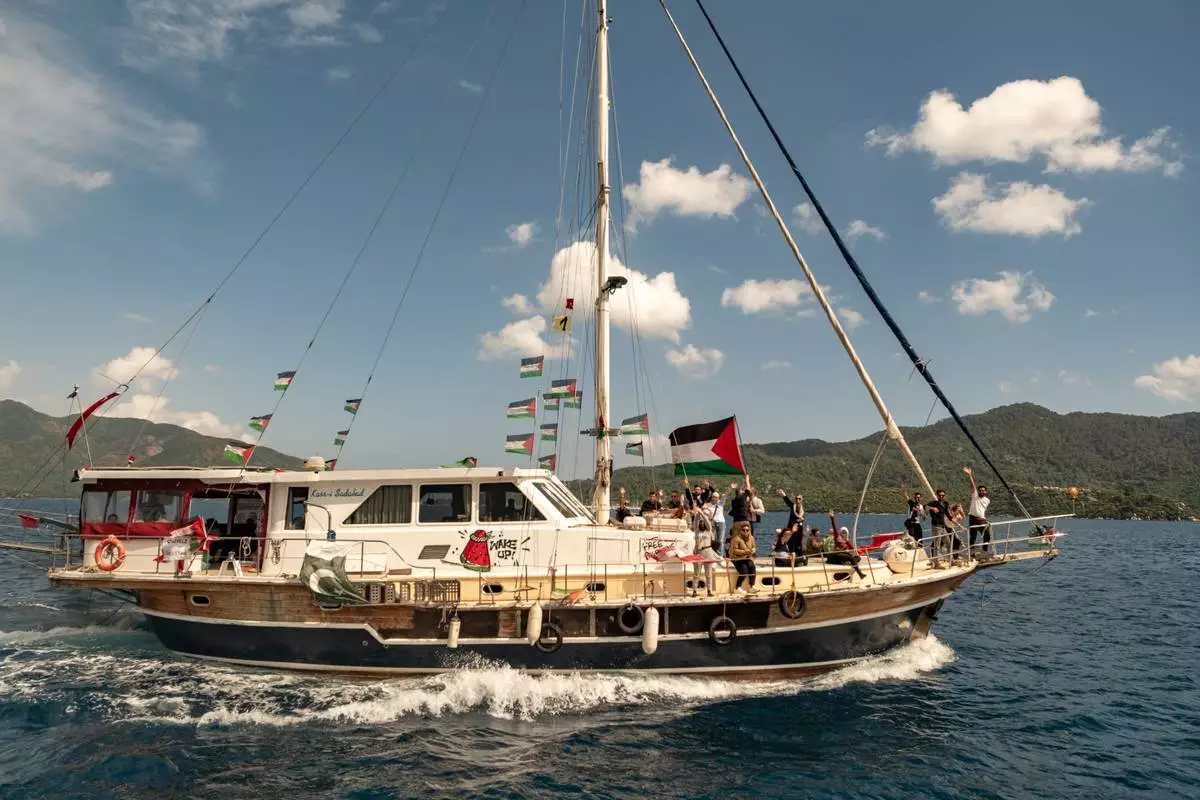
Boats belonging to the Global Sumud Flotilla, carrying activists and humanitarian aid, depart for Gaza from the port of Marmaris, Turkey, Thursday, May 14, 2026, in an attempt to break the Israeli naval blockade. (AP Photo/Murat Kocabas)
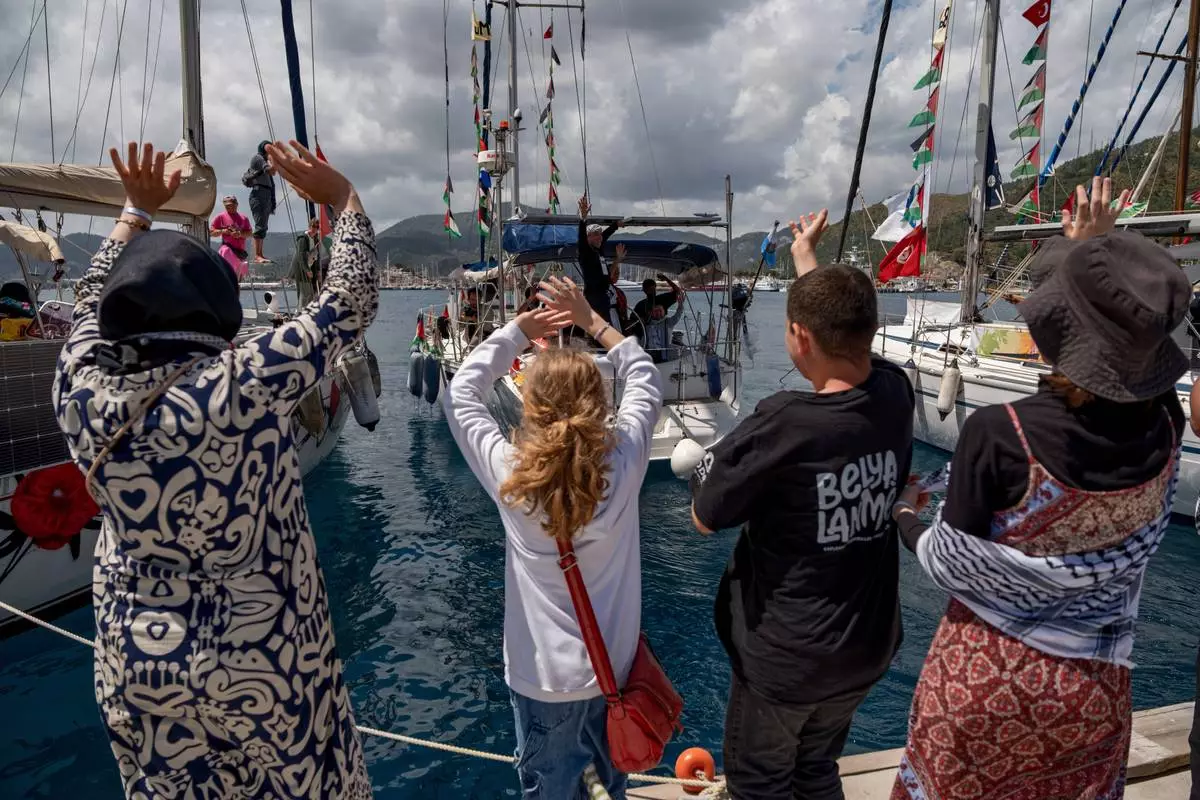
People wave to boats belonging to the Global Sumud Flotilla, carrying activists and humanitarian aid, depart for Gaza from the port of Marmaris, Turkey, Thursday, May 14, 2026, in an attempt to break the Israeli naval blockade. (AP Photo/Murat Kocabas)
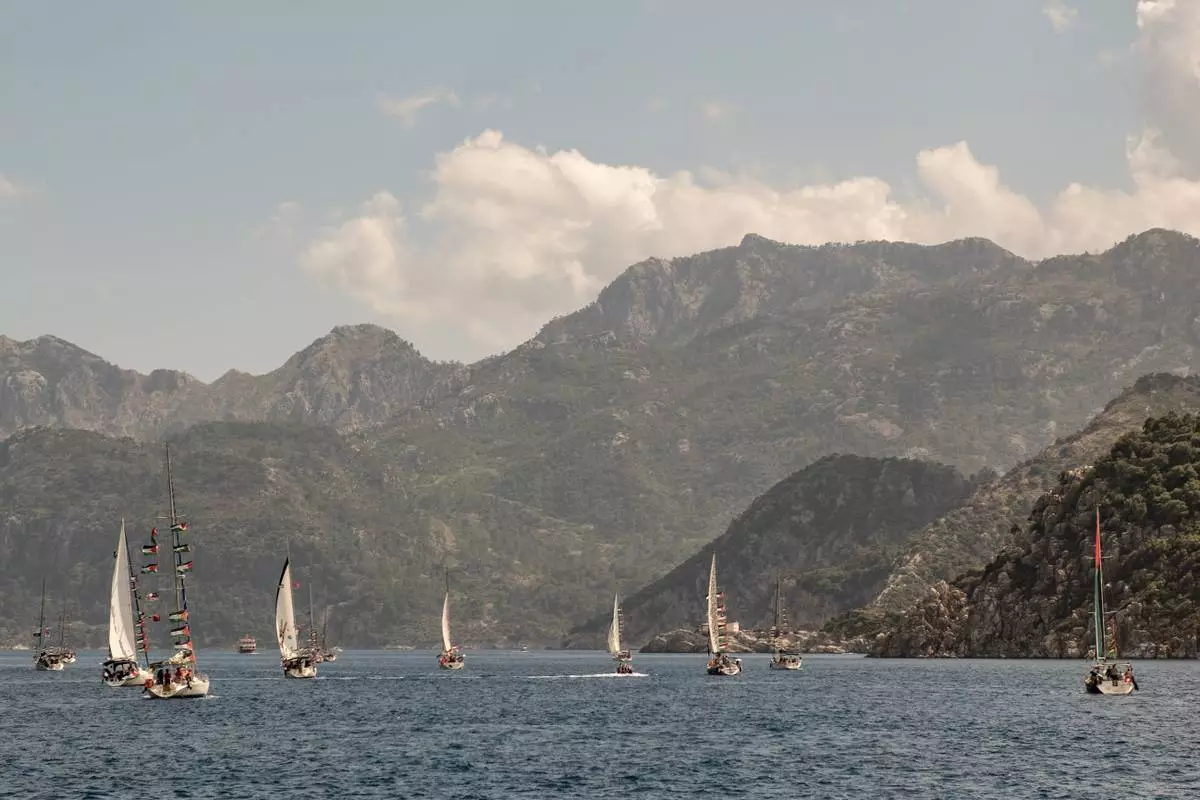
Boats belonging to the Global Sumud Flotilla, carrying activists and humanitarian aid, depart for Gaza from the port of Marmaris, Turkey, Thursday, May 14, 2026, in an attempt to break the Israeli naval blockade. (AP Photo/Murat Kocabas)