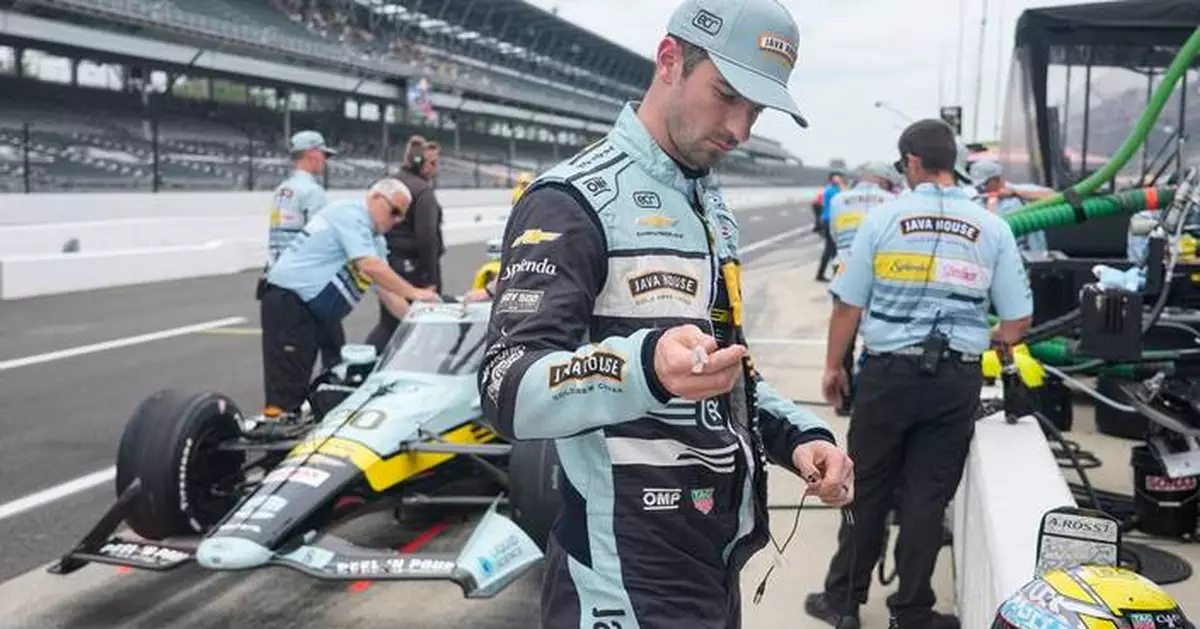
INDIANAPOLIS (AP) — Alexander Rossi was taken to a hospital for further evaluation after he crashed early in Monday's practice for the Indianapolis 500.
Rossi spun going through the second turn on Indianapolis Motor Speedway's 2.5-mile oval, hitting the outside wall before the car skidded down the track with the rear end of his No. 20 car briefly dragging along the top of the wall. The trailing Pato O'Ward tried to avoid a collision but couldn't stop in time and hit the side of Rossi's car, and Romain Grosjean was also collected in the crash.
Rossi appeared unsteady when he first tried to climb into a vehicle that took him to the track's infield medical care center.
O'Ward and Grosjean also went to the medical center, where they were both quickly checked and released. Track officials initially announced that Rossi, the 2016 Indianapolis 500 winner, was awake, alert and undergoing evaluation. Dr. Julia Valzer later said Rossi had been taken to the hospital.
It was the first crash this month on Indy's oval.
“Just wrong place, wrong time and just got collected there,” O'Ward said before Rossi's hospitalization was revealed. “These cars don't stop very well when you're going at those speeds and with how you run the brakes. Obviously, I just hit the brakes and there wasn't much I could do to avoid him, so I'm glad Alex is all right and Romain as well.”
It wasn't clear whether the crash would impact the 33-car starting grid for this weekend's sold-out race. Three of the eight fastest drivers in Sunday’s qualifying — Rossi, O’Ward and Conor Daly — all sustained damage to their cars, as did Grosjean, who qualified 24th.
Less than 24 hours earlier, Rossi came within a whisker of winning his first Indy pole. He was bumped out of the top spot by defending 500 champion Alex Palou of Spain. Palou's four-lap average of 232.248 mph was ahead of Rossi's 231.990. The Californian still wound up in the middle of the front row and is set to start from a career-best second.
O'Ward, the Mexican driver with Arrow McLaren, earned the No. 6 starting slot, the outside of Row 2, while Daly qualified eighth for his season debut with Dreyer & Reinbold Racing. Now all three, plus Grosjean, will spend the next three days repairing cars they’d spent months fine-tuning.
“The car was still really good again today in race trim, it felt really comfortable," Daly said. “Unfortunately, we got caught up in the Turn 2 accident in front of us and collected some damage. Hopefully the (crew) guys can get that all fixed up. I am still quite happy with the car.”
The grid already has changed because two drivers, Caio Collet of A.J. Foyt Enterprises and Jack Harvey, Daly's teammate, were sent to the back of the field because of rules violations. IndyCar officials said they found unapproved changes and unapproved hardware on the drivers' equipment when they went through post-qualifying technical inspection Sunday evening.
Team Penske’s Josef Newgarden posted the fastest lap in a practice session that was abbreviated first by the crash and then rain, which washed out most of the final hour that cars were scheduled to be on the track. One more short practice will be held Friday during the annual Carb Day festivities, which include the pit-stop competition.
AP auto racing: https://apnews.com/hub/auto-racing

Pato O'Ward, of Mexico, drives through the third turn during qualifications for the Indianapolis 500 auto race at the Indianapolis Motor Speedway in Indianapolis, Sunday, May 17, 2026. (AP Photo/Michael Conroy)
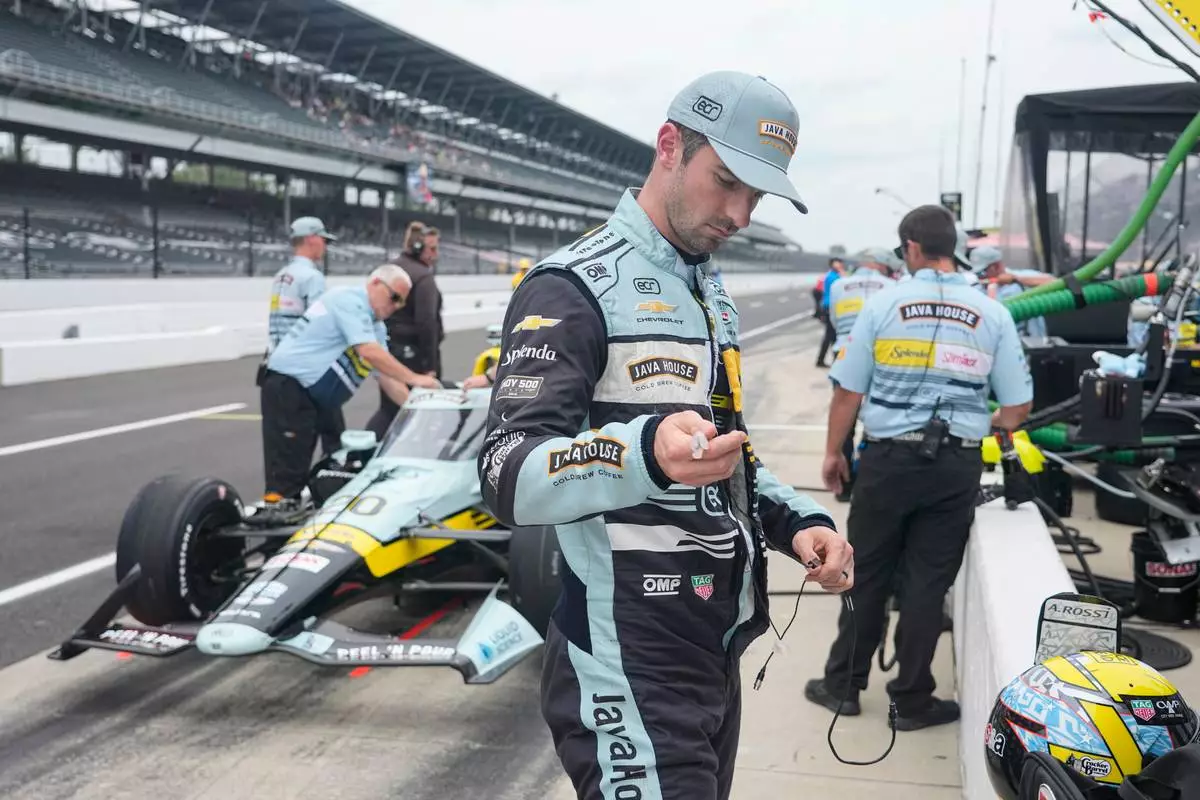
Alexander Rossi prepares too drive during practice for the Indianapolis 500 auto race at the Indianapolis Motor Speedway in Indianapolis, Monday, May 18, 2026. (AP Photo/Michael Conroy)
WASHINGTON (AP) — President Donald Trump recently blasted the accuracy of global warming projections in a Truth Social post that itself painted a distorted view of the science, projections and how the international community discusses climate policy.
Every several years, the United Nations produces massive scientific reports on what's happening and likely to happen with human-caused global warming. Scientists update some of the scenarios used to make future projections. One key control knob, which determines the amount and impact of future climate change, is carbon dioxide emissions from the burning of coal, oil and natural gas. The more carbon pollution, the more global warming, so scientists base their projections on a buffet of potential scenarios.
Those scenarios triggered the president's social media post over the weekend. Here's a closer look at the facts:
TRUMP: “GOOD RIDDANCE! After 15 years of Dumocrats promising that ‘Climate change’ is going to destroy the Planet, the United Nations TOP Climate Committee just admitted that its own projections (RCP8.5) were WRONG! WRONG! WRONG!”
THE FACTS: Trump was referring to a set of projections from 2011 from a group of scientists associated with the U.N.'s Intergovernmental Panel on Climate Change that were updated in a study published in a scientific journal this spring. The update found that the old worst case scenario — called RCP8.5 — was implausible.
The changes prompted scientists and non-scientists who downplay the harms or even deny the science of climate change to criticize in social media the international panel of climate scientists' decades of work, which won a Nobel Prize. And it prompted mainstream climate scientists to explain the necessity for including unlikely scenarios and to point out that the change also reflects how the world has dramatically increased cleaner energy use, such as solar and wind power and electric cars. That has caused soaring carbon emissions to practically flatten.
Even when it was created 15 years ago, that worst case scenario was unlikely — there were other scenarios that were considered more likely. But the most extreme scenario was still possible if the world went on a fossil fuel heavy binge, in particular continuing to use coal, the most dirty fossil fuel, in a big way. It projected an end of the century warming of about 8 degrees Fahrenheit (4.5 degrees Celsius) compared to the mid 1800s.
It was not alarmism, said climate scientist Detlef Van Vuuren of Utrecht University, lead author of the new study laying out future scenarios, and Johan Rockström, director of the Potsdam Institute for Climate Impact Research in Germany.
Even with the lowest amount warming projected “we enter danger,” Rockström said. “We enter danger both from extreme events (such as floods, heat waves and droughts) but also from risks of crossing tipping points” such as loss of coral and glaciers.
The now-jettisoned scenario was “a relevant low-probability high-risk scenario” with a role to help governments “be prepared with the possible risks of climate change. For instance, living in the Netherlands — a country possibly vulnerable to flooding — I would not like my government to only look at the best-guess scenario, but also explore what the risks are,” Van Vuuren said.
"The risks of climate change have not disappeared. The good news is that we did not follow the most dramatic emission pathway. However, we are still heading towards a future with significant climate impacts; a future that we should avoid,'' Van Vuuren added.
It's a future of suffering and more deaths, but was never about outright destroying the planet, said Cornell University climate scientist Natalie Mahowald.
Nine out of 10 climate scientists interviewed by The Associated Press said the worst case scenario that was jettisoned was unlikely but still plausible when it first came out. But they said that has changed because of a boom in carbon-free wind and solar energy technologies that has made them cheaper at times than fossil fuels.
Dropping the old worst case scenario is because “we are making progress in slowing climate change with a well-established affordable range of solutions — especially, solar, wind, battery storage, and electrified transportation,” said University of Michigan environment dean Jonathan Overpeck.
TRUMP: "My administration will always be based on TRUTH, SCIENCE, and FACT!”
THE FACTS: A signature Trump administration move on climate was initially justified by a report that was presented as a scientific document that scientists said was inaccurate and was then ditched.
In July 2025, the Trump administration announced it would repeal an Obama-era scientific finding by the U.S. Environmental Protection Agency that climate change was endangering America's public health. To back it up, the Department of Energy issued a 151-page report by its Climate Working Group, saying climate change was not that harmful.
Dozens of scientists told the AP that the Trump justification document was filled with errors, bias and distortion.
The National Academy of Sciences, created by President Abraham Lincoln to advise the federal government on science issues, issued a quick report disputing the Trump document and saying “human-caused emissions of greenhouse gases and resulting climate change harm the health of people in the United States.” Separately, a group of 85 scientists wrote a letter saying the Trump claims “are misleading or outright wrong.”
When the Trump administration officially revoked the EPA endangerment finding in February, it did not include the science justification from the Department of Energy that scientists had criticized.
Find AP Fact Checks here: https://apnews.com/APFactCheck
The Associated Press’ climate and environmental coverage receives financial support from multiple private foundations. AP is solely responsible for all content. Find AP’s standards for working with philanthropies, a list of supporters and funded coverage areas at AP.org.
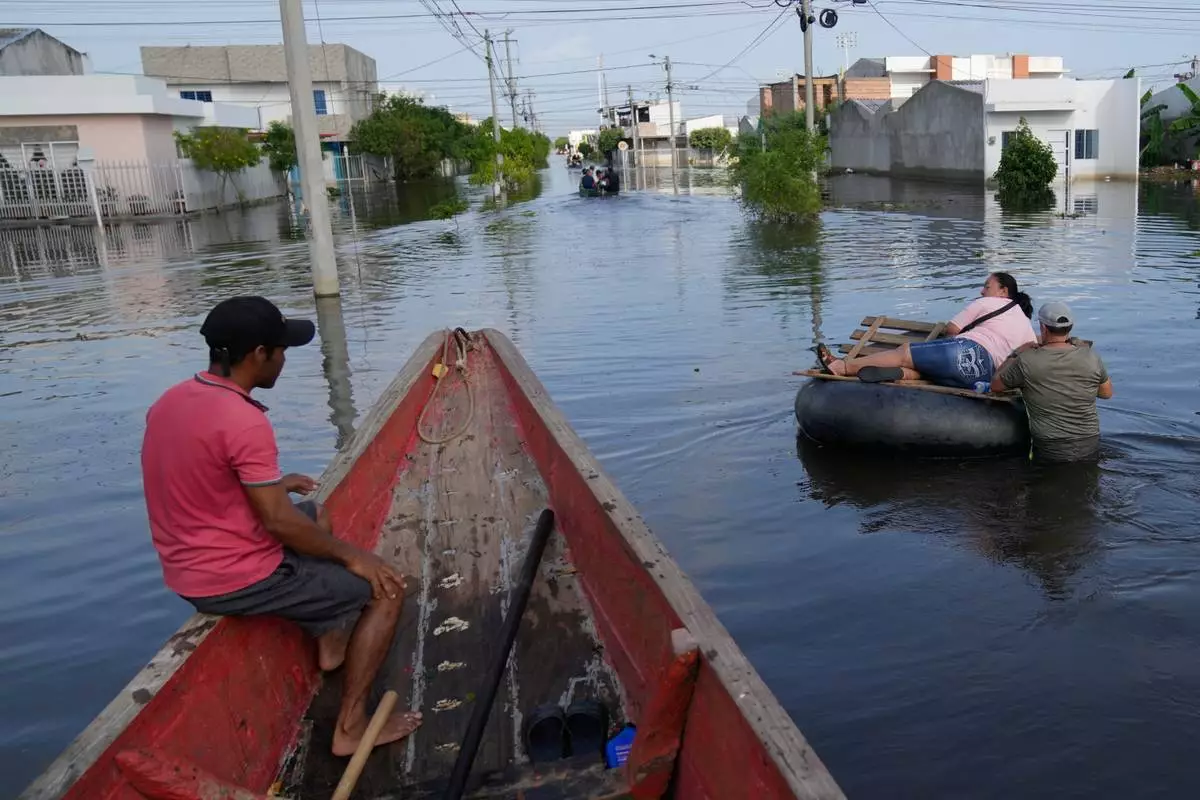
FILE - Residents wade through a flooded neighborhood in Monteria, Colombia, Feb. 10, 2026. (AP Photo/Fernando Vergara, File)
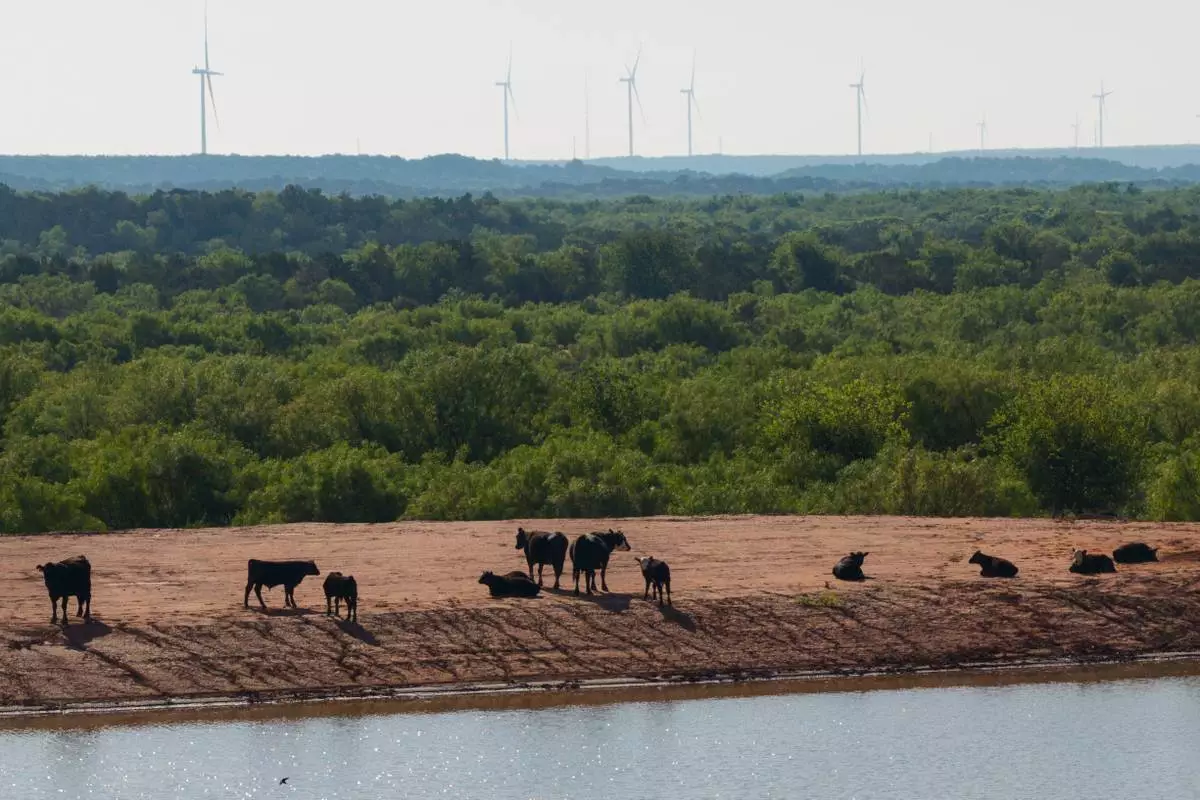
FILE - Cattle rest near the edge of a pond with wind turbines in the background amid a drought in Foard County, Texas, April 25, 2026. (AP Photo/Jon Shapley, File)
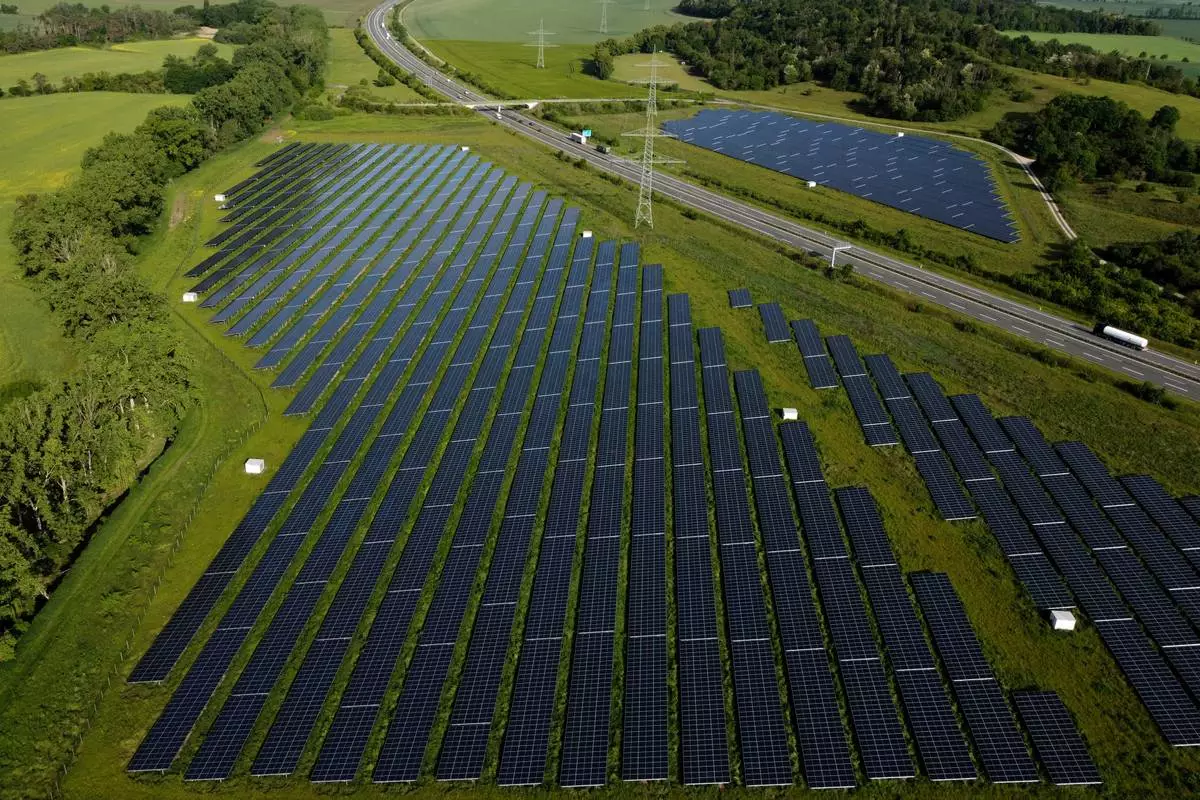
FILE - A new solar farm operate near Quedlinburg, Germany, May 26, 2025. (AP Photo/Matthias Schrader, File)

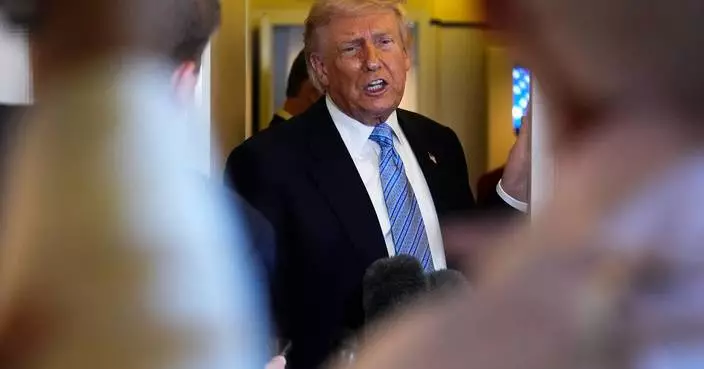
FILE - President Donald Trump speaks to reporters aboard Air Force One, May 15, 2026, as he returns from a trip to Beijing, China. (AP Photo/Mark Schiefelbein, File)
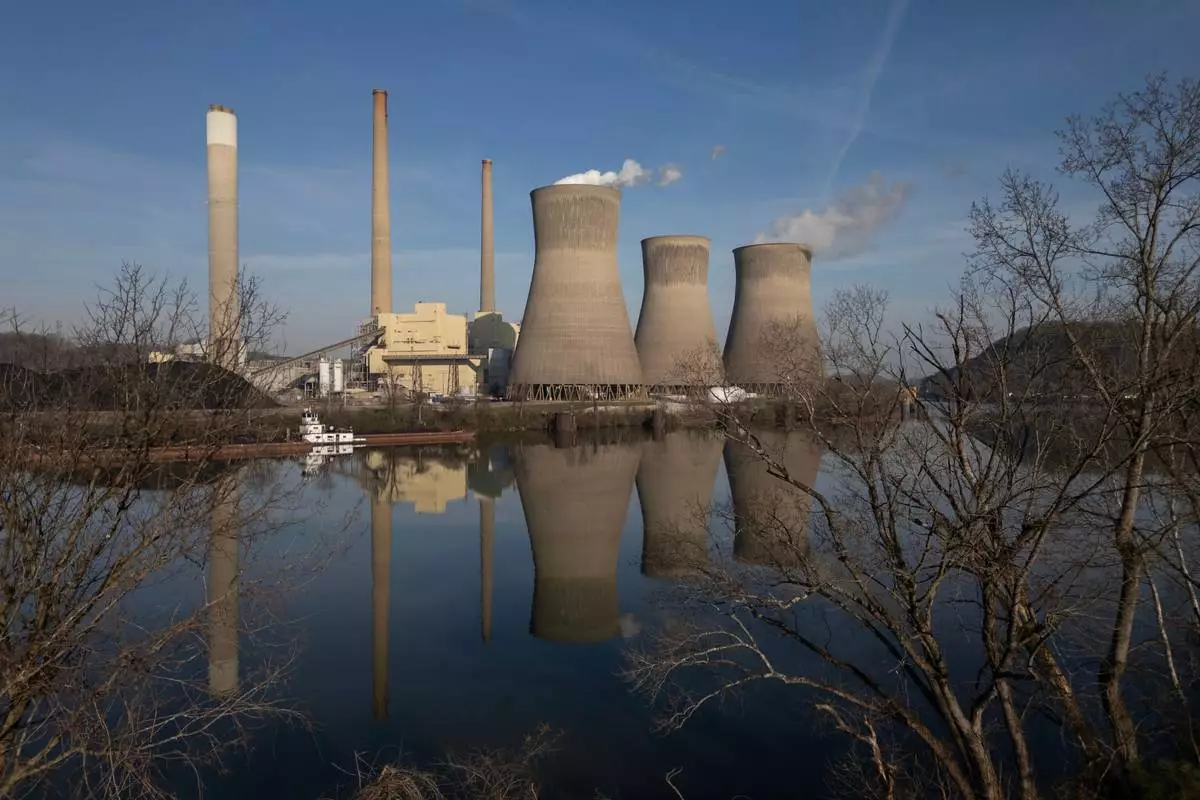
FILE - American Electric Power's John Amos coal-fired power plant in Winfield, W.Va., is seen across the Kanawha River from Poca, W.Va., March 22, 2026. (AP Photo/Carolyn Kaster, File)