President Donald Trump is set to make more medications available on his discounted-drug website TrumpRx on Monday, according to a White House official who spoke on condition of anonymity to preview the remarks.
The expanded offerings, to be announced at an afternoon White House healthcare affordability event, could beef up a government website that the Republican administration has touted as providing relief to Americans who are struggling with rising health costs.
Skeptical Democrats have criticized TrumpRx as performative, noting that many of the drugs it features are already inexpensive for people with insurance or come in lower-cost generic versions sold elsewhere. Democratic Sen. Elizabeth Warren of Massachusetts last month called it a “conduit for Big Pharma to steer consumers to expensive brand-name drugs when cheaper generics are available.”
The government-hosted website is not a platform for buying medications. Instead, it’s set up as a facilitator, pointing Americans to drugmakers’ direct-to-consumer websites, where they can make purchases. It also provides coupons to use at pharmacies. The site initially launched in February with over 40 medications, including weight-loss drugs such as Ozempic and Wegovy.
Monday's announcement, first reported by Bloomberg News, comes as affordability has emerged as a top voter concern for the November midterm elections. Health costs are a worry for many Americans, an issue compounded by recent cuts to Medicaid and the expiration of enhanced Affordable Care Act subsidies this year that sent some people's premiums skyrocketing.
Besides TrumpRx, the administration has promoted other efforts to lower drug costs, including deals between the president and the 17 major drugmakers to offer medications at the same prices that appear in other developed countries, or lower.
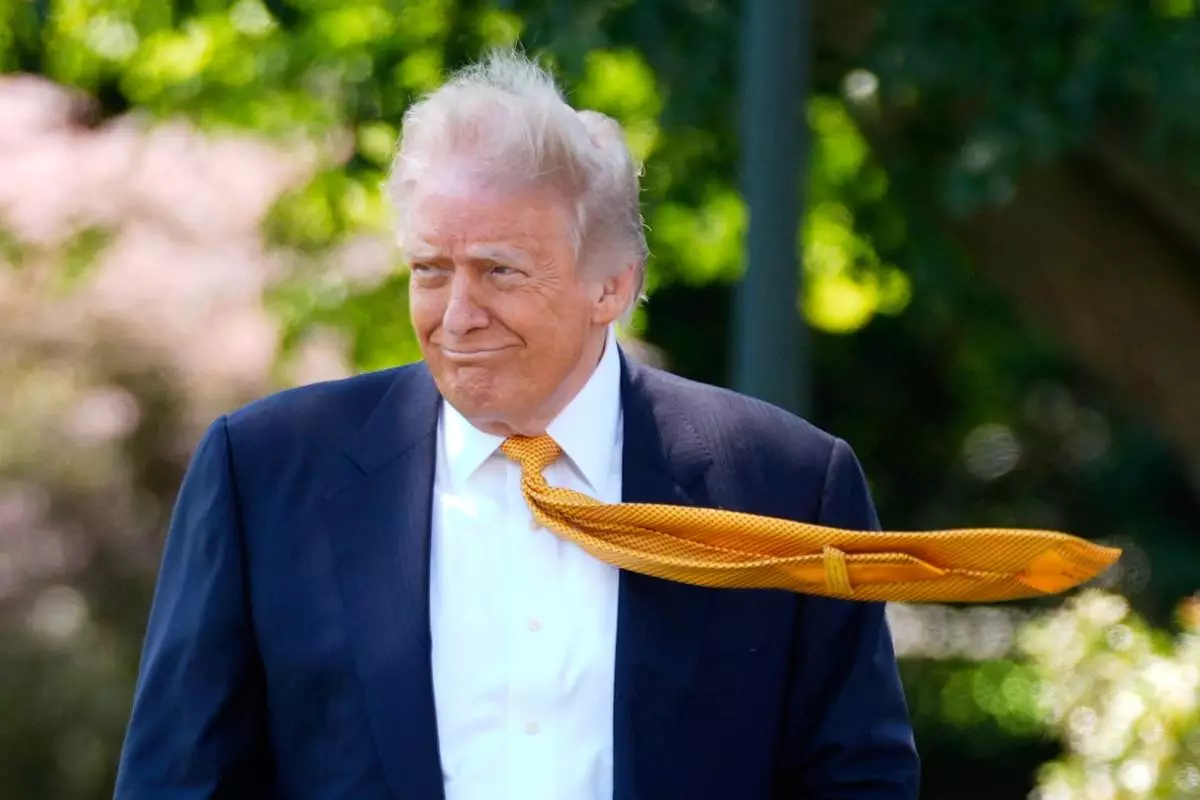
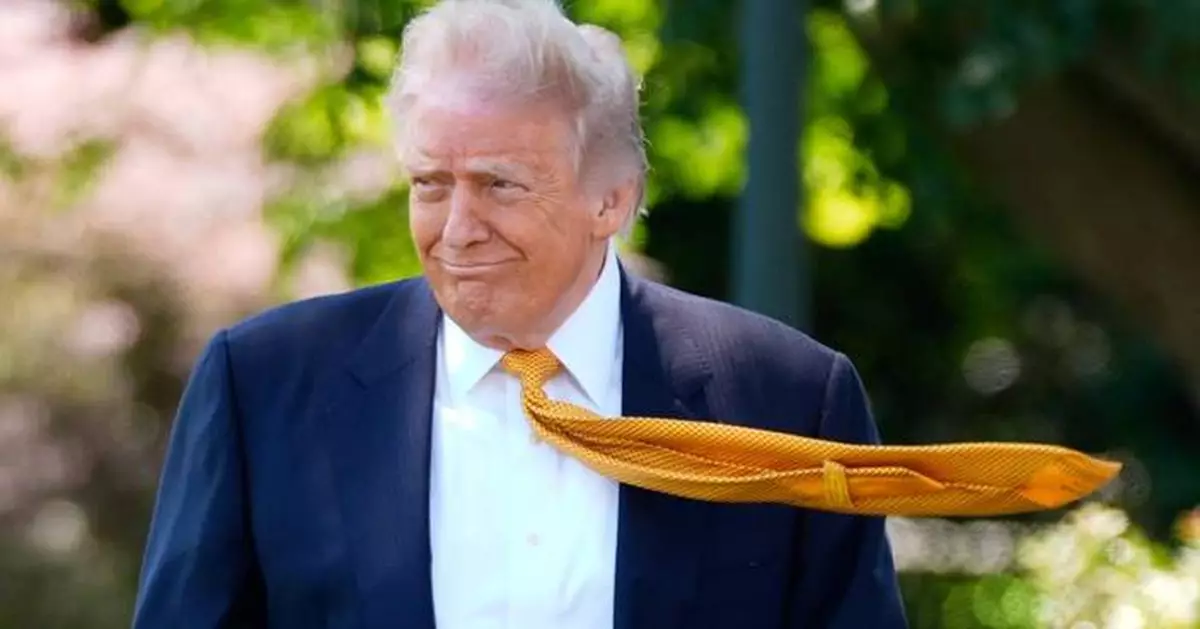
President Donald Trump walks as he leaves the White House for travel to Beijing, Tuesday, May 12, 2026, in Washington, to meet with China's President Xi Jinping. (AP Photo/Manuel Balce Ceneta)
JOHANNESBURG (AP) — Health officials believe the Ebola outbreak in Congo began weeks ago.
The outbreak has been declared a public health emergency of international concern by the World Health Organization and the death toll has risen to more than 100. Two cases, including one death, have also been reported in neighboring Uganda.
Here's a timeline of what we know so far after authorities first struggled to identify the outbreak because it was caused by a rarer virus not normally associated with Ebola outbreaks in Congo:
A health worker who was the first suspected case authorities knew about falls ill and dies in Bunia, the capital of Ituri Province in northeastern Congo. The person's body is later transported to the nearby mining town of Mongbwalu, according to Congo's health minister.
The health minister says the person died on April 24. The Africa Centers for Disease Control and Prevention says they died on April 27 after severe bleeding symptoms.
A close contact of the first suspected victim dies after also presenting with symptoms, according to the Africa CDC.
Field tests on samples in Bunia are negative for the Ebola virus type, sometimes known as the Zaire virus, which is the virus most commonly found in previous Ebola outbreaks in Congo.
Ebola disease is caused by a group of viruses. Three of them are known to cause large outbreaks: Ebola virus, Sudan virus and Bundibugyo virus, according to WHO. It takes another two weeks before health authorities establish that the rarer Bundibugyo virus is behind this outbreak.
The World Health Organization is alerted to what it calls a “high-mortality” outbreak of an unknown illness in Mongbwalu. Health workers are among the fatalities. Local reports say there are around 50 deaths already.
The Congolese health minister later says authorities believe the body of the first person who died and was taken to Mongbwalu may have started the outbreak there. The bodies of people infected with Ebola can be highly contagious.
A 59-year-old Congolese man experiencing fever and body aches is admitted to a hospital in Kampala, the capital of neighboring Uganda some 700 kilometers (434 miles) from Ituri. Ugandan authorities say he traveled across the border from Congo.
A WHO rapid response team visits the Mongbwalu and nearby Rwampara health zones in Ituri to investigate as the outbreak spreads further.
Thirteen blood samples from suspected Ebola cases in Rwampara are analyzed at a testing facility in the Congolese capital, Kinshasa.
On the same day, the Congolese man dies in the hospital in Uganda. His body is repatriated to Congo.
Laboratory analysis in Congo confirms Bundibugyo virus in eight of the 13 samples from Rwampara. Ugandan health authorities then test a sample taken posthumously from the man who died there and it is also positive for Bundibugyo virus, which has no approved treatment or vaccine.
The Congo Health Ministry declares an Ebola outbreak, and the Africa CDC says there are 246 suspected cases and 65 deaths. Within days that figure rises to more than 300 cases and more than 100 deaths.
Uganda says its outbreak is limited to two cases, both of which were people who traveled from Congo.
It is the 17th significant Ebola outbreak in Congo since the disease was first identified in 1976.
The WHO officially declares the Ebola outbreak in Congo and Uganda a public health emergency of international concern. The U.N. health agency says the outbreak does not meet the criteria of a pandemic emergency like COVID-19 and advises countries not to close their borders.
However, it says nations that share a land border with Congo or Uganda should urgently enhance their surveillance and ensure health workers are trained to investigate and manage Ebola cases.
An American doctor in Congo is among the confirmed cases in the Ebola outbreak, Congolese officials say.
The doctor is among the cases in Bunia, says Dr. Jean-Jacques Muyembe, medical director of the country’s National Institute of Bio-Medical Research. He had been treating patients at a hospital there, according to the organization he works for.
Associated Press writers Monika Pronczuk in Dakar, Senegal; Evelyne Musambi in Nairobi, Kenya; and Rodney Muhumuza in Kampala, Uganda contributed to this report.
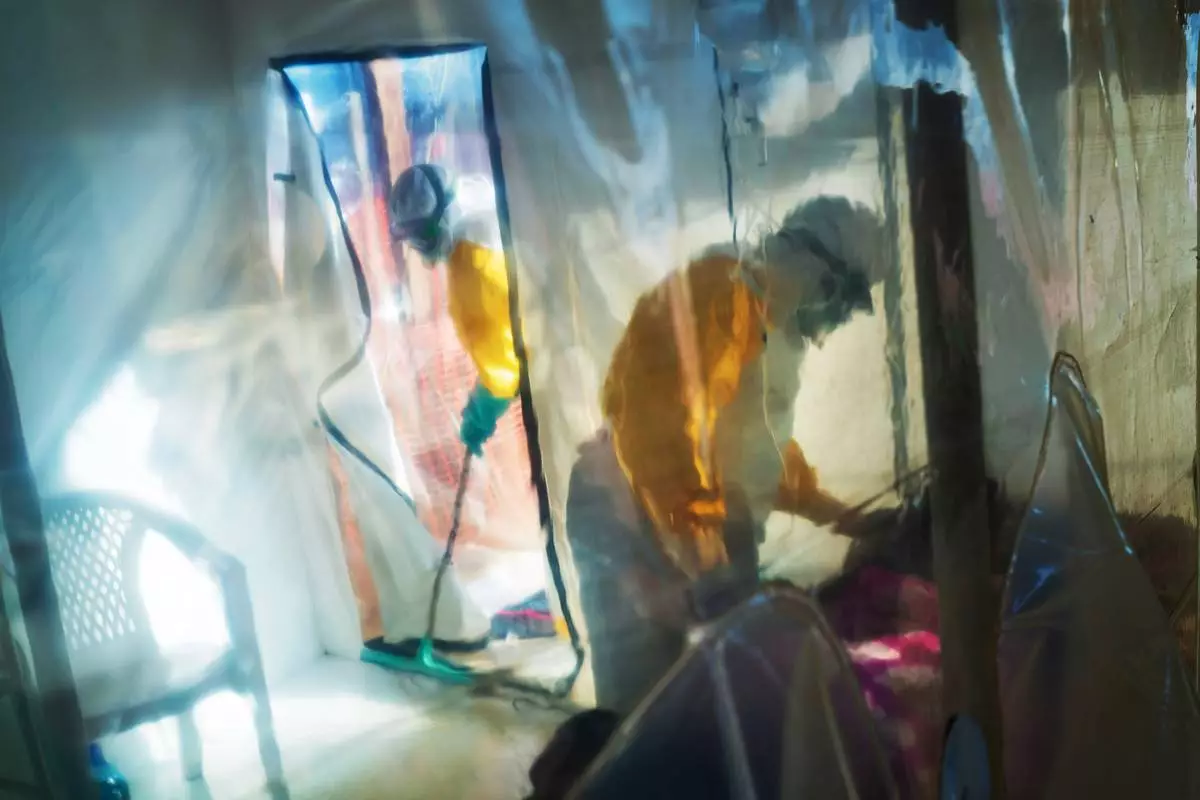
FILE - Health workers wearing protective suits tend to an Ebola victim kept in an isolation tent in Beni, Congo, July 13, 2019. (AP Photo/Jerome Delay, File)
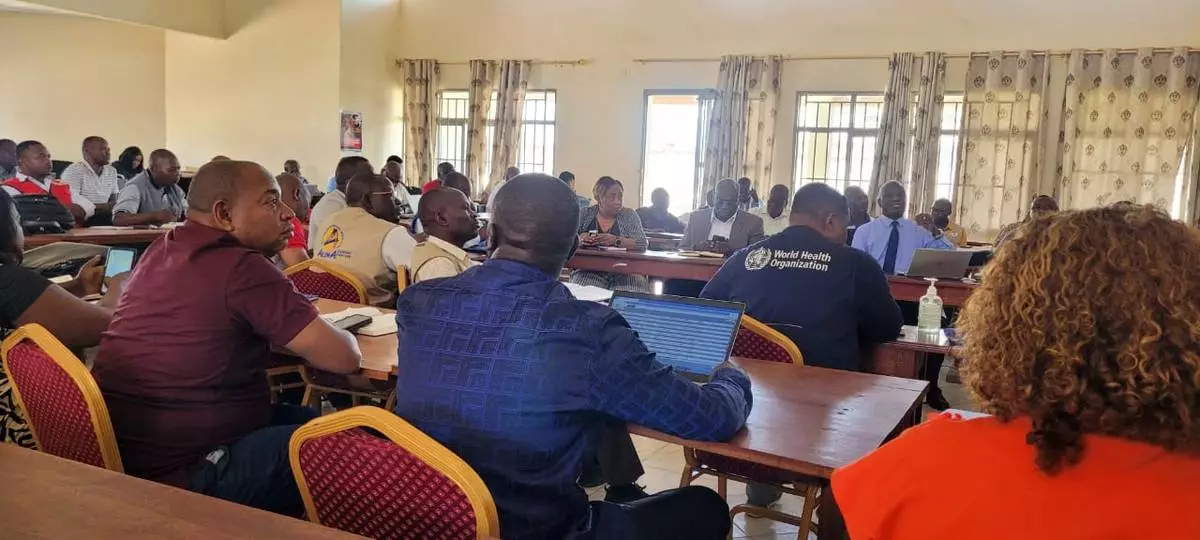
People meet at the Ituri Provincial Health Directorate for the first Ebola response meeting in Bunia, Congo, Friday, May 15, 2026. (AP Photo/Jorkim Jotham Pituwa)
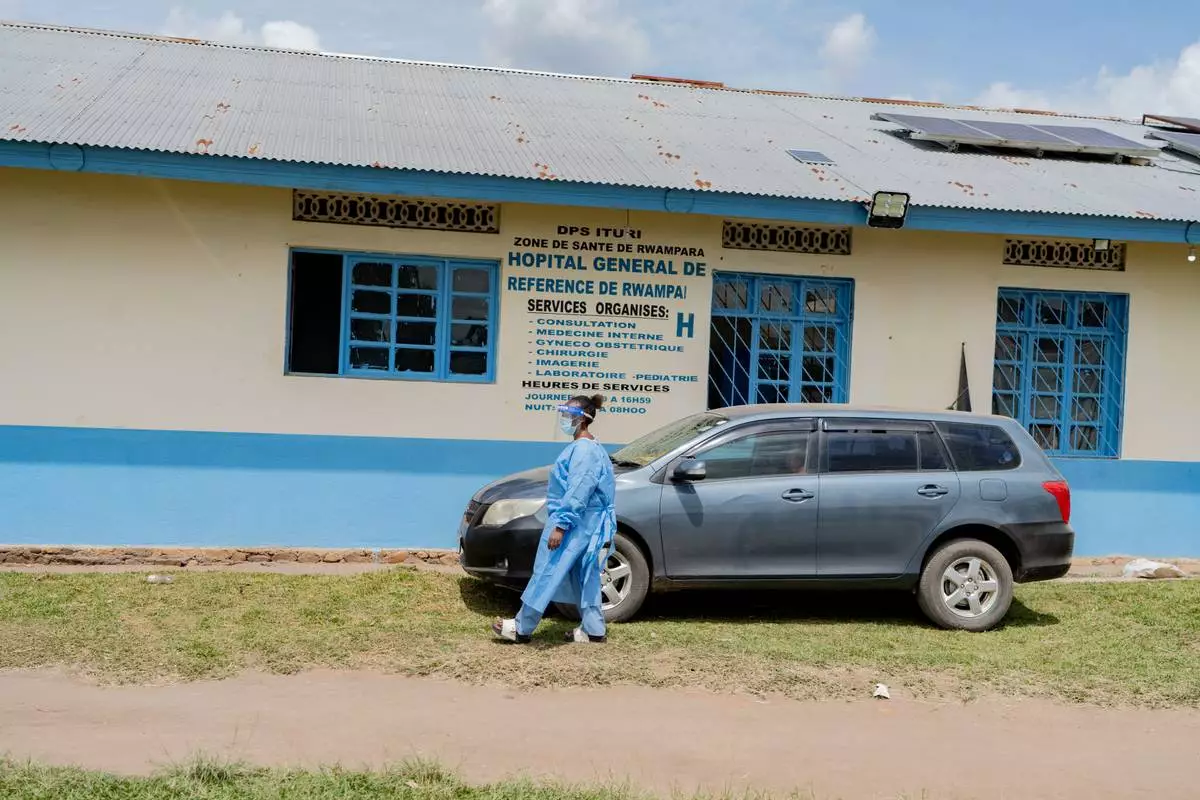
A health worker wearing protective gear walks outside the a hospital in Bunia, Congo, Saturday, May 16, 2026. (AP Photo/Jorkim Jotham Pituwa)