MIAMI (AP) — A close ally of ousted Venezuelan President Nicolás Maduro was charged in federal court in Miami on Monday with bribing top officials to profit from lucrative government contracts.
Alex Saab made his initial court appearance after being deported over the weekend by acting President Delcy Rodríguez as part of a purge of insider businessmen who are believed to have enriched themselves through corrupt dealings with Maduro.
Shackled and wearing a prison uniform, Saab answered “Yes, ma'am,” in English after being told he was charged with a single count of money laundering tied to an unspecified bribery scheme. It was unsealed at the hearing but not yet publicly available.
Saab, 54, was previously charged during the first Trump administration in 2019 and then arrested during a refueling stop in Cape Verde on what the Venezuelan government described as a high-level humanitarian mission to Iran.
But President Joe Biden pardoned him in 2023 in exchange for the release of several imprisoned Americans in Venezuela and the return of a fugitive foreign defense contractor. The deal, part of a failed effort by the Biden White House to lure Maduro into holding a free presidential election, was harshly criticized by Republicans and federal law enforcement officials, who began investigating Saab for other alleged crimes not covered by the narrowly tailored pardon.
U.S. officials have long described Saab as Maduro's “bag man” and could ask him to serve as a valuable character witness against his former protector, who is awaiting trial on drug charges in Manhattan after being captured in a raid by the U.S. military in January.
The new U.S. prosecution of Saab is taking place against the backdrop of the Trump administration’s efforts to overhaul relations with Venezuela.
Trump and senior administration officials have heaped praise on Rodríguez, who has thrown open Venezuela's oil industry to U.S. investment at a time of surging oil prices tied to the war in Iran. In exchange, the White House has dampened talk of elections, which are required by Venezuela's constitution within 30 days of the president becoming “permanently unavailable.”
But Rodríguez faces enormous domestic pressures from the more radical, ideological wing of the ruling socialist party, some of whom, like Interior Minister Diosdado Cabello, wield great influence inside Venezuelan security forces and face criminal charges themselves in the U.S.
Mario Silva, who for years spread pro-government propaganda as the host of a program on state TV before being removed from the airwaves shortly after Maduro's capture, questioned the legality of Saab's removal, saying it violates a constitutional ban on extradition.
“The imperialists don't negotiate. They conquer, test and probe — until our country shatters,” said Silva in a livestream posted Sunday on social media. “Nobody is safe right now.”
Silva also pointed out that the efforts of Venezuela’s government to previously secure the release of Saab outmatch the work done to bring home Maduro and former first lady Cilia Flores.
Perhaps anticipating blowback, Venezuela's immigration authority, SAIME, in a statement Saturday referred to Saab only as a “Colombian citizen who is implicated in committing several crimes in the United States of America, a fact that is widely known, notorious, and heavily documented in the media.”
Cabello on Monday justified Saab’s extradition arguing that he is not a Venezuelan citizen and alleged that his Venezuelan identification card known as “cédula” — the most important form of ID in the South American country — supposedly issued in 2004 “is not legal.”
“He presented himself with a fraudulent ID card, and with that ID card, he had access to certain things,” Cabello told reporters. “When we searched and conducted a detailed investigation, there is no record in SAIME that certifies that this person is Venezuelan, which is why we made the decision to deport him from Venezuela.”
Rodríguez's silence stands in contrast to the praise she heaped on Saab a few years ago during the international campaign Venezuela's government mounted to free him from U.S. custody. At the time, Rodríguez described him as an “innocent Venezuelan diplomat” who had been illegally “kidnapped” while on a humanitarian mission to Iran to circumvent the “immoral, imperial blockade” imposed by the United States.
As Rodríguez cements her rule, she has distanced herself from Saab, firing him from her Cabinet and stripping him of his role as the main conduit for foreign companies looking to invest in Venezuela.
Saab amassed a fortune through Venezuelan government contracts. The indictment against him in 2019 was tied to a government contract for low-income housing that was never built.
The Associated Press reported earlier this year that he was being investigated as part of another case the Justice Department brought against Saab’s longtime partner, Alvaro Pulido, over the so-called CLAP program set up by Maduro to provide staples — rice, corn flour, cooking oil — to poor Venezuelans at a time of rampant hyperinflation and a crumbling currency.
Saab had been identified in the 2021 indictment as “Co-Conspirator 1" and allegedly helped set up a web of companies used to bribe a pro-Maduro governor who awarded the business partners a contract to import food boxes from Mexico at an inflated price.
Saab secretly met with the Drug Enforcement Administration before his first arrest and, in a closed-door court hearing in 2022, his lawyers revealed that the businessman for years had helped the DEA untangle corruption in Maduro’s inner circle. As part of that cooperation, he forfeited more than $12 million in illegal proceeds from dirty business dealings.
AP writer Regina Garcia Cano in Mexico City contributed to this report.
This story is part of an investigation that includes the FRONTLINE documentary “Crisis in Venezuela,” which aired Feb. 10, 2026, on PBS. Watch the documentary at pbs.org/frontline, in the PBS App and on FRONTLINE’s YouTube channel.

FILE - Venezuela's President Nicolas Maduro, left, and Alex Saab stand together during an event marking the anniversary of the 1958 coup that overthrew dictator Marcos Perez Jimenez, in Caracas, Venezuela, Jan. 23, 2024. (AP Photo/Jesus Vargas, File)
NEW YORK (AP) — Commuters in New York City’s suburbs were navigating a gauntlet of car, bus and subway routes to get to and from work Monday after a labor strike shut down the Long Island Rail Road, the busiest commuter rail system in the country.
Unions representing rail workers and the Metropolitan Transportation Agency, which runs the railroad, continued negotiating Monday after failing to reach agreement through the weekend despite pressure from the National Mediation Board and New York Gov. Kathy Hochul.
Katie Dolgow, who teaches first graders in Manhattan, said it had already taken her an hour just to travel from Long Island to Queens as more commuters turned to the region's already notoriously gridlocked roads. But her big concern was going home.
“I have to get my son at daycare by 5:30. It's going to take me longer getting home. I'm a teacher, I'm going to have to leave work at 1:30,” she said.
Unionized workers were out early picketing in front of major LIRR hubs, chanting slogans and holding up signs that read: “No contract. No work,” and “Equal work. Equal pay.”
“We're just asking for a reasonable cost of living adjustment on our wages,” Byron Lee, a locomotive engineer, said outside Penn Station in midtown Manhattan. “People think that we don't deserve it.”
The LIRR serves hundreds of thousands of commuters who live along a 118-mile-long (190-kilometer-long) land mass that includes Brooklyn and Queens in New York City and the Hamptons, a summertime playground for the rich and famous.
The strike started at 12:01 a.m. Saturday after five unions representing about half the rail system's workforce walked off the job. It's the first walkout for the LIRR since a two-day strike in 1994.
The unions, which represent locomotive engineers, machinists, signalmen and others, have said more substantial raises are warranted to help workers keep up with inflation and rising living costs. The MTA has said the unions’ initial demands to raise salaries would result in large fare increases and be disproportionate to other unionized workers’ pay.
“With the rate of inflation nationally, and especially in this New York area, everybody feels it,” said James Louis, vice president of the Brotherhood of Locomotive Engineers and Trainmen, on Monday. “We’re just trying to keep their heads above water. We’re not asking for anything outrageous.”
The unions and the MTA have been negotiating a new contract since 2023, but talks have stalled over salaries and healthcare.
The Trump administration got involved in September, a move that temporarily averted a strike. But months still passed without a deal.
Hochul said Sunday that workers would lose every dollar they would gain with a new contract by remaining on strike.
MTA Chairman Janno Lieber said negotiations were “headed in a positive direction” Monday morning as he dangled the prospect of LIRR service resuming Tuesday commute if a deal was reached soon.
By the afternoon, however, both sides conceded discussions were progressing slowly.
Gary Dellaverson, the MTA’s chief negotiator, on Monday afternoon said rail system officials were perhaps “overly optimistic” they could get a deal done. He said no new proposals were discussed Monday morning before union officials took a lengthy break until midafternoon.
“We continue to have optimism that we can get this done, but it’s not at the same level,” Dellaverson said outside MTA headquarters in lower Manhattan, where the two sides have been meeting. “The unions have shown us they have no sense of urgency to get this resolved.”
Ridership has been lighter than expected on the free but limited shuttle buses the MTA provided from a handful of locations on Long Island to New York City subway stations.
Officials had implored the roughly 250,000 riders who normally use the train system each weekday to work from home rather than commute into the city, if possible.
During the morning commute, more than 2,000 people took advantage of the shuttle service, the agency said. It had prepared for about 13,000 riders.
The buses are also being offered for the evening rush hour and are geared toward essential workers and those who can't telecommute.
Molloy University and Stony Brook University on Long Island are both set to hold commencements Monday.
Officials at Stony Brook urged graduates and guests to carpool where possible as the state university's ceremony was slated to start during the afternoon rush hour.
The first impacts of the walkout were felt over the weekend as baseball fans had to find other ways to get to Citi Field in Queens to see the New York Mets take on their crosstown rivals the New York Yankees.
If the strike stretches into Tuesday, basketball fans looking to catch the New York Knicks continue their playoff run could also run into problems. Madison Square Garden, where the Knicks play their home games, is located directly above the railroad’s Penn Station hub in Manhattan.
Hochul stopped by MTA headquarters in lower Manhattan on Monday morning as negotiations were underway, according to her office. The governor was briefed on the status of talks as well as the morning commute.
“She is pleased that the unions accepted her invitation to return to the table and encourages both parties to continue negotiating in good faith,” said Sean Butler, a Hochul spokesperson.
The Democrat, who is up for reelection this year, has blamed President Donald Trump’s administration for cutting mediation short in September and pushing the unions toward a strike.
McCormack reported from Concord, New Hampshire. Associated Press writers Ted Shaffrey and Joseph Frederick in New York contributed.
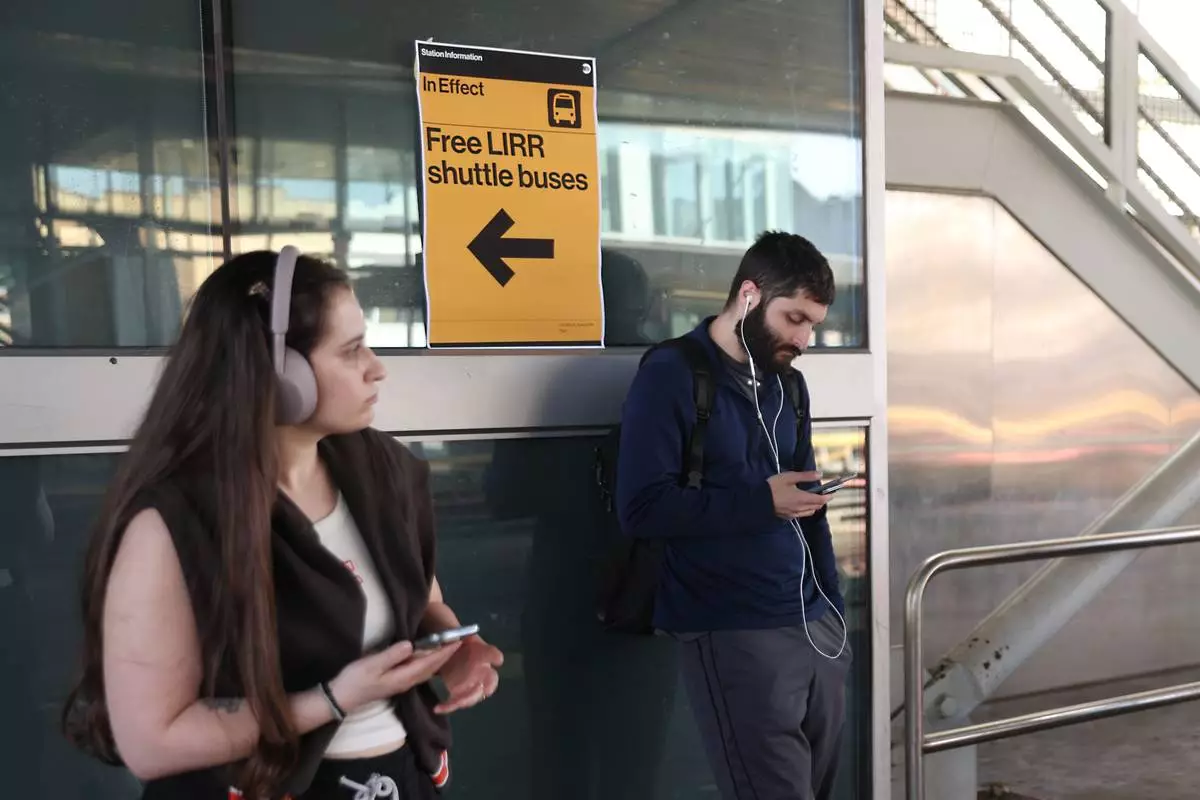
Signs for free Long Island Rail Road shuttle buses hang at the Howard Beach–JFK Airport station as Long Island Rail Road workers enter the third day of their strike, Monday, May 18, 2026, in New York. (AP Photo/Heather Khalifa)
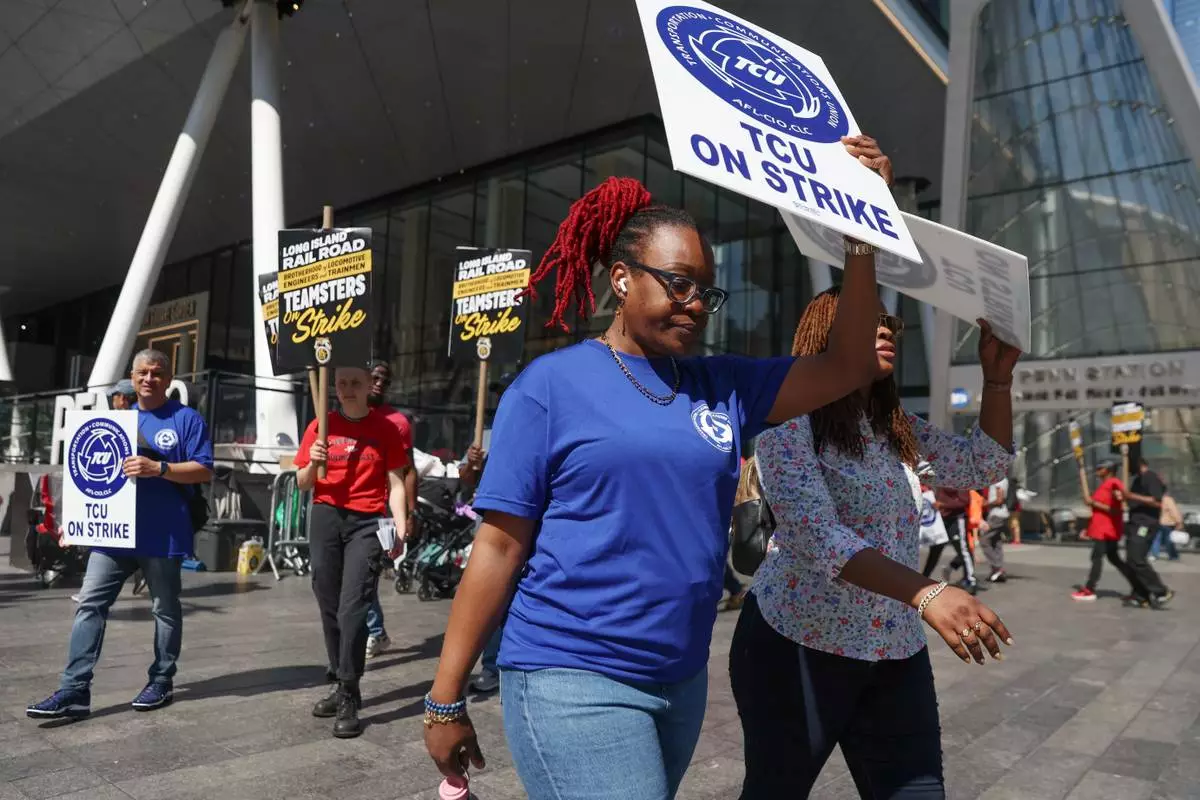
Long Island Rail Road workers walk on the picket line outside of Penn Station on the third day of their strike, Monday, May 18, 2026, in New York. (AP Photo/Heather Khalifa)
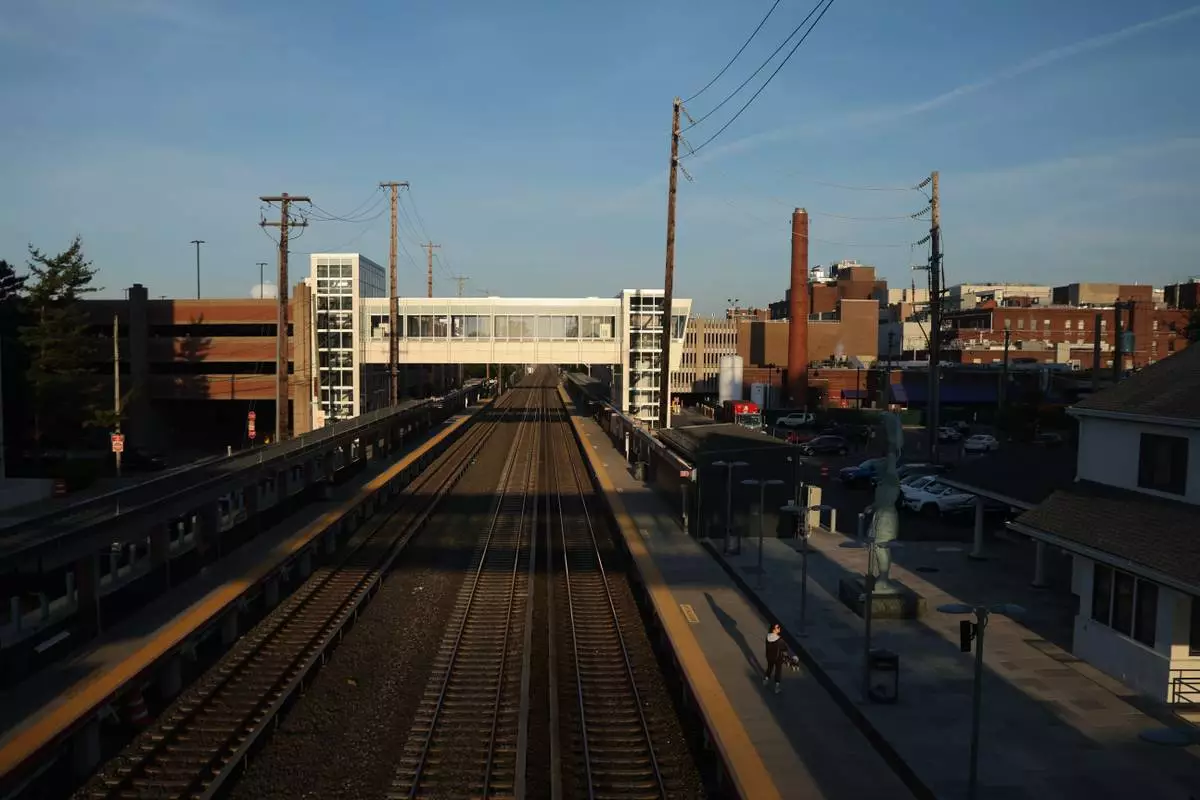
A pedestrian walks along an empty track at Mineola train station as Long Island Rail Road workers strike, Monday, May 18, 2026, in Mineola, N.Y. (AP Photo/Heather Khalifa)
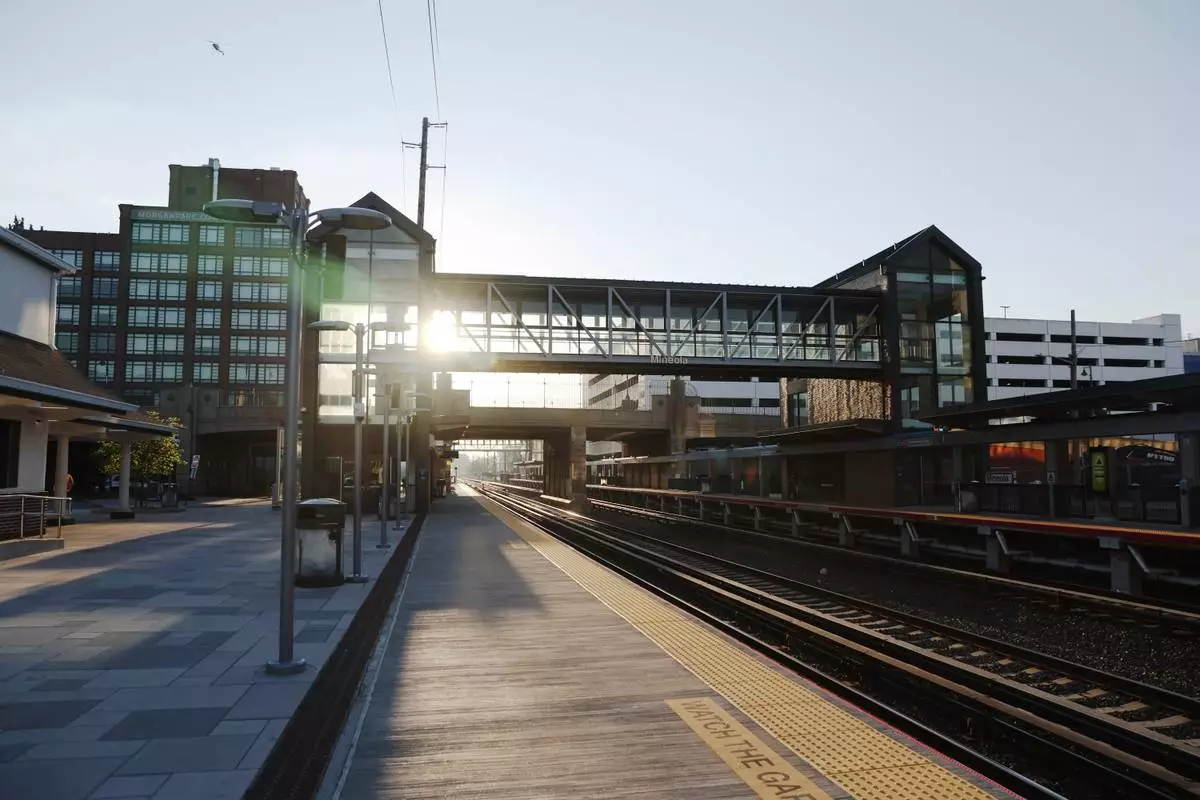
Tracks are empty at Mineola train station as Long Island Rail Road workers enter the third day of their strike, Monday, May 18, 2026, in Mineola, N.Y. (AP Photo/Heather Khalifa)
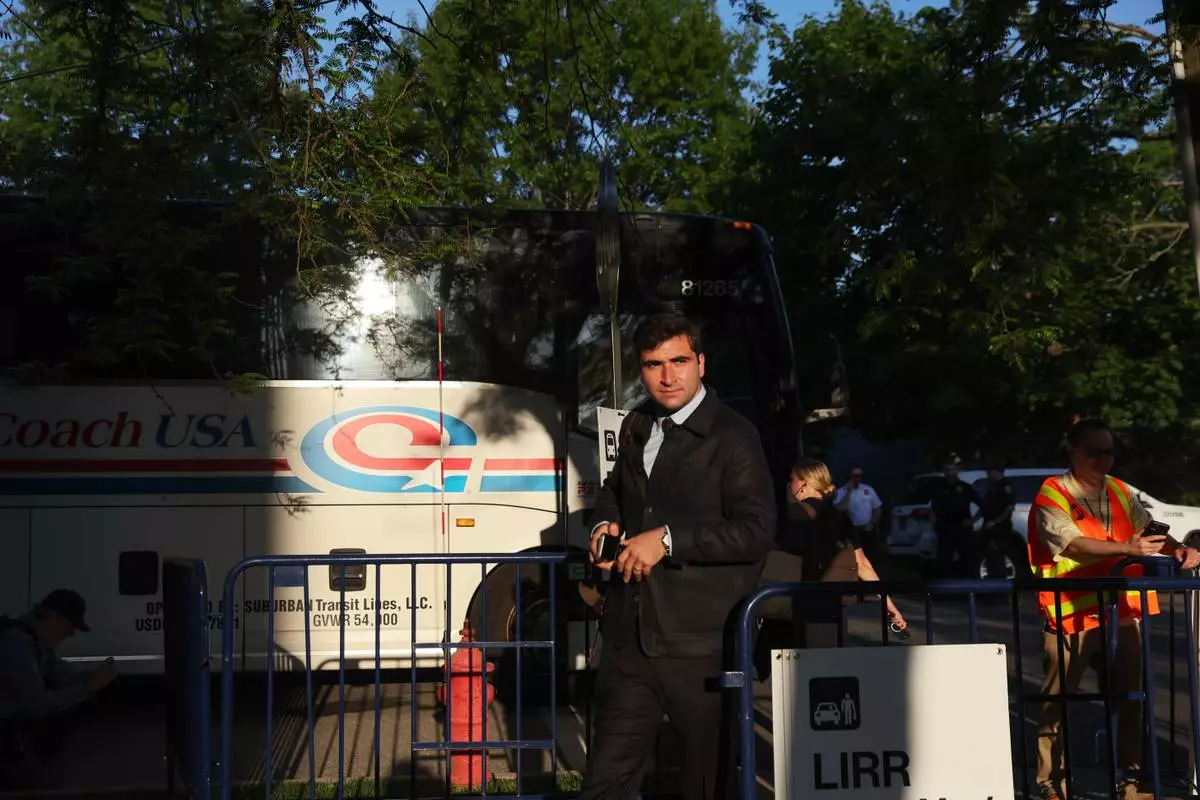
People exit and board buses at the Mineola train station as Long Island Rail Road workers enter the third day of their strike, Monday, May 18, 2026, in Mineola, N.Y. (AP Photo/Heather Khalifa)
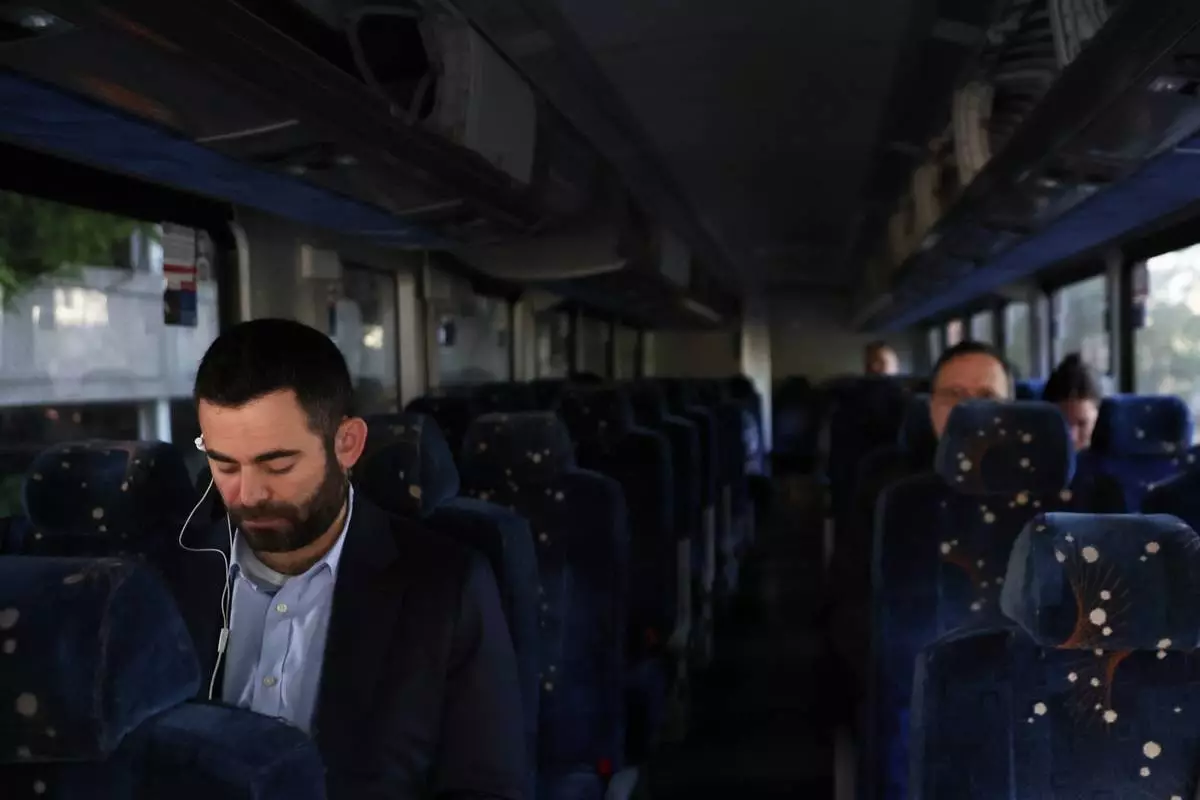
Commuters sit on a shuttle bus as Long Island Rail Road workers strike, Monday, May 18, 2026, in Mineola, N.Y. (AP Photo/Heather Khalifa)
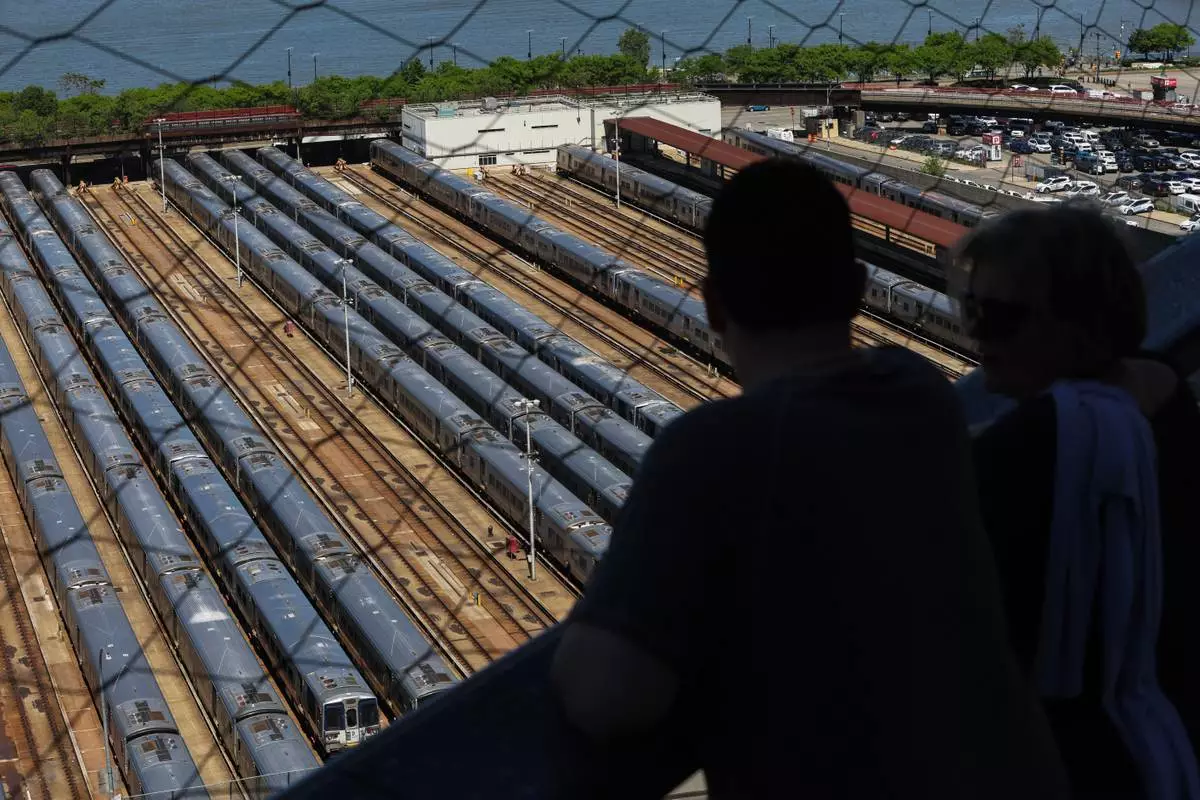
Visitors look out at the trains at the West Side Yard from the Vessel on the first day of a Long Island Rail Road workers' strike, Saturday, May 16, 2026, in New York. (AP Photo/Heather Khalifa)
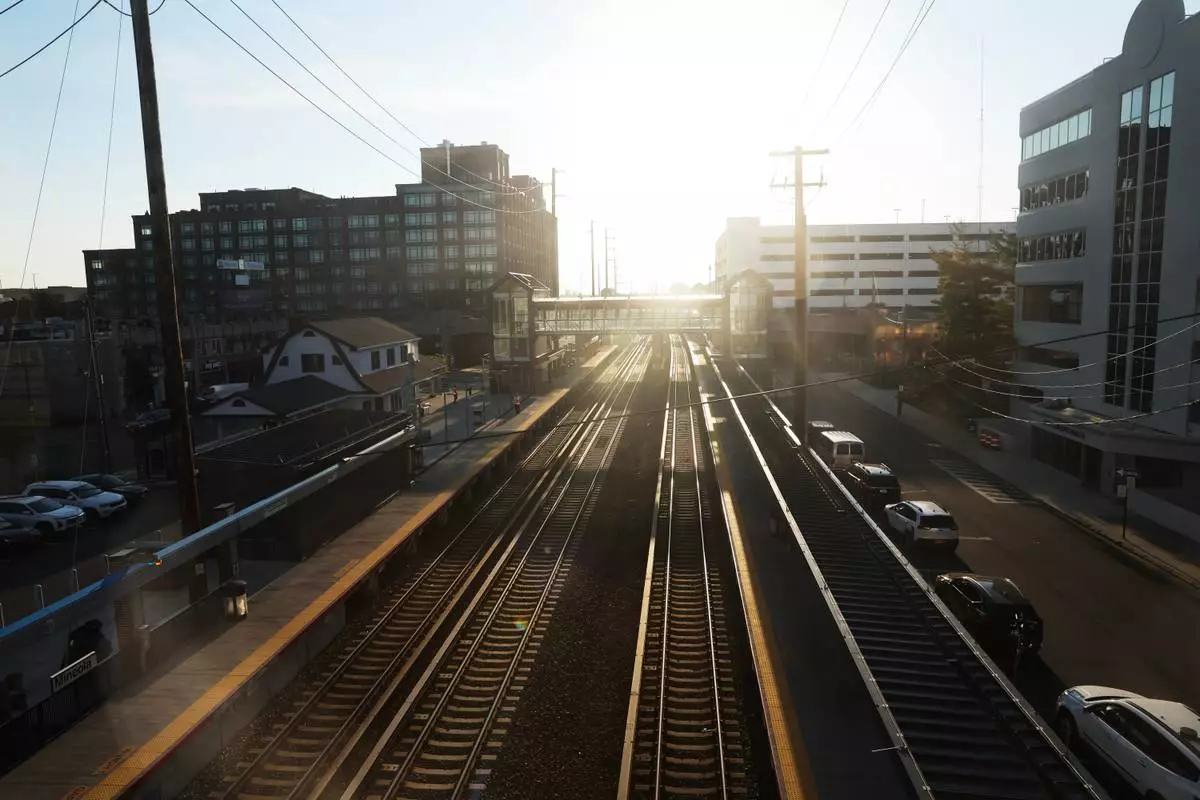
Tracks are empty at Mineola train station as Long Island Rail Road workers enter the third day of their strike, Monday, May 18, 2026, in Mineola, N.Y. (AP Photo/Heather Khalifa)