Skip to Content Facebook Feature Image

A new Swatch model is introduced, and a case study in overexcited 'drop culture' plays out

ENT

A new Swatch model is introduced, and a case study in overexcited 'drop culture' plays out
ENT

ENT

A new Swatch model is introduced, and a case study in overexcited 'drop culture' plays out

2026-05-19 03:33 Last Updated At:03:49

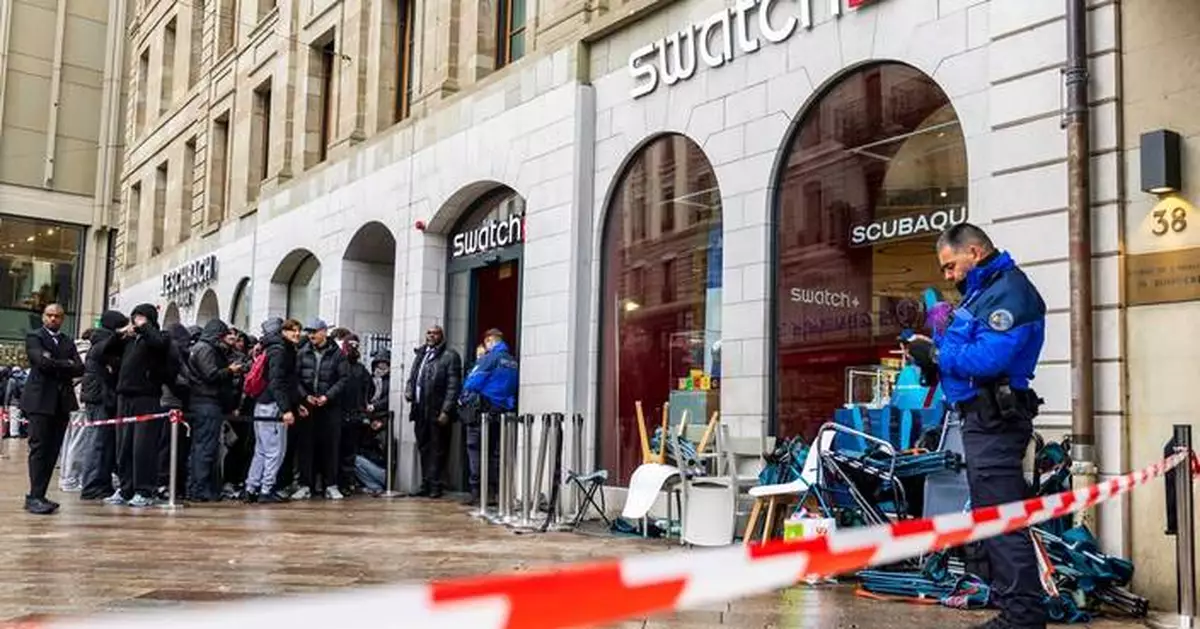
LONDON (AP) — In Paris, police deployed tear gas. In Milan, Italy, a fistfight erupted. In London, Singapore and New York, all-night queues snaked from the doors of Swatch stores — the latest examples of status-symbol “drop culture” to flash across the globe when status symbols and resale value collide.

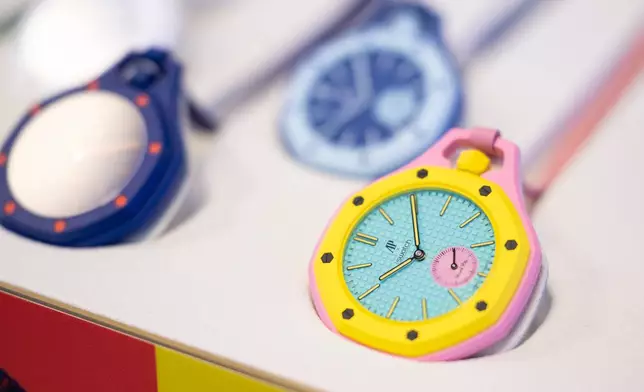
The company at the center of it all, Swatch, no stranger to over-the-top retail outbreaks, said it was time to chill. The Swiss watchmaker said Monday that there's no shortage of its Royal Pop pocket watch, a collaboration with Audemars Piguet's luxury timepieces.

More Images
The new Royal Pop watches by Swatch and Audemars Piguet, at the Swatch Drive-Thru Store next to Swatch headquarters in Biel/Bienne, Switzerland, Saturday, May 16, 2026. (Anthony Anex/Keystone via AP)
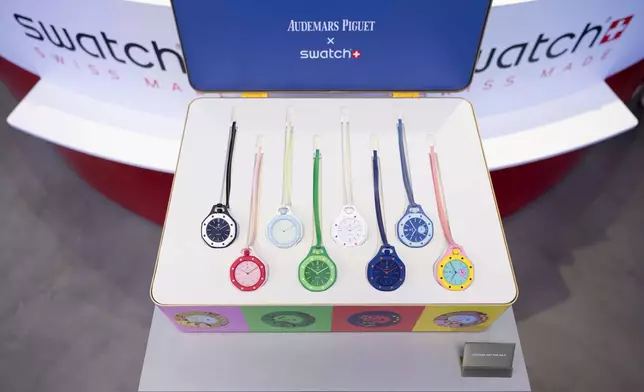
The new Royal Pop watches by Swatch and Audemars Piguet, at the Swatch Drive-Thru Store next to Swatch headquarters in Biel/Bienne, Switzerland, Saturday, May 16, 2026. (Anthony Anex/Keystone via AP)

The new Royal Pop watches by Swatch and Audemars Piguet, at the Swatch Drive-Thru Store next to Swatch headquarters in Biel/Bienne, Switzerland, Saturday, May 16, 2026. (Anthony Anex/Keystone via AP)

The new Royal Pop watches by Swatch and Audemars Piguet, at the Swatch Drive-Thru Store next to Swatch headquarters in Biel/Bienne, Switzerland, Saturday, May 16, 2026. (Anthony Anex/Keystone via AP)

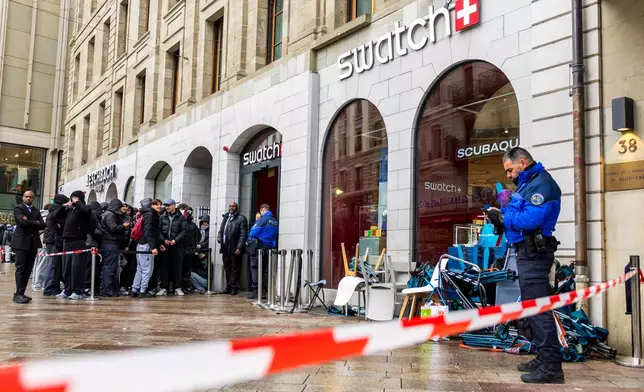
Swiss police officers secure the area where customers queue to buy the new Royal Pop watch by Swatch and Audemars Piguet, in Geneva, Switzerland, Saturday, May 16, 2026. (Salvatore Di Nolfi/Keystone via AP)
Swiss police officers secure the area where customers queue to buy the new Royal Pop watch by Swatch and Audemars Piguet, in Geneva, Switzerland, Saturday, May 16, 2026. (Salvatore Di Nolfi/Keystone via AP)
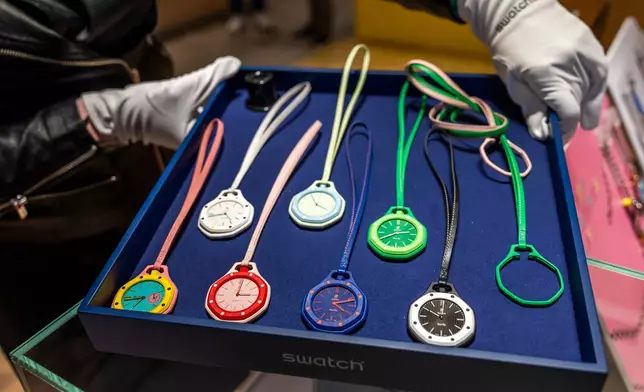
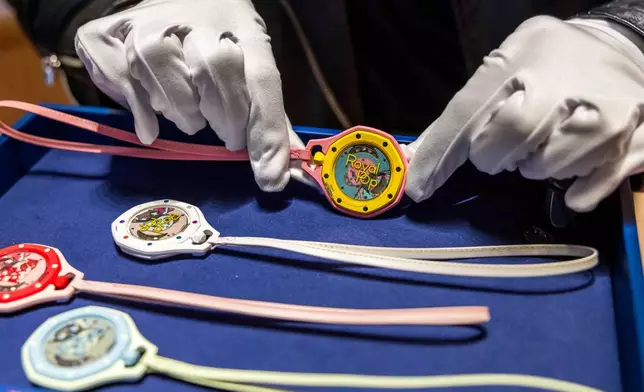
A saleswoman shows the new Royal Pop watch by Swatch and Audemars Piguet, in Geneva, Switzerland, Saturday, May 16, 2026. (Salvatore Di Nolfi/Keystone via AP)
A saleswoman shows the new Royal Pop watch by Swatch and Audemars Piguet, in Geneva, Switzerland, Saturday, May 16, 2026. (Salvatore Di Nolfi/Keystone via AP)

A saleswoman shows the new Royal Pop watches by Swatch and Audemars Piguet, in Geneva, Switzerland, Saturday, May 16, 2026. (Salvatore Di Nolfi/Keystone via AP)

A saleswoman shows the new Royal Pop watches by Swatch and Audemars Piguet, in Geneva, Switzerland, Saturday, May 16, 2026. (Salvatore Di Nolfi/Keystone via AP)

Swiss police officers secure the area where customers queue to buy the new Royal Pop watch by Swatch and Audemars Piguet, in Geneva, Switzerland, Saturday, May 16, 2026. (Salvatore Di Nolfi/Keystone via AP)

Swiss police officers secure the area where customers queue to buy the new Royal Pop watch by Swatch and Audemars Piguet, in Geneva, Switzerland, Saturday, May 16, 2026. (Salvatore Di Nolfi/Keystone via AP)

All for a "bioceramic" timekeeper that retails for around $400 — but perhaps more to the point, resells for thousands of dollars. By Monday, the candy-colored flex objects proliferated on eBay, with one boasting: “IN HAND!!! Swatch x AP Royal Pop,” for 3,055.58 British pounds ($4,092.31) “or Best Offer.”

It was the latest eruption in a generation-long trail of consumerist frenzy — both online and in the physical world — that has touched companies from Nike to Walmart to Apple as human beings race, sometimes frantically, to keep pace with buying trends and the potential for resale.

“It looks like people got crazy to get a Royal Pop to make money through resale, not because they are fans of the Swatch,” said Pierre-Yves Donze, a business history professor at Osaka University Graduate School of Economics. “People want money, especially. Royal Pop is not like a cool product, but a way to make easy money.”

That's a change, he said in an email, from past product drops from Swatch and other brands that benefit from the reach of social media to create the appearance, at least, of overwhelming demand. Previously, he said, people spent the money on buzzy objects because “they wanted to have it in their collection.”

Swatch did not respond to a question about its products being resold way above retail. But in a statement to The Associated Press, the company pointed at demand and retailers. It said that in about 20 of Swatch’s 220 stores worldwide where the Royal Pop was launched, “challenges arose on launch day because the queues of interested customers were exceptionally long and the organization of some shopping malls was not sufficient to handle this level of turnout.”

On social media, the Royal Pop has received over 11 billion views since the launch, the statement said.

It compared the Royal Pop to that of the MoonSwatch launch during the pandemic in March 2022 in partnership with sister company Omega. Then, a similar swoon appeared to ensue: masked people could be seen on social media from Singapore to Sydney, running apparently to Swatch stores.

Swatch has more than four decades of experience with hype. In 1984, it suspended a 13-ton yellow Swatch from a building in Frankfurt, Germany, around the same time people started donning its innovative timekeepers that were mass produced, affordable and very different from traditional heirlooms. People old and young began wearing timepieces in “White Memphis” and “Chrono-tech,” with its primary color hands.

This past weekend, the Swatch store in festive Carnaby Street again drew a line of people, this time ahead of the release of the Royal Pop. A mob of several dozen blocked the sidewalk at the Swatch store on nearby Oxford Street on Sunday, just before it opened. Then police closed all Swatch stores in London and several other U.K. cities. News outlets around the world reported similar scenes, with shuttered stores in the Netherlands and a “mosh pit” vibe in New York's Times Square.

In France, police used both tear gas grenades and tear gas spray to disperse crowds that gathered outside the country's Swatch boutiques, the national police service said.

It said officers used gas grenades at the sprawling Westfield Parly 2 shopping mall west of Paris, where TV footage also showed officers with riot shields and helmets stationed outside the watchmaker's outlet, its shutters down. Officers in the southeast city of Lyon also deployed a gas grenade when a crowd ignored repeated warnings to disperse on the city’s Bellecour public square, while municipal police in the southern city of Montpellier used tear gas spray, the police service said. It said crowds gathered peacefully outside Swatch outlets in other towns.

Swatch France posted on Instagram that “because of public security considerations,” its stores in a half dozen French locations were closed for the day.

The company, meanwhile, issued a statement assuring people that the Royal Pop will be available for months.

The pocket watch launched only in retail stores and was not available online — a risky move, some critics said, because the atmosphere was likely amped up by the big money at stake for the resellers in line. There were sporadic injuries reported as well as some arrests and property damage.

To many companies, the liability risk of the hype is too high.

“A lot of the streetwear drops and sneaker drops that used to happen when I was younger, all of them have moved online because of safety concerns,” said Odunayo Ojo, a London-based fashion and cultural critic, said on his YouTube channel, Fashion Roadman. Either Swatch “didn't get the memo,” he said, underestimated the draw to the new product or strategically hyped the drop to pump sales.

“Swatch already has a track record of understanding how these things go," Ojo said.

By Monday, the lines had died down, perhaps because, as onlookers near a Swatch store in Paris said, there were no Royal Pop watches left in stores. New shipments, they'd heard, were on the way.

Associated Press journalists John Leicester and Oleg Cetinic in Paris contributed.
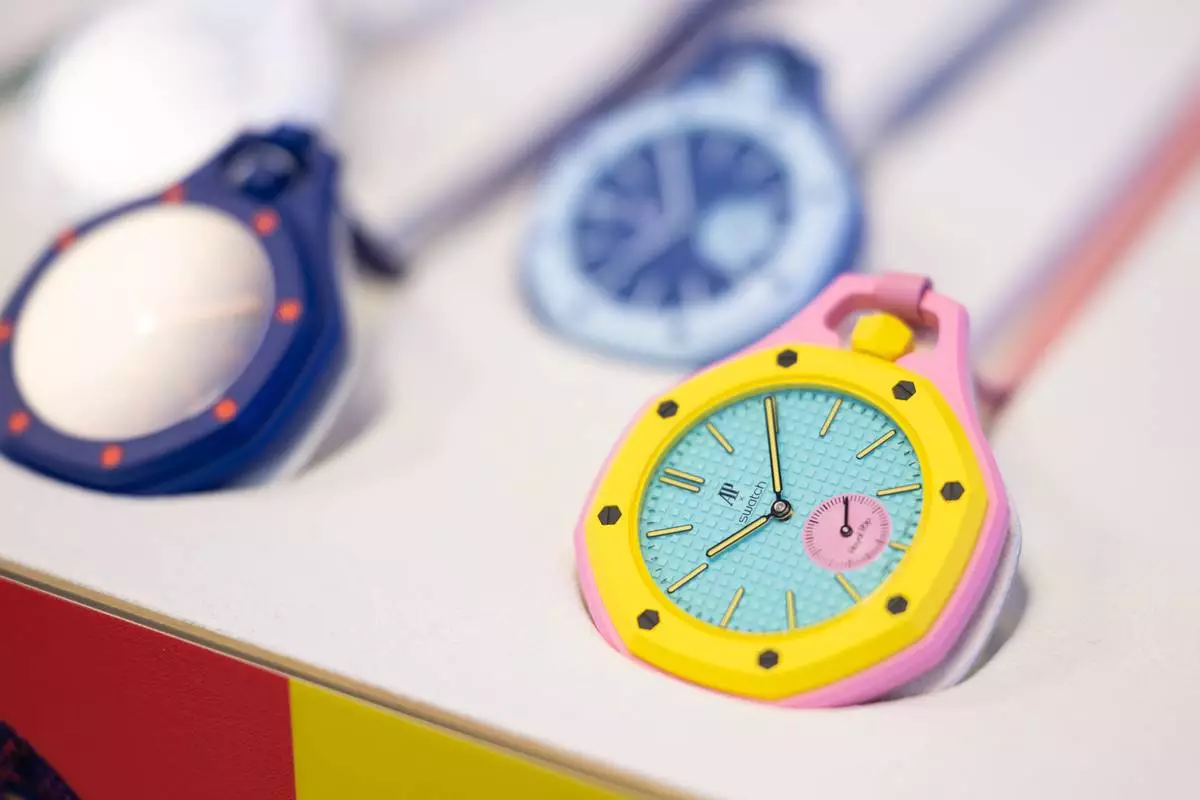
The new Royal Pop watches by Swatch and Audemars Piguet, at the Swatch Drive-Thru Store next to Swatch headquarters in Biel/Bienne, Switzerland, Saturday, May 16, 2026. (Anthony Anex/Keystone via AP)
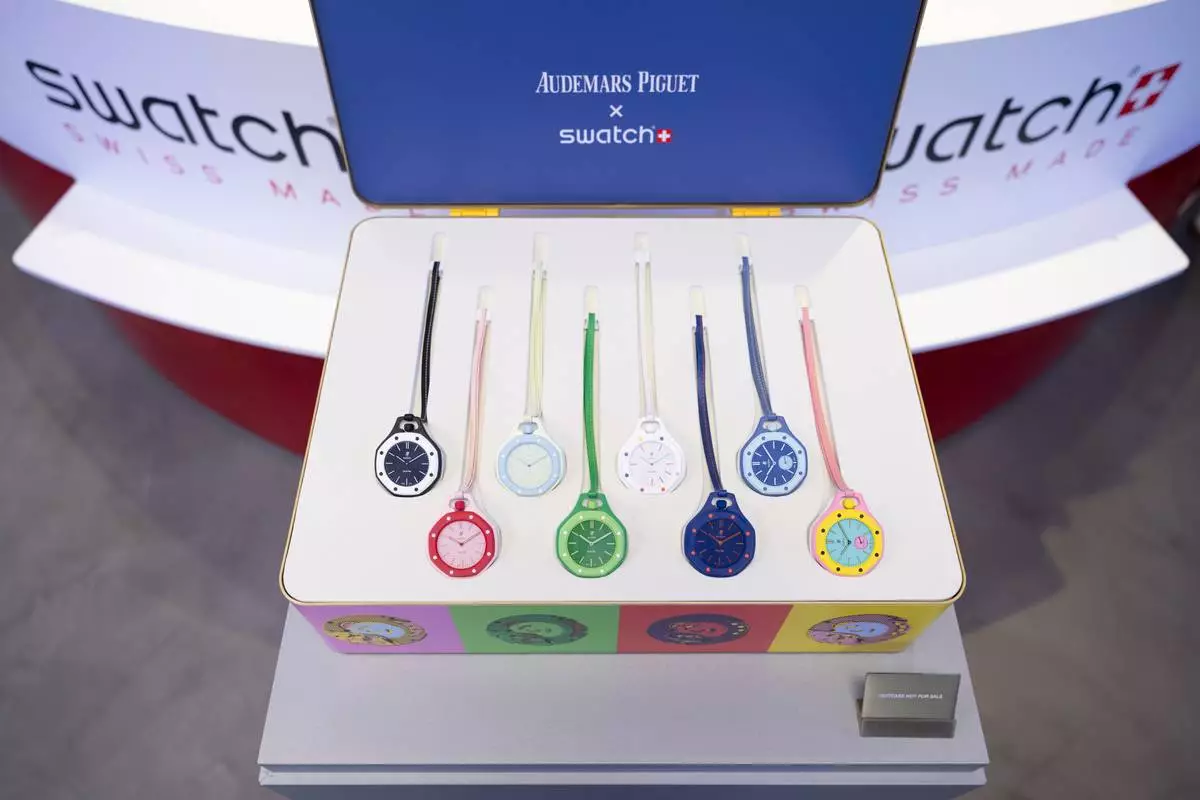
The new Royal Pop watches by Swatch and Audemars Piguet, at the Swatch Drive-Thru Store next to Swatch headquarters in Biel/Bienne, Switzerland, Saturday, May 16, 2026. (Anthony Anex/Keystone via AP)
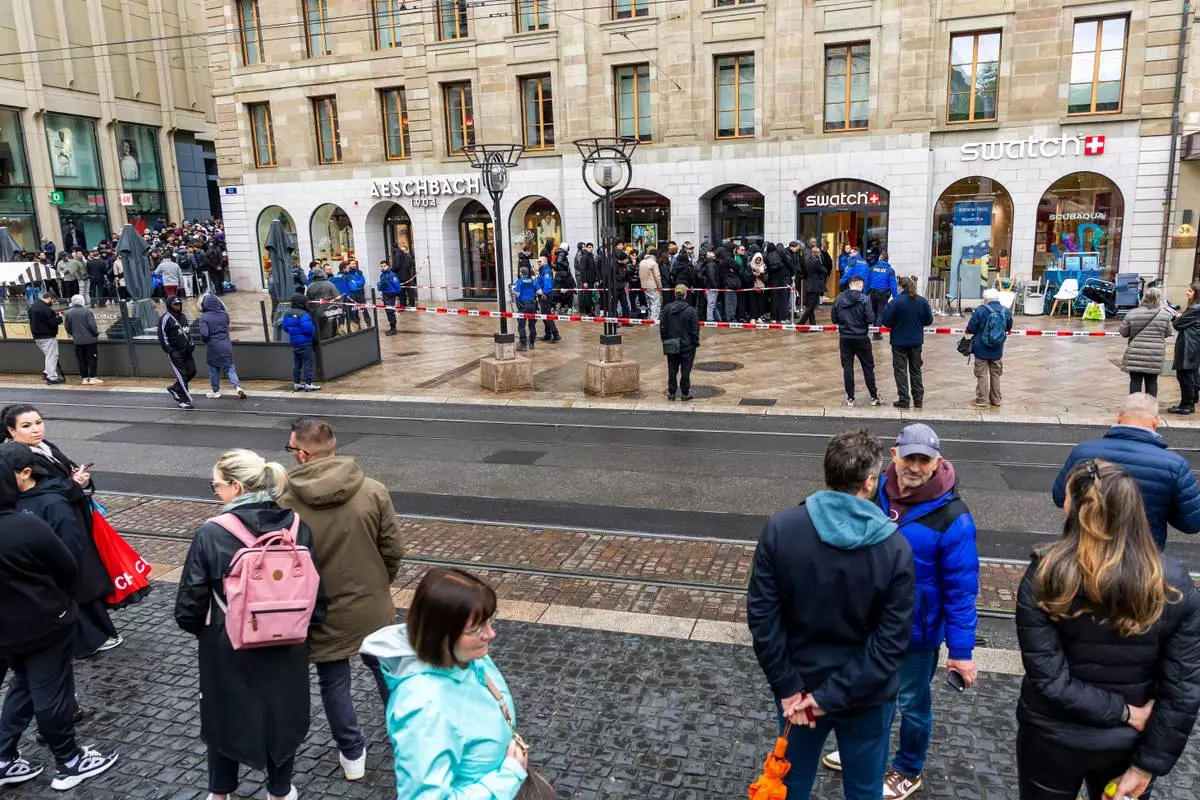
The new Royal Pop watches by Swatch and Audemars Piguet, at the Swatch Drive-Thru Store next to Swatch headquarters in Biel/Bienne, Switzerland, Saturday, May 16, 2026. (Anthony Anex/Keystone via AP)

The new Royal Pop watches by Swatch and Audemars Piguet, at the Swatch Drive-Thru Store next to Swatch headquarters in Biel/Bienne, Switzerland, Saturday, May 16, 2026. (Anthony Anex/Keystone via AP)

Swiss police officers secure the area where customers queue to buy the new Royal Pop watch by Swatch and Audemars Piguet, in Geneva, Switzerland, Saturday, May 16, 2026. (Salvatore Di Nolfi/Keystone via AP)
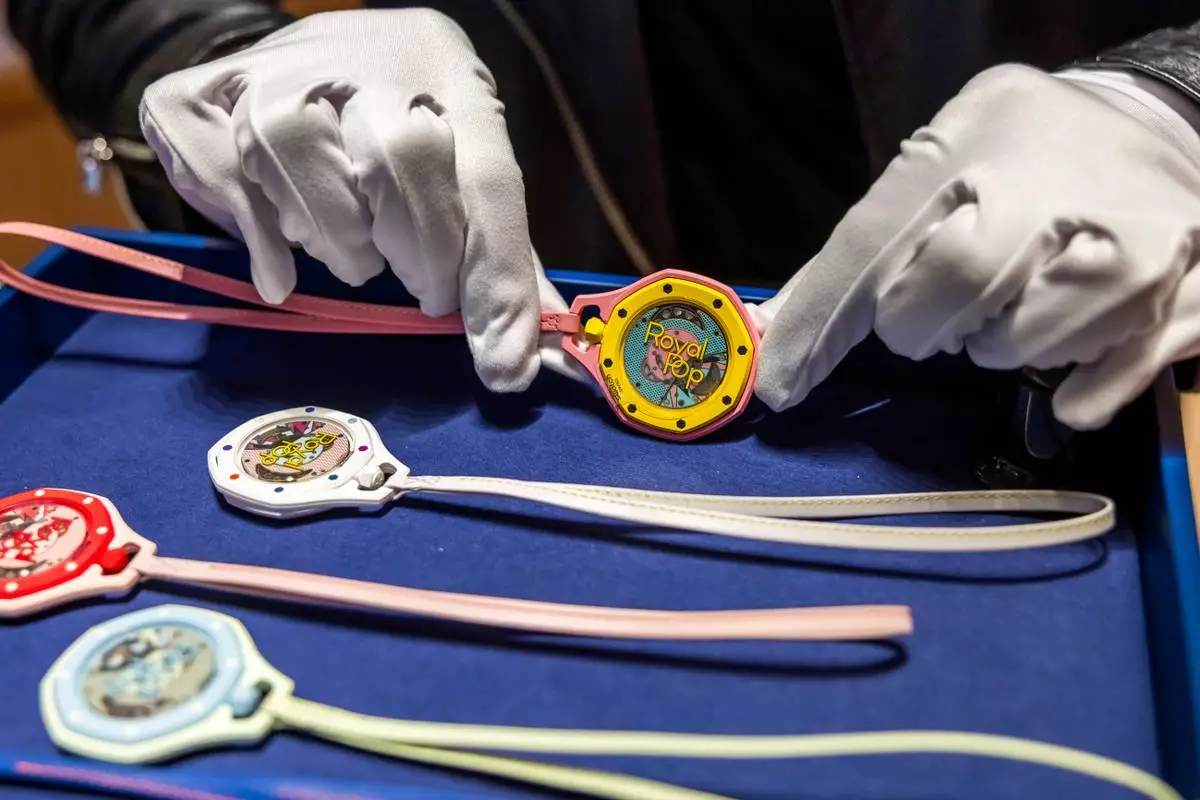
Swiss police officers secure the area where customers queue to buy the new Royal Pop watch by Swatch and Audemars Piguet, in Geneva, Switzerland, Saturday, May 16, 2026. (Salvatore Di Nolfi/Keystone via AP)
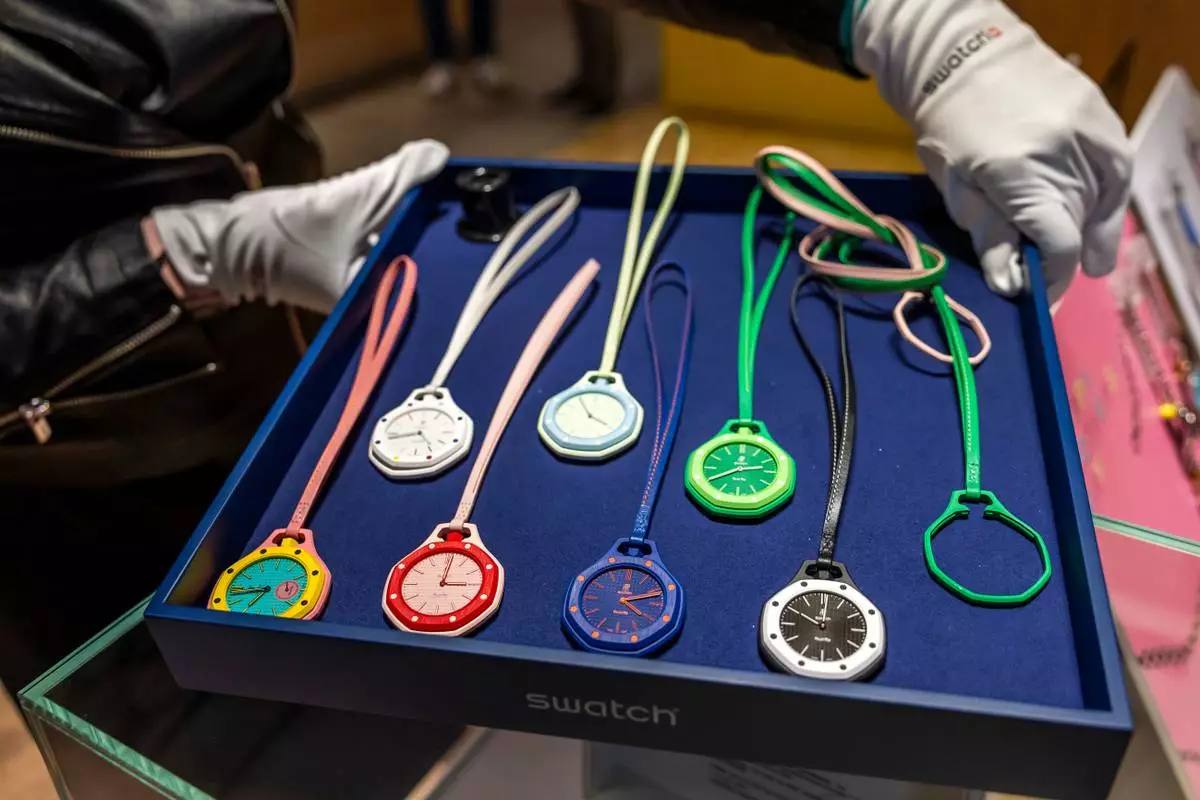
A saleswoman shows the new Royal Pop watch by Swatch and Audemars Piguet, in Geneva, Switzerland, Saturday, May 16, 2026. (Salvatore Di Nolfi/Keystone via AP)
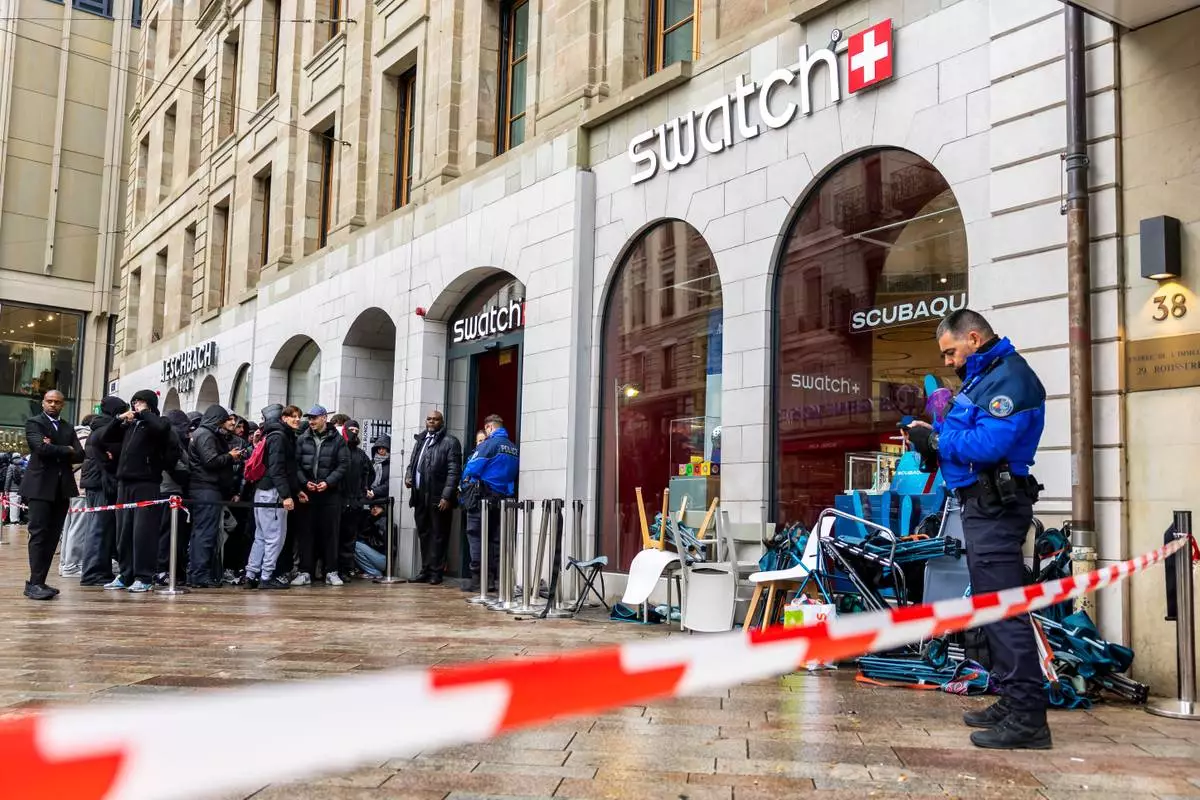
A saleswoman shows the new Royal Pop watch by Swatch and Audemars Piguet, in Geneva, Switzerland, Saturday, May 16, 2026. (Salvatore Di Nolfi/Keystone via AP)


A saleswoman shows the new Royal Pop watches by Swatch and Audemars Piguet, in Geneva, Switzerland, Saturday, May 16, 2026. (Salvatore Di Nolfi/Keystone via AP)

A saleswoman shows the new Royal Pop watches by Swatch and Audemars Piguet, in Geneva, Switzerland, Saturday, May 16, 2026. (Salvatore Di Nolfi/Keystone via AP)

Swiss police officers secure the area where customers queue to buy the new Royal Pop watch by Swatch and Audemars Piguet, in Geneva, Switzerland, Saturday, May 16, 2026. (Salvatore Di Nolfi/Keystone via AP)

Swiss police officers secure the area where customers queue to buy the new Royal Pop watch by Swatch and Audemars Piguet, in Geneva, Switzerland, Saturday, May 16, 2026. (Salvatore Di Nolfi/Keystone via AP)

USHUAIA, Argentina (AP) — Travelers hoping to catch a glimpse of Magellanic penguins and humpback whales have journeyed in greater numbers every year to Ushuaia, the main Antarctic cruise hub at the southernmost point of Argentina.

The wind-lashed city that bills itself as the “end of the world” now fears for its future. In the last week, the remote outpost has found itself at the center of speculation about the source of a deadly hantavirus outbreak on an Atlantic cruise after Argentina's Health Ministry said it was examining whether the outbreak’s first victims, a Dutch couple who died in April, contracted the rat-borne virus there.

Argentine scientists searching for the source of the outbreak arrived Monday in Ushuaia. Their research institute said they would capture and analyze rodents over the next few day in areas linked to the couple's itinerary in the city.

Questions surround the investigation. Authorities in Ushuaia — the capital of left-leaning Tierra del Fuego Province, which has frequently clashed with libertarian President Javier Milei — say they're victims of a smear campaign. The Argentine Health Ministry says it can't rule out any destination visited by the Dutch bird enthusiasts during their monthslong road trip through Argentina and Chile before boarding the ship in Ushuaia.

Despite a lack of any evidence to suggest the outbreak started in Ushuaia, people here whose livelihoods depend on foreign visitors say they are feeling the effects.

“This is a place that we’ve tried to promote as being as far away as possible from all the world’s problems — war, racism, health problems, too,” said Julio Lovece, the former tourism secretary of Ushuaia. “There’s concern because our main attraction is clean and pure landscapes, the imaginary idea of the end of the world.”

The arrival of winter has emptied Ushuaia save for a trickle of Brazilian tourists in puffy jackets and big hoods bobbing down the sleet-slick streets like the penguins they've come to visit.

“We got a little worried this was something similar to what we experienced with COVID,” said Vinícius Pezzini, 38, an investment banker from São Paulo on his honeymoon. “But from what it seems, everything is functioning normally."

As the subpolar Patagonian wind blows in off the Beagle Channel, tour operators already are looking toward the next high season starting in October, when deep-pocketed passengers plan cruises to Antarctica. Several travel agents said that fears about the Andes variant of the hantavirus have already caused some Americans and Europeans to scrap cruise bookings for next season. They declined to say how many.

“We have seen a number of passengers canceling trips, but my main concern is not the cancellations but people who were thinking about going to Ushuaia but had two or three destinations to choose from and now may go to Southeast Asia or Africa,” said Ángel Brisighelli, owner of the Ushuaia-based Rumbo Sur travel agency. “That damage won’t be visible until much later.”

It's a reminder of just how fragile the tourism economy remains, especially for cruises occupying an outsized place in the public imagination when it comes to infectious disease.

Some officials in Tierra del Fuego are subscribing to the philosophy that all press is good press.

“We suffered a loss of prestige, yes. But this is also a chance to show that Ushuaia is one of the safest places in the world,” said Juan Pavlov, the secretary of foreign affairs at the Tierra del Fuego Tourism Institute.

Many residents of Tierra del Fuego, lured in the 1970s by tax breaks to the rugged archipelago split between Argentina and Chile, remember when Antarctic travel meant naval patrols and research expeditions. Today, the white continent routinely tops bucket lists of vacationers from around the world.

A decade ago, just over 38,400 Antarctic cruise passengers set out from Ushuaia, a city of 80,000. In the 2025-2026 season, more than 135,000 did, according to Argentine port authorities, many hoping to experience the world's largest ice sheets before they melt.

Ninety percent of Antarctic cruises depart from Ushuaia, and the city says it relies on tourism for over 25% of its revenue. Any drop in visitors, however small, can have ripple effects throughout the economy, said Patricio Cornejo, head of local travel agency Tierra del Fuego Aventura.

“Everything would exist in a different reality without the dynamism that tourism creates here, especially when other industries fail to generate momentum,” he said.

Under Milei, Tierra del Fuego has weathered a series of economic blows. The government's scrapping of trade barriers has battered its mainstay electronics production, while its strengthening of the local currency has given Argentines more spending power abroad, discouraging tourism at home that keeps Ushuaia afloat during the low season.

Argentina’s apparent lack of urgency in hunting for the origin of the outbreak has perplexed experts overseas.

Officials are still struggling to fill the gaps in the late Dutch couple’s itinerary. The start of field work on Monday to detect the possible presence of the hantavirus in a province that has never registered a case of it comes nearly two weeks after Argentina’s Health Ministry first announced the scientists would travel.

“The investigation is going to be key for us to see what we can learn from the outbreak,” said Mark Loafman, a family medicine doctor and public health expert at Cook County Health in Chicago. “We’d like to see hypotheses based on science, and not on concern over tourism.”

The Pan American Health Organization — to which Argentina is party despite withdrawing from the World Health Organization last year — defended Argentina’s response and said it was working with its government to “strengthen the detection and follow-up of potential cases.”

“While the ongoing investigation remains important, its broader public health relevance for the Americas is limited, given that the disease is endemic in the region,” the organization said in response to questions on whether the lagging investigation caused concern.

Here in Ushuaia, authorities argue the most logical source of contagion is the Patagonian region that spans southern Chile and three Argentine provinces, where the same Andes hantavirus identified in the cruise outbreak circulates.

But health officials say they have no record of the Dutch couple visiting those endemic areas during the incubation period for the virus — estimated to be between nine and 45 days before the arrival of symptoms on April 6.

In recent days, they've stressed that all is well in Argentina's treasured tourist destinations.

“Tourism operators tell us that many trip reservations have been canceled, so we must make this clarification,” announced José Contreras, mayor of the village of Epuyén where a 2018 hantavirus outbreak killed 11 people. "Epuyén has no hantavirus this season. People should feel at ease and continue to visit.”

Boats sit in the dock in Ushuaia, Argentina, Thursday, May 14, 2026. (AP Photo/Joel Reyero)

Boats sit in the dock in Ushuaia, Argentina, Thursday, May 14, 2026. (AP Photo/Joel Reyero)

People sit on a bench in Ushuaia, Argentina, Thursday, May 14, 2026. (AP Photo/Joel Reyero)

People sit on a bench in Ushuaia, Argentina, Thursday, May 14, 2026. (AP Photo/Joel Reyero)

An eagle sits on a branch in Ushuaia, Argentina, Thursday, May 14, 2026. (AP Photo/Joel Reyero)

An eagle sits on a branch in Ushuaia, Argentina, Thursday, May 14, 2026. (AP Photo/Joel Reyero)

The sun shines down on Ushuaia, Argentina, Thursday, May 14, 2026. (AP Photo/Joel Reyero)

The sun shines down on Ushuaia, Argentina, Thursday, May 14, 2026. (AP Photo/Joel Reyero)

Recommended Articles