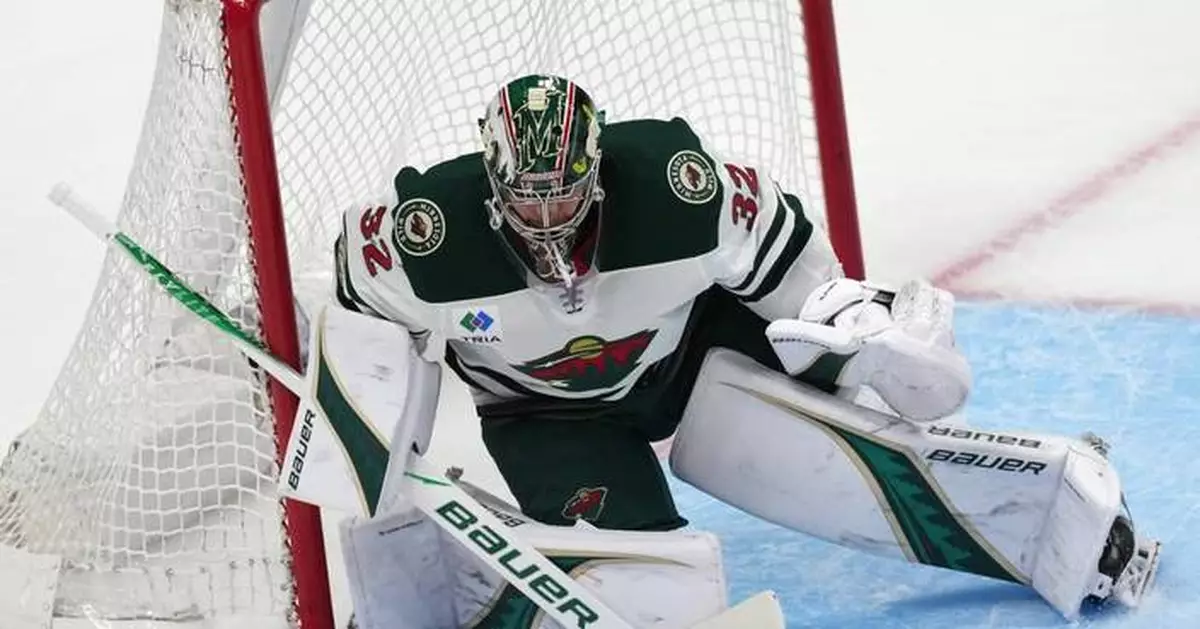
ST. PAUL, Minn. (AP) — Minnesota Wild goalie Filip Gustavsson will have offseason surgery on his hip, putting his readiness for the beginning of training camp in question.
Wild general manager Bill Guerin said Monday the procedure would take place “as soon as possible” to repair damage from overall wear and tear, not in response to any specific injury that occurred during the playoffs.
Gustavsson slumped down the stretch of the regular season and was benched for the start of the playoffs when rookie Jesper Wallstedt took over as the No. 1 goalie. Gustavsson made one postseason start, a 5-2 loss at Colorado in Game 2 of the second-round NHL playoff series. The Avalanche ousted the Wild in five games.
Gustavsson signed a five-year, $34 million contract extension last October that kicks in with the 2026-27 season and carries a full no-trade clause for the first two years. He went 28-15-6 in 49 starts during the regular season with a 2.69 goals-against average, a .903 save percentage and four shutouts in his fourth year with the Wild.
Wallstedt was 18-9-6 in 33 starts with a 2.61 goals-against average, a .915 save percentage and four shutouts. During the playoffs, he won five of 10 starts, gave up three or fewer goals seven times, and made 30-plus saves in half of his appearances.
Given the commitment the Wild made to Gustavsson after the retirement of Marc-Andre Fleury and the performance by Wallstedt during his debut season, the 2021 first-round draft pick would be one of the club's most valuable trade chips to use in the long-running quest to find a true No. 1 center.
That path, though, would come with considerable risk.
“I like our goaltending situation, to be quite honest with you,” Guerin said at his season-ending news conference. "Both of our goalies are No. 1 goalies, you know? The luxury of it is being able to put a fresh rested goalie in the net every night, and you know both guys are signed. They’re both very good. They work well in a tandem. They support each other. I’m very comfortable with where it is.”
For their part, both Gustavsson and Wallstedt endorsed the time share in exit interviews with reporters last week. The fact that they're both natives of Sweden and recent Olympic teammates doesn't hurt the dynamic, either.
“I thought our competition was really good in everything, from every day being in practice, to competing in drills, to what we did off ice, and to competing to play the games,” Wallstedt said. “I thought it made us both better.”
The headliner trade of this NHL season was the deal that sent star defenseman Quinn Hughes from Vancouver to Minnesota for recent first-round draft picks Zeev Buium, Liam Ohgren and Marco Rossi and the Wild's first-round selection next month. Hughes played up to his billing, with 53 points in 48 regular-season games and 15 points in 11 playoff games.
“The impact that he had on our team was incredible,” Guerin said. “So, yeah, priority one.”
Hughes, who has one year left on his current contract with a $7.85 million salary cap hit, has said nothing to suggest he's hesitant to commit to Minnesota long term.
“I love the team. I love the city and the fans. Just being in that locker room, it’s a special group,” Hughes said last week. “I would definitely be open to re-signing here.”
With Kirill Kaprizov and Matt Boldy up front and Hughes and Brock Faber leading the blue-liners, the Wild have their most talented group of core players in team history. Missing center Joel Eriksson Ek and defenseman Jonas Brodin during the entire second-round series, though, eroded their depth. The absence of first line right wing Mats Zuccarello during half of the first-round series also loomed large.
Zuccarello, who turns 39 before training camp begins in September, will be an unrestricted free agent this summer along with four other forwards who were fixtures during the playoffs: Michael McCarron, Marcus Johansson, Vladimir Tarasenko and Nick Foligno. McCarron is the youngest of that quintet at age 31, and regardless of age and performance they probably wouldn't all fit under the salary cap when the Wild have depth at center and defenseman to address.
“We have cap space. We have assets. We’ll do whatever we can to make this team better and better so we can win a championship,” Guerin said. “I’ve shown you — and our fans, and everybody involved — that if there’s something out there that can make our team better, I am willing to do it, and I won’t sit on my hands.”
AP NHL: https://apnews.com/hub/stanley-cup and https://apnews.com/hub/nhl
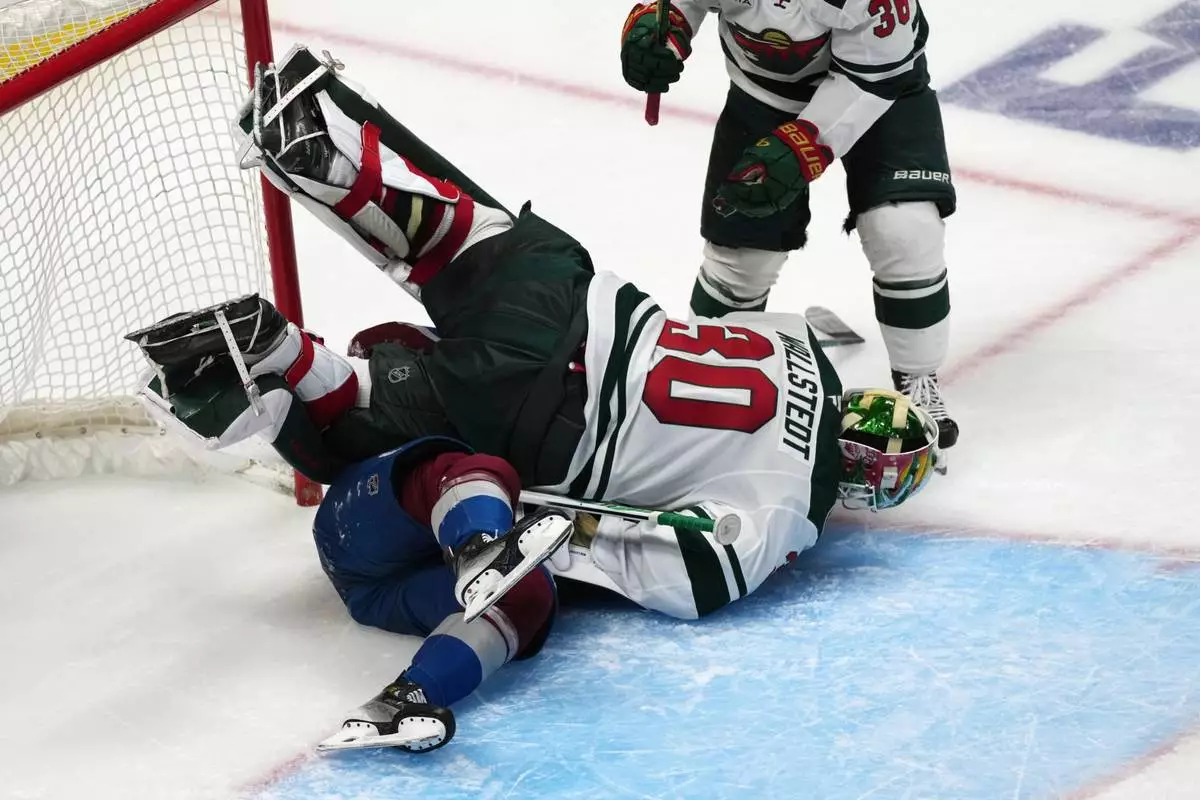
Minnesota Wild goaltender Jesper Wallstedt, center, falls after being run into by Colorado Avalanche right wing Valeri Nichushkin in the third period of Game 5 of an NHL Stanley Cup hockey second-round playoff series Wednesday, May 13, 2026, in Denver. (AP Photo/David Zalubowski)
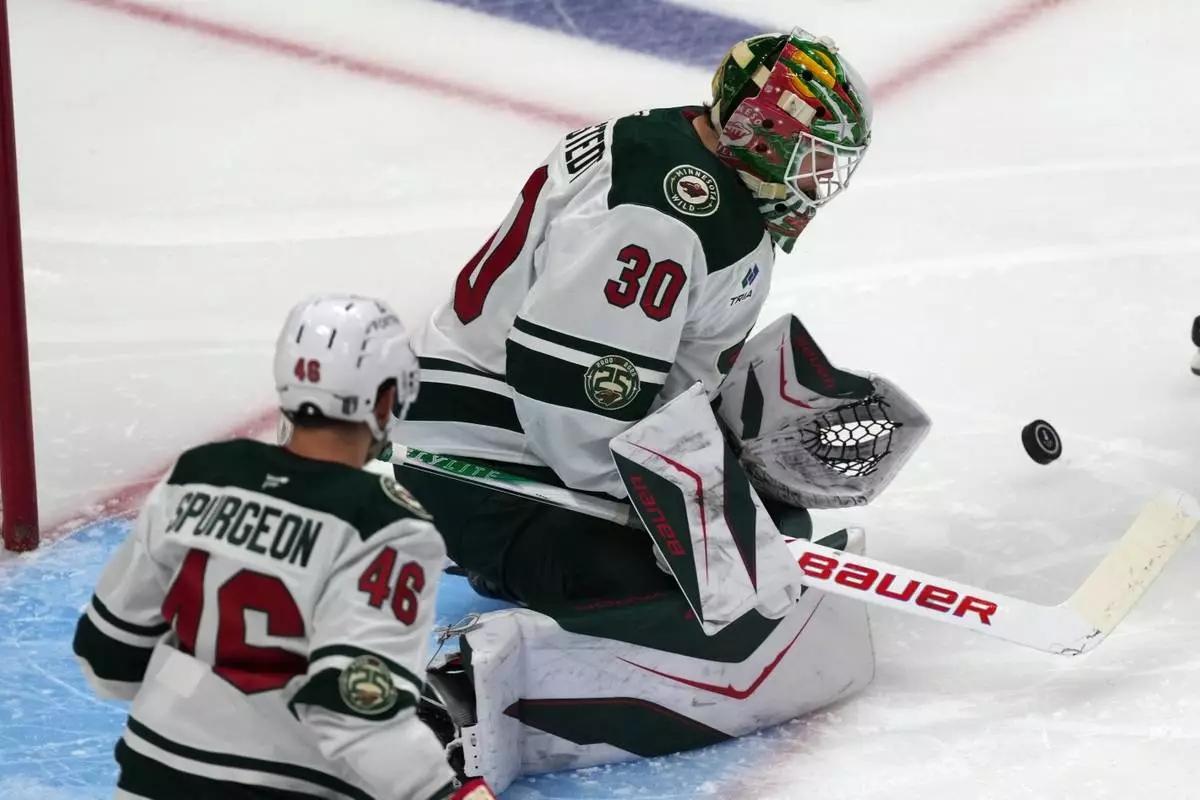
Minnesota Wild goaltender Jesper Wallstedt stops a shot in the first period of Game 5 of an NHL Stanley Cup hockey second-round playoff series against the Colorado Avalanche, Wednesday, May 13, 2026, in Denver. (AP Photo/David Zalubowski)
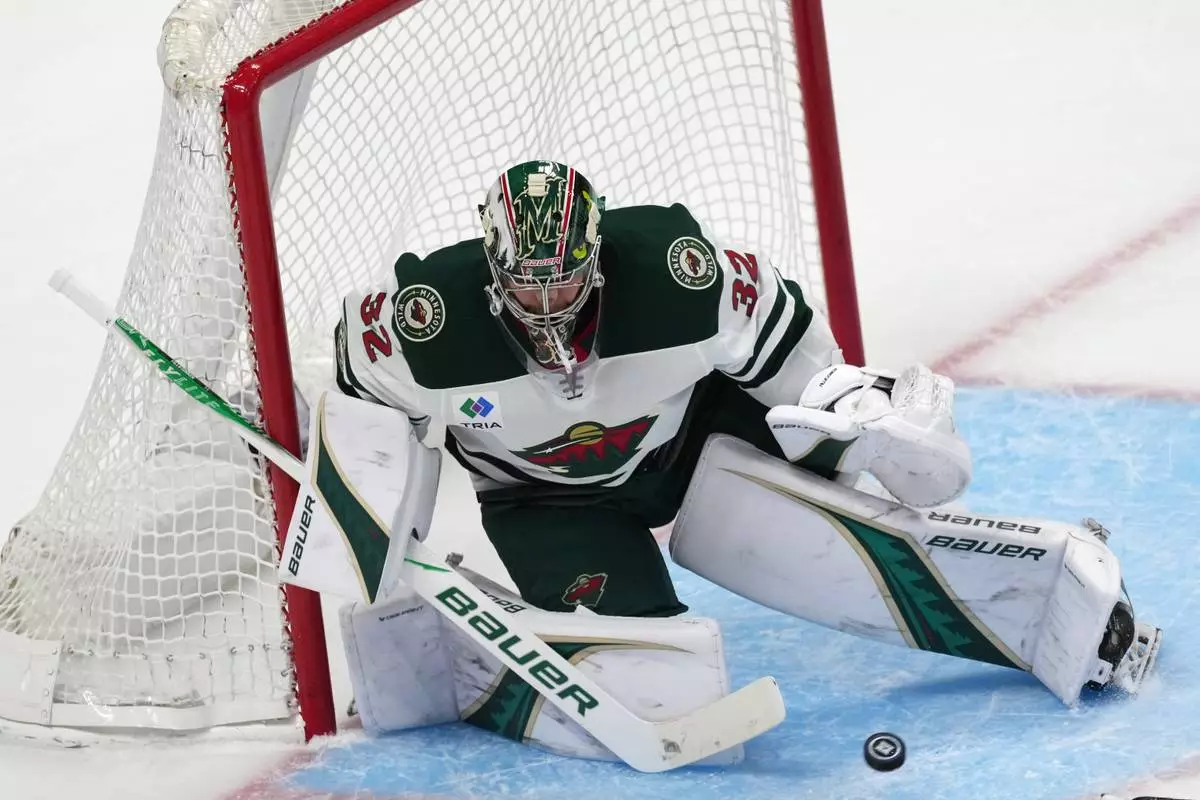
Minnesota Wild goaltender Filip Gustavsson stops a shot in the third period of Game 2 of an NHL hockey Stanley Cup second-round playoff series against the Colorado Avalanche Tuesday, May 5, 2026, in Denver. (AP Photo/David Zalubowski)