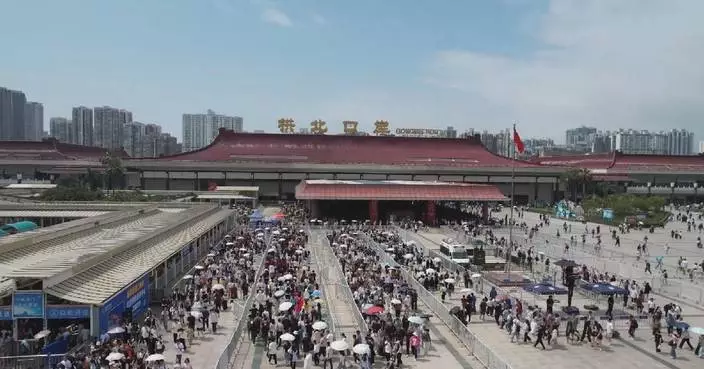
The trade in goods in China's Yangtze River Delta region surged to a record 6.14 trillion yuan (about 0.9 trillion U.S. dollars) in the first four months of 2026, up 15.9 percent from the previous year, Shanghai Customs said on Monday.
The figure also accounted for 37.8 percent of China's total goods trade in the same period.
Exports from the region reached 3.83 trillion yuan, up 13.6 percent year on year, while imports rose 20.1 percent to 2.31 trillion yuan. The Yangtze River Delta region contributed 41 percent of China's total exports of goods and 33.5 percent of goods imports, according to data from Shanghai Customs.
Zhu Kongjia, deputy head of the statistics and analysis division at Shanghai Customs, said that the 'new trio,' namely, electric vehicles, lithium-ion batteries, and photovoltaic products, as well as high-end manufacturing products, were the main factors that drove the growth of trade in goods in the region.
"The 'new trio' and high-end manufacturing products were the main driving force. In the first four months, electromechanical products accounted for more than 60 percent of exports in the Yangtze River Delta region. Among them, integrated circuits and automobiles saw sharp increases of 79.4 percent and 69.7 percent respectively, making up 40.6 percent and 57.1 percent of the country's exports in the same period," said Zhu.
From January to April, trade with Belt and Road partner countries rose 17.1 percent to 3.09 trillion yuan , while trade with other members of the Regional Comprehensive Economic Partnership (RCEP) jumped 27.9 percent to 2.13 trillion yuan, data from Shanghai Customs showed.
"We are stepping up support for key industrial chains and new foreign trade models, carrying out joint supervision across customs districts for high-tech goods such as biopharmaceuticals and integrated circuits, and facilitating efficient circulation of related products within the region," said Xu Bin, head of reform and development at Shanghai Customs' general business division.
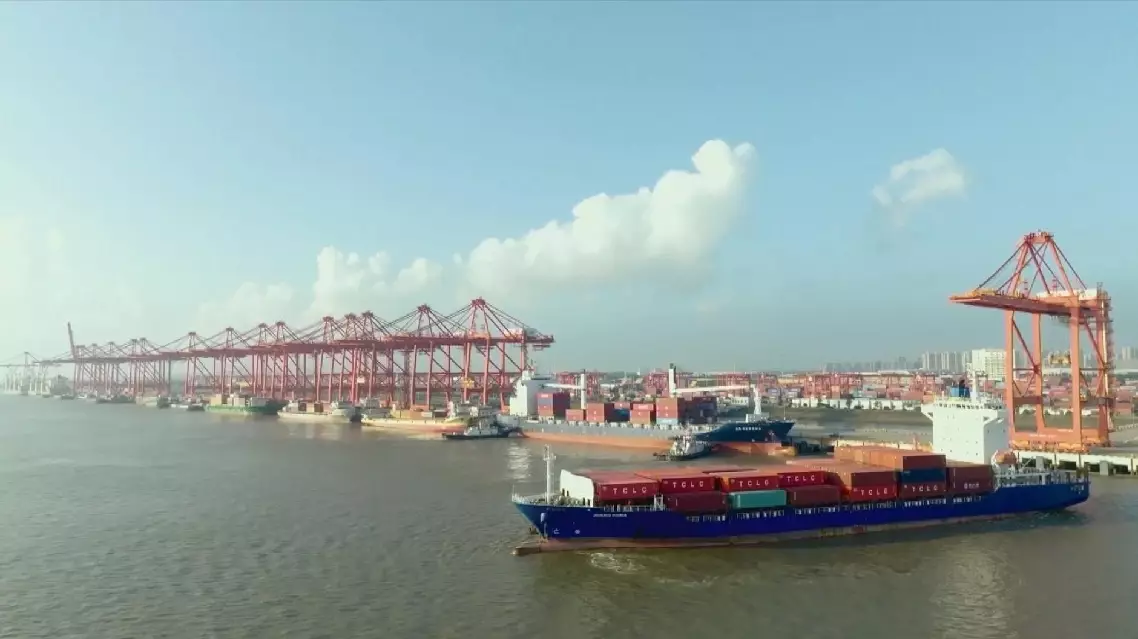
Yangtze River Delta trade in goods hits record high in first four months
CEO of Mastercard Michael Miebach, who was part of the U.S. business delegation that accompanied President Donald Trump during his just-concluded state visit to China, has hailed China's commitment to advancing global connectivity and delivering win-win results.
Trump on Friday wrapped up his three-day visit to China at the invitation of Chinese President Xi Jinping, marking the first visit by a U.S. president to China in almost nine years since President Xi hosted Trump in the Chinese capital in November 2017.
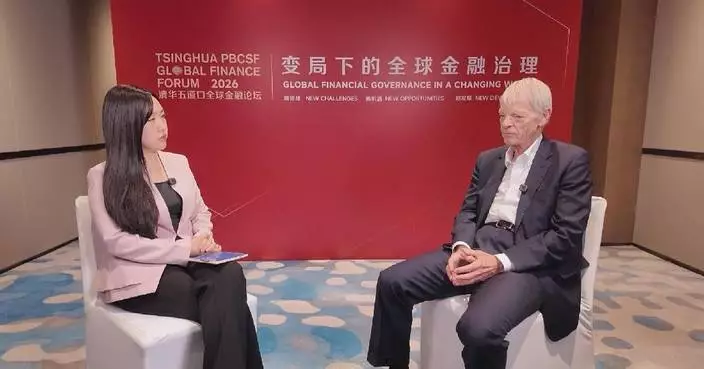
In an exclusive interview with China Global Television Network (CGTN), Miebach shared his views on how China’s continual push for global connectivity resonates positively with people in the United States and beyond.
Mastercard's Chinese joint venture announced the official commencement of its bank card clearing operations in May 2024, issuing Mastercard-branded cards with its member institutions for domestic and international use.
Over the past two years, Miebach said, the company has rolled out more than 200 products and programs tailored to the Chinese market, greatly enhancing convenience for users.
"Before our license was bifurcated, largely, that you either have a card that does something over here and have a local solution. So now you have ultimate choice, ultimate convenience and safety, security, predictable experience everywhere you go. If you're a person that travels a lot or a businessperson, for example, then some business trips really matter. So, it's a pretty unique proposition," the CEO said.
He also recognized China's unfaltering commitment to cooperation and willingness to work with others, saying that these principles make true mutual benefit possible.
"The priority of the Chinese government is strengthening the service sector. It is driving consumption. It is international connectivity. So that point, I just illustrated, it's very firmly on the last one. So, I think we're very well aligned with this joint venture coming together between our Chinese partners, ourselves, and our customers here to really drive what the government is trying to do. It makes a lot of sense for us. It's a true win-win," he said.
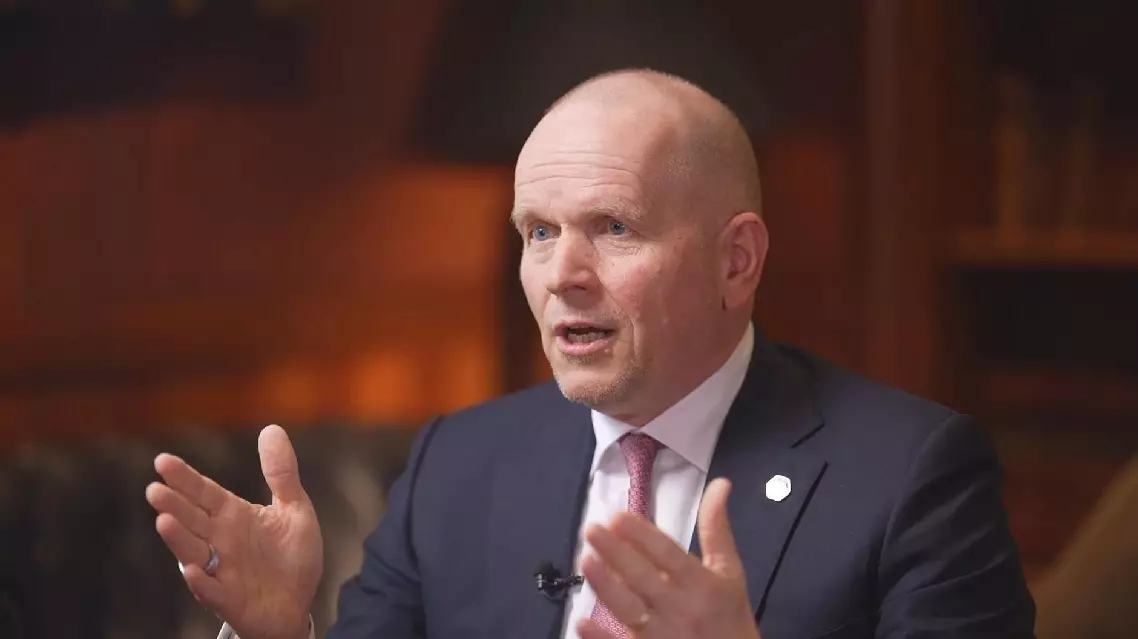
China's push for global connectivity delivers true win-win results: Mastercard CEO