
MINNEAPOLIS--(BUSINESS WIRE)--May 19, 2026--
Infios, a global leader in intelligent supply chain execution, today published a new proprietary research report, “The Rise of the Tariff-Optimized Supply Chain: Inside the New Rules of Global Trade,” showing how the 2025 U.S. tariff policy created a structural break in global trade and permanently changed how companies execute their supply chains. Based on year-over-year* analysis of more than one million U.S. customs entries, the report finds that tariffs are no longer a predictable cost line item. They are a live execution variable that companies actively manage through classification, mode selection, routing, warehousing and financial sequencing.
This press release features multimedia. View the full release here: https://www.businesswire.com/news/home/20260519472779/en/
“At Infios, one of our guiding principles is Thinking Ahead, helping customers to anticipate change instead of reacting to it after the fact,” said Ed Auriemma, CEO at Infios. “This research highlights how global trade patterns are evolving and where companies are adjusting routes, transportation modes and execution strategies in response. Organizations that recognize those shifts early and respond quickly will be best positioned to deliver execution without interruption.”
The report identifies two distinct phases of response. In the initial shock period, importers experimented with “panic routing,” short-term mode shifts and temporary United States-Mexico-Canada Agreement (USMCA) surges. The 50%+ duty bracket, which had barely existed before 2025, spiked sharply before settling at a lower but still elevated level. And with urgency overriding cost discipline, air freight and truck share both rose as speed became the priority. Over time, the behaviors that lasted created a structural and deliberate redesign for global trade execution.
“What we’re seeing isn’t just a shift in sourcing or supplier mix. It’s a fundamental change in how trade is executed,” said Don Mabry, SVP, Global Trade Solutions at Infios. “Tariffs have introduced a level of volatility that companies can no longer manage with periodic adjustments or manual processes. Organizations able to sense change early, evaluate options quickly and reconfigure execution paths will outperform those operating within rigid, single-path systems designed for a more stable world. The organizations that treat trade execution as a dynamic discipline, not a back-office function, are the ones gaining a durable competitive advantage.”
Notable findings include:
Not all sourcing shifted equally. Consumer goods and light manufacturing diversified away from China; specialty chemicals and industrial components stayed dependency-bound regardless of tariff exposure. At the same time, entirely new trade corridors emerged while others collapsed under policy pressure. The data reveals a supply chain landscape in motion: new corridors opening, unviable ones falling away and early signs of manufacturing relocation, making route intelligence a strategic asset, not a logistics afterthought.
Infios’s analysis concludes this is not a sourcing story, but an execution story. In a volatile policy environment, flexibility beats efficiency and execution precision is key. Companies thriving will be those that can sense change early, evaluate options quickly and reconfigure execution paths before conditions force their hand.
The report introduces a consistent definition for this new operating model: a tariff-optimized supply chain, which treats duties as a live execution variable, actively managed through classification, mode selection, routing, warehousing and financial sequencing, rather than as a fixed cost to absorb. In an environment where volatility is structural, those capabilities are what will separate the leaders in global trade.
To access the report, visit www.infios.com.
*Matched May-December and July-December periods in 2024 and 2025
About Infios
Infios is a global leader in Intelligent Supply Chain Execution, relentlessly making supply chains better. Trusted by more than 5,000 customers across 70 countries, Infios helps organizations move from fragmented, reactive operations to coordinated, real-time action across order, warehouse and transportation management. Its portfolio of adaptable solutions enables businesses of all sizes to simplify operations, improve efficiency and drive meaningful results.
At the core is Infios AI, execution intelligence embedded directly into operational workflows. Infios AI senses disruption, determines the best response and executes coordinated action across systems, creating a continuous decision-action loop where execution keeps pace with change.
Infios is a joint venture of international technology provider Körber and global investment firm KKR.
Learn more at www.infios.com.
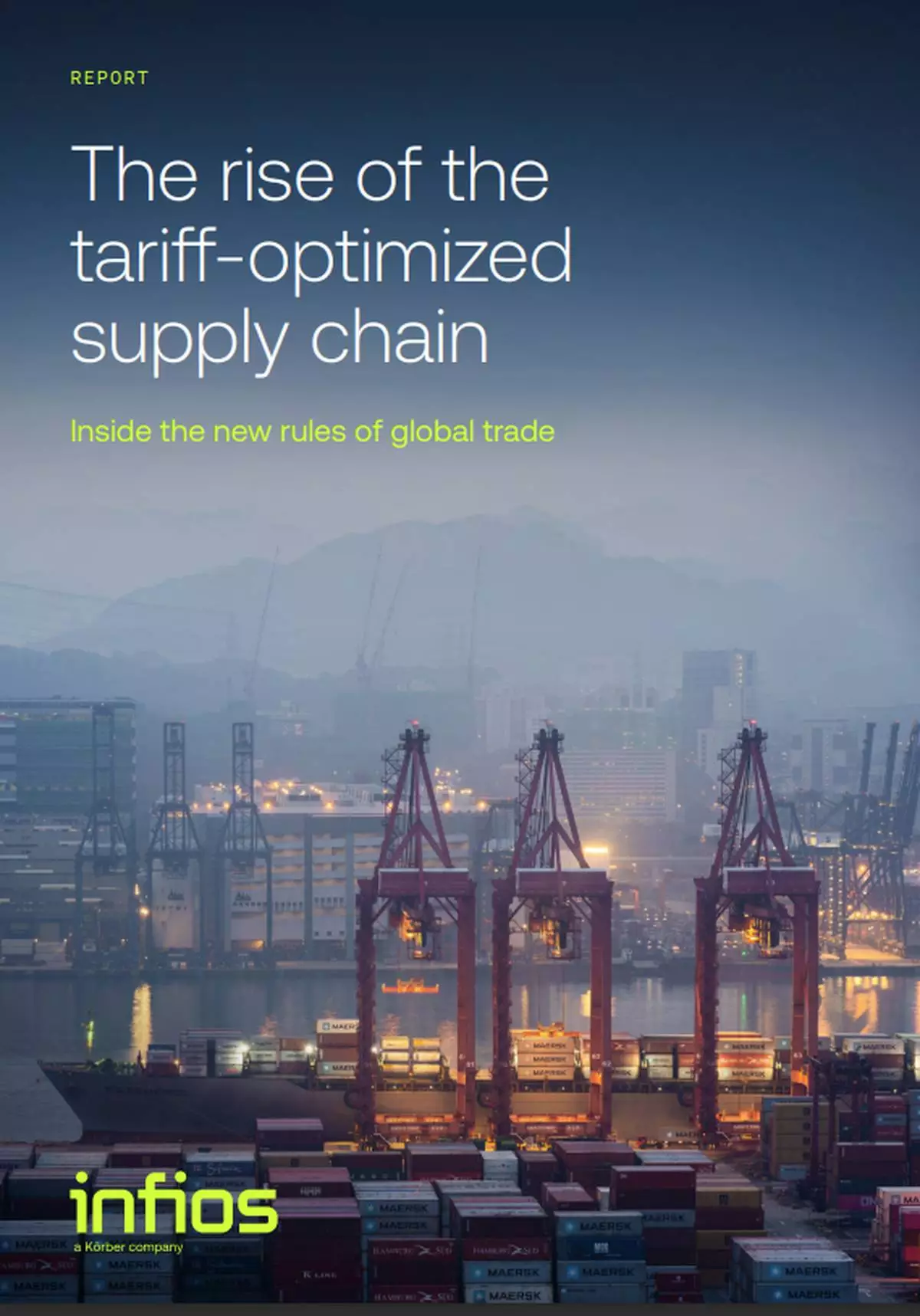
New research from Infios shows tariffs are becoming a real-time execution variable, driving leaders to experiment with new routes, shift transportation modes and turn compliance into a competitive advantage.