As people-to-people ties between China and Russia deepen, a growing appetite for Chinese literature is reshaping library collections, university programs, and bookstore shelves across Russia.
Demand for translated Chinese fiction has doubled over the past two years, according to local statistics, with a rising number of bookstores carving out dedicated Chinese literature sections. In response to this trend, and as part of the China-Russia Year of Education program, Moscow State Linguistic University has launched an institute specifically for young Chinese-Russian translators, aiming to foster cultural exchange and development through literary translation.
"Against the major challenges of digitalization and artificial intelligence, it is extremely important to preserve cultural codes, and those codes are present primarily in literature, especially fiction," said Irina Kraeva, rector of the university.
Libraries are moving in a similar direction.
"We have noticed the trend and have also made a shift toward the East and toward increasing our collection of Chinese-language literature. In the past year alone, our holdings have grown by almost a thousand items, a very significant number compared to the previous total of around only 18,000 pieces," said Marina Zakharenko, director of the M.I. Rudomino Library of Foreign Literature.
With its collections of publications covering Chinese culture, travel, geography, art, and philosophy, the library plans to open an Oriental Literature Room next month.
The publishing sector is also responding. Shans Publishing House, which specializes in bringing Chinese literature to Russian readers, has released hundreds of new books in recent years.
"Books about tea, and authentic translations of classic treatises by academic scholars are in high demand," said Alina Fedorova, acting editor-in-chief of the international publishing house.
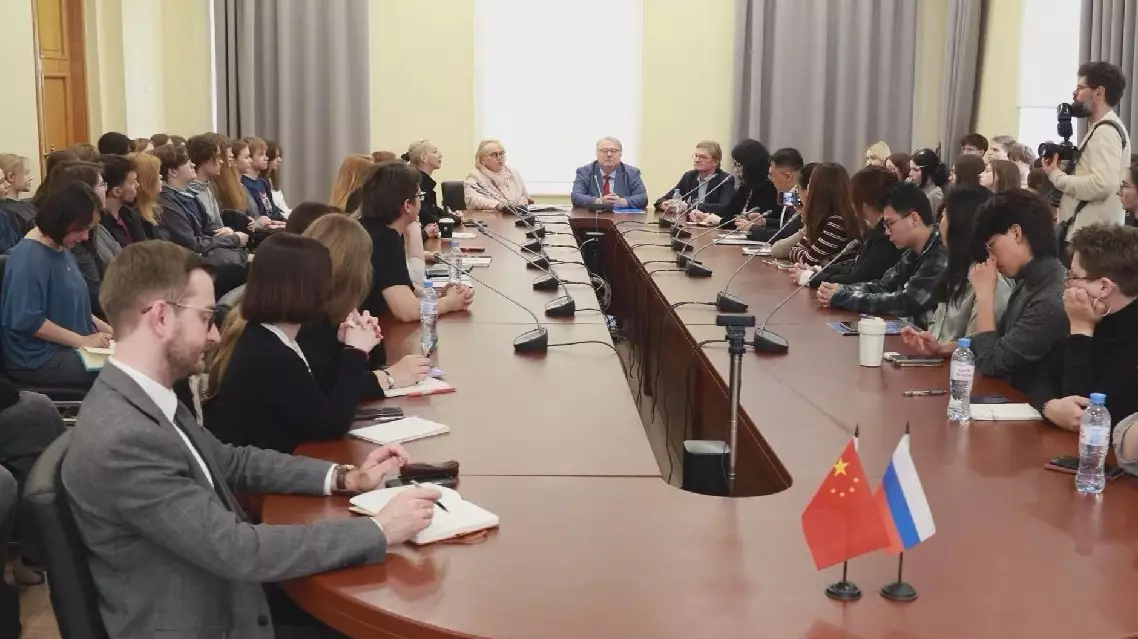
Russia readers show growing appetite for Chinese literature