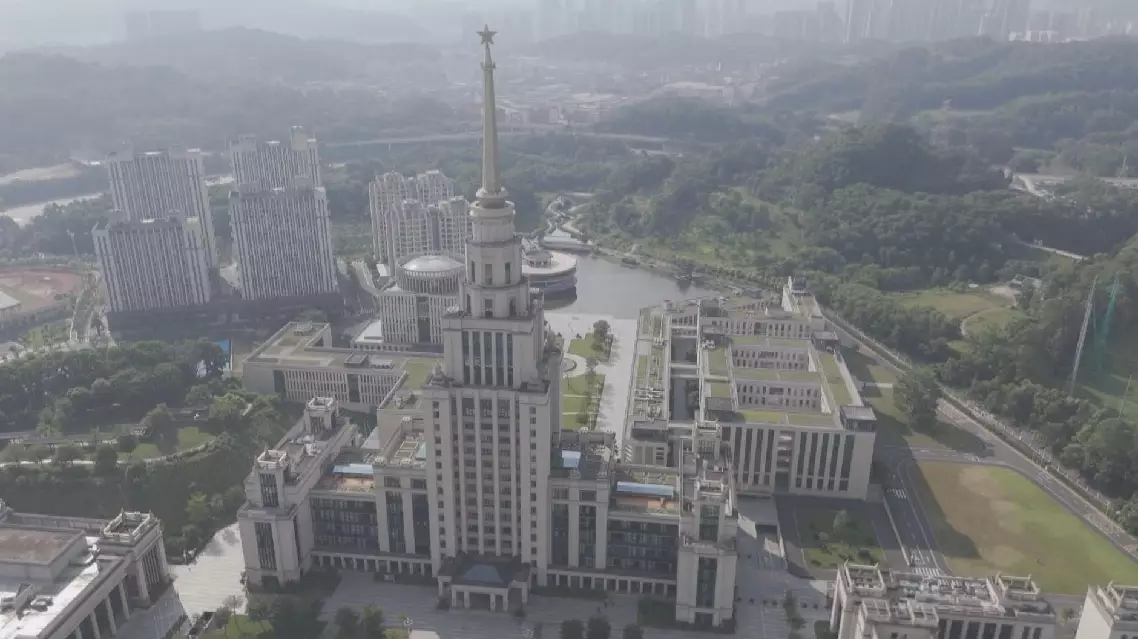
A Chinese-Russian cooperative university in south China's Shenzhen is this year celebrating a decade since its establishment, with its success standing as testament to how cultural exchanges between the youths of the two countries can deliver fruitful results in mutual learning.
The Shenzhen MSU-BIT University in south China's Guangdong Province was established back in 2016 as a joint venture between the Moscow State University(MSU) and the Beijing Institute of Technology (BIT), two leading academic institutions in their respective countries.
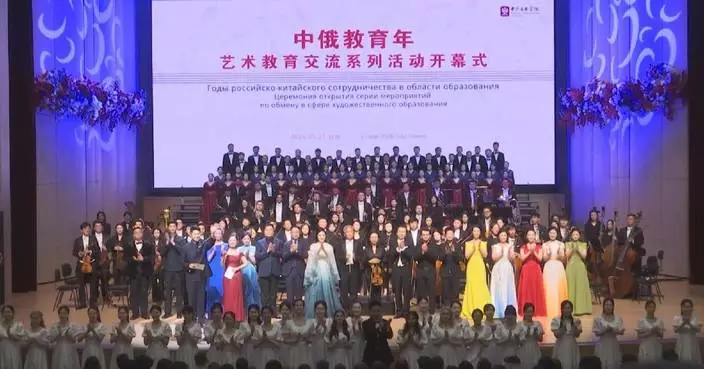
Ties between the two sides are in the spotlight as Russian President Vladimir Putin embarks on his 25th visit to China this week, and there is extra emphasis on education, with the two countries having designated 2026 and 2027 as the "China-Russia Years of Education", an initiative which is expected to inject new momentum into bilateral exchanges in education and people-to-people cooperation.
At the Shenzhen MSU-BIT University, international students currently comprise 14 percent of the student body, with the majority being Russian.
Among them is Georgii Vorontsov, a second-year graduate student majoring in applied mathematics and information technology. After having lived in China for nearly five years, Vorontsov said he feels fully immersed into the Chinese way of life, saying he has made many local friends and gained a deeper understanding of the culture. "After attending the Shenzhen MSU-BIT University, my biggest takeaway is learning how to study, live, communicate, and conduct research in a cross-cultural environment. Our university encourages China-Russia friendly exchanges. Communication between people from two different cultural backgrounds greatly contributes to mutual understanding between our two countries," he said.
Leveraging the advantages brought by the joint education programs, Chinese and Russian students not only learn professional knowledge and improve their language skills, but also participate in a range of social activities together, enhancing mutual understanding through exchanges and cooperation.
"Our professional courses are also taught by Russian teachers. At the same time, we participated in social events with our Russian classmates, going to various places in China to learn more about the rural revitalization and teach in rural areas. Young people can build genuine understanding and trust by learning and doing such projects together," said Zeng Jiaqi, an undergraduate student majoring in economics at the university.
As it marks a milestone 10th anniversary, the university has continued to promote regular cooperation with Russian universities and carries out a series of cultural exchange activities spanning various projects, according to management personnel.
"Currently, when it comes to teaching in Russian, Shenzhen MSU-BIT University is already considered as the largest in China. We have a regular collaboration with Moscow State University, and have launched representative cultural exchange and cooperation activities under the brand of the 'Belt and Road' international knowledge, science and culture festival. We also continuously carry out popular science activities with Chinese and Russian characteristics to the public, which have received high attention from the governments of both countries," said Xie Huanxin, Assistant to the President and Director of the University Administrative Office.
China-Russia joint university in Shenzhen delivers decade of mutual learning