DURHAM, N.C.--(BUSINESS WIRE)--May 21, 2026--
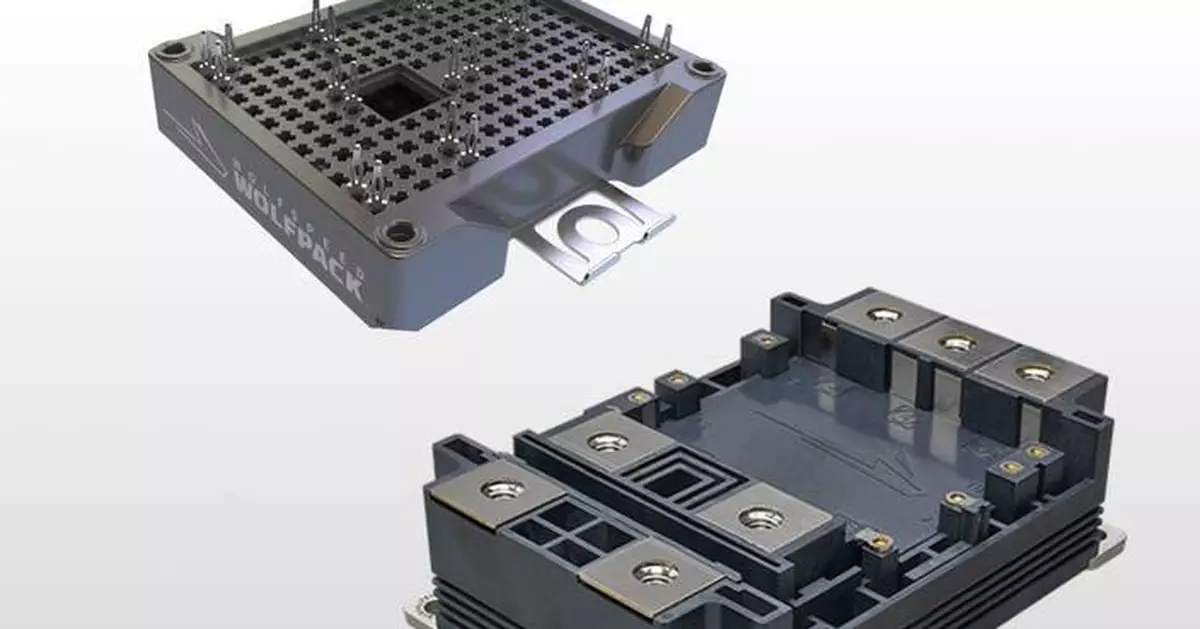
Wolfspeed has introduced two new 3.3 kV silicon carbide (SiC) power module families – including high-power half-bridge baseplate modules and scalable full-bridge baseplate-less modules in industry-standard footprints — that are purpose-built to address the rapidly approaching power constraints driven by AI data centers and the broader energy transition. Meeting this moment requires power generation, conversion, and distribution that is faster, smaller, more efficient, cost-effective, and more resilient than anything silicon alone can deliver. These new module families give engineers the tools to modernize energy infrastructure across the entire energy life cycle.
This press release features multimedia. View the full release here: https://www.businesswire.com/news/home/20260520804306/en/
"The release of this 3.3 kV MOSFET voltage node in two complementary footprints was a strategic decision," said Guy Moxey, vice president of Wolfspeed's Industrial & Energy business. "We understand the urgency our customers are facing to scale power infrastructure, and these two families enable both established grid-scale players and emerging players with modular architectures to move quickly. We are giving engineers the tools to build the grid of tomorrow, today — and only by working together can we successfully address the surging demand for power and unlock the full potential of AI and electrification."
Your System — Your Choice
The two 3.3 kV families enable design engineers to reduce power stages and move to a 2-level topology for 2 kV and higher DC-link architectures — with the choice of baseplate and baseplate-less SiC power modules.
The high-power half-bridge baseplate SiC power module (LM platform) is designed for >800 amp (A) applications and optimized for demanding converter topologies used in solar, grid-scale energy storage, and wind-power infrastructure.
The scalable full-bridge baseplate-less (part of the Wolfspeed WolfPACK® family) SiC power module is engineered for modularity, offering flexibility to configure multi-level, series-stacked, or parallel converter architectures with consistent, matched performance — and is optimized for solid-state transformers (SSTs) and modular renewable energy infrastructure.
Purpose-Built for Continuous 24/7, 2 kV+ DC-Link Operation
Both families are engineered for the relentless demands of always-on infrastructure. The Wolfspeed WolfPACK® module leverages cutting-edge sintered die attach and epoxy encapsulant material to deliver a significant improvement in power cycling performance over standard silicon gel encapsulated modules. Similarly, the baseplate module achieves improved system durability and power cycling through advanced packaging technology featuring sintered die attach and a copper die-top system. Both families feature Gen 4 technology with improved cosmic ray susceptibility.
“Amperesand is focused on critical power delivery from medium voltage to AI rack, requiring best-in-class reliability, power density, efficiency, and cost effectiveness,” said Brian Dow, Chief Executive Officer at medium-voltage solid-state transformer manufacturer Amperesand. “The latest advances in SiC technology enable maximum reliability for high variability AI factory loads, while unlocking optimized packaging that drives previously unachievable costs and best-in-industry power density and efficiency. Wolfspeed is driving innovation, scale, and quality that is ideally suited for demanding solid-state transformer critical power solutions.”
Smaller Size – Lower System Cost
The Wolfspeed WolfPACK® module enables solid-state transformer systems to deliver over 50% footprint reduction compared to traditional equipment through improved switching performance and system architecture improvements. Read how Amperesand is engineering for industry-leading space savings and 20-30-year lifetime for their 6+ MW medium voltage SST using the 3.3 kV Wolfspeed WolfPACK® solution here.
The new high-power baseplate module delivers up to 42% improvement in switching losses over other market-available SiC solutions and greater than 90% over IGBTs — both measured at 125°C on a 1.8 kV bus in the same package.
Both families achieve improved switching over temperature, reducing magnetics and EMI filter sizes, ultimately leading to system power density and reduced system costs.
Availability & Resources
Samples for the full-bridge Wolfspeed WolfPACK® IBB020A33GM4, IBB020A33GM4T and for HAB900C33LM4 are available for select customers through Wolfspeed’s direct sales representatives.
Both families will be demonstrated at PCIM, June 9–11, 2026, at booth 7-435, with live demonstrations showcasing system-level performance and scalability. To schedule a meeting with a Wolfspeed expert at the show, visit here.
About Wolfspeed Inc.
Wolfspeed (NYSE: WOLF) leads the market in the worldwide adoption of silicon carbide technologies that power the world’s most disruptive innovations. As the pioneers of silicon carbide, and creators of the most advanced semiconductor technology on earth, we are committed to powering a better world for everyone. Through silicon carbide material, Power Modules, Discrete Power Devices and Power Die Products targeted for various applications, we will bring you The Power to Make It Real™. Learn more at wolfspeed.com.
Wolfspeed ®, Wolfspeed WolfPACK®, and WolfPACK® are registered trademarks and The Power to Make It Real™ is a trademark of Wolfspeed, Inc.
Forward-Looking Statements
This press release contains forward-looking statements involving risks and uncertainties, both known and unknown, that may cause Wolfspeed’s actual results to differ materially from those indicated in the forward-looking statements. Forward-looking statements by their nature address matters that are, to different degrees, uncertain, such as statements about Wolfspeed’s strategic plans, priorities, growth opportunities, and ability to achieve profitability. Actual results could differ materially due to factors detailed in Wolfspeed’s filings with the U.S. Securities and Exchange Commission (“SEC”), including its most recent Annual Report on Form 10-K and subsequent SEC filings. These forward-looking statements represent Wolfspeed’s judgment as of the date of this release. Except as required under U.S. federal securities laws, Wolfspeed disclaims any intent or obligation to update any forward-looking statements after the date of this release.
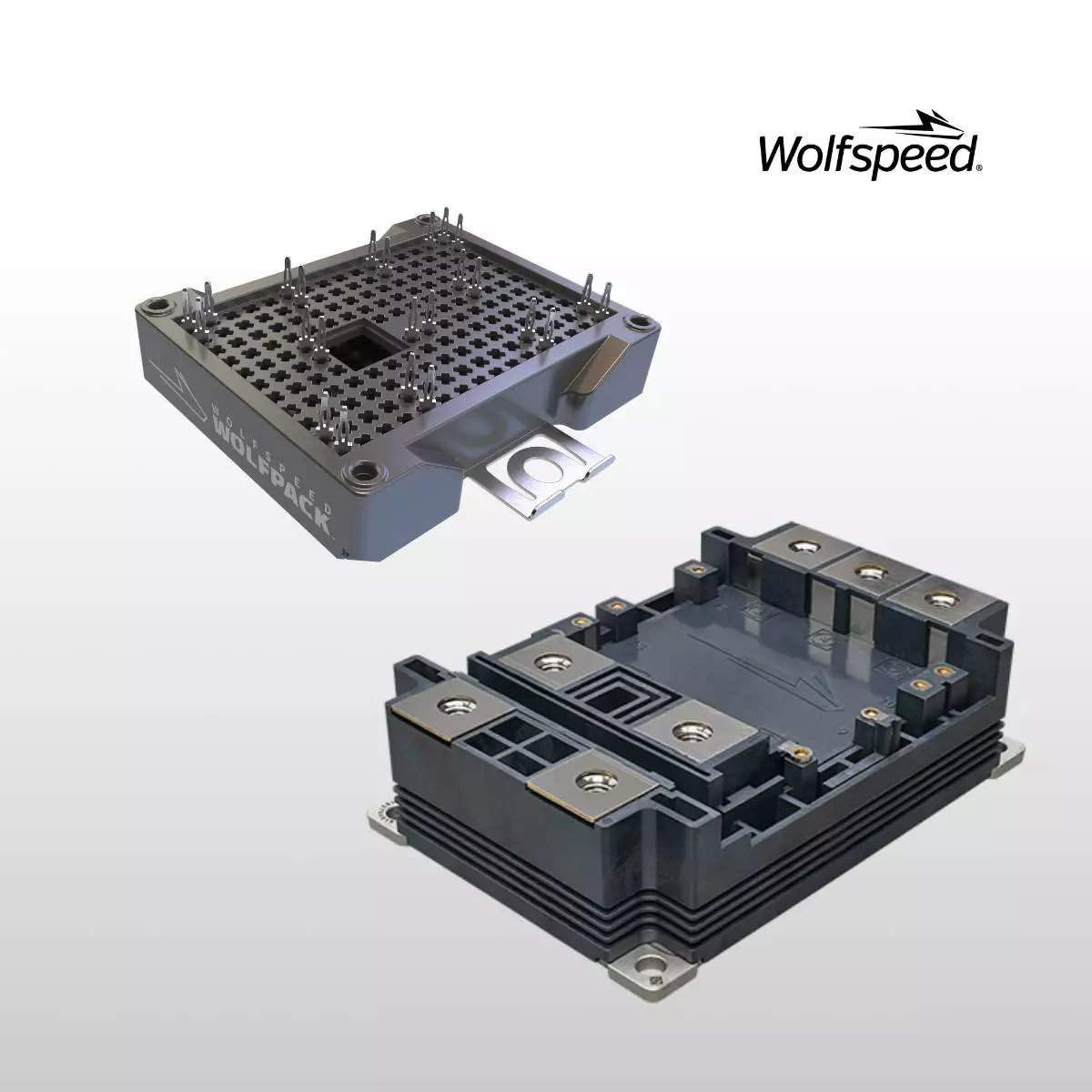
The 3.3 kV silicon carbide (SiC) power module families are purpose-built to address the rapidly approaching power constraints driven by AI data centers and the broader energy transition.