China's national railway network handled 1.31 billion tons of cargo in the first four months of this year, an increase of 0.9 percent year on year, thanks to the "single-bill" logistics service that has effectively helped reduce logistics costs, said China Railway on Wednesday.
In April, China Railway led the establishment of the China multimodal transport development alliance to strengthen cooperation with logistics companies and accelerate the development of rail-water intermodal transport. The "single-bill" logistics service now covers inland freight stations nationwide, as well as major ports along the Yangtze River and China's coastal regions.
"In the past, customers had to transfer documents and change containers multiple times when switching between rail and water transport. Now, with the 'single-bill' system, the entire journey is handled with just one document, greatly simplifying the transfer process between rail and water transport." Yang Jie, a manager of the international port business department with the Xi'an railway logistics center at China Railway Xi'an Bureau Group.
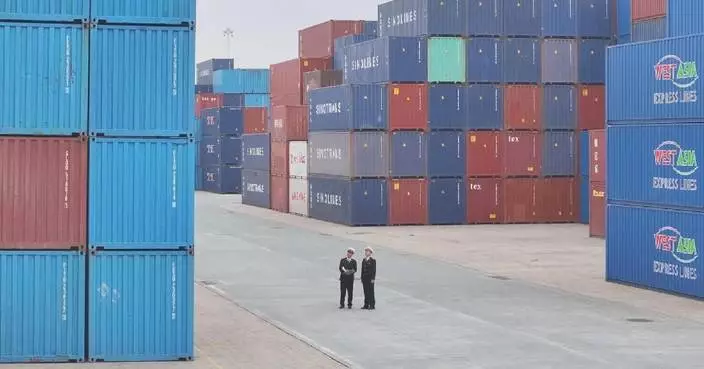
Compared to traditional transport models, the "single-bill" logistics service system for the rail-water intermodal transport operates on the principle of "one commission, one document, one journey and one settlement." Goods remain in the same sealed container throughout the journey, efficiently linking railway trunk lines with port and water transport resources.
Overall, the system reduces comprehensive logistics costs for companies by approximately 25 percent and improves transport efficiency by over 30 percent.
"The China Railway's 95306.cn platform now shares data with maritime booking systems. Customers can not only complete the entire shipping process with a single bill, but they can also track their cargo in real time, just like checking an express delivery package. This makes the entire transport process more transparent," said Yang Shaobo, an engineer of multi-modal transport section with the freight department at China Railway Xi'an Bureau Group.
From January to April, China's national railway network completed 5.957 million twenty-foot equivalent units (TEUs) of rail-water intermodal transport, up 10.7 percent year on year. The "single-bill" logistics service handled a cumulative total of 35,700 TEUs during the same period.
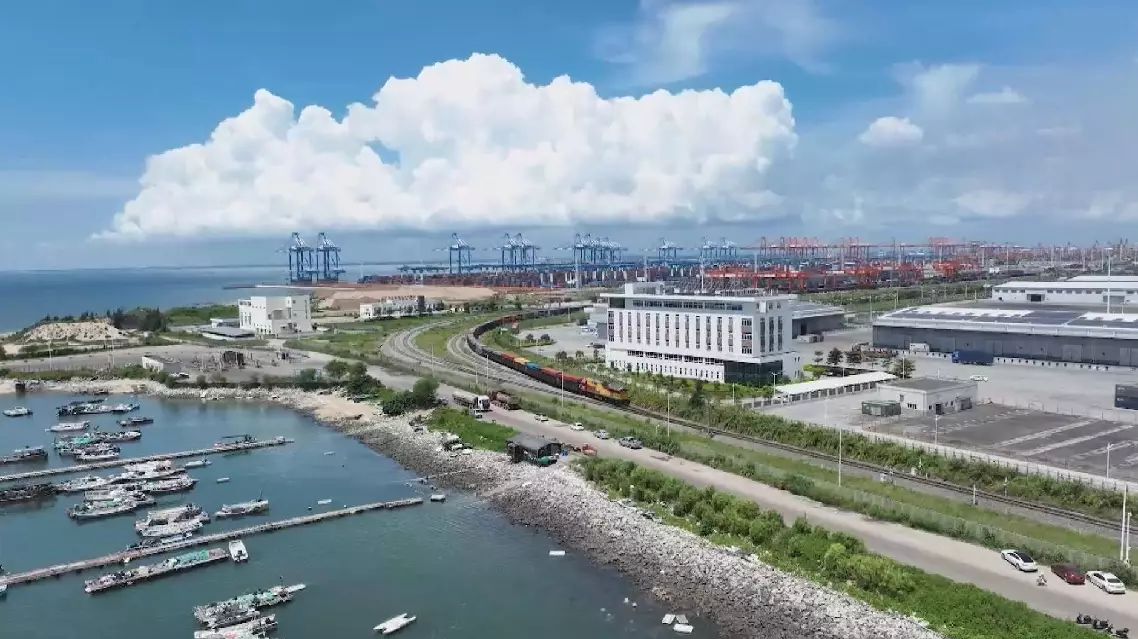
China’s railways handle 1.31 billion tons of cargo in first 4 months
The United Nations Security Council on Wednesday called on all parties to conflict to comply with their obligations under international law to protect civilians.
The call came as the Security Council held its annual day-long open debate on the protection of civilians in armed conflict. At the debate, the Security Council was briefed that while civilians continue to suffer because parties to the conflict choose to ignore their legal obligation to protect them, adhering to the rules of war and enforcing accountability when they are broken can produce a different result.
Edem Wosornu, director of the Crisis Response Division in the Office for the Coordination of Humanitarian Affairs, said one civilian was killed approximately every 14 minutes in 2025.
"Protecting civilians in armed conflict is not charity. It is the minimum that humanity and civilian civilization require. It is central to peace and security. It is the responsibility of this Council and of every Member State that signed the United Nations Charter, and it is what many people around the world expect the Member States of the United Nations to do. It cannot be outsourced. It cannot be postponed. It cannot be diluted. It is the choice we have to make now," said Wosornu.
The United Nations recorded over 37,000 civilian deaths across 20 armed conflicts last year, compared to the 36,000 civilian deaths recorded across 14 armed conflicts in 2024.
Addressing the debate, Mirjana Spoljaric, president of the International Committee of the Red Cross, said "Wars fought without rules transform wars between combatants into wars against civilians. In recent weeks, I have undertaken several missions to the Middle East, where the impact of conflict on civilians is painfully clear. But brutal patterns of warfare are becoming pervasive across regions from the Middle East to the Horn of Africa, to eastern Europe, and beyond. We can no longer pretend that what we are witnessing across war zones is in accordance with the law."
Fu Cong, China's permanent representative to the United Nations, said at the debate that civilians are the biggest victims of armed conflict, underlining the need to promote the political settlement of hotspot issues and eliminate the threat of violence to security.
It is an obligation that all parties must fulfill in accordance with international humanitarian law, he said, adding that any double standards or selective application are unacceptable.
"The world today is rife with turmoil and escalating conflicts, claiming countless innocent lives and tearing families apart. The secretary-general's report indicates that more than 20 conflicts worldwide this year have resulted in at least 37,000 civilian deaths and displaced over 100 million people. This harsh reality once again warns us that we must act with greater urgency and stronger measures to protect civilians," said Fu.
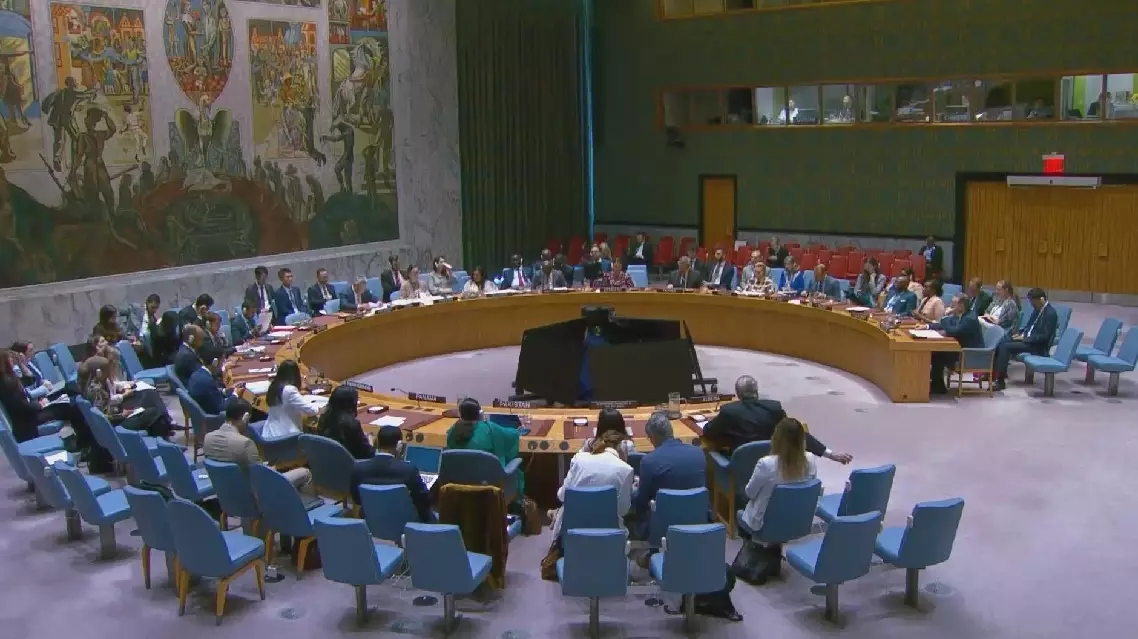
UN Security Council calls on all parties to conflict to protect civilians