NEW YORK (AP) — Federal prosecutors have charged two men with using artificial intelligence to create nude videos and photos of female celebrities under a newly enacted law meant to halt the spread of deepfake pornography.
Cornelius Shannon, 51, and Arturo Hernandez, 20, were both arrested Tuesday for generating sexually explicit AI content that drew millions of views online, according to criminal complaints.
The men — who do not appear to be connected — are among the earliest defendants to face charges under the Take It Down Act, a law signed last year by President Donald Trump that adds stricter penalties for publishing AI-created deepfakes and “revenge porn.” The bill drew bipartisan support, as well as the public backing of first lady Melania Trump.
Under the new law, the men now face up to two years in prison.
Attorneys for Shannon and Hernandez did not immediately respond to a request for comment.
In a statement, Joseph Nocella, the U.S. attorney in Brooklyn, said the men had ”used cutting-edge digital technology to create images that degraded and violated” dozens of women. “This case makes clear that posting deepfake pornography is not a victimless crime,” he added.
Shannon, a resident of New Jersey, published at least 240 albums of AI-generated pornography featuring female politicians, musicians and singers, according to the complaint.
The deepfakes published by Hernandez, of Texas, included both celebrities as well as private women, including recent high school graduates, prosecutors said.
The arrests come as increasingly sophisticated generative AI tools have raised alarm about the online spread of sexually explicit fakes, often depicting minors.
Last month, an Ohio man became the first person convicted under the Take It Down Act after pleading guilty to using AI to generate child sexual abuse material.
In March, two teenage boys received probation for creating explicit AI images of their classmates at an exclusive private school in Pennsylvania.
And in a separate case filed earlier this year, three teenagers in Tennessee sued Elon Musk’s xAI, claiming the company’s Grok tools morphed their real photos into explicitly sexual images.
The high school students are seeking class-action status to represent what the lawsuit says are thousands of people who were similarly victimized as minors.
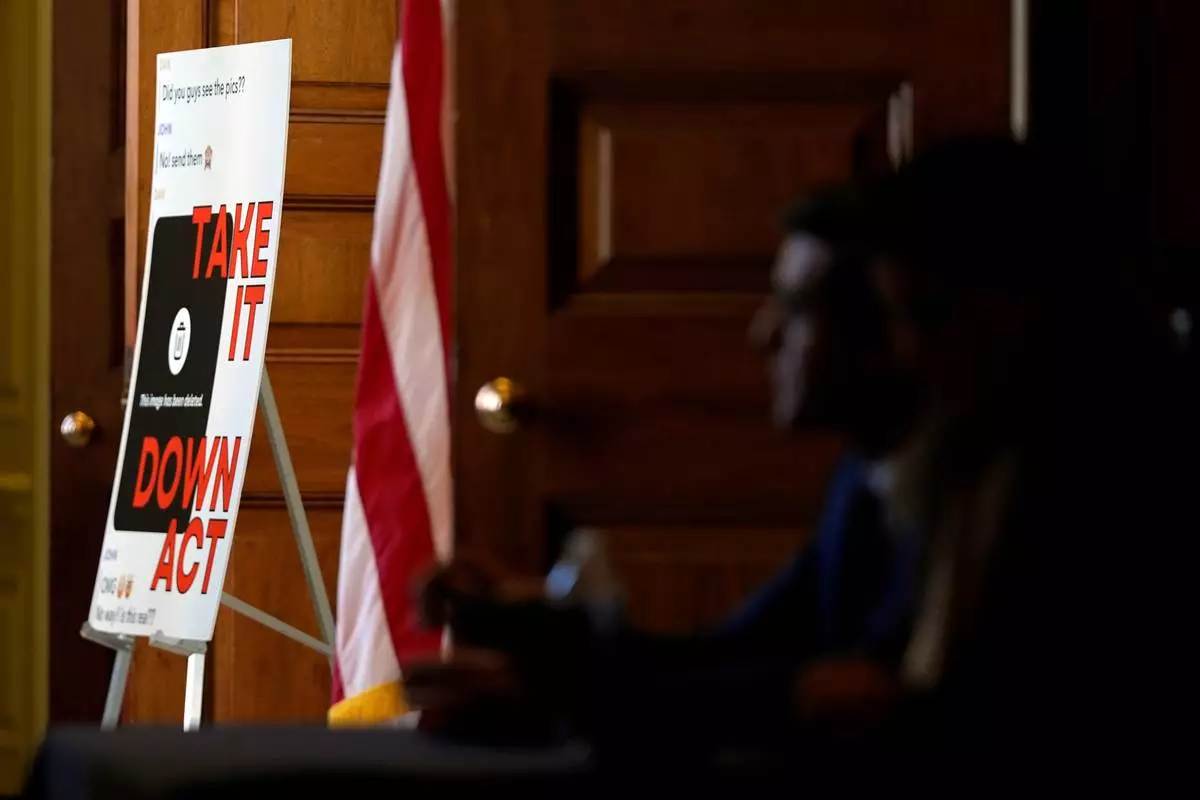
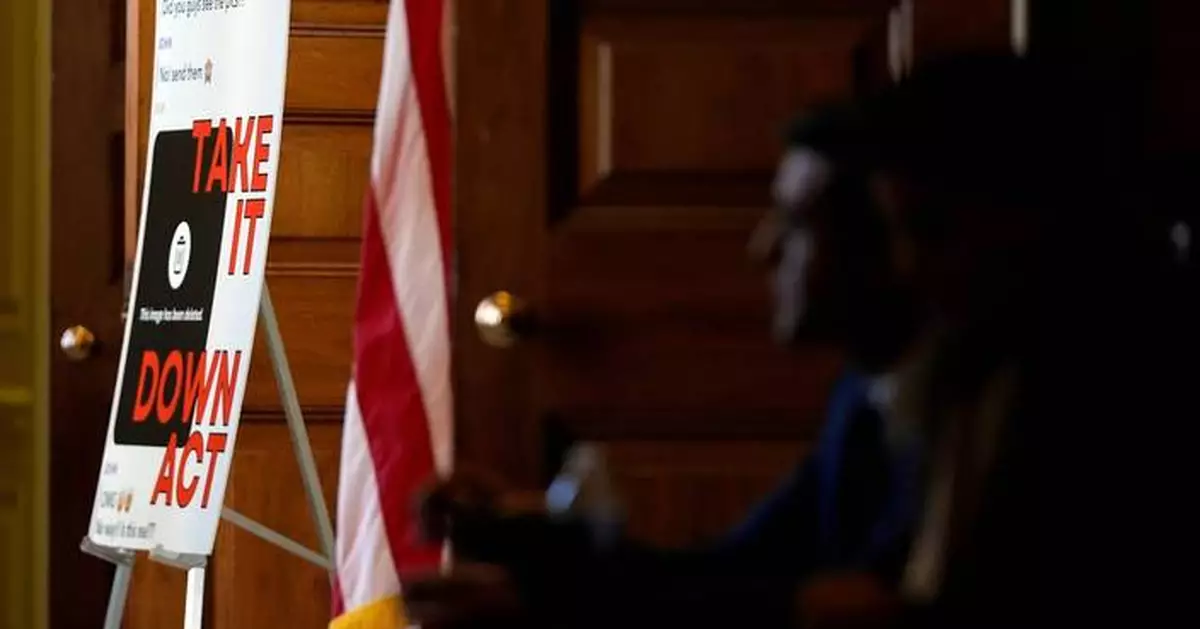
FILE - A poster outside a roundtable about an online safety bill, hosted by first lady Melania Trump, is displayed in the Capitol, March 3, 2025, in Washington. (AP Photo/Julia Demaree Nikhinson, File)
WASHINGTON (AP) — The U.S. Commission of Fine Arts on Thursday approved the design for the triumphal arch that President Donald Trump wants built at an entrance to the nation's capital, a key step in the project's process but one that has no immediate bearing on the timeline for construction.
Commissioners, all appointed by Trump, acted despite overwhelming public opposition to the 250-foot arch, one of several projects the Republican president is pursuing alongside a White House ballroom to leave his imprint on Washington.
At the White House, Trump told reporters he thought the vote was “fantastic" adding that “we’re the only important and major city that doesn’t have one."
The commission only oversees designs and has no role in the actual construction or funding of the arch or any other project it considers. Preliminary surveys and testing of the arch site began last week. The National Capital Planning Commission, a separate federal agency that approves construction on federal land, has the arch on the agenda at its June meeting.
Trump had said last year that the arch could be paid for with private donations left over from the ballroom project. A cost estimate for the arch is still being calculated, but a mix of taxpayer and private money is expected to be used to pay for it, according to a White House official, who spoke on condition of anonymity because the president has not publicly discussed the project's cost.
“The building is beautiful,” said the commission's chairman, Rodney Mims Cook Jr., shortly before the vote on the slightly revised design. Commissioners had suggested several changes when they first reviewed the design in April. Some were made by the Harrison Design architecture firm and approved on Thursday.
The arch would stand 250 feet tall (76 meters) from its base to a torch held aloft by a Lady Liberty-like figure on top of the structure, flanked by two gilded eagles. But four lions envisioned as guarding the base were removed. The phrases “One Nation Under God” and “Liberty and Justice for All” would be inscribed in gold lettering atop either side of the monument.
A public observation deck on top would provide 360-degree views of the region. The arch would have an exterior made of granite.
The commission’s vice chairperson, architect James McCrery II, said in April that he preferred the arch without the figures on top, which would have reduced the height by about 80 feet (24.4 meters). Critics argue that the arch would dominate the skyline and disrupt carefully designed views between the Lincoln Memorial and Arlington National Cemetery.
It would be more than twice as tall as the Lincoln Memorial, which is 99 feet (30 meters) tall, and close to half the height of the Washington Monument, at about 555 feet (169 meters) tall.
Nicolas Charbonneau, a director at Harrison Design, told commissioners that Trump considered their recommendation to remove the statue “but elected not to pursue such an option" because he wants the arch to celebrate America and the living.
“This makes it distinct from monuments like the Jefferson and Lincoln Memorials,” Charbonneau said.
McCrery had also recommended nixing the ground-level lion statues along with an underground tunnel for pedestrians to get to the arch, which would be built on a busy traffic circle. The design approved Thursday has no lions and incorporates pedestrian crosswalks. A platform the arch would have been built on also has been removed.
Ten people who testified Thursday, including on behalf of organizations such as the National Trust for Historic Preservation and the DC Preservation League, opposed the arch on grounds that it is too big. They said the project needed to be approved by Congress because it would be built on federal land and that it would disrupt the sightline between the Lincoln Memorial and Arlington House at Arlington National Cemetery that was created to symbolize reunification after the Civil War.
A group of veterans and a historian have sued the Trump administration in federal court to block the arch construction over concerns about disruptions to the sightline.
Despite the arguments by preservationists, historians and others, Trump asserted Thursday that he does not need Congress to approve the arch. It’s the same justification he’s given for moving ahead quickly with the ballroom project last year.
Cook, the commission chairman, pushed back after listening to the testimony and noted the limitations of building anything new on the National Mall.
“Washington is not a static city. It must grow,” Cook said.
The president has said some of his other projects, including adding a blue coating to the interior of the Lincoln Memorial Reflecting Pool, will beautify the city in time for July 4 celebrations of America’s 250th birthday.
That project is also the subject of a court challenge brought by The Cultural Landscape Foundation, which said repainting the bottom of the Reflecting Pool blue without first undergoing relevant reviews runs afoul of federal preservation laws governing historic sites.
The nonprofit group argued in a lawsuit filed last week that the changes at the memorial to Abraham Lincoln are part of Trump’s broader effort to push through dramatic renovations in Washington without proper reviews and undermine the tone of the area.
A hearing in the case was underway Thursday in federal court in Washington.
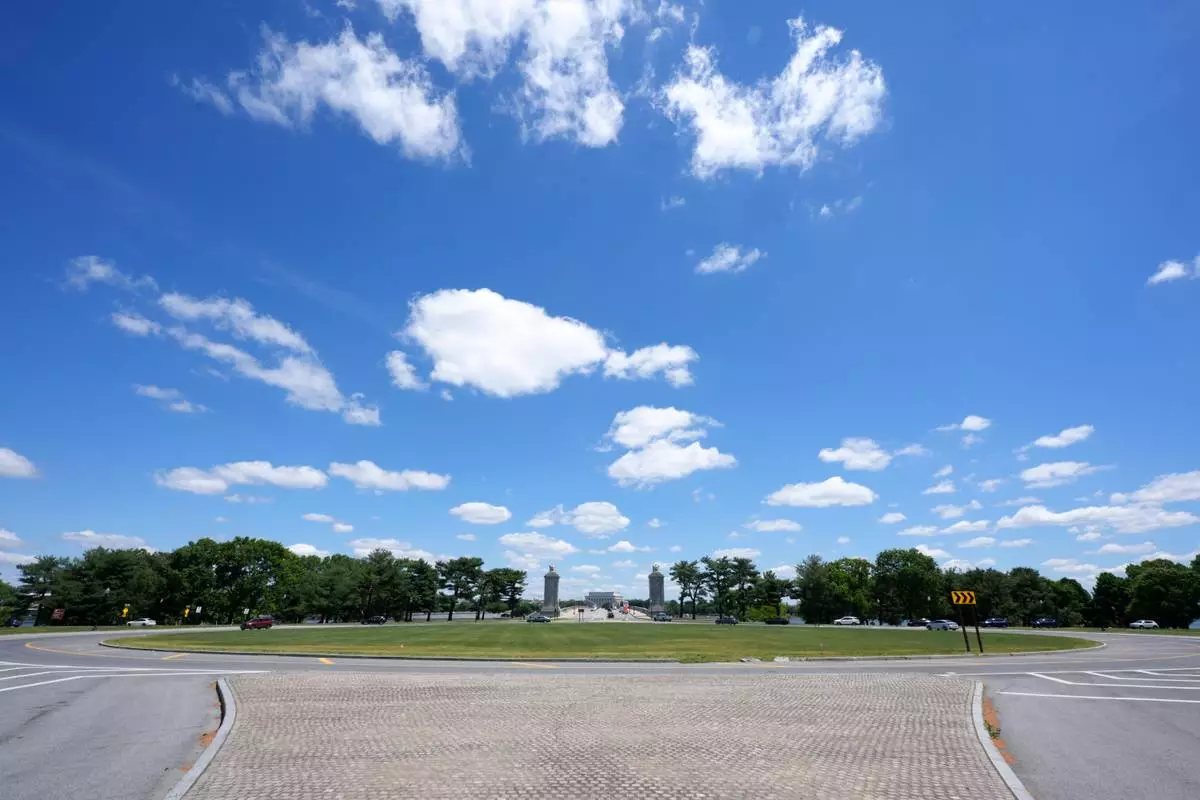
Flags placed by workers are pictured in the Memorial Circle, where President Donald Trump has proposed building an arch to commemorate the United States' 250th anniversary, Friday, May 15, 2026, in Washington. (AP Photo/Jacquelyn Martin)
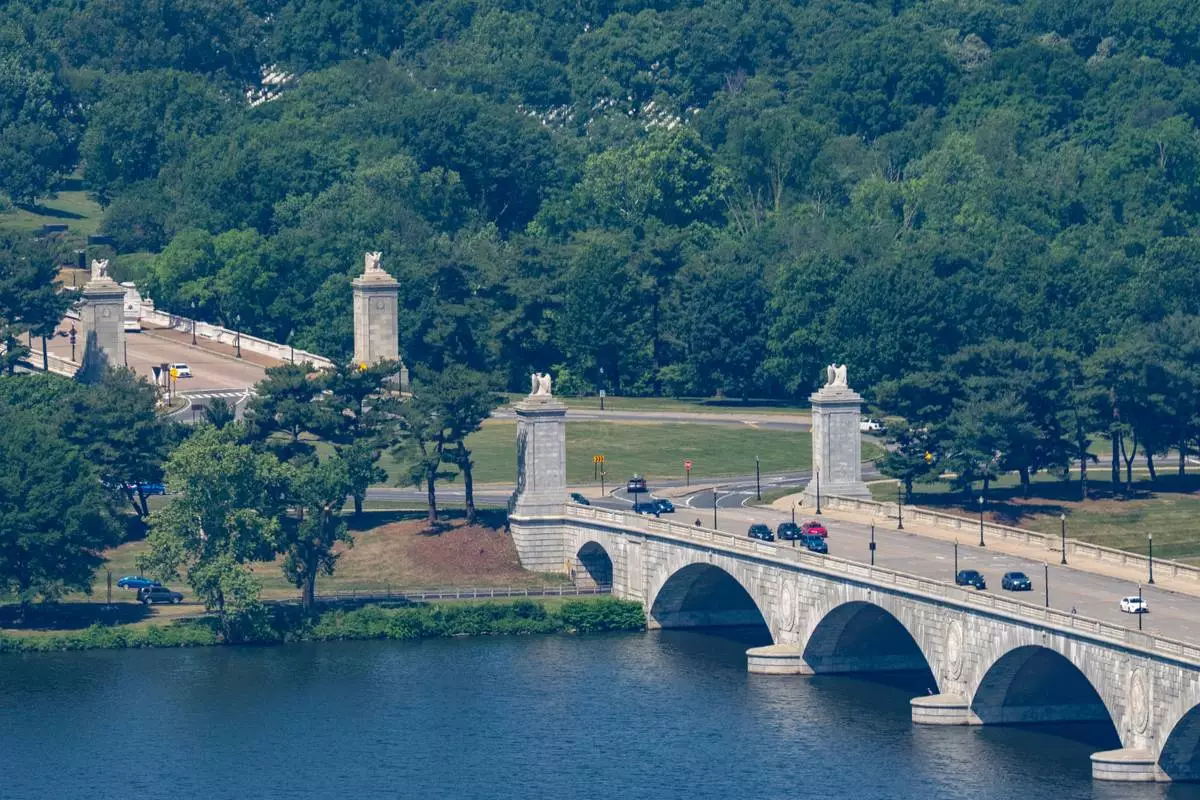
The Memorial Circle, where President Donald Trump has proposed building an arch to commemorate the United States' 250th anniversary is seen, Tuesday, May 19, 2026, in Washington. (AP Photo/Alex Brandon)