BELGRADE, Serbia (AP) — Serbia ’s protesting university students are gearing up this weekend for their first big rally of the year, in a renewed push for major political changes in the Balkan country run by authoritarian President Aleksandar Vucic.
Thousands of people are expected to gather on Saturday from all over Serbia in the capital, Belgrade.
Click to Gallery
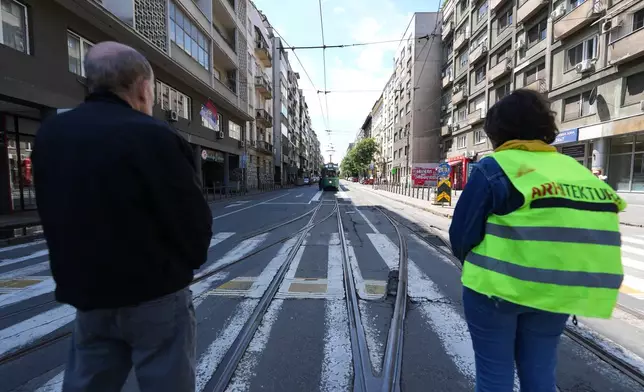
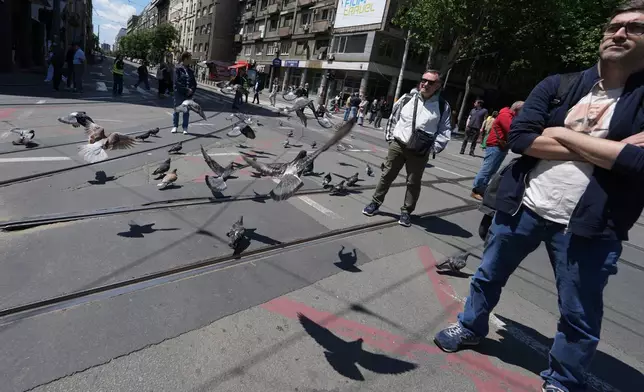
University students and citizens stand in silence during commemorative traffic blockade to a train station tragedy that killed 16 people before the first big rally this year of opponents of President Aleksandar Vucic in Belgrade, Serbia, Monday, May 18, 2026. (AP Photo/Darko Vojinovic)
A car passes by a big screen showing Serbian President Aleksandar Vucic, reading: " I am too stubborn. I am too much of a Serb. I love Serbia too much to be to the taste of the power mongers." before his opponents first big rally this year in Belgrade, Serbia, Tuesday, May 19, 2026. (AP Photo/Darko Vojinovic)
University students and citizens stand in silence during commemorative traffic blockade to a train station tragedy that killed 16 people before the first big rally this year of opponents of President Aleksandar Vucic in Belgrade, Serbia, Monday, May 18, 2026. (AP Photo/Darko Vojinovic)
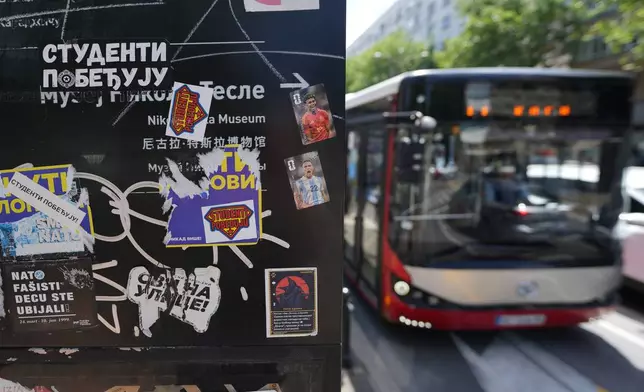
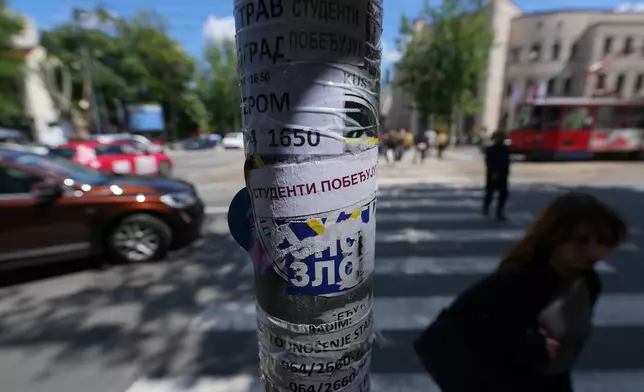
City bus passes by a sign covered with stickers that read: "Students win" before the first big rally this year of opponents of President Aleksandar Vucic in Belgrade, Serbia, Monday, May 18, 2026. (AP Photo/Darko Vojinovic)
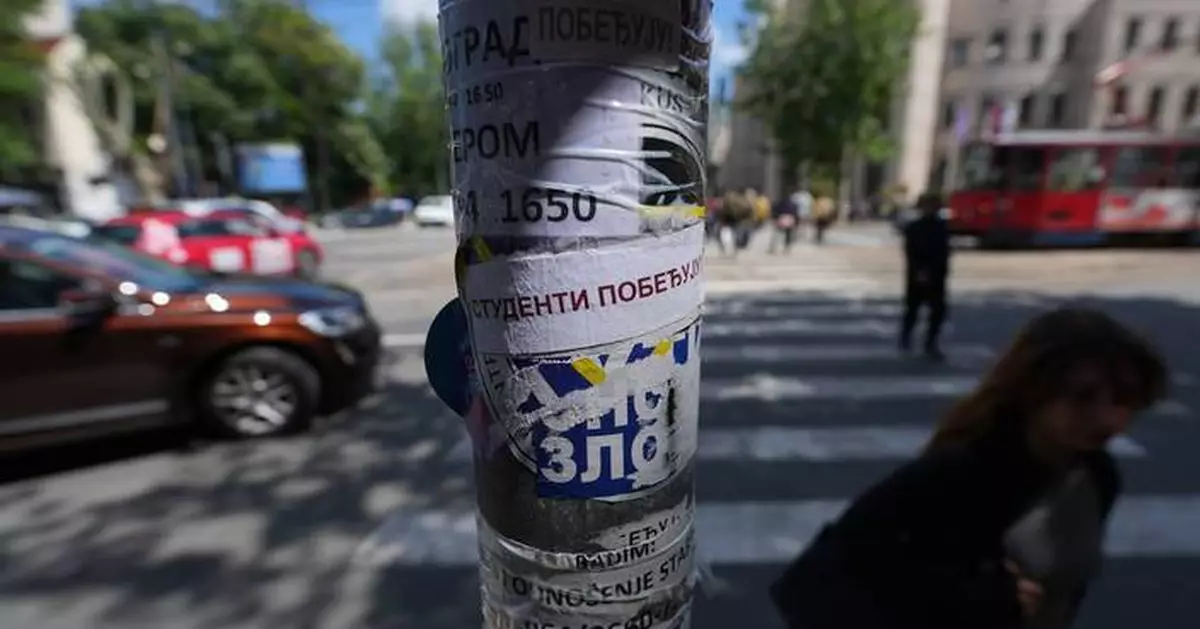
People walk by a lamppost with stickers that read: "Students win" before the first big rally this year of opponents of President Aleksandar Vucic in Belgrade, Serbia, Monday, May 18, 2026. (AP Photo/Darko Vojinovic)
Serbia's youth movement was behind a wave of mass anti-corruption street protests that shook Vucic last year. Now, students say their sights are set on approaching elections later this year or next that they hope will oust Vucic's right-wing populist government.
“We hope a lot of people will come and spend the day with us, and then continue to support the students because we are preparing for the elections,” youth representative Isidora Jovanovic told The Associated Press. “Serbia needs a change, and students will bring that change.”
The venue on Saturday will be Belgrade’s Slavija Square, the scene of a huge anti-government protest last March. That rally ended in a sudden disruption that experts later said — and the government denied — involved the use of a sonic weapon against peaceful demonstrators.
Police at the square on Tuesday separated Vucic's loyalists from the students who were printing their “Students win” slogans. Days earlier, an elderly man was injured when a driver broke up a traffic blockade in central Belgrade.
A number of other incidents have taken place in previous months, including violence that marred a local election in March.
Jovanovic said organizers will do all they can to make sure there are no incidents, especially because a lot of people will come from across Serbia. The students ”don’t want any of them (citizens) to leave with a bad feeling or injuries.”
Launched in response to a train station tragedy that killed 16 people in northern Serbia in November 2024, the student movement blocked faculties for months in 2025, forcing the resignation of then-Prime Minister Milos Vucevic and his government.
The protesters said that wasn’t enough, and demanded early parliamentary elections, which Vucic has not called yet. He told the state RTS television on Thursday evening that the vote will be held between September and November this year.
The quest for accountability over the concrete canopy crash at the Novi Sad station resonated widely among the public because many believed the tragedy was the result of deeply rooted corruption and negligence in state infrastructure projects.
Dusan Vucicevic, a professor at the Faculty of Political Sciences, said the youth movement has since grown into a political player backed by a large number of people. Students, he said, can count on an “excellent result” in a future ballot.
“We finally have a political group that can challenge the (ruling) Serbian Progressive Party and Aleksandar Vucic,” Vucicevic told the AP.
Vucic has pushed hard against the protesters. Pro-government media have branded his critics as terrorists and foreign agents who wish to destroy the country — a rhetoric that has ramped up political divisions.
The protests, he told the RTS, are “unregistered, criminal” gatherings. The protesters "take control of our roads and streets ... they have been involved in violence all this time.”
The president's loyalists will likely on Saturday fill a park camp outside the presidency building that he set up last March, apparently as a shield against protesters. Several attacks on protesters and journalists were reported around the camp in the past.
Reports of police use of excessive force and arbitrary detentions of protesters have sparked international scrutiny. Serbia’s democratic backsliding could cost the country around 1.5 billion euros ($1.8 billion) in European Union funding for membership candidate nations.
Branislav Vasic and Filip Novakovic, freshmen at Belgrade's Faculty of Political Sciences, told the AP they too will be at the rally on Saturday. The 19-year-olds said joining their older colleagues in protests is an imperative.
“Everyone should go to the rally out of principle because of the situation,” Vasic said. He is convinced that ”there is the strength for change as long as people want it.”
Novakovic believes that “we are together in this, one step away from a better future.” This generation, he said, has a historic chance to carry out the changes previous generations could not.
“I will keep trying as long as I live, he said. ”This struggle is a long one.”
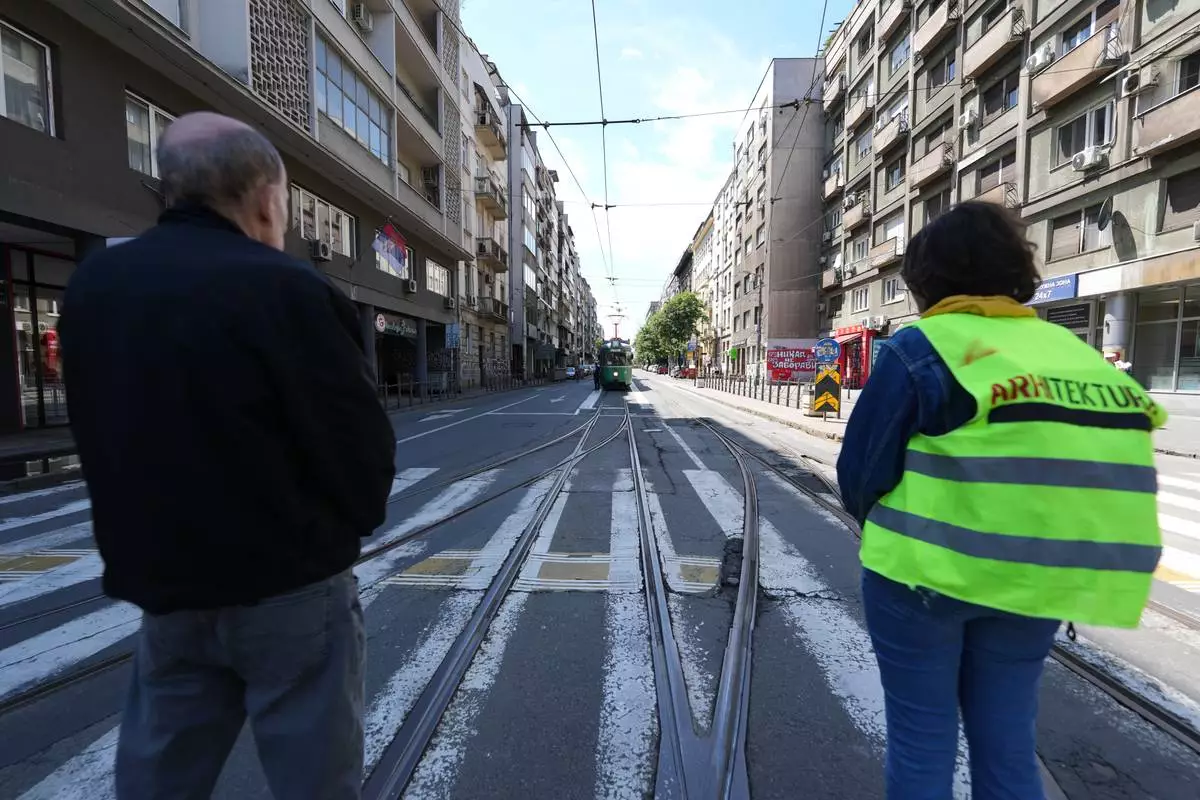
University students and citizens stand in silence during commemorative traffic blockade to a train station tragedy that killed 16 people before the first big rally this year of opponents of President Aleksandar Vucic in Belgrade, Serbia, Monday, May 18, 2026. (AP Photo/Darko Vojinovic)

A car passes by a big screen showing Serbian President Aleksandar Vucic, reading: " I am too stubborn. I am too much of a Serb. I love Serbia too much to be to the taste of the power mongers." before his opponents first big rally this year in Belgrade, Serbia, Tuesday, May 19, 2026. (AP Photo/Darko Vojinovic)
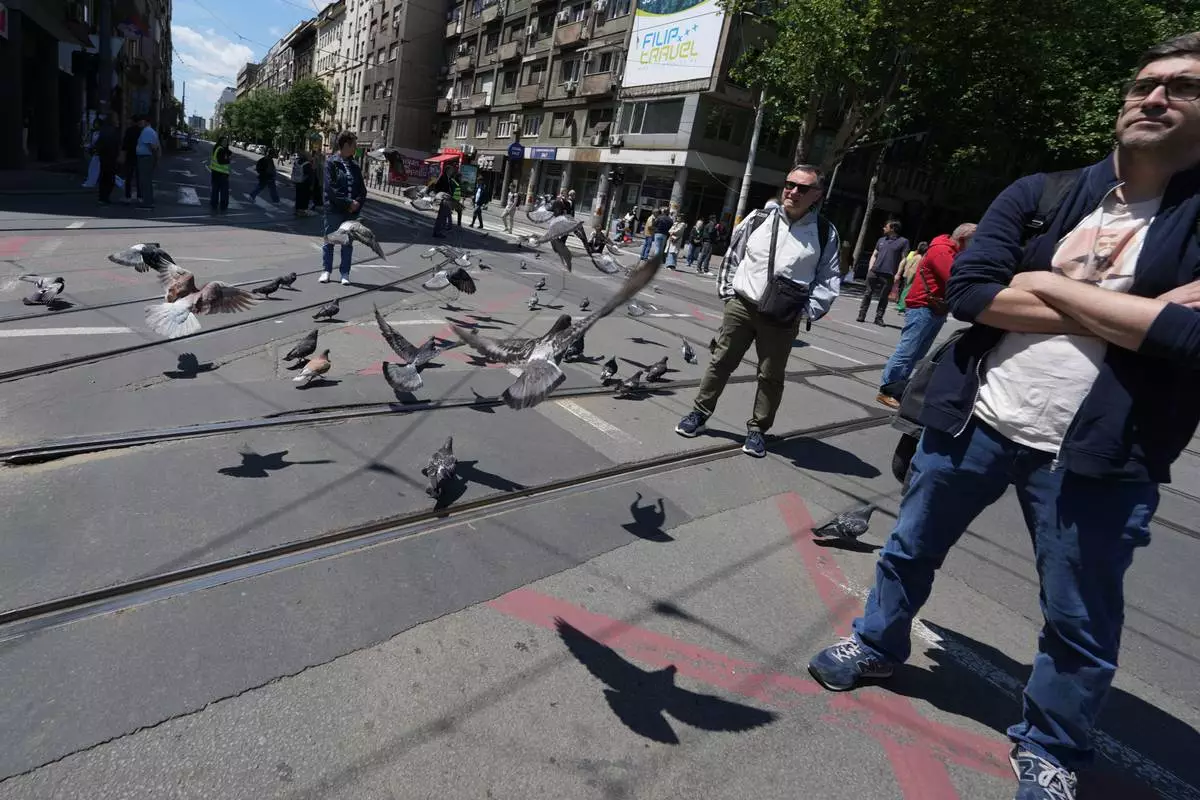
University students and citizens stand in silence during commemorative traffic blockade to a train station tragedy that killed 16 people before the first big rally this year of opponents of President Aleksandar Vucic in Belgrade, Serbia, Monday, May 18, 2026. (AP Photo/Darko Vojinovic)
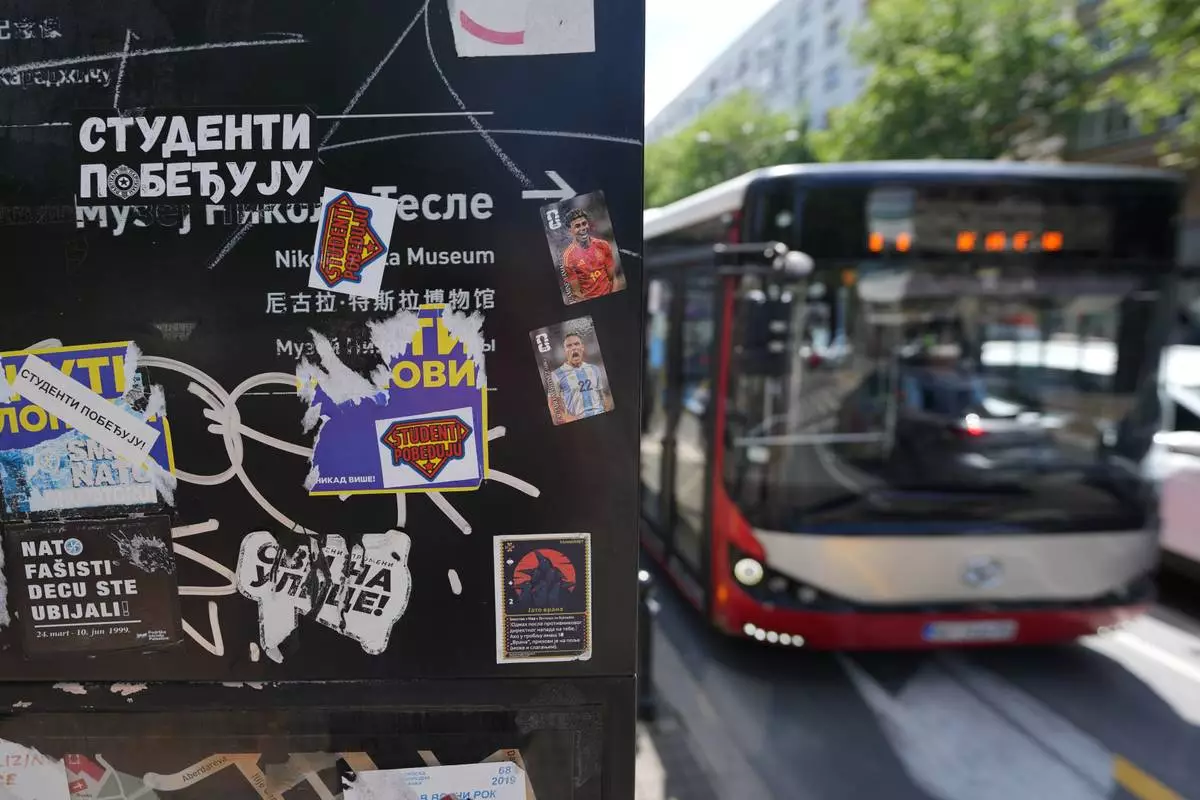
City bus passes by a sign covered with stickers that read: "Students win" before the first big rally this year of opponents of President Aleksandar Vucic in Belgrade, Serbia, Monday, May 18, 2026. (AP Photo/Darko Vojinovic)
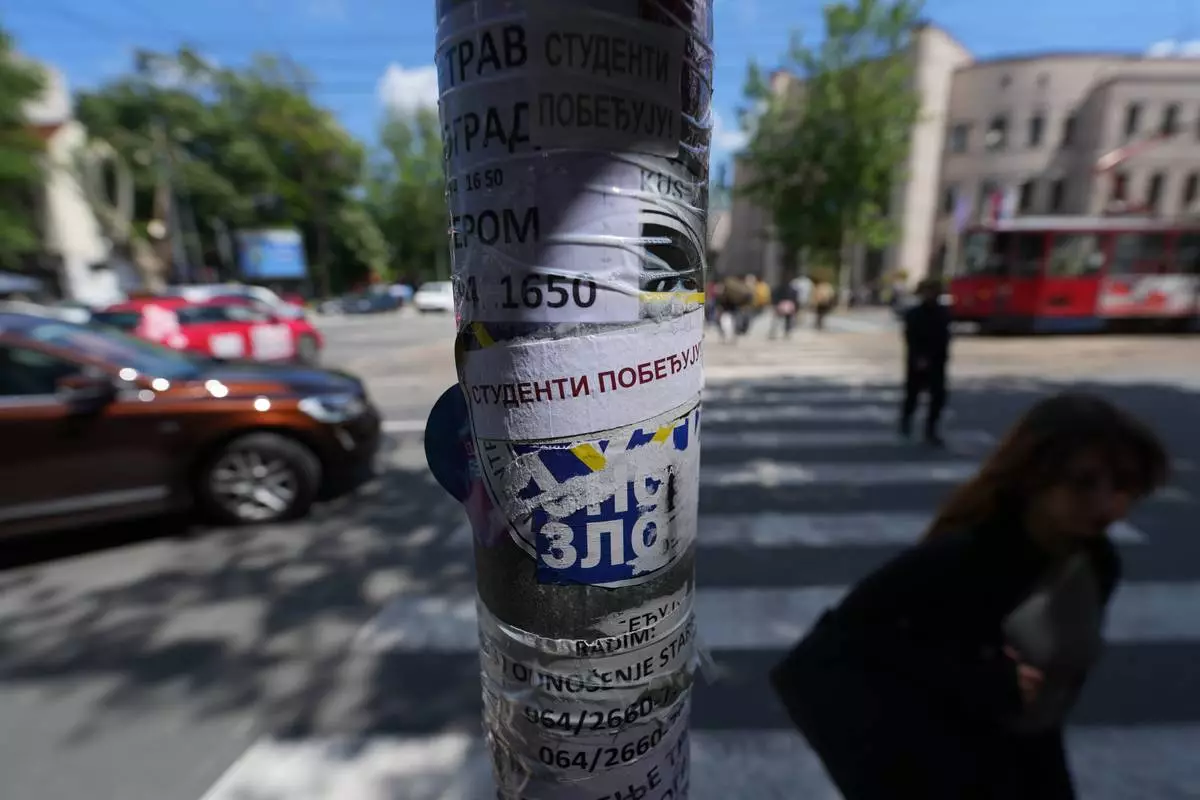
People walk by a lamppost with stickers that read: "Students win" before the first big rally this year of opponents of President Aleksandar Vucic in Belgrade, Serbia, Monday, May 18, 2026. (AP Photo/Darko Vojinovic)
JAKARTA, Indonesia (AP) — Indonesia is overhauling its trade policies for key commodities in a sudden move that some experts liken to a hostile takeover of major industries in the resource-rich nation, with global implications.
The new regulation announced to parliament Wednesday by Indonesian President Prabowo Subianto mandates that a recently set up state-owned enterprise will handle the country's exports of coal, palm oil and iron alloys by September.
Prabowo said one aim is to increase tax revenues. That would help restore dwindling government reserves that have been exhausted by the energy shocks from the war in Iran. Given Indonesia's role as a major commodities exporter, the new rules likely will ripple across international supply chains.
Indonesia is the largest exporter of thermal coal, which is burned for energy, and palm oil, a key ingredient in everything from cosmetics to biofuels. The Southeast Asian nation of roughly 287 million people also has the world's biggest known reserve of nickel, a mineral needed for electric vehicle batteries and stainless steel.
As Indonesia's largest trading partner, China will feel the brunt of this policy pivot, experts said.
China is closely watching Indonesia’s “initiative to nationalize” and considering “how it would impact China’s further cooperation,” said Lei Xie with the UK-based think tank Third Generation Environmentalism. “The future path that Indonesia is taking is highly important for China.”
The swiftness of the new rule's implementation could affect access to needed resources for China's clean technologies industries, which use Indonesian commodities to supply growing demand for renewable energy. Chinese companies are major investors in many Indonesian industries, including critical minerals.
“Indonesia has become vital to China" since it supplies the commodities that "underpin China’s dominance in electric vehicles, batteries, and industrial manufacturing,” said Li Shuo with the US-based Asia Society Policy Institute’s China Climate Hub. “But the relationship is evolving.”
If handled well, the centralization of Indonesia's trade may also open the door to more American investment, analysts said, as it competes with China for key resources.
“Such a move is a clear signal that U.S. investment is being attracted to come to Indonesia even more,” said Bhima Yudhistira with the Jakarta-based Center of Economic and Law Studies. He called the new policy a “hostile takeover” that will mean every contract in industries controlled by China may be revised.
Prabowo told lawmakers Indonesia had lost as much as $908 billion because exporters underreport their sales to avoid paying taxes and other fees.
“The primary objective of this policy is to strengthen oversight and monitoring — and to combat under-invoicing, transfer pricing and the diversion of export proceeds,” he said.
The new entity taking over Indonesia's exports of these commodities — PT Danantara Sumberdaya Indonesia — was officially registered the day before Prabowo's announcement. It is 99% owned by Danantara, the sovereign wealth fund the president launched last year, and will strengthen the government's influence on setting the price of its commodities.
This “represents a governance reform, a step toward strengthening our credibility in managing strategic commodity trade in an orderly and accountable manner,” said Yvonne Mewengkang with Indonesia’s Ministry of Foreign Affairs.
From June to August, private companies are expected to turn over their import and export transactions to Danantara, which by September should manage all trade transactions with foreign buyers.
“There will be an explanation for investors later, so that stakeholders will be informed before June 1," said Airlangga Hartarto, the coordinating economic minister in Indonesia. “After all, in the initial phase, we are focusing on transparency in reporting.”
Trade analysts are skeptical that the government will be able to seamlessly take over trade in all those industries within less than four months.
China is Indonesia's top trading partner and one of its biggest sources of foreign direct investment.
Chinese firms dominate Indonesia's nickel industry and China is a top importer of the resources affected by the trade takeover.
Other major importers of Indonesian palm oil, coal and nickel include the U.S. and the European Union. India, Japan and South Korea and neighboring Malaysia, Vietnam and the Philippines would also be affected.
Under Prabowo, the government has been increasing control over strategically important commodities, cracking down on unauthorized mining operations, taking over plantations and pushing for the development of a domestic refining industry for critical minerals.
Even before Prabowo's announcement, the China Chamber of Commerce in Indonesia sent a five-page protest letter last week highlighting investors' concerns about Indonesia's unstable business climate.
Chinese enterprises recently have faced “excessively stringent regulation, over-enforcement, and even corruption and extortion by competent authorities,” the letter said. This has “severely disrupted normal business operations" and “undermined long-term investment confidence."
“Prabowo didn’t listen to the complaint from these Chinese companies and then did something very, very shocking with this new body to control the export,” said Yudhistira with CELIOS.
By exerting state control over key industries, Indonesia is trying to diversify its investors, according to Yudhistira. Reducing Chinese control may attract interest from others, like the U.S.
This will only intensify the race for resources between the two superpowers, he warned.
Whether this new policy does attract new investors, however, will depend on the transparency of its implementation, said Syahdiva Moezbar with the Finland-based Centre for Research on Energy and Clean Air in Jakarta.
Private businesses say they are still in the dark.
Danantara's impact on small-volume trade, specialized product exports and downstream industries still needs to be spelled out, according to Eddy Martono, chairman of the Indonesian Palm Oil Association.
“Exporters usually already have their own established markets," he said. “We must ensure we do not lose these markets if they are not managed properly.”
Delgado reported from Bangkok.
The Associated Press’ climate and environmental coverage receives financial support from multiple private foundations. The AP is solely responsible for all content. Find AP’s standards for working with philanthropies, a list of supporters and funded coverage areas at AP.org.
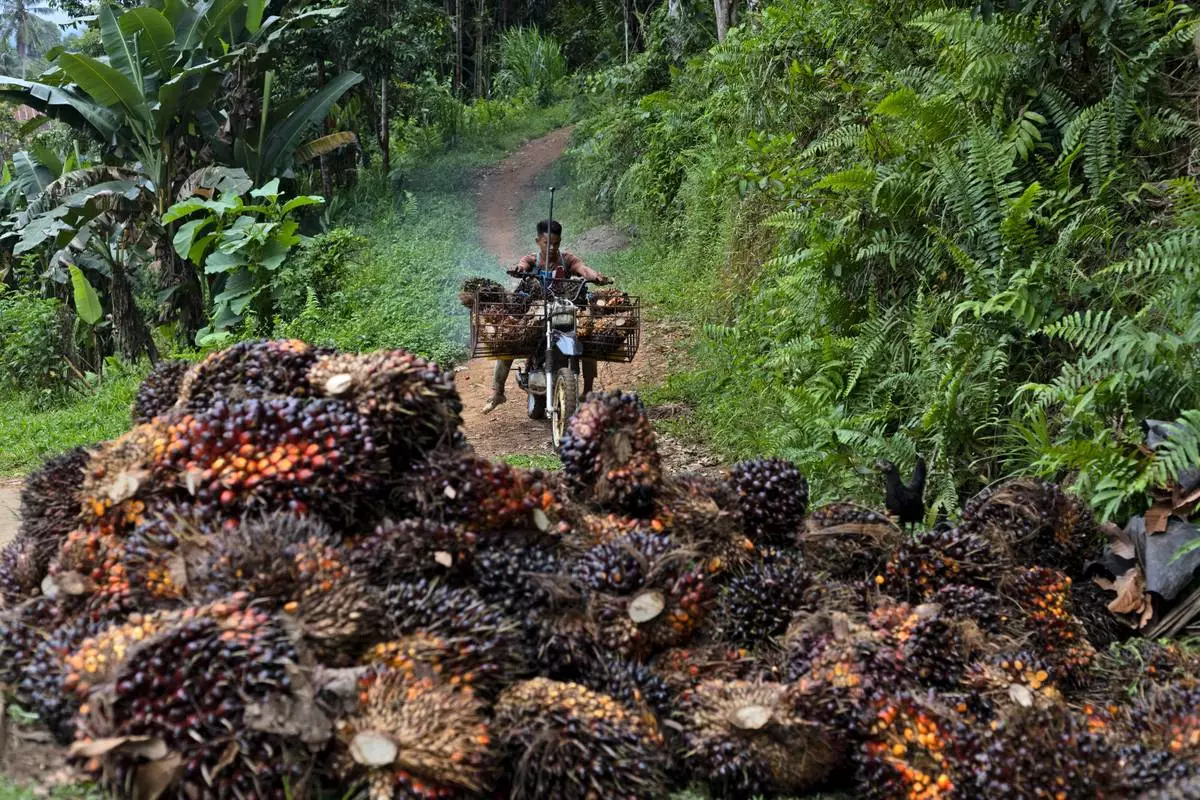
FILE - A man uses a motorcycle to transport palm fruit at a plantation in Polewali Mandar, South Sulawesi, Indonesia, April 21, 2024. (AP Photo/Yusuf Wahil, File)
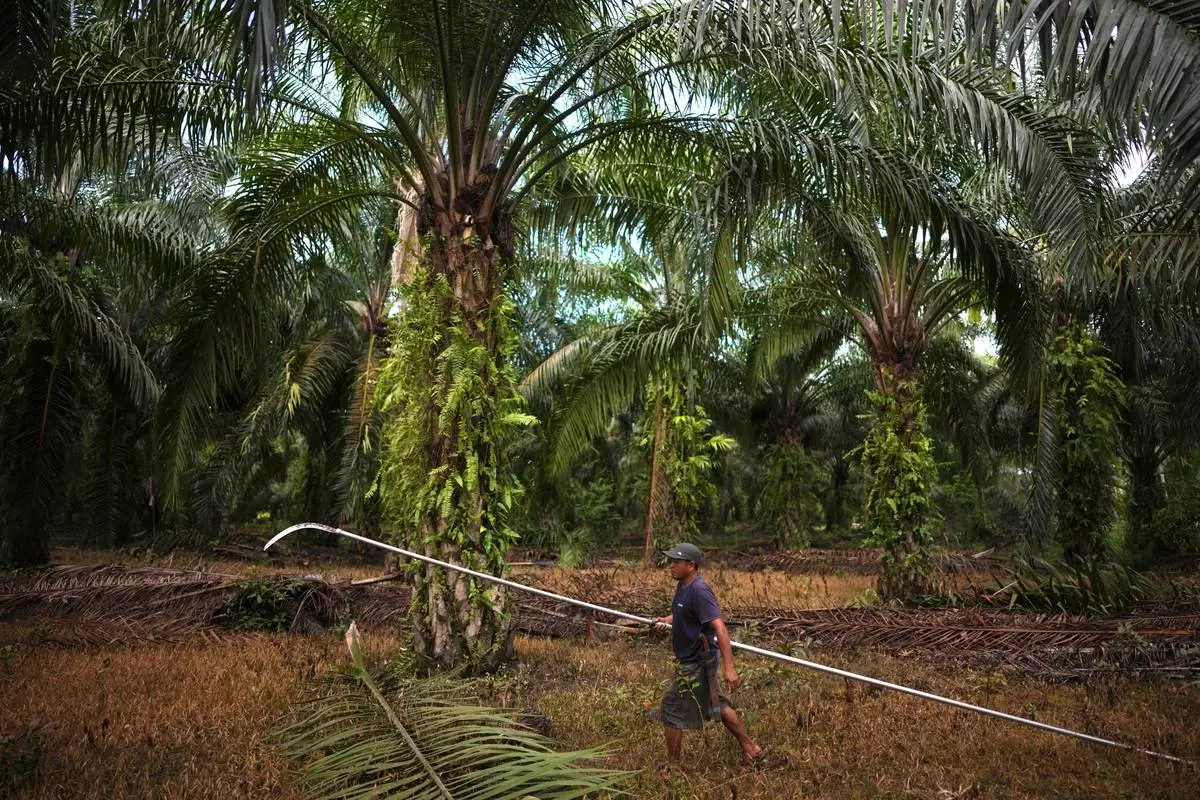
FILE - A farmer walks near palm oil trees at a plantation in Central Mamuju, Sulawesi Island, Indonesia, Feb. 25, 2025. (AP Photo/Dita Alangkara, File)
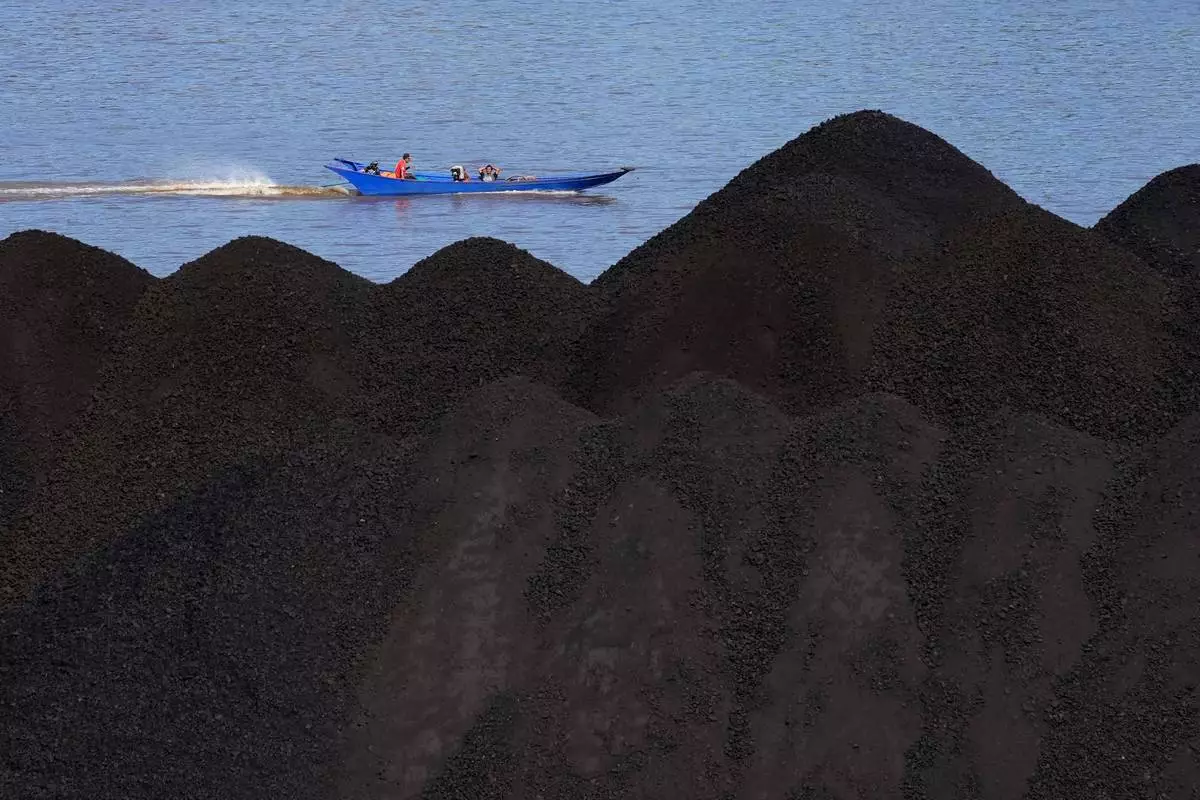
FILE - A boat cruises past a coal piled up on a barge on Mahakam River in Samarinda, East Kalimantan, Indonesia, Dec. 19, 2022. (AP Photo/Dita Alangkara, File)
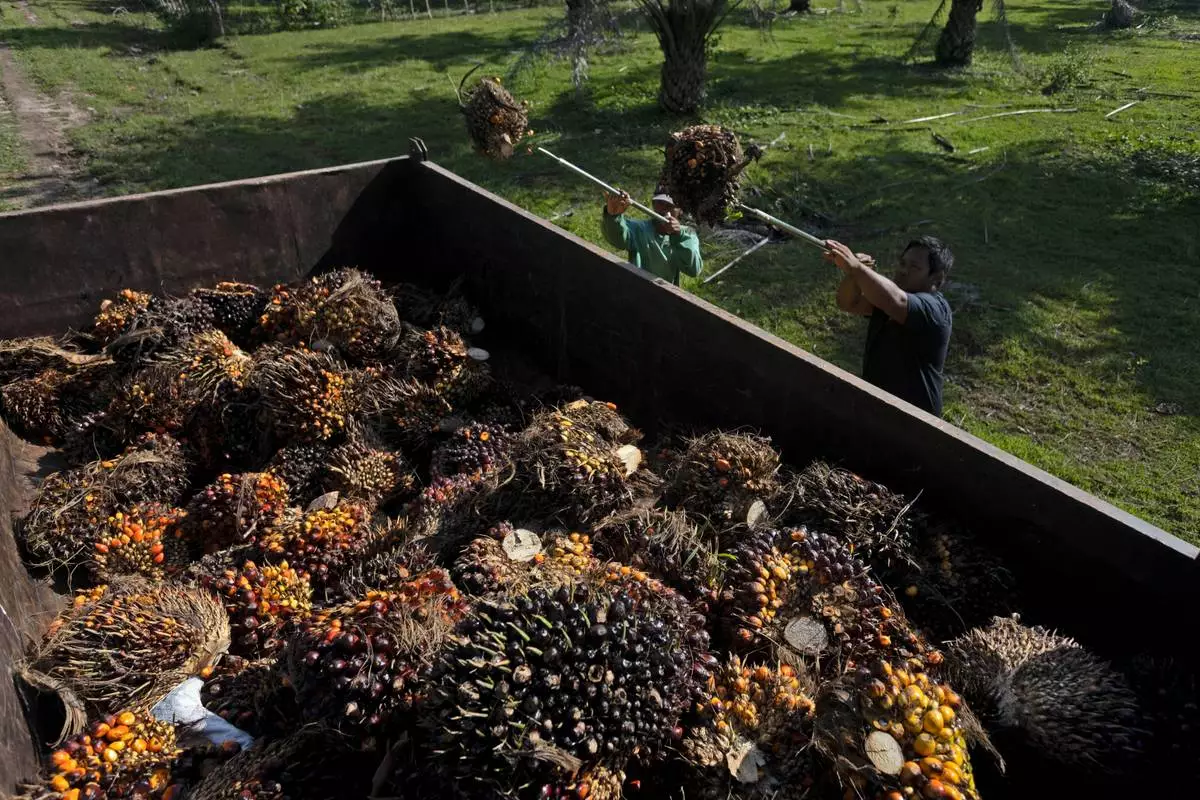
FILE - Men load palm fruit onto a truck at a palm oil plantation in Polewali Mandar, South Sulawesi, Indonesia, April 23, 2024. (AP Photo/Yusuf Wahil, File)
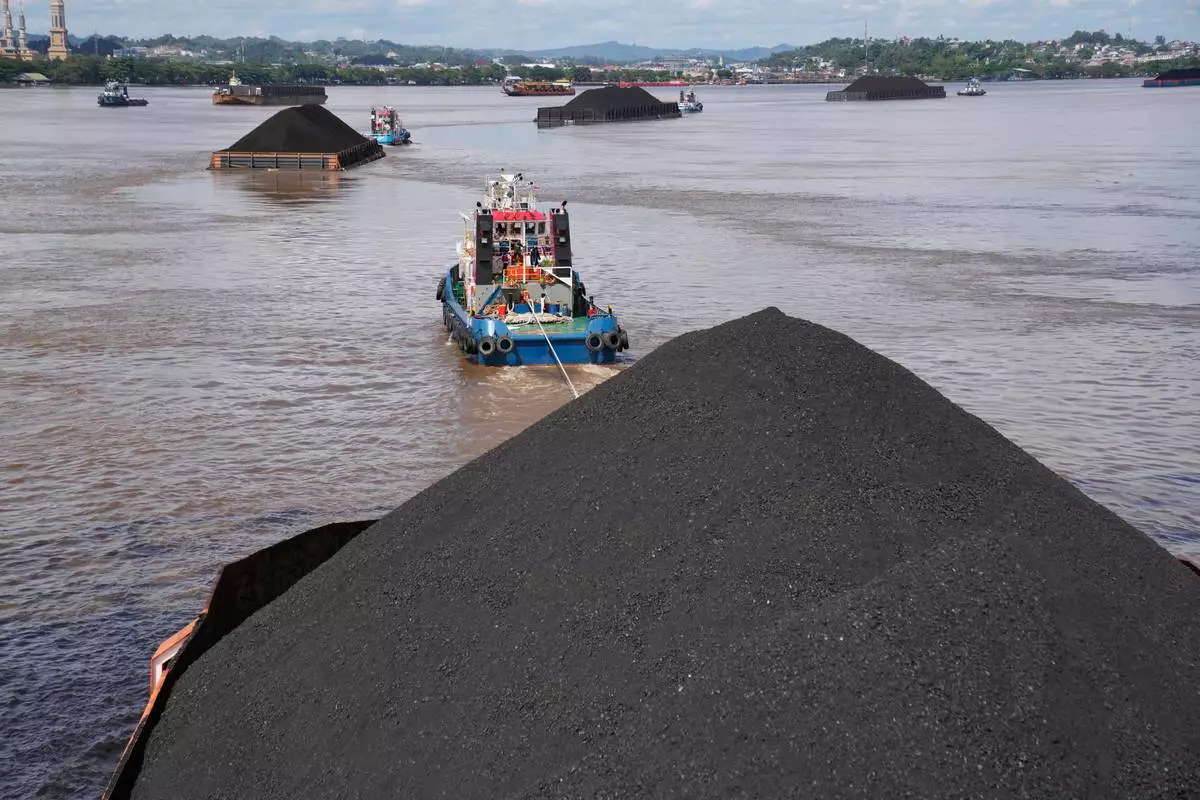
FILE - Tug boats pull barges fully loaded with coal on the Mahakam river in Samarinda, East Kalimantan, Indonesia, on Dec. 19, 2022. (AP Photo/Dita Alangkara, File)