LONDON (AP) — British police appealed for witnesses Friday in their investigation into potential offenses by former Prince Andrew, including sexual misconduct.
Thames Valley Police also said they had been in contact with lawyers for a woman who alleges she was taken to a location in Windsor in 2010 for sexual purposes.
“Should she wish to report this to police it will be taken seriously and handled with care, sensitivity and respect for her privacy,’’ police said in a statement.
Florida attorney Brad Edwards told the BBC in January that he represented a woman who had a sexual encounter with the former prince, now known as Andrew Mountbatten-Windsor, at his home in Windsor, after she was trafficked by late disgraced sex offender Jeffrey Epstein in 2010.
Andrew has repeatedly denied wrongdoing in connection with allegations against him.
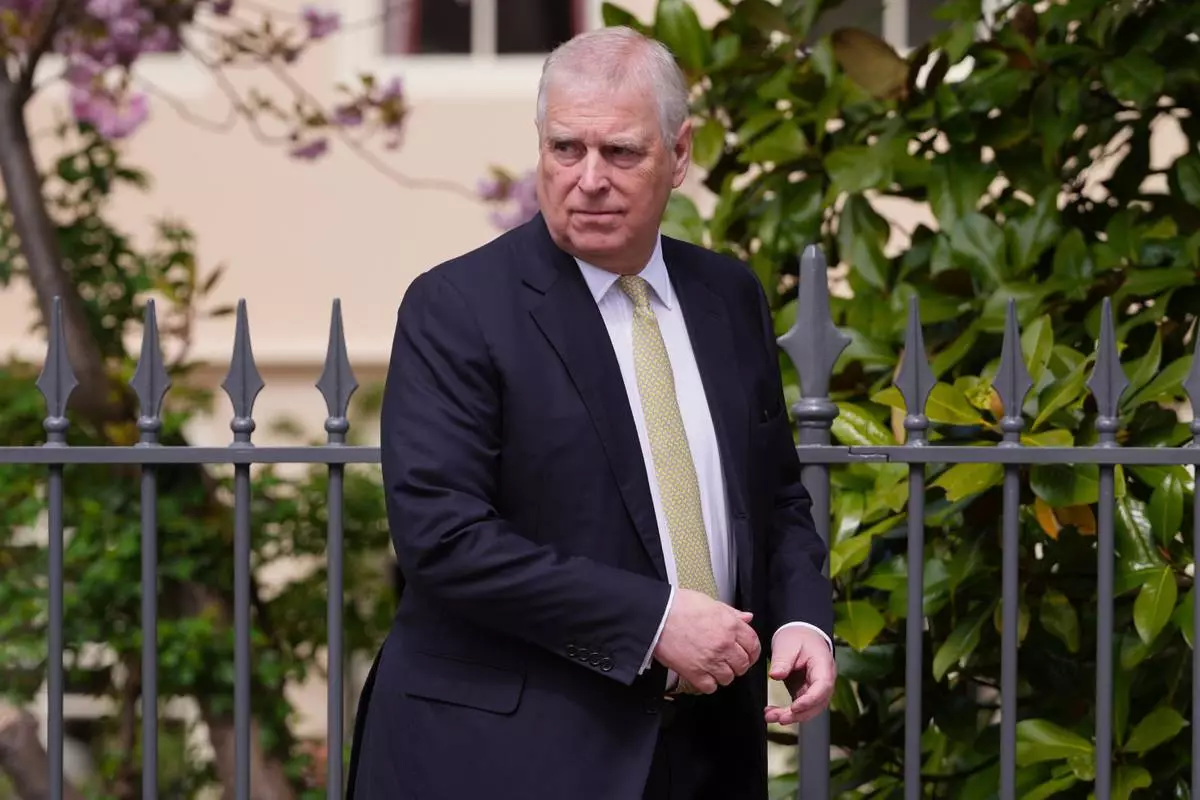
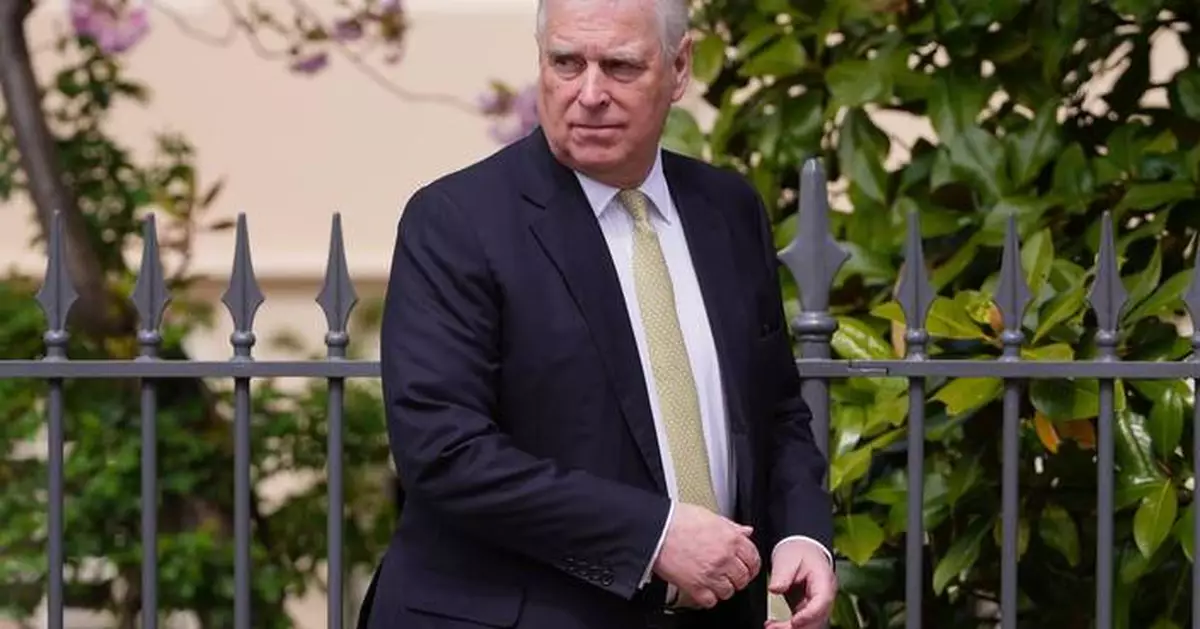
FILE - Britain's Andrew Mountbatten-Windsor, formerly known as Prince Andrew, looks round as he leaves after attending the Easter Matins Service at St. George's Chapel, Windsor Castle, England, April 20, 2025. (AP Photo/Kirsty Wigglesworth, File)
KHARTOUM, Sudan (AP) — It was a classic husband's phone call. He was done for the day and would stop at the market before coming home. But he was returning from war, not work.
Fahmy al-Fateh never made it home. His wife, Azaher Abdallah, started calling friends and family, then turned to his colleagues in Sudan 's army. Her husband was last seen leaving a military base in the capital, Khartoum, on a motorcycle. That was over a year ago.
Now the couple's 3-year-old son shouts at every passing motorcycle, thinking it's his father, Abdallah said.
“He was the most precious thing in my life," she said, sobbing and burying her face in her hands. “I would feel more at peace if I knew something. It’s better than not knowing what happened to him, whether he's alive or dead.”
Her husband is one of more than 8,000 people who have gone missing during Sudan's three years of war, according to the International Committee of the Red Cross. The conflict has torn families apart. People have been separated while fleeing, or gone missing during fighting. Others are quietly detained, leaving friends and relatives in agony trying to learn their fate.
Many of those missing in Khartoum state are thought to be in unmarked graves where tens of thousands of bodies have been found since Sudan's army retook the capital last year from paramilitary fighters.
It was often too dangerous to bury bodies in cemeteries while fighting raged. People dug graves wherever they could.
Driving through the city last month, Associated Press reporters saw soccer fields and cemeteries overflowing with the dead. Mounds of dirt beside a defunct gas station had makeshift signs with names and dates, but many were unmarked.
A member of the military media accompanied the AP during the visit, including during interviews. The AP retains full editorial control of its content.
The ICRC said it had resolved over 1,000 cases of the missing but would not say how many were alive or dead.
Abdallah was sleeping when her husband left the house before sunrise last January. Al-Fateh, a 38-year-old farmer and merchant, had joined Sudan's army when the war began. That day, he was helping to retake Khartoum from the paramilitary Rapid Support Forces.
Since then, the 30-year-old Abdallah has combed the city, visited hospital morgues and asked the army for help. Her husband's unit said they'd try to find him. If she didn't hear anything, they said, consider him missing.
At home on the outskirts of Khartoum, she scrolls through photos of him in uniform, still believing that one day he'll return.
“That is what my heart tells me," she said.
Psychologists say the uncertainty surrounding missing loved ones can cause years of profound distress.
“Families of missing persons experience additional layers of vulnerabilities due to hostilities, displacement and ambiguous loss,” said Nathalie Nyamukeba, a psychologist with the ICRC.
Some families in Sudan say the only way to deal with it is to keep searching.
Sulafa Mustafa's son went missing two years ago. A shy boy, 18-year-old Suleiman Abdalsid went to a friend’s house near Khartoum and never came home.
His mother tirelessly traveled through the streets, even as the sounds of shelling echoed, going door to door. She has visited hospitals and prisons, and showed countless strangers his photo.
She has even rented a microphone to shout his name.
“I haven’t lost faith in finding you,” she said, and covered her face with her hands.
Finding people alive or dead is challenging in Sudan, especially as the war continues. Labs that could have been used for DNA testing have been destroyed, and few forensic specialists remain.
In Khartoum state, authorities have moved nearly 30,000 bodies — of some 50,000 — that had been hastily buried near houses, in sports fields or by the road when the RSF controlled the area. Their work continues.
About 10% of bodies that have been reburied are unidentified.
Hisham Zienalabdien, director general of the forensic medicine department for Khartoum state, said they are saving DNA from unidentified bodies in hopes of one day being able to match it with relatives.
For families who have found loved ones but can't properly bury them, there is a different kind of pain.
Abubakar Alswai waited more than a year to move his 73-year-old brother, Mohamed, from where he had been buried in front of his house into a public cemetery.
The RSF had killed Mohamed but waited three weeks before granting a neighbor permission to bury his bullet-hit and decomposing remains. In Islamic tradition, largely followed in Sudan, funerals take place as quickly as possible, ideally within 24 hours.
Alswai wiped tears from his cheeks as he watched grave diggers remove his brother's remains. At least now Mohamed will get the dignified burial he deserves, he said, and his family will have some peace.
“What happened had left a mark on my heart," he said.
For more on Africa and development: https://apnews.com/hub/africa-pulse
The Associated Press receives financial support for global health and development coverage in Africa from the Gates Foundation. The AP is solely responsible for all content. Find AP’s standards for working with philanthropies, a list of supporters and funded coverage areas at AP.org.
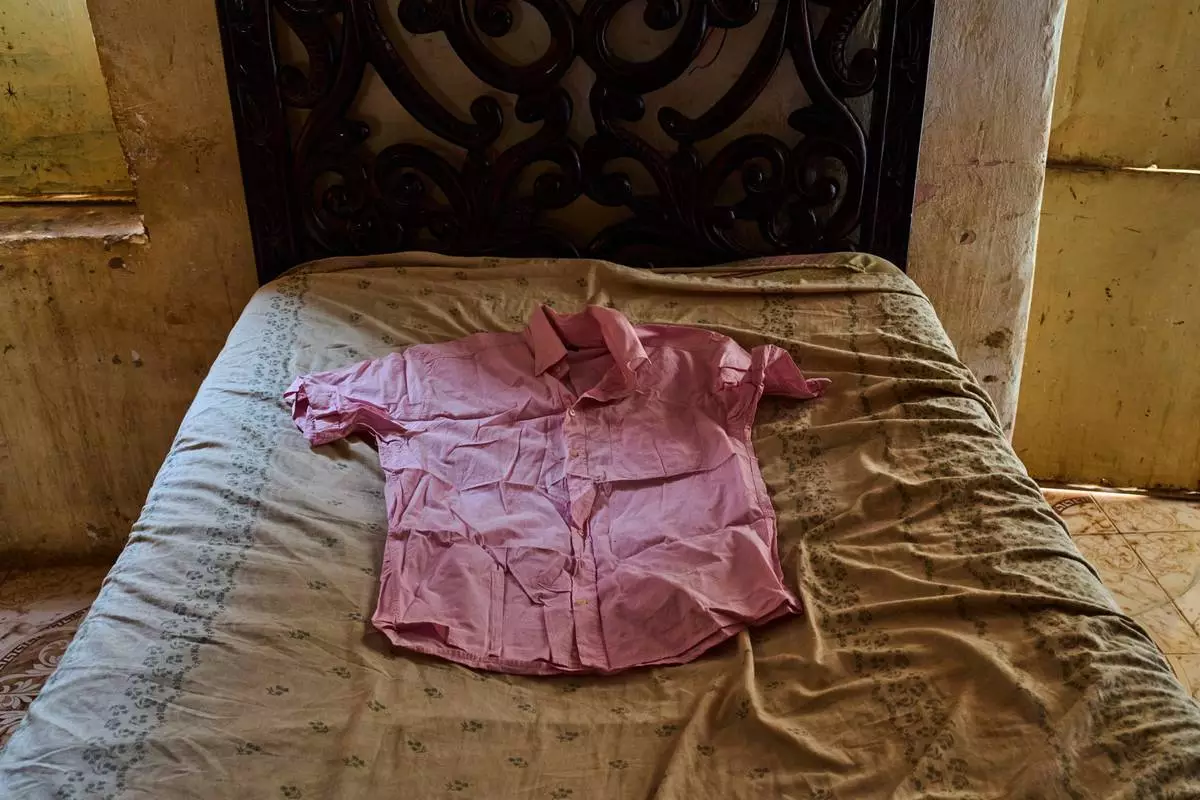
A shirt belonging to Suleiman Abdelsaid, who went missing in 2024 at age 18, is displayed on a bed at his family home in Omdurman, Sudan, Tuesday, April 21, 2026. (AP Photo/Bernat Armangue)
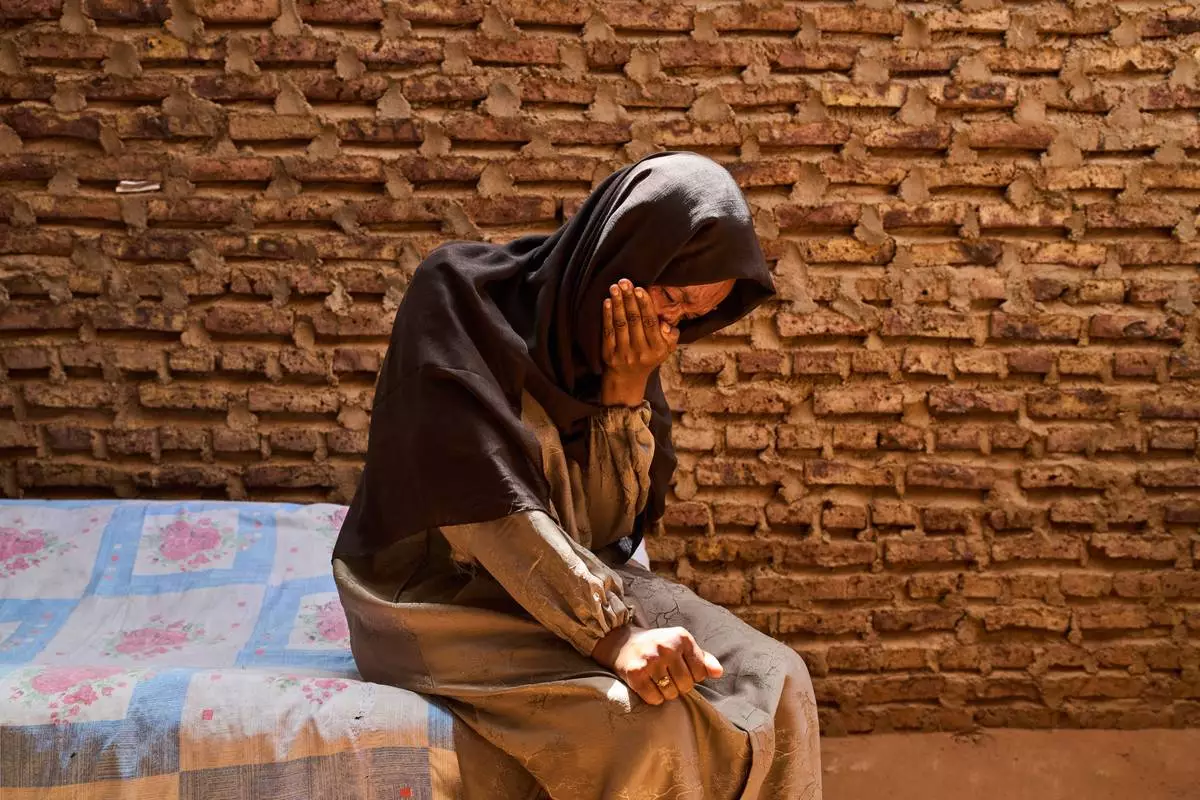
Azaher Abdallah, who has been searching for her husband, Fahani Al Fateh, for over a year, becomes emotional during an interview with The Associated Press in Omdurman, Sudan, Sunday, April 19, 2026. (AP Photo/Bernat Armangue)
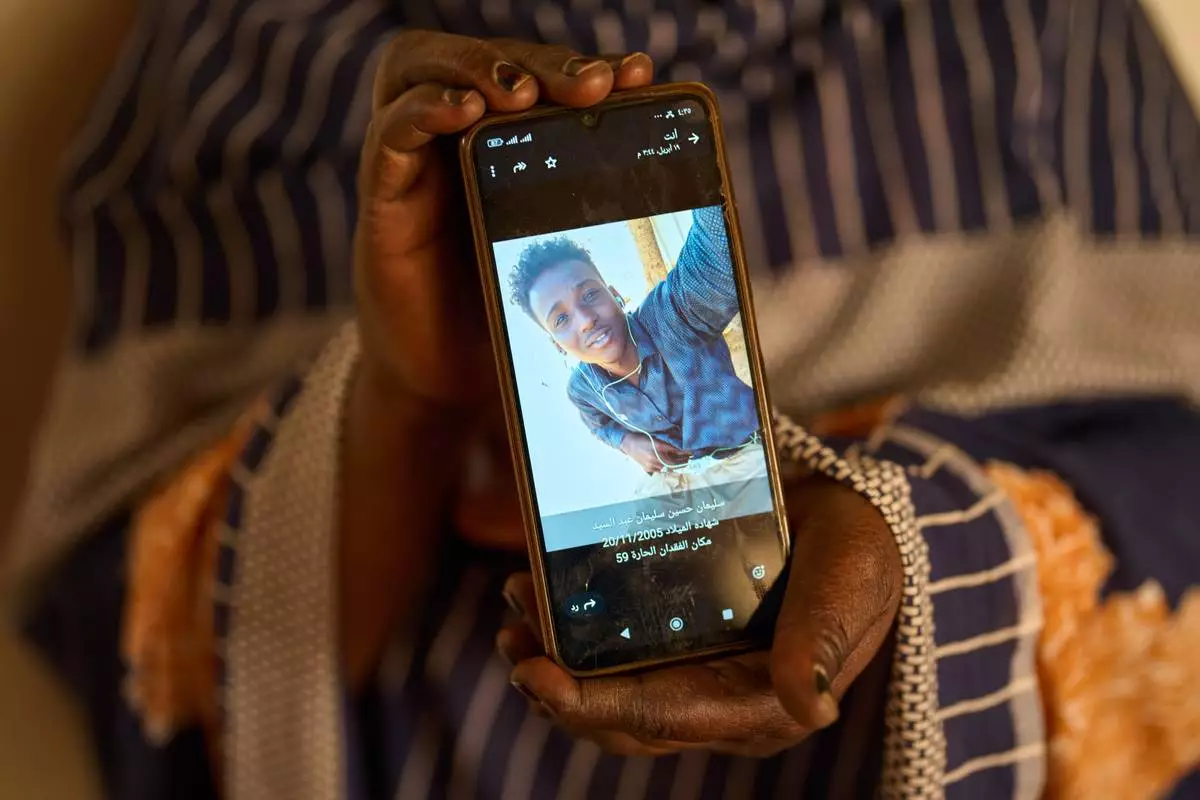
Sulafa Mustafa shows a photograph of her missing son, Suleiman Abdelsaid, in Omdurman, Sudan, Tuesday, April 21, 2026. (AP Photo/Bernat Armangue)
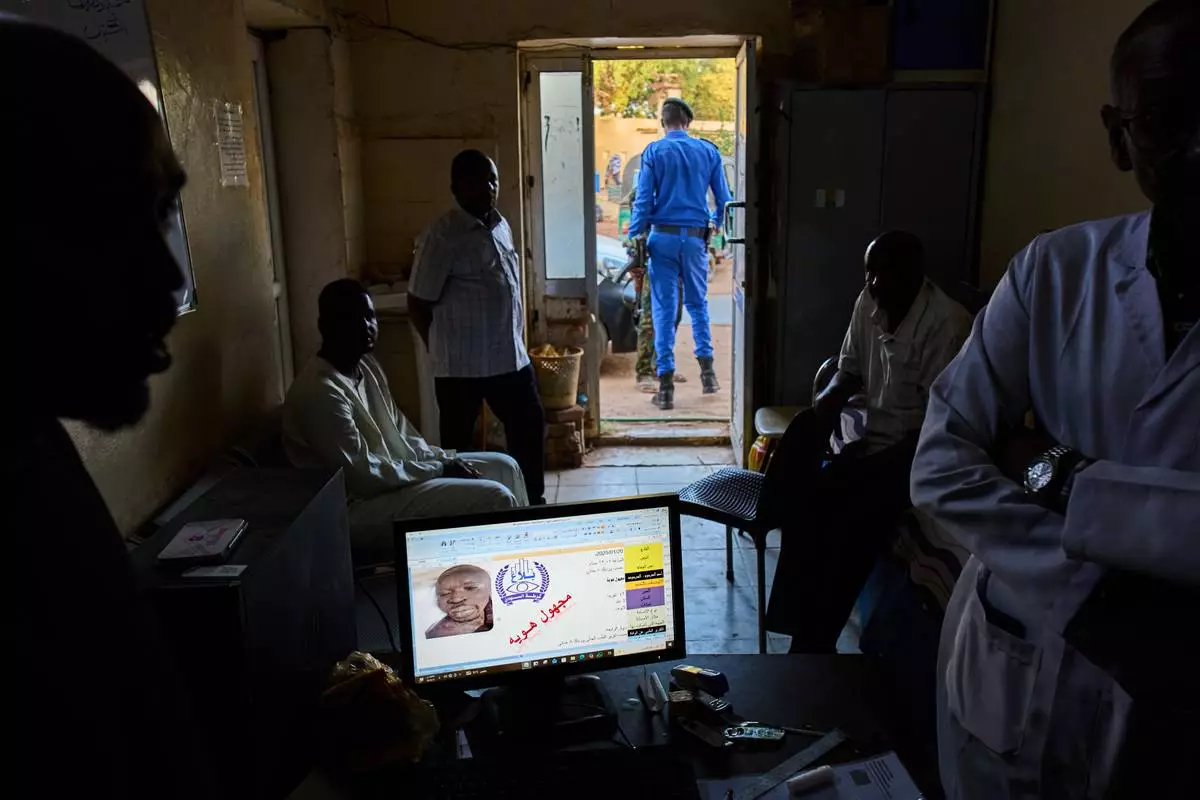
A computer screen displays a record of an unidentified body in the missing persons database at Al Nao Hospital in Omdurman, Sudan, Saturday, April 18, 2026. (AP Photo/Bernat Armangue)
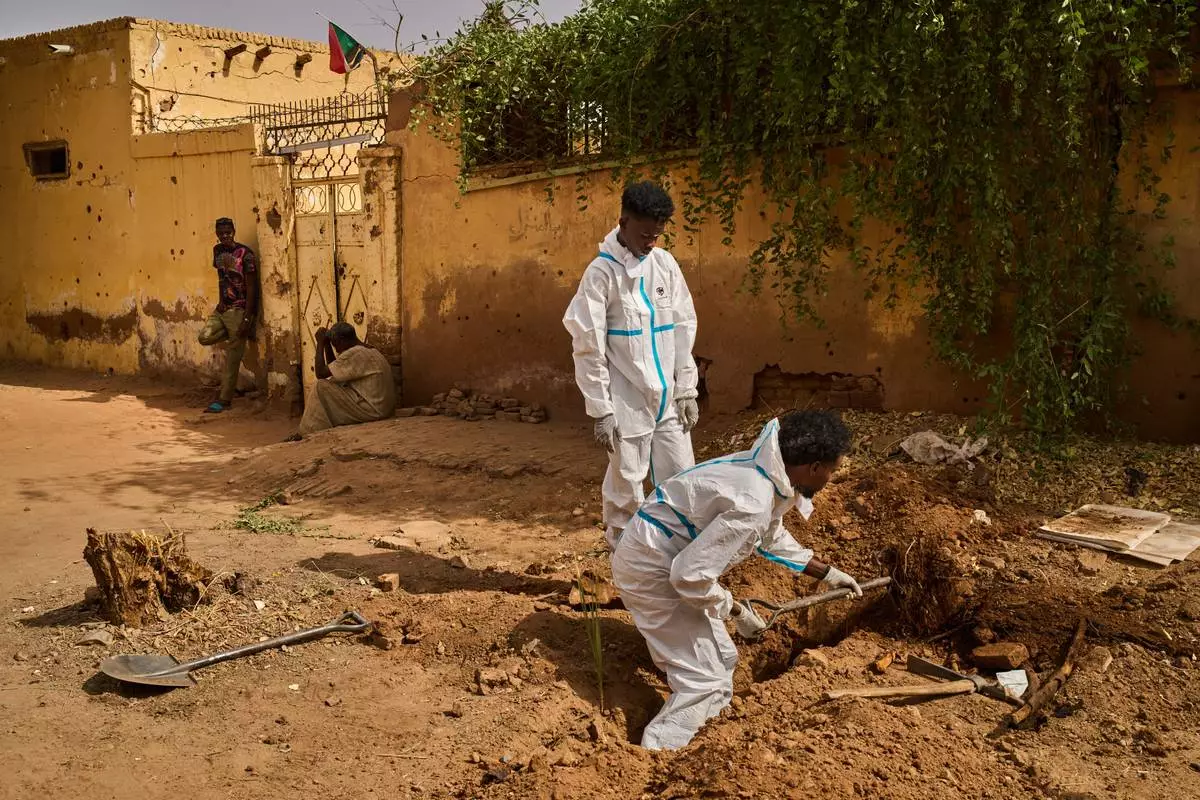
Staff from Sudan's Forensic Medicine Corporation exhume the body of Mohammed Alsawi, 73, who was killed in 2023 by the paramilitary Rapid Support Forces, or RSF, in Omdurman, Sudan, Monday, April 20, 2026. (AP Photo/Bernat Armangue)