Skip to Content Facebook Feature Image

Railways boost Xizang's progress

China

China

China

Railways boost Xizang's progress

2026-05-22 17:47 Last Updated At:23:37

Overcoming extreme geographical challenges, Chinese workers have built railways on the frozen ground and in the oxygen-thin air of the Qinghai-Tibet Plateau, and ended the history of Xizang Autonomous Region's history of having no railways.

Xizang has undergone a monumental transformation over the past 75 years since its peaceful liberation in 1951. At the heart of this change lies a ribbon of steel climbing through snow-covered mountains -- the Qinghai-Xizang Railway, an engineering marvel that has boosted the region's economic growth and regional progress with closer connectivity with other parts of China.

The Qinghai-Xizang Railway stretches over 1,900 kilometers from Xining, the provincial capital of Qinghai, to Xizang's regional capital Lasa, ascending to an altitude of more than 5,000 meters at Tanggula Pass, quite literally rising above the clouds.

The true engineering achievement lies in how the railway was constructed. Engineers had to overcome the challenge of building across vast areas of permafrost ground that constantly freezes and thaws, creating unstable conditions that could threaten the safety of the tracks.

The extreme altitude posed another major obstacle. Oxygen levels along parts of the route are so low that even basic breathing becomes difficult for both construction workers and passengers.

But the hardship has paid off. Over the past 20 years, the railway has carried out more than 40 million passenger trips and transported over 100 million tons of cargo. Train services have increased from just 5 pairs to 17 today, cutting logistics costs by around 60 percent.

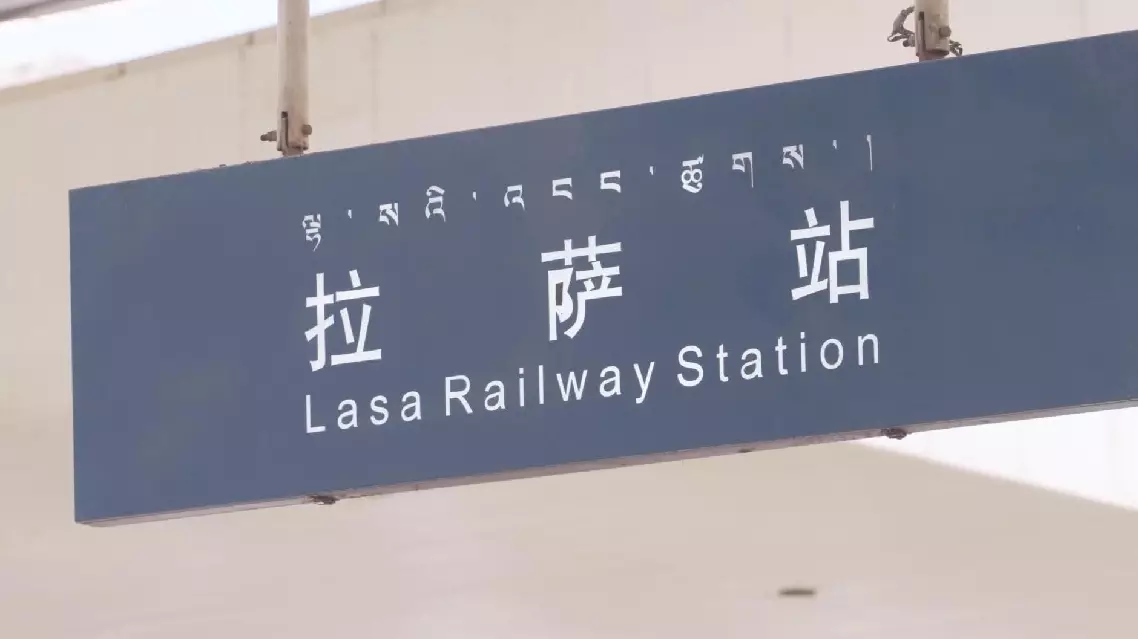
"As a vital gateway for Xizang's opening-up, sound station services and efficient operations have directly driven explosive growth in passenger flows. The average daily passenger volume has soared from 3,000 in the initial operation period to 10,000 nowadays, realizing the leapfrog development of railway passenger transport in Xizang," said Xu Jianwei, director of Lhasa Railway Station.

Today, this line has completely transformed travel into Xizang. Land journeys that once took days can now be made by train, safely and comfortably, even at extreme altitude.

Inside the trains running on the Qinghai-Xizang Railway, pressurized cabins and on-board oxygen systems keep passengers safe at high altitude. The railway has also been upgraded with continuously welded tracks, improving comfort and reducing maintenance challenges.

This line is still evolving, with future plans to bring China's Fuxing high-speed trains all the way here.
Railways boost Xizang's progress


Railways boost Xizang's progress
China's Minister of Commerce Wang Wentao outlined the key priorities of the 32nd Asia-Pacific Economic Cooperation (APEC) Ministers Responsible for Trade Meeting, which opened on Friday in Suzhou, East China's Jiangsu province.

In an interview with CGTN ahead of the two-day meeting, Wang said free trade, digital cooperation and green economy are high on the agenda of the meeting.

"The key areas include advancing regional economic integration and the Free Trade Area of the Asia-Pacific, supporting the World Trade Organization (WTO) in strengthening digital cooperation and developing green economy. At present, the international situation is marked by intertwined turbulence and chaos, with intensified geopolitical instability. The rise of unilateralism and protectionism poses serious challenges to the international economic and trade order, disrupting global and Asia-Pacific development. Against this backdrop, all parties have higher expectations for this trade ministers' meeting, hoping that it can build consensus and deliver outcomes," Wang said.

This year marks China's third time hosting the APEC meetings and the 35th anniversary of its membership.

By 2025, China had become the largest trading partner of 13 APEC economies. Trade between China and APEC economies reached 3.7 trillion U.S. dollars, accounting for 57.8 percent of China's total foreign trade.

China has signed 24 free trade agreements or economic and trade arrangements with 31 countries and regions, including 15 APEC economies. In recent years, China has also completed upgrades of free trade agreements with APEC economies such as Singapore and Peru.

The minister said that China has always been a firm supporter and an important contributor to APEC.

"We have actively shared our vast market and development opportunities with all parties. China's door to the world will only open wider and wider. Facing the common challenges, China will continue to fulfill its responsibilities as a major country, further deepen reform, expand high-standard opening-up, and continue to provide new opportunities for the Asia-Pacific region and the world with its new achievements in Chinese modernization," the minister said.

China's Commerce Minister outlines priorities for 32nd APEC trade ministers' meeting

China's Commerce Minister outlines priorities for 32nd APEC trade ministers' meeting

Recommended Articles