Skip to Content Facebook Feature Image

An SNL 'All Drug Olympics?' Not quite. But these Enhanced Games are no joke

News

An SNL 'All Drug Olympics?' Not quite. But these Enhanced Games are no joke
News

News

An SNL 'All Drug Olympics?' Not quite. But these Enhanced Games are no joke

2026-05-23 04:32 Last Updated At:04:51

LAS VEGAS (AP) — The first, best and most hilarious rendition of the “All Drug Olympics” came courtesy of “Saturday Night Live." It was 1988 when Soviet weightlifter “Sergei Akmudov,” geeked up on anabolic steroids, Nyquil and “some sort of fish paralyzer,” tried to clean and jerk 1,500 pounds — three times the existing world record — only to have his arms snap off at the shoulders.

Blood and gore gushed from where his arms used to be. Laughter cascaded as the on-site reporter, Kevin Nealon, threw it back to Dennis Miller in the studio.

It took almost 40 years, but finally, the event that tackles that age-old bar question, “What would happen if we just let them all take drugs?” has arrived.

“The Enhanced Games,” featuring 50 athletes who have been free to use performance enhancers of their choice and will compete in track, swimming and, yes, weightlifting, is set for Sunday in Las Vegas.

Is it just a bad joke? Depends on who you ask.

“A big success for us would be the athletes being healthy, safe, better paid and happier than they’ve ever been before,” said Max Martin, the CEO and co-founder of Enhanced.

The Associated Press spoke with a handful of leaders in the Olympic and anti-doping world, most of whom would not agree to speak on the record, even to denigrate the Enhanced Games, lest they lend oxygen to an idea they largely portrayed as a cynical money grab for washed-up athletes.

Benjamin Cohen, director general of the International Testing Agency that spearheads testing for the Olympics along with dozens of individual sports, was among those who would comment.

“I’ve heard some people calling it the ‘Doping Olympics,’ but even using the word ‘Olympics’ (is a stretch)," Cohen said. “At the end of the day, it’s a one-day event, it’s 2,000 people eating popcorn and there’s a music concert. It’s (50) athletes. It’s not right to put it on the same level.”

The germ of the idea for the Enhanced Games formed in 2022. Then, the event was largely seen as a disruptive, potentially paradigm-shifting sports event meant to poke at the mainstream anti-doping world’s troubled enforcement efforts and Olympic sports’ inability to pay a living wage to a disturbingly large percentage of their athletes.

It has since evolved into a new-age online pharmaceutical company, which describes itself as a “global movement that develops scientific insights, medical discoveries and record-breaking sports events to unite humanity and inspire innovation.”

Enhanced, which became a publicly traded company May 8 and has seen its initial stock price drop by around half to $5.24 as of Friday afternoon, made some of its biggest headlines early by touting its $250,000 first prizes and bonuses of up to $1 million for those who break world records in top events like the 100-meter sprint.

Those marks, of course, would not count in any real sports record book. They have to come in events sanctioned by, say, World Athletics or World Aquatics, both of which require athletes to pass drug tests for any result to count.

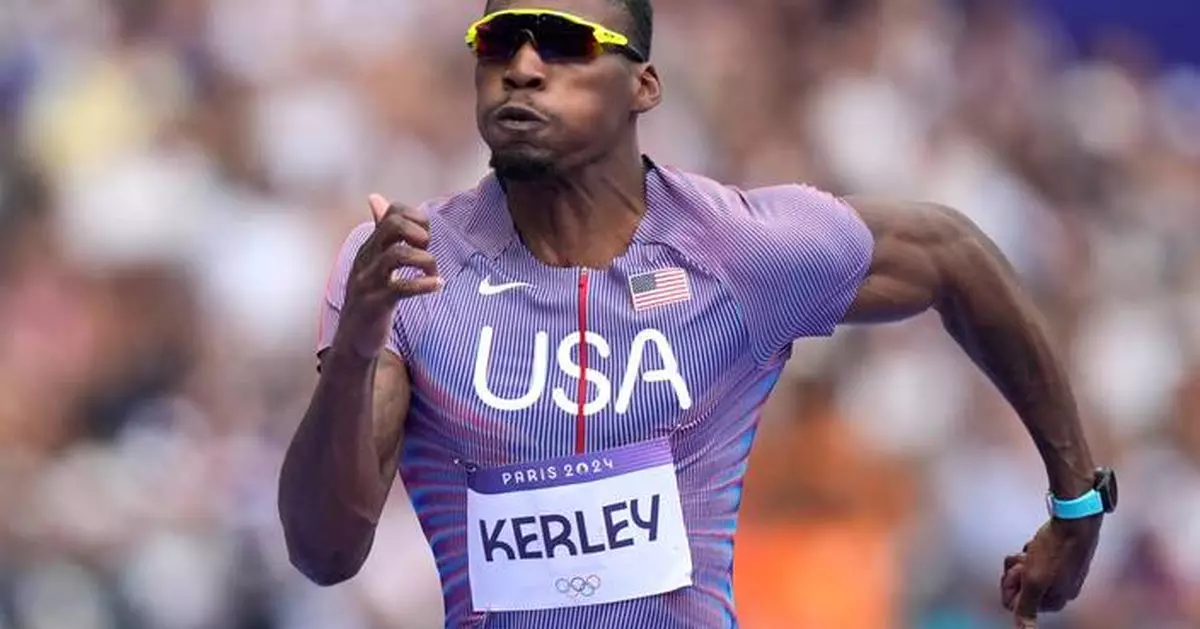
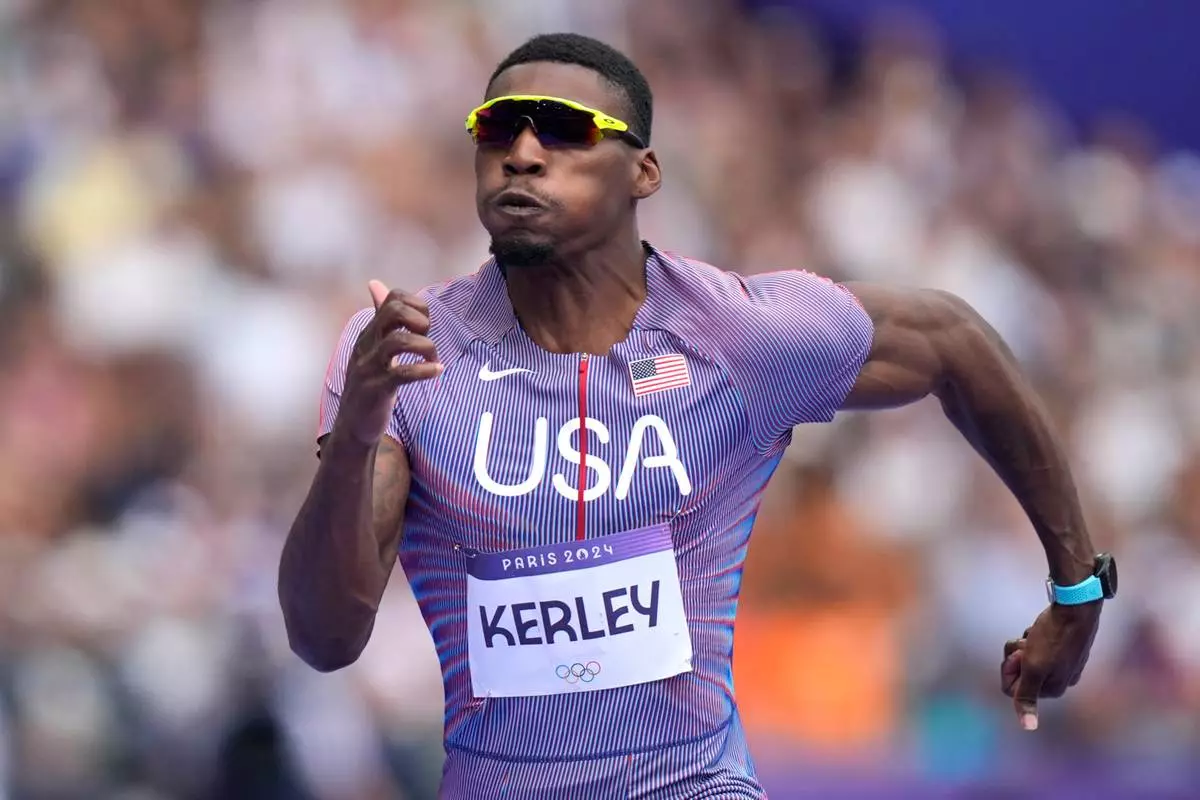
Another number that might or might not be real is the $12 million that sprinter Fred Kerley says he’s making. Arguably the biggest name among the 50 athletes competing, Kerley, the 2022 world 100-meter champion whose personal best is 9.76 seconds — .18 short of Usain Bolt's world record — has been doing live streams leading up to the event.

In one exchange about how much it would cost a shoe company to sign him, he said: “My contract was $12 million altogether, so if they’re not willing to pay 12-plus, they can kiss my ass.”

All the 2,500-or-so tickets for the specially built venue on the Strip that includes a pool and track are going to people chosen by the organization. The Vegas betting line? Inside the sports book attached to the venue, there was no mention of Enhanced and the ticketwriters didn't know what the Enhanced Games were.

What would it mean if somebody breaks a record? What would it mean if nobody does?

“For me, it will be difficult to draw conclusions from one race this weekend,” Cohen said. “For Usain Bolt to have broken a world record at the Olympics, it means he had to perform at a certain level for a number of months in the lead-up to qualify to get to that stage. It’s not the same as a one-day competition where you had a six-month doping regimen.”

Earlier this year, an Enhanced swimmer, Kristian Gkolomeev of Greece, set an unofficial record (20.89 seconds) in the 50 meters and received the $1 million bonus from the group. He was using performance enhancers and a speed suit that has been banned by world swimming authorities.

His ability — or Kerley's — to cash in for the $1 million this week won’t be the only measure of success (or failure) for this one-day event.

Michael Ashenden, a former drug fighter in the Lance Armstrong era who argued in a 2024 paper that the Enhanced Games weren't such a radical idea, has been working with the group's medical commission as an independent advisor.

He says an anti-doping system that oversees elite sports doesn’t reflect the real world and its needs.

Enhanced, which openly lists an available menu of what have long been sports’ most worrisome performance enhancers — nandrolone, erythropoietin (EPO) and human-growth hormone — emphasizes that athletes who choose those drugs are under strict medical supervision and are only using substances that have been approved by the Food and Drug Administration.

The records from their training and testing will be used to publish papers and take a stab at that old question: What would happen if we let the athletes dope?

“The same science that allows an athlete to enhance might allow a 70-year-old to regain their strength, their recovery, and their energy,” Ashenden said. “The Enhanced Games are using the stadium to show what medicine might do for the rest of society.”

If that works, and the stock price goes up, then Enhanced, which has been bankrolled by billionaire venture capitalist Peter Thiel and others, would view this as a success.

“If you’re a 25-year-old training for your first marathon, if you’re 65 and you’re looking for more energy to take your grandkids to the playground and play with them, enhancements can help you be the best at any point in time that you can be,” said Martin, the CEO.

Anti-doping researcher Oliver Catlin, whose father, Don, was one of the godfathers of the profession, pointed out the upcoming 60th anniversary of the start of the modern-day drug-fighting movement in sports. It was triggered by the death at the Tour de France of cyclist Tom Simpson, whose autopsy blamed overuse of amphetamines and other stimulants for his death.

“I have friends of enhanced sports who believe it can be done legally and safely,” Catlin said. “But you have to look at the other side of the coin, too. There’s a reason we have clean sport, and it’s because some of these substances have literally been implicated in the death of athletes.”

AP sports: https://apnews.com/hub/sports
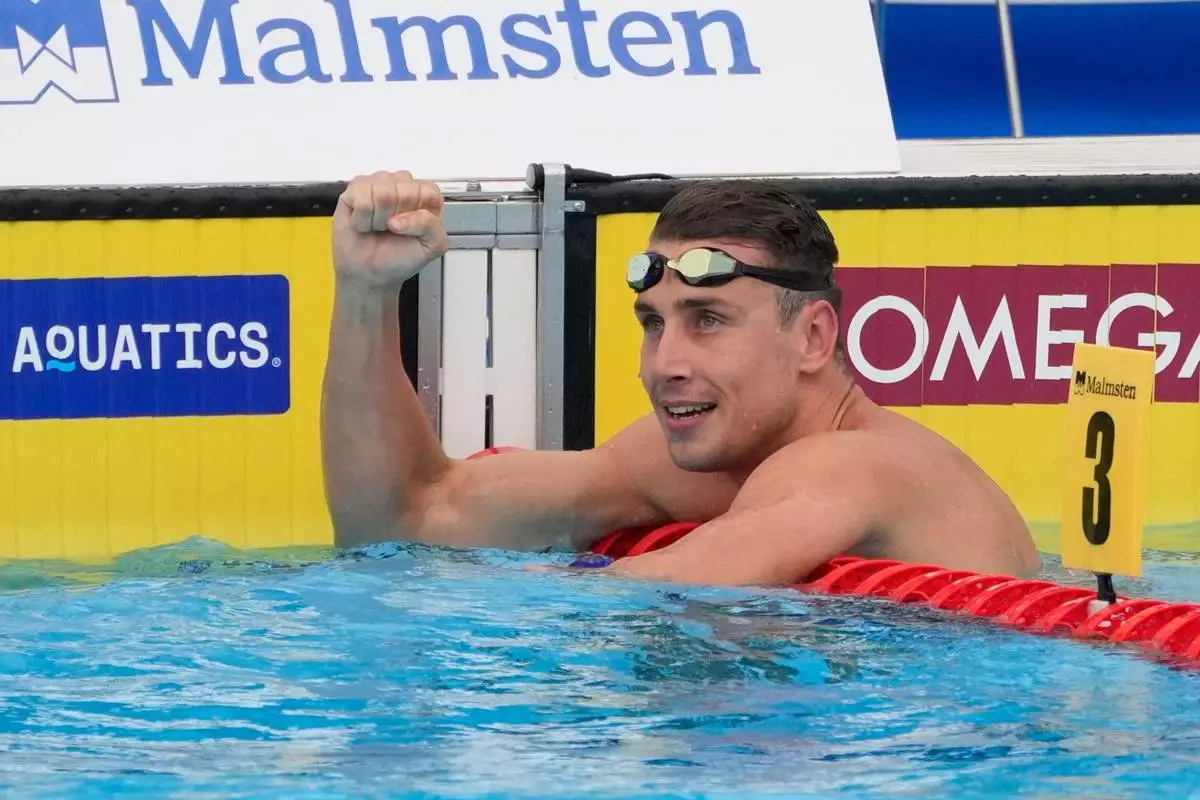
FILE - Greece's Kristian Gkolomeev celebrates after winning Men's 50m Freestyle Final at the European Aquatics Championships in Belgrade, Serbia, June 23, 2024. (AP Photo/Darko Bandic, File)
FILE - Greece's Kristian Gkolomeev celebrates after winning Men's 50m Freestyle Final at the European Aquatics Championships in Belgrade, Serbia, June 23, 2024. (AP Photo/Darko Bandic, File)

FILE - Fred Kerley, of the United States, competes in the men's 100-meter heats at the 2024 Summer Olympics, Aug. 3, 2024, in Saint-Denis, France. (AP Photo/Matthias Schrader, File)

FILE - Fred Kerley, of the United States, competes in the men's 100-meter heats at the 2024 Summer Olympics, Aug. 3, 2024, in Saint-Denis, France. (AP Photo/Matthias Schrader, File)
Activists detained when their flotilla attempted to breach Israel’s naval blockade of Gaza say they have been mistreated at the hands of Israeli soldiers, describing beatings, tasers and attack dogs.

The Global Sumud Flotilla of 50 boats was intercepted in international waters some 250 miles (400 kilometers) off the coast of Israel, and activists along with journalists and at least one lawmaker from Italy were transferred onto military boats and brought to a larger military vessel at the Ashdod port in southern Israel, where they were held in containers, according to their accounts. They told The Associated Press they were punched and kicked, as well as dragged and pulled by their hair.

Israel's far-right security minister Itamar Ben-Gvir, who has called for deporting political opponents and was barred from mandatory military service for his extreme views, sparked global outrage after promoting a video of himself taunting activists from a flotilla to Gaza who were detained by his police force. Foreign leaders have condemned his on-camera treatment of the detainees and several countries summoned Israeli envoys to air their concerns.

Israel denies mistreatment. The allegations were “false and entirely without factual basis,” said Zivan Freidin, a spokesperson for the Israeli Prison Service.

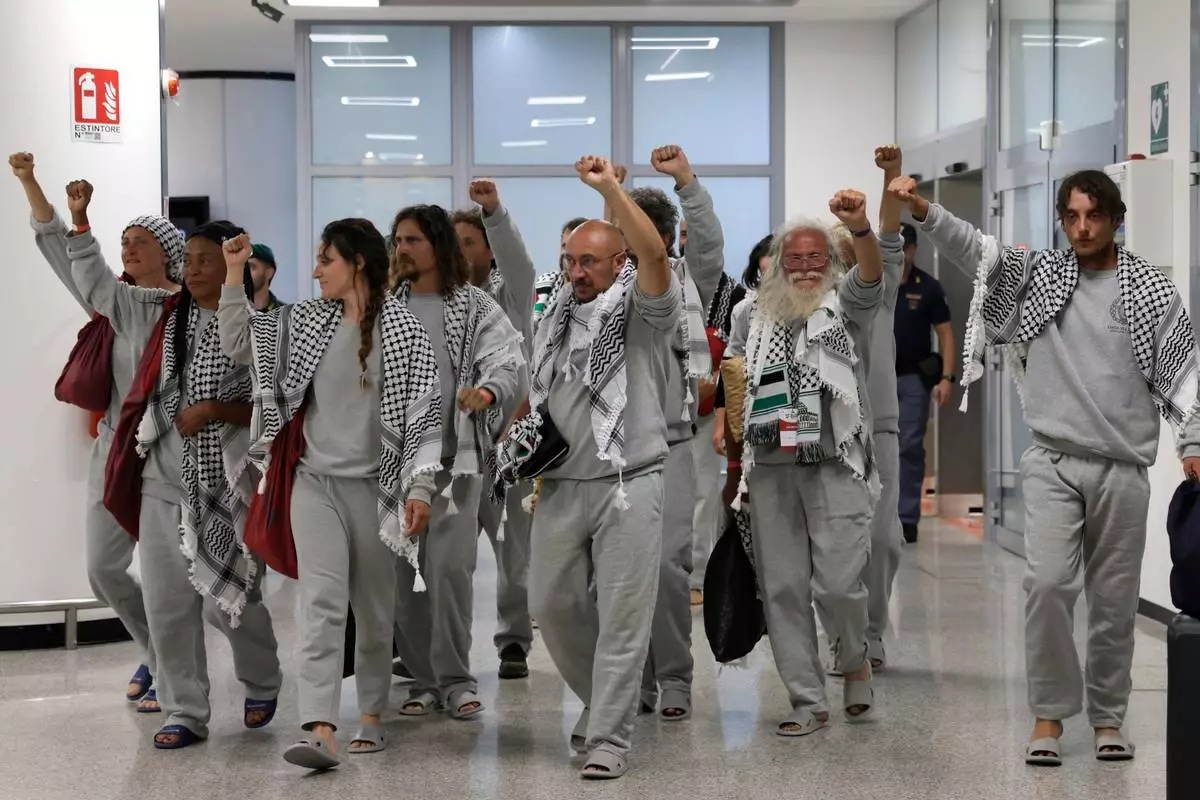
Some 420 activists departed for Turkey on Thursday after they were deported from Israel, many wearing gray sweatsuits and Arab kaffiyehs.

The AP spoke to some Thursday and Friday as they reached Istanbul, Athens and other European cities:

Here are their accounts:

He detailed being held in a container alongside other detainees shortly after the flotilla raid and he said some people were taken outside the containers where he heard them being physically assaulted.

“We faced periods where we couldn’t stand, our heads were bowed to the ground, we were dragged and pulled by our hair. The handcuffs left serious marks on us.”

After arriving at Ashdod port, Ozkan says he was denied the right to contact his lawyer, embassy officials or relatives back home. He describes being told to sign papers under duress, which he refused.

“When we refused to sign, they treated us like prisoners, creating a file, taking photos, forcibly handcuffing our hands and feet with iron shackles. And then, with the soldiers, dragged us along the ground, surrounded by dogs, releasing the dogs on us, before loading us into prison trucks.”

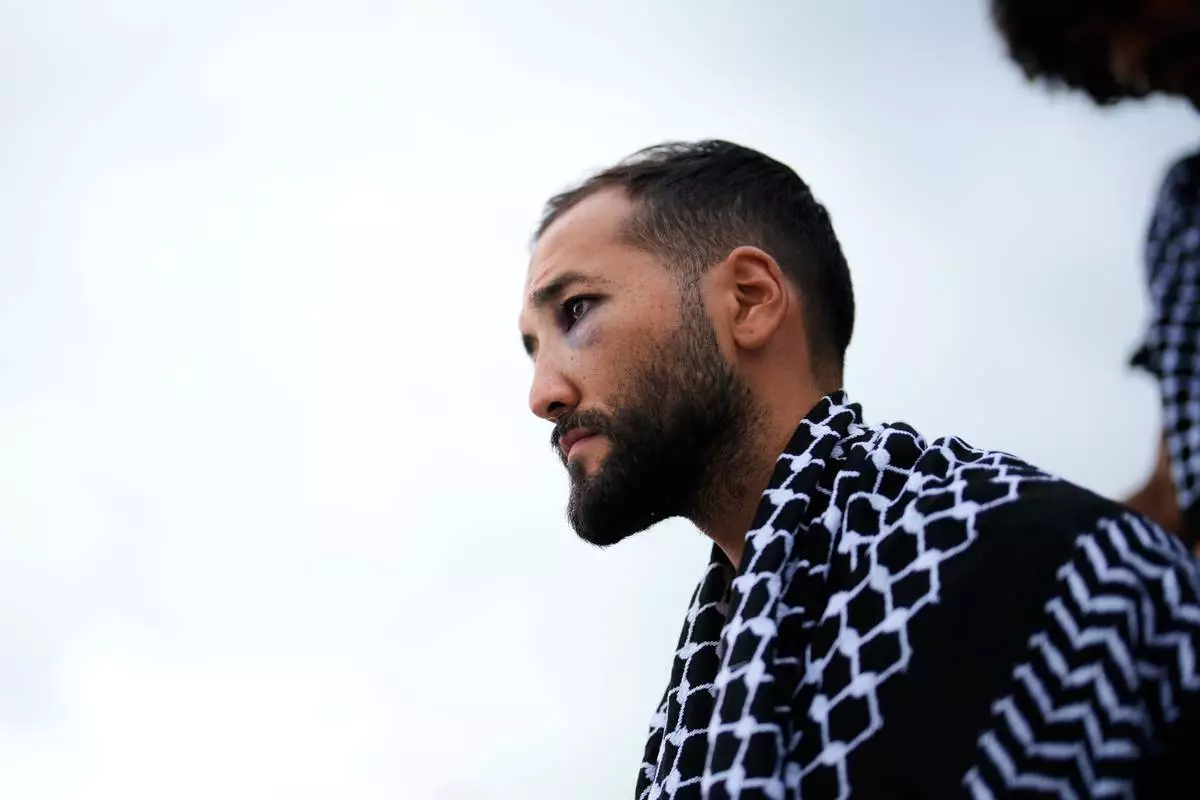
“When we got to Ashdod port, I was immediately grabbed by five IDF (soldiers) or police officers. They put my head down and started beating me. One of them had gloves on with hardened plastic and he started punching my face and it swelled shut,” he said, showing his black eye.

“During the crossing, we were put on our knees, blindfolded, and told to make sure the blindfold didn’t move. They repositioned mine 30 times because I kept trying to look around. And there’s absolutely no possibility in this situation to say ‘I’m a member of parliament’ or ‘I’m a journalist’ — you’re dealing with machines that scream and accompany their screaming with physical gestures. They put you flat on the ground, then on your knees, with zip ties on your wrists. The blindfold, plus an additional zip tie securing your wrists down to a metal structure, just a few inches from the deck. So you’re forced to travel in an extremely uncomfortable position on rough concrete. And I had cramps in my legs the whole time, obviously.”

After they were transferred to a ship that was used for detention “the treatment became immediately more violent. We entered through this small hatch and were shoved and dragged by force with our arms twisted behind our backs, forced to kneel in front of a wall with our heads down.”

At one point, he was thrown down “flat on my stomach, hands behind my back, face pressed, head pressed against the soaking wet and dirty floor of this ship — pressed down with their feet — and then they pressed my hands behind my back.”

Once inside the container, “I was kicked in the shin. Honestly, I don’t expect it. And they say ‘Welcome to Israel.’ Then a punch to the face, one from this side, one from that side. A closed-fist punch. I moved to get up and I got kicked in the leg. A little jolt from a taser to the ribs. And then I make it out the other side of this container and reach the deck.”

Mantovani said he was also strip searched, and his eye glasses and wallet discarded. He and the activists on his ship threw their cellphones into the sea when the Israeli boats approached, and he didn’t wear a watch on this mission after his was nearly confiscated on a previous flotilla.

“I was struck with a taser, beaten with punches and kicks, insulted and humiliated. On the prison ship there was a container that everyone had to pass through. You entered through one door and a group of six or seven people would beat you mercilessly until you emerged from the other side. Every single one of us went through that.”

Atmatzidis said he was being processed for identification when Ben-Gvir was touring the prison ship.

“The minister entered the room and asked me where I was from. I replied, ‘from Greece.’ He then asked why I was there, and I told him that I had come to deliver humanitarian aid to people who needed it. He responded, ‘Are you a friend of Hamas?’ I explained that our mission had no political agenda and was purely humanitarian. He was surrounded by four armed guards who aimed their weapons and laser sights at me while I sat there handcuffed behind my back.”

He added: "Whenever we told them that circulation was being cut off and our hands were going numb, they showed absolutely no mercy. I do not have the words to describe the brutality and cruelty of these people. It is something I will never forget.”

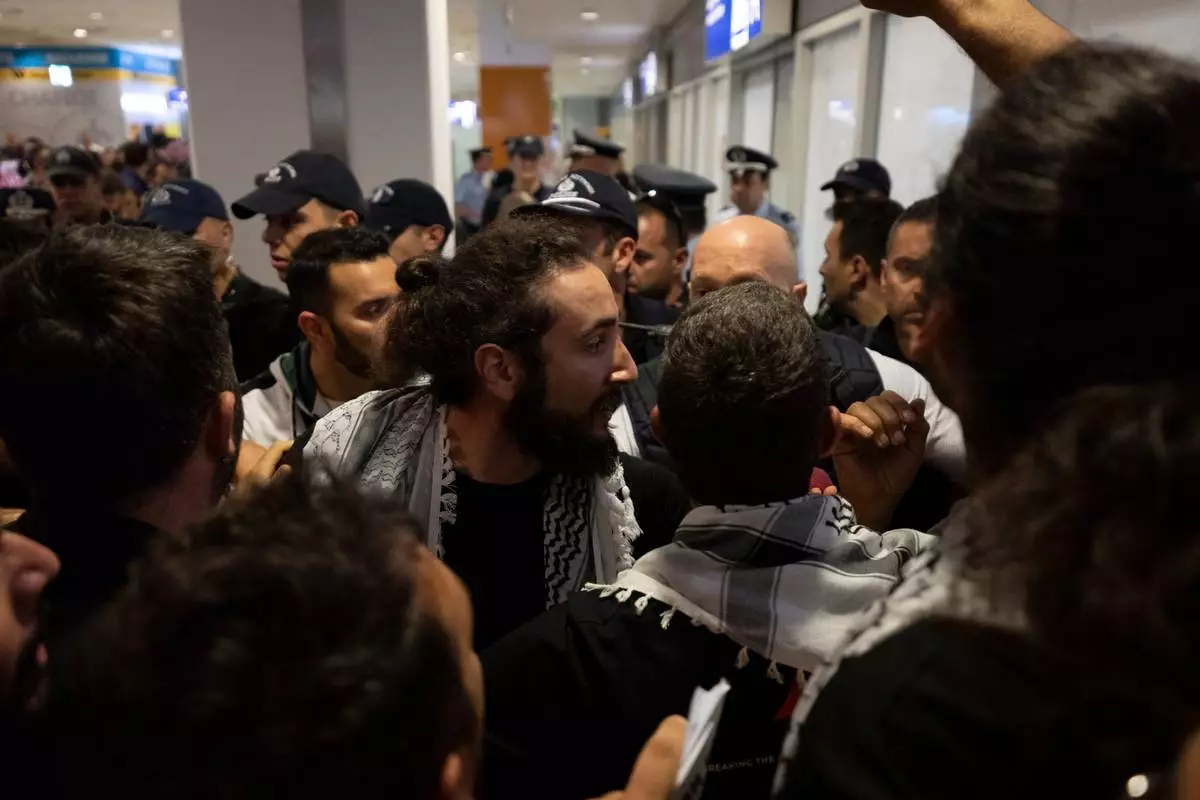
An activist from the Global Sumud Flotilla talks with the police upon his arrival at Eleftherios Venizelos International Airport in Athens, Greece, Friday, May 22, 2026. (AP Photo/Michael Varaklas)

An activist from the Global Sumud Flotilla talks with the police upon his arrival at Eleftherios Venizelos International Airport in Athens, Greece, Friday, May 22, 2026. (AP Photo/Michael Varaklas)

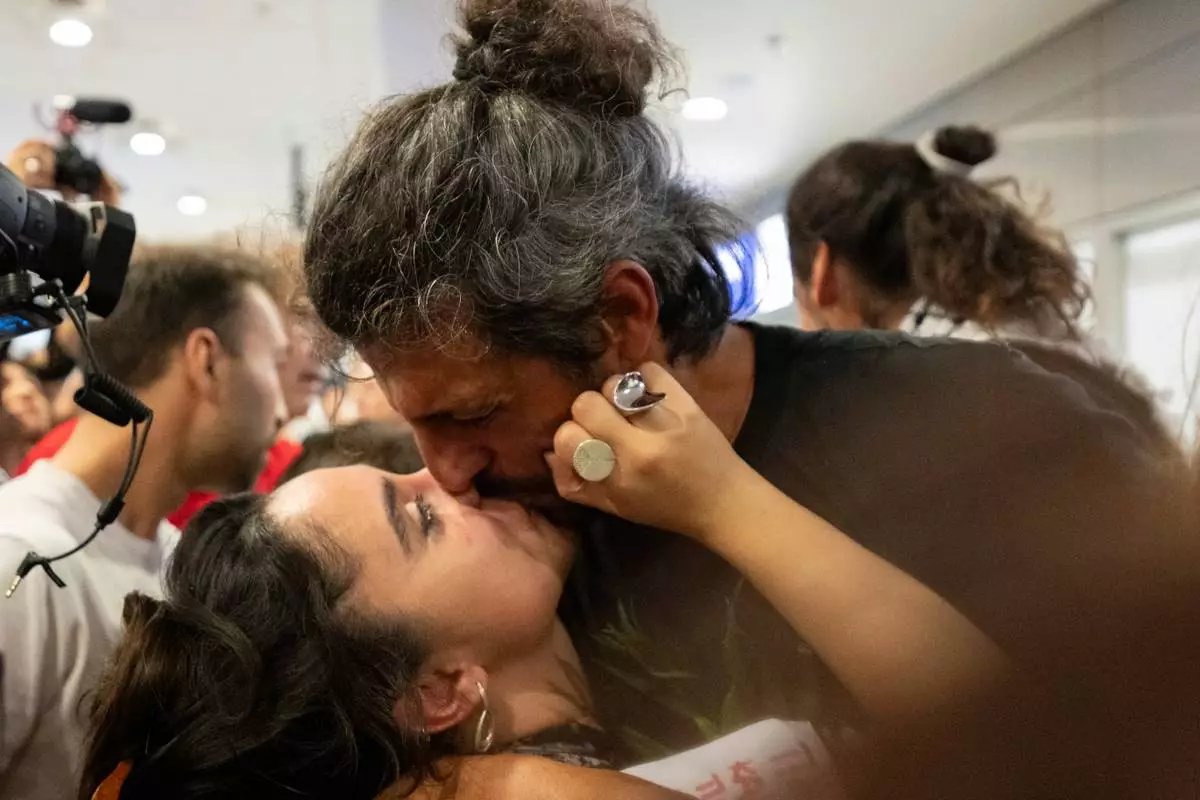
An activist from the Global Sumud Flotilla kisses a woman upon his arrival at Eleftherios Venizelos International Airport in Athens, Greece, Friday, May 22, 2026. (AP Photo/Michael Varaklas)

An activist from the Global Sumud Flotilla kisses a woman upon his arrival at Eleftherios Venizelos International Airport in Athens, Greece, Friday, May 22, 2026. (AP Photo/Michael Varaklas)

Activists from the Global Sumud Flotilla disembark a plane upon arriving at Istanbul Airport, in Istanbul, Turkey, Thursday, May 21, 2026. (AP Photo/Emrah Gurel)

Activists from the Global Sumud Flotilla disembark a plane upon arriving at Istanbul Airport, in Istanbul, Turkey, Thursday, May 21, 2026. (AP Photo/Emrah Gurel)

Italian members of the Global Sumud Flotilla arrive at the Fiumicino Airport in Rome on Thursday, May 21, 2026, after they were released and deported by the Israeli government after attempting to reach Gaza. (Cecilia Fabiano/LaPresse via AP)

Italian members of the Global Sumud Flotilla arrive at the Fiumicino Airport in Rome on Thursday, May 21, 2026, after they were released and deported by the Israeli government after attempting to reach Gaza. (Cecilia Fabiano/LaPresse via AP)

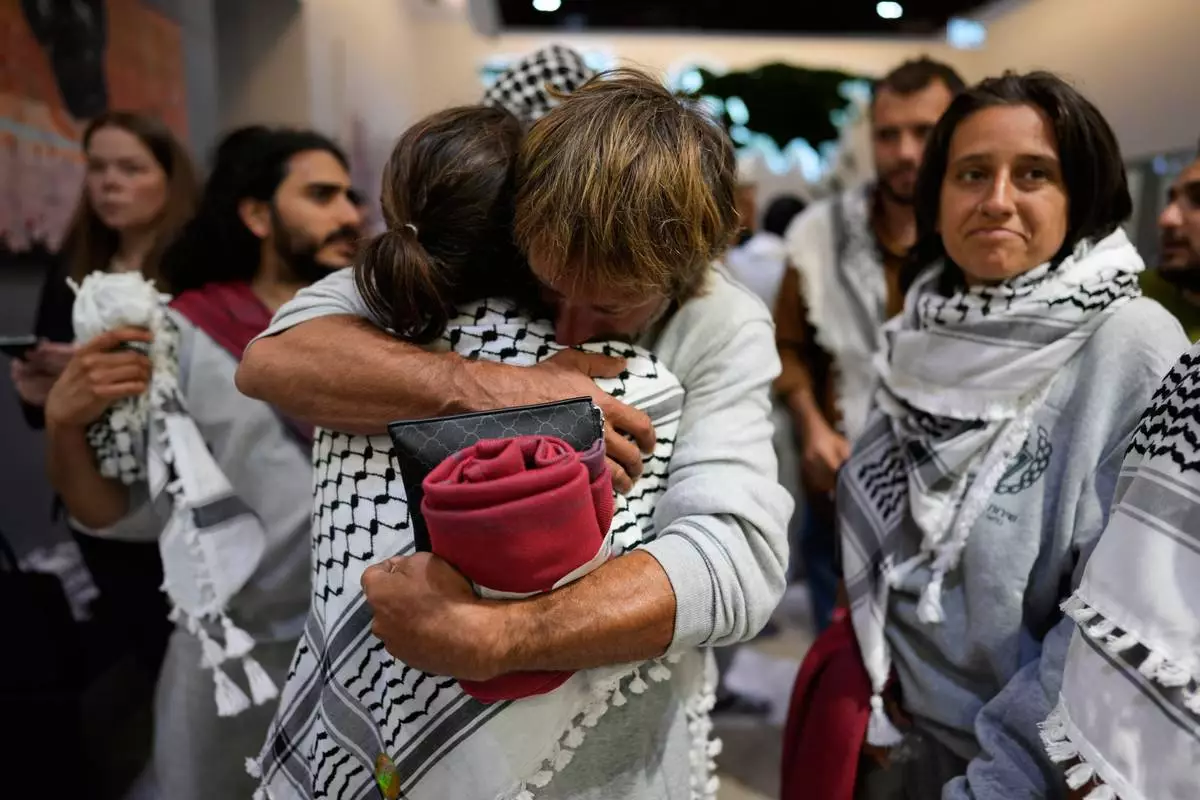
Activists from the Global Sumud Flotilla comfort each other upon their arrival at Istanbul Airport, in Istanbul, Turkey, Thursday, May 21, 2026. (AP Photo/Emrah Gurel)

Activists from the Global Sumud Flotilla comfort each other upon their arrival at Istanbul Airport, in Istanbul, Turkey, Thursday, May 21, 2026. (AP Photo/Emrah Gurel)

Recommended Articles