RALEIGH, N.C. (AP) — The Montreal Canadiens have shown neither fear nor hesitation when playing on the road in the NHL playoffs.
That approach carried a young, skilled team through a pair of Game 7 road wins to reach the Eastern Conference Final.
Click to Gallery
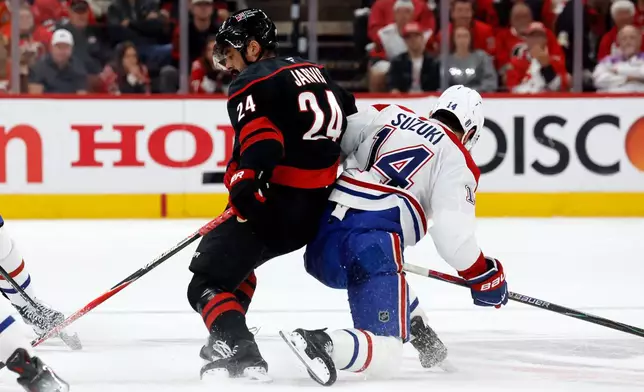
Carolina Hurricanes' Seth Jarvis (24) collides with Montréal Canadiens' Nick Suzuki (14) during the first period in Game 1 of the Eastern Conference finals NHL hockey Stanley Cup playoffs series in Raleigh, N.C., Thursday, May 21, 2026. (AP Photo/Karl DeBlaker)
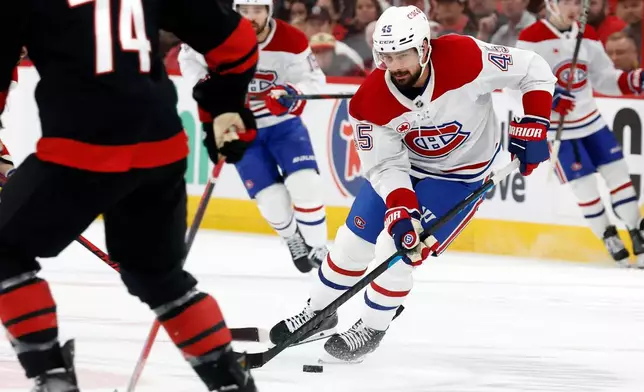
Montréal Canadiens' Alexandre Carrier (45) controls the puck against the Carolina Hurricanes during the first period in Game 1 of the Eastern Conference finals NHL hockey Stanley Cup playoffs series in Raleigh, N.C., Thursday, May 21, 2026. (AP Photo/Karl DeBlaker)
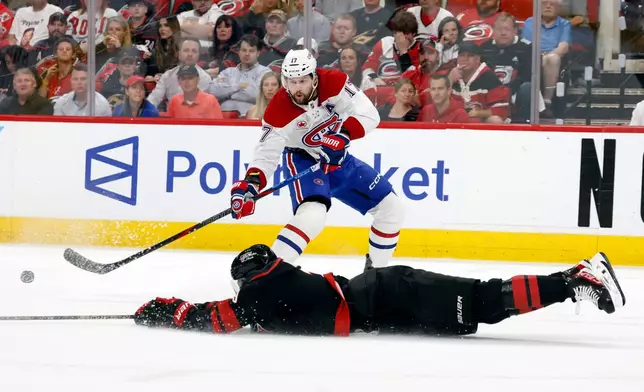
Carolina Hurricanes' K'andre Miller (19) slides to the ice to attempt to block a pass by Montréal Canadiens' Josh Anderson (17) during the first period in Game 1 of the Eastern Conference finals NHL hockey Stanley Cup playoffs series in Raleigh, N.C., Thursday, May 21, 2026. (AP Photo/Karl DeBlaker)
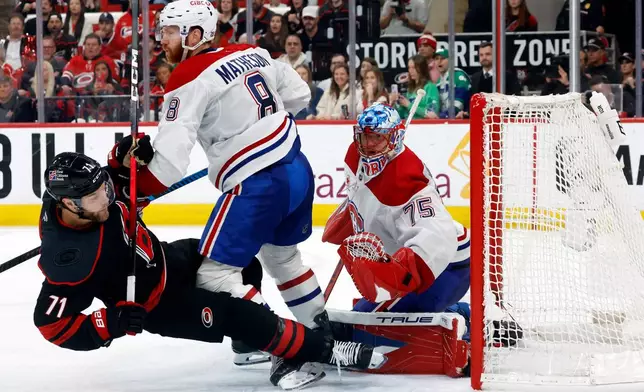
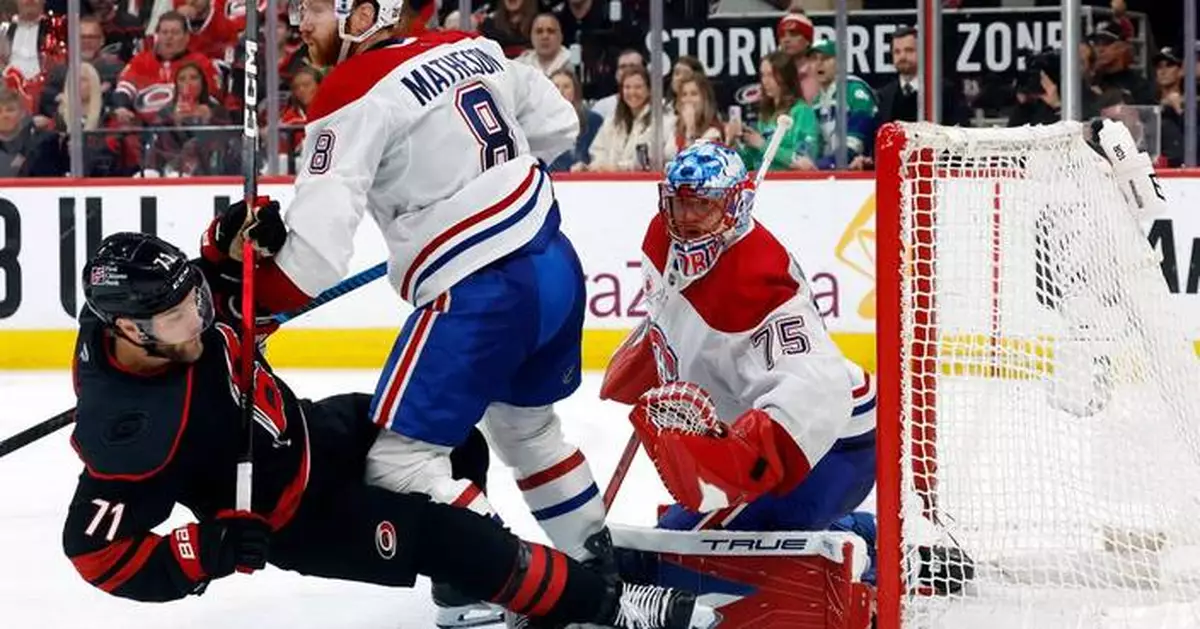
Montréal Canadiens' Mike Matheson (8) takes out Carolina Hurricanes' Taylor Hall (71) in front of Canadiens goaltender Jakub Dobes (75) during the second period in Game 1 of the Eastern Conference finals NHL hockey Stanley Cup playoffs series in Raleigh, N.C., Thursday, May 21, 2026. (AP Photo/Karl DeBlaker)
Then it had them get the jump on a Carolina Hurricanes team coming off a long layoff after sweeping through the first two postseason rounds to open the third round.
Montreal is 7-2 on the road in the postseason entering Saturday night's Game 2, defying the gravity that typically comes with playing in front of hostile crowds and facing against an opponent's preferred matchups.
“I don't know, it's a good question,” Canadiens forward Josh Anderson said Friday when asked to explain the team's road success. “Maybe less thinking and you want to calm the storm a little bit. I think on the road our starts have been pretty good and we’re well organized. We just play the right way and I think we play to our identity. ... I think we always find a way to try to gain the momentum back.”
The Canadiens went 3-1 on the road in their series as the upstart against both Tampa Bay and Buffalo, then beat Carolina 6-2 for the Hurricanes' first postseason loss after their 8-0 start to the playoffs.
Along the way, the Canadiens have scored first in five of nine road games, led at the first intermission in six, never trailed in four and led entering the third period in the past four straight.
They've also proven capable of handling adversity in those tests, from surviving the Game 7 against the Lightning with only nine shots on goal to scoring four unanswered goals that turned a 3-2 deficit in Game 5 at Buffalo into a 6-3 win.
Or, in Thursday's case, it was seizing it from the opening minutes against the Eastern Conference's top seed. Montreal regrouped from giving up a goal just 33 seconds into the game by scoring four times by midway through the opening period.
Afterward, coach Martin St. Louis pointed to confidence coming from a regular season where the Canadiens tied for second in the league with 56 road points.
“You’ve got to trust that the guys can just, like I always say, play the game that’s in front of them, understanding who’s on the other side, who’s on the ice while that’s happening,” St. Louis said Thursday night. “Young players, they love to have these offensive touches. And I think sometimes it’s just not what the game’s giving you right now. You’ve got to defend.”
That approach worked perfectly Thursday. The Canadiens jumped on the Hurricanes as they emerged from the longest playoff break (11 days) in more than a century. They confidently moved the puck out of trouble against Carolina’s aggressive pressure and capitalized on Hurricanes breakdowns with a quick succession of clean breakouts and breakaway chances.
And that spry start came even after the Hurricanes scored just 33 seconds into the game, signaling a fast start that turned out to be merely a mirage.
“One team looked like an Eastern Conference Final team,” Hurricanes forward Taylor Hall said Friday, “and the other didn’t.”
That left coach Rod Brind'Amour saying after Thursday's game he figured the only thing the team could do was toss the result as a one-off considering how out of character the Hurricanes looked in repeatedly giving up so many high-danger chances.
“Obviously they're battle-tested right now. But we feel that a lot of that was self-inflicted," Hall said.
The Hurricanes are in the postseason for the eighth straight year and this is their third trip to the Eastern Conference Final in four seasons. But they're now 1-13 in those games during this run under Brind'Amour to create what has become an imposing obstacle for a team that regularly ranks among the league's best in the regular season.
The Hurricanes did a much better job in the second period of getting to their game of getting the puck into the offensive zone and staying there to pressure the Canadiens, all while minimizing the number of chances going the other way. But by then they were trying to recover from a 4-1 deficit.
“You have to play to it, we didn't play to it,” Brind'Amour said of the team's preferred style. "I'd like to see how the result is when you play your game, and that was not what we did last night.”
AP NHL playoffs: https://apnews.com/hub/stanley-cup and https://apnews.com/hub/nhl
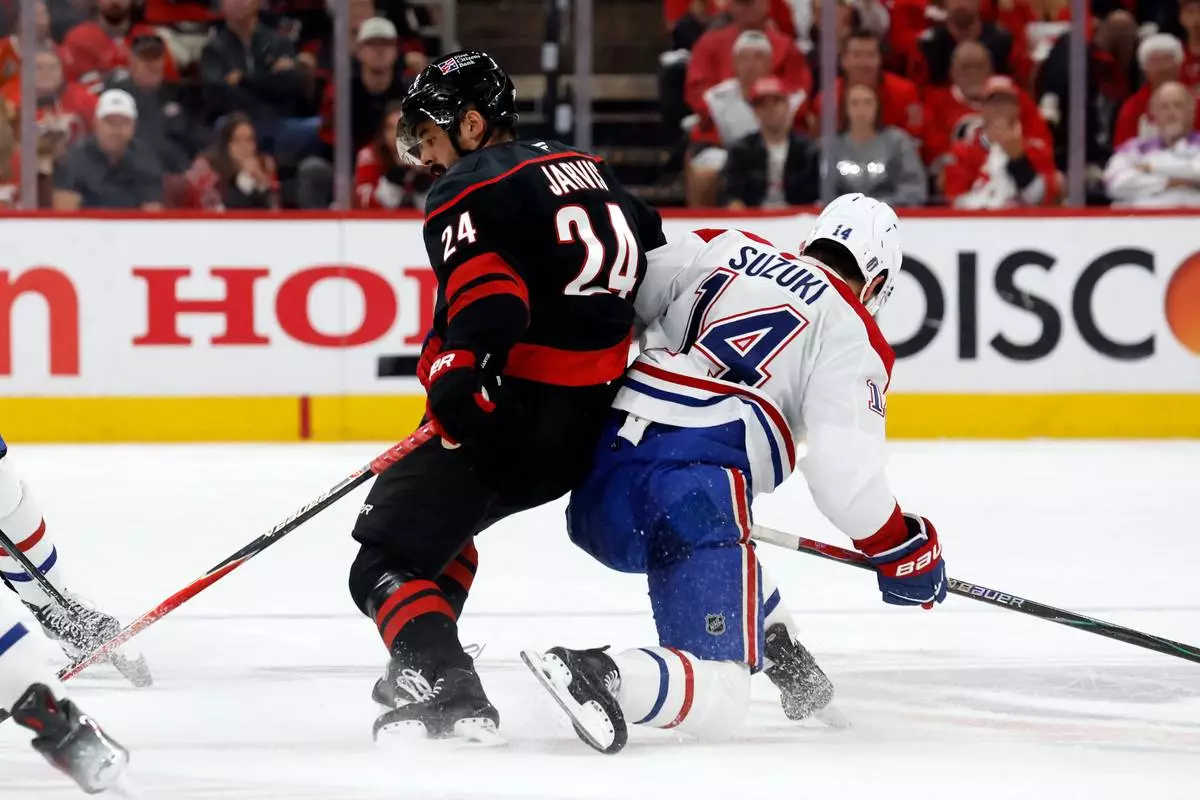
Carolina Hurricanes' Seth Jarvis (24) collides with Montréal Canadiens' Nick Suzuki (14) during the first period in Game 1 of the Eastern Conference finals NHL hockey Stanley Cup playoffs series in Raleigh, N.C., Thursday, May 21, 2026. (AP Photo/Karl DeBlaker)
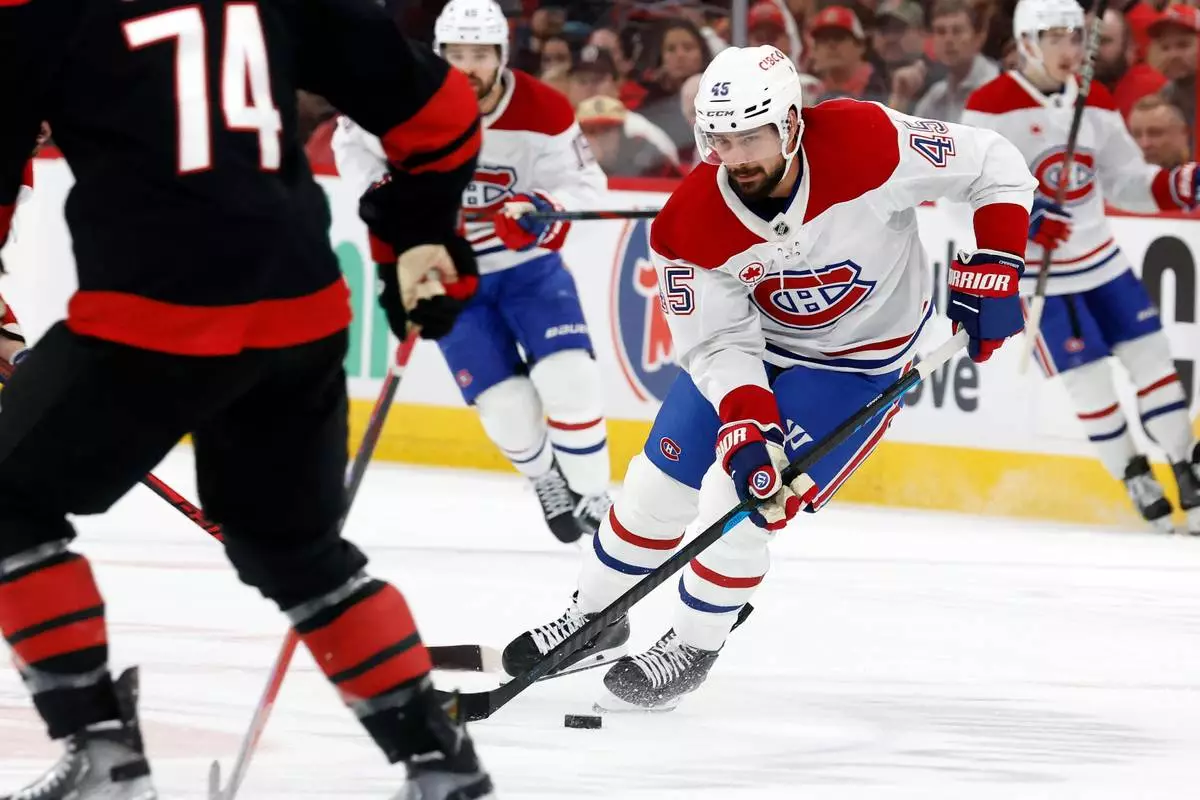
Montréal Canadiens' Alexandre Carrier (45) controls the puck against the Carolina Hurricanes during the first period in Game 1 of the Eastern Conference finals NHL hockey Stanley Cup playoffs series in Raleigh, N.C., Thursday, May 21, 2026. (AP Photo/Karl DeBlaker)
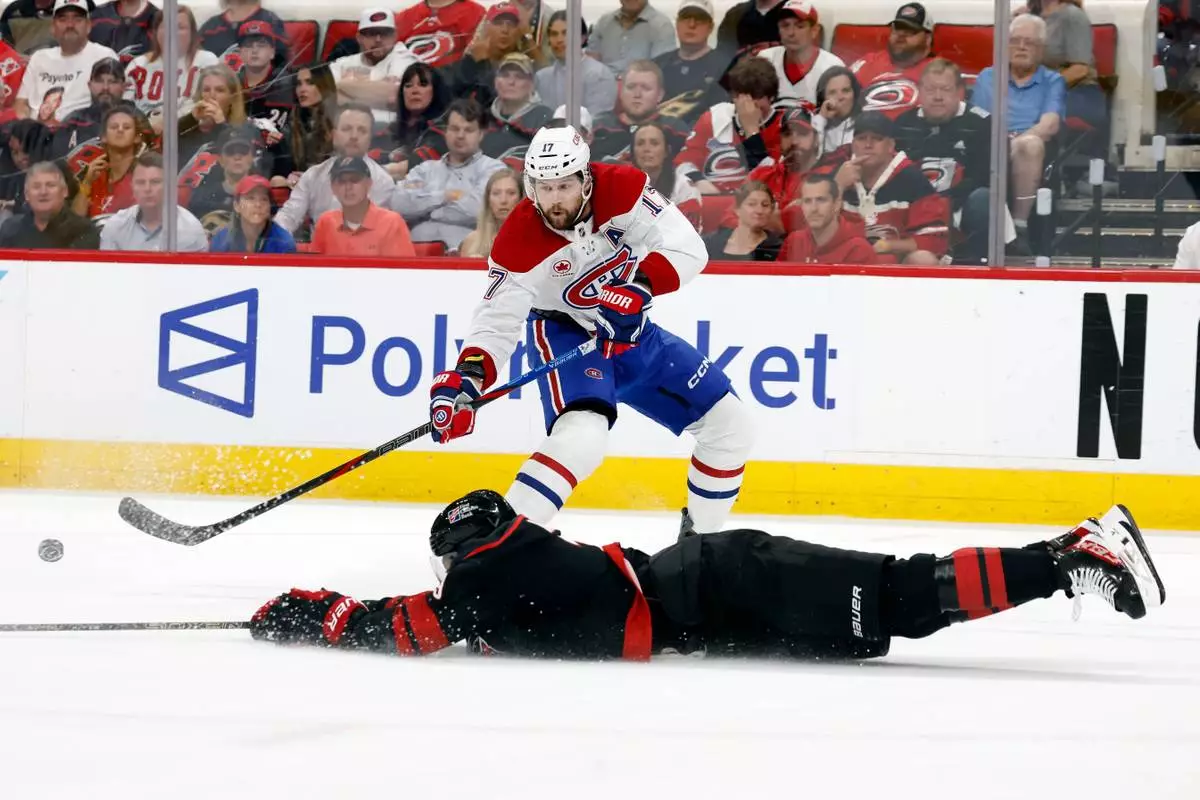
Carolina Hurricanes' K'andre Miller (19) slides to the ice to attempt to block a pass by Montréal Canadiens' Josh Anderson (17) during the first period in Game 1 of the Eastern Conference finals NHL hockey Stanley Cup playoffs series in Raleigh, N.C., Thursday, May 21, 2026. (AP Photo/Karl DeBlaker)
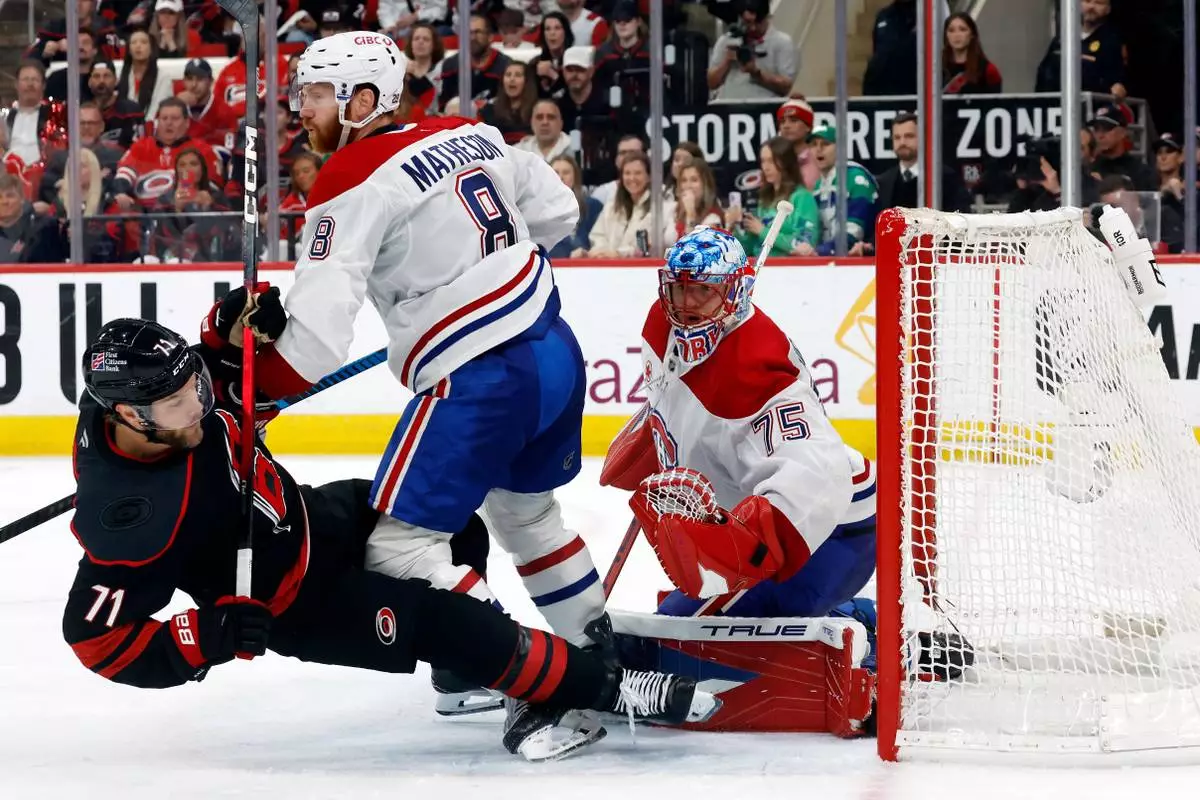
Montréal Canadiens' Mike Matheson (8) takes out Carolina Hurricanes' Taylor Hall (71) in front of Canadiens goaltender Jakub Dobes (75) during the second period in Game 1 of the Eastern Conference finals NHL hockey Stanley Cup playoffs series in Raleigh, N.C., Thursday, May 21, 2026. (AP Photo/Karl DeBlaker)