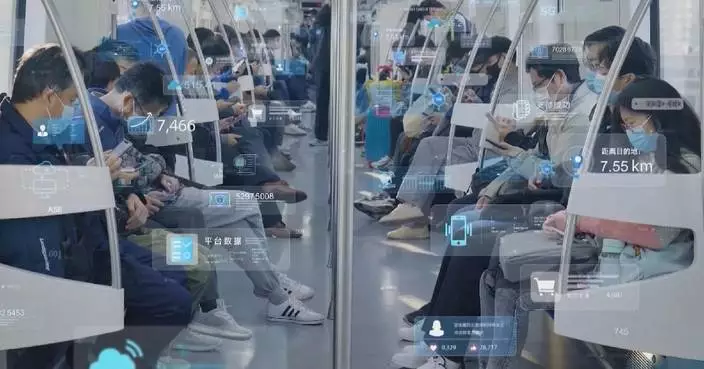
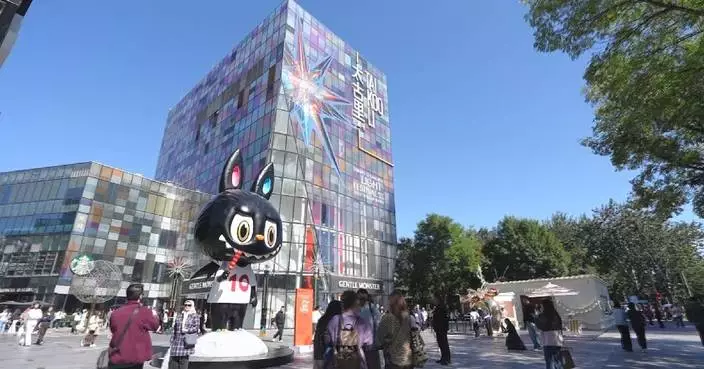
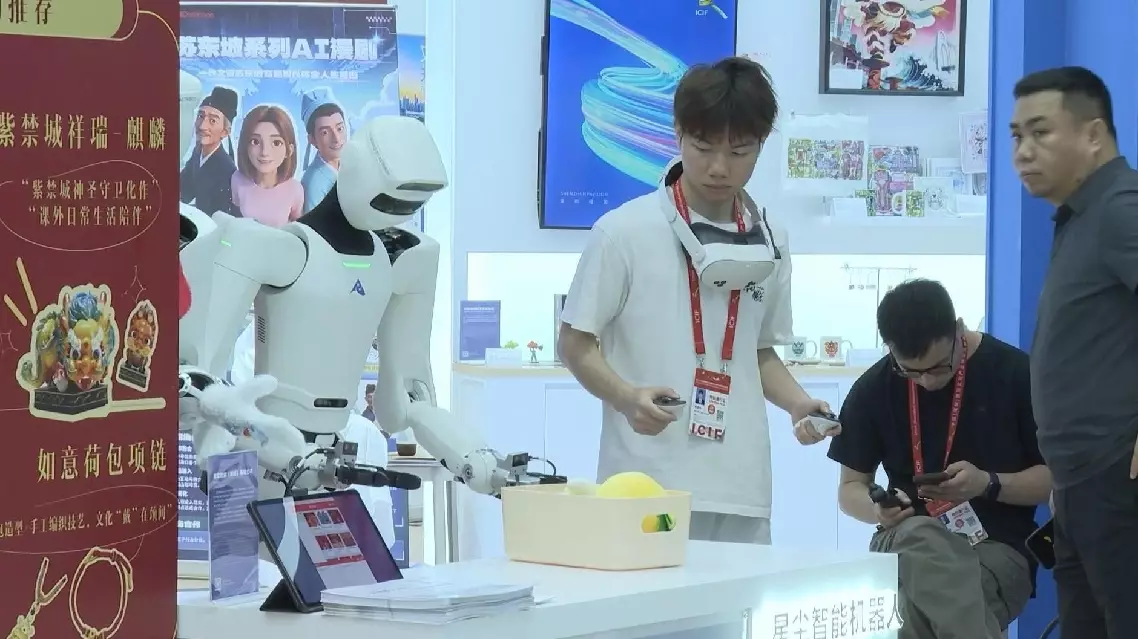
Artificial Intelligence (AI) is rapidly integrating into cultural and creative sectors in China's tech capital of Shenzhen City, where industry leaders and scholars have gathered at trade fairs and forums focusing on how the technology is reshaping workflows, creative jobs, and the ethical considerations that come with such advancements.
AI tools and large-language models were central to the 22nd China International Cultural Industries Fair (ICIF), which runs through Monday, as well as the recent Forum on Building up China's Cultural Strength.
On the fair grounds, many discussions have centered on how AI will reshape society, including the disruptive potential and the opportunities that go along with it.
"I think AI is going to be taking off some jobs in the future because it's revolutionary," said Chris Molina, an overseas student from Shenzhen Polytechnic University.
"A lot of creative ideas now come from AI. It brings us positive energy," said Liu Xiaoyan, general manager of Shenzhen Zhongchuang International Cultural Industry Development Company.
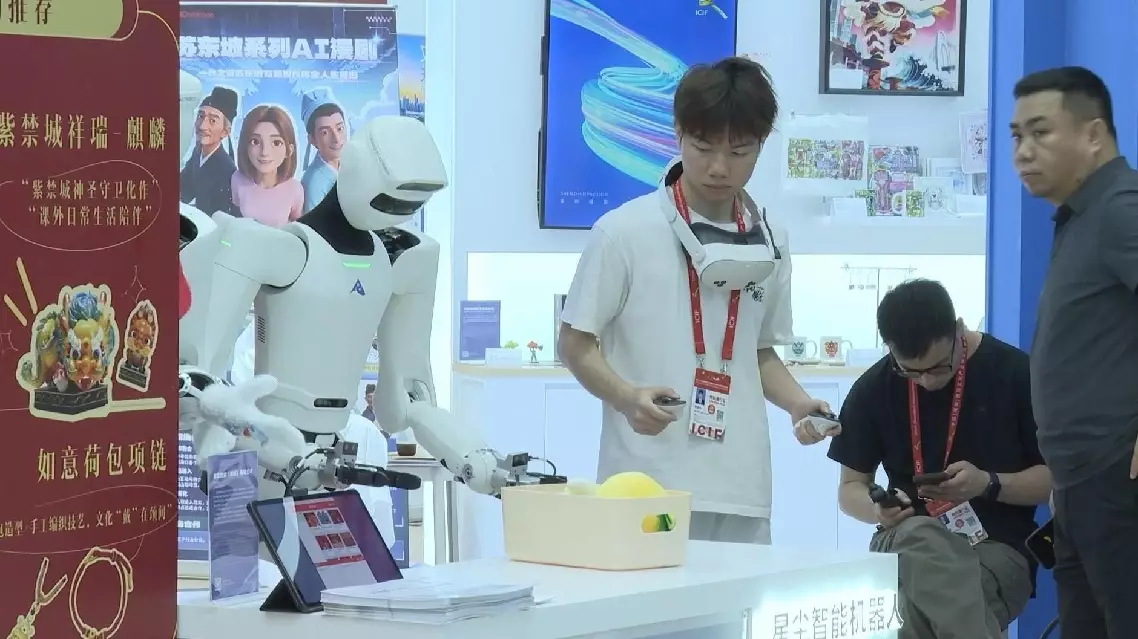
Exhibitors at the fair demonstrated how AI has moved from experimental concepts to practical applications across entertainment, design and professional services.
Among them is tech giant Tencent, which showcased a smart assistant targeted toward busy professionals.
"WorkBuddy actually carries our multimodal model. Once connected to cloud servers, it can call on different large models with various capabilities to create the final content," said Roy Zhang, an exhibit manager at the Tencent pavilion.
In the consumer space, LBE Cultural Tourism and Live Attractions partnered with tech company AbsoluPai to launch AI Nailoong, an interactive virtual character. Wilson Wang, licensing director at LBE, said the product uses generative AI to enable more responsive, emotionally engaging interactions with children.
As deployment expands, questions have quickly arisen about responsible governance. At the Forum on Building up China’s Cultural Strength, experts at the emphasized the need for regulatory frameworks and human accountability.
"AI will never have moral emotions like conscience, compassion or dignity. It cannot decide on its own to be good or evil. So, humans must bear that responsibility," said Zhou Guoping, an acclaimed Chinese author and a research fellow at the Institute of Philosophy of the Chinese Academy of Social Sciences, speaking on stage at the forum.
"That's why we need the idea of a 'helmsman' more than ever -- not just individuals curating their own work, but also institutions, platforms and regulators," said Jason Si, vice president of Tencent and director of the Tencent Research Institute, also speaking from the podium.
"To pave the way for AI governance in the Greater Bay Area, the first and foremost task is to set rules -- to establish a set of ethical standards," said Pang Chuan, vice president of Macao University of Science and Technology, speaking to attendees.
With AI now embedded in creative pipelines, digital entertainment and enterprise software, industry professionals say the focus has shifted from whether to adopt the technology to how to manage its integration, intellectual property rights and safety standards.
China's cultural sector embraces AI in Shenzhen, as experts weigh impact
China's cultural sector embraces AI in Shenzhen, as experts weigh impact