The tangible economic benefits brought by Serbia's partnerships with China have proven how countries can work together in an increasingly complex international landscape and contribute to the efficiency of global governance, said Nikola Stojanovic, Advisor to Speaker at the National Assembly of Serbia.
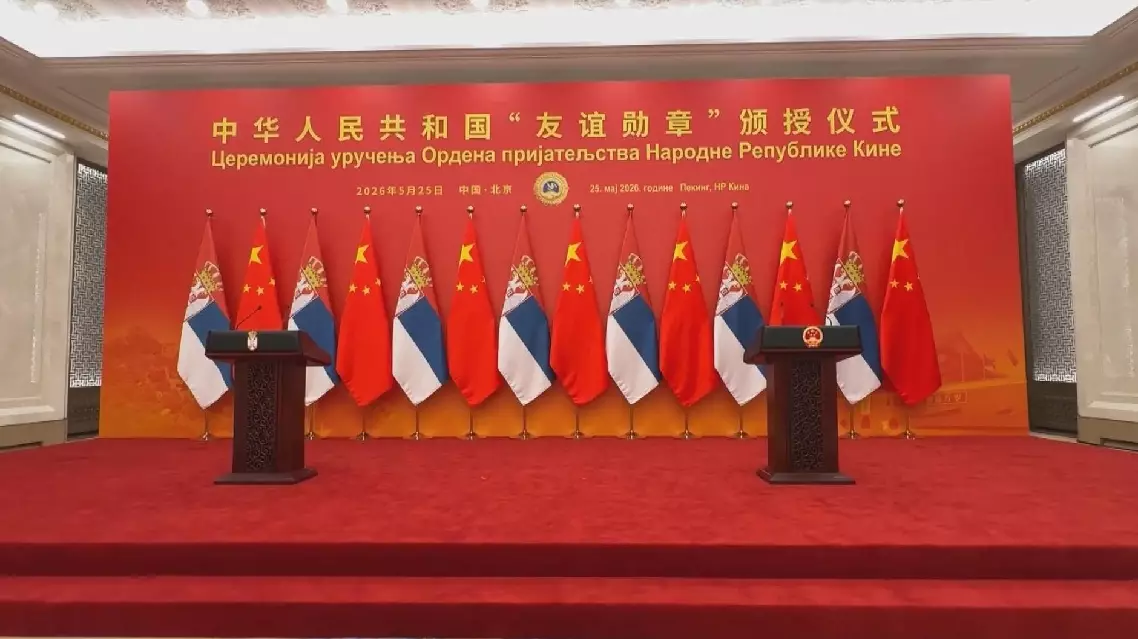
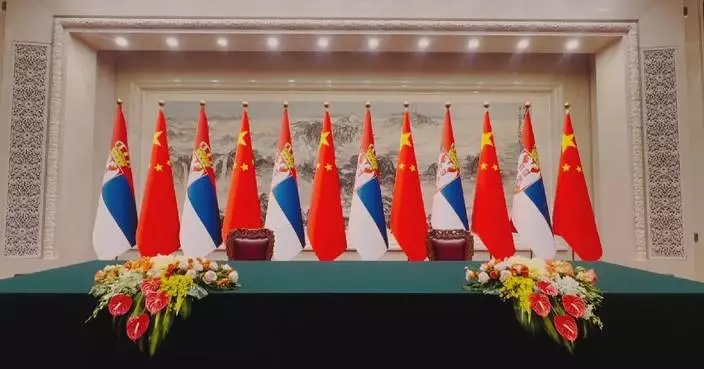
Ties between the two sides are in the spotlight as Serbian President Aleksandar Vucic arrived in Beijing on Sunday for a five-day state visit to China at the invitation of Chinese President Xi Jinping.
While giving his assessment of the importance of the visit in an interview with the China Media Group (CMG), Stojanovic stressed that Serbia pursues a people-focused approach, which informs its decisions to seek out close cooperation with China.
"So as Serbia, we are very proud to be a sovereign and independent country that really makes its own decision and is guided by the interests of our own people. So in that sense, we as Serbia are military neutral country, a country which is on the European path, but at the same time not at the expense of cooperating with other partners throughout the globe. So the key factor, the key driver of the both domestic and foreign policy decision-making of Serbian leadership is the benefits of the Serbian people," he said.
"If a partnership is going to bring concrete, tangible economic improvement to the lives of our citizens, we will always, always go for it. So being in principle in a way where you are really focused on the interests of your own people is the key to the formula of Serbia's, I would say, success in navigating this complex global environment. So far, our cooperation with China has indeed brought a lot of tangible economic benefits. And in that sense, we were able really to justify to our citizens why this kind of cooperation is really a model how countries can work together in current international landscape," said Stojanovic.
Turning his attention more broadly to international affairs, Stojanovic pointed to significance of the Global Governance Initiative put forward by President Xi, and said that the "principled positioning" of both China and Serbia is contributing to greater stability in global governance, which is experiencing headwinds such as unilateralism and other challenges.
"At this point, I think we can all agree that there is a deficit of global governance, that the institutions and mechanisms which were set up to really address the emerging global issues are not as nearly as efficient as their founders wanted them to be. So in that sense, this initiative focused on global governance has so far received support from Serbia, because both Serbia and China, we truly adhere to the principles of multilateralism, we both consider the Charter of the United Nations as the founding pillar of how the relations between countries on a global scale should work. And in that sense, Serbia has so far always supported these initiatives stemming from China," said the official.
"China has so far been a very stern supporter of Serbia's territorial integrity, one of the key pillars of the international law. In the same way, Serbia has throughout the previous period consistently supported China's core interests. So this is just one example how principled positioning in international affairs is contributing to more efficient global governance mechanisms. But of course, there is much more to be done. Serbia is a small country, but if nothing else, we can observe China-Serbia relations as a model example of how a big country, big power and a smaller mid-sized country can work to mutual benefit," said Stojanovic.

Serbia, China contribute to global governance efficiency: National Assembly advisor