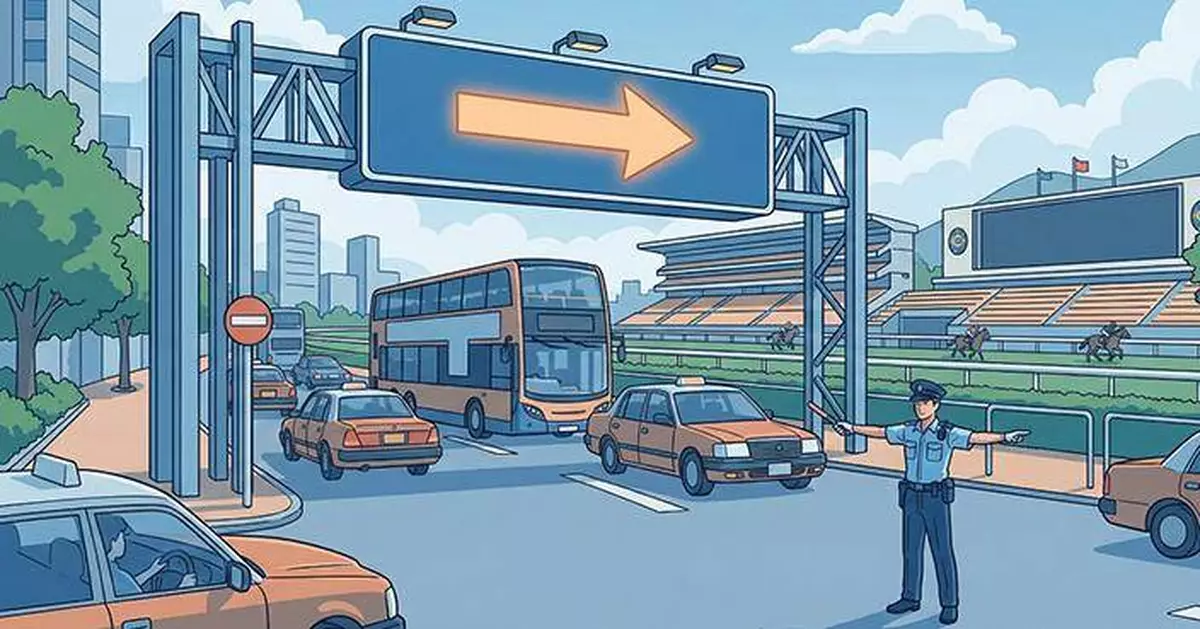
Subsidiary legislations relating to regulation of ride-hailing services gazetted today
The Government today (May 26) gazetted four pieces of subsidiary legislation relating to the regulation of ride-hailing services.
The Road Traffic (Ride-hailing Service) Regulation sets out the details of the regulatory regime for ride-hailing services, including the validity period and renewal arrangement for ride-hailing service licences, ride-hailing vehicle permits (vehicle permits) and ride-hailing vehicle driving permits; the fees associated with the aforementioned licences and permits; and the obligations imposed on the holders of such licences and permits. The Road Traffic (Driving Licences) (Amendment) Regulation 2026 introduces a combined driving test for taxis and ride-hailing vehicles. The Road Traffic (Limit on Number of Ride-hailing Vehicle Permits) Notice specifies the limit on the number of vehicle permits that may be issued. The Road Traffic (Amendment) (Ride-hailing Service) Ordinance 2025 (Commencement) Notice prescribes the commencement dates of the various provisions of the Road Traffic (Amendment) (Ride-hailing Service) Ordinance 2025.
A spokesperson for the Transport and Logistics Bureau said, "With the support of different sectors of society, the Road Traffic (Amendment) (Ride-hailing Service) Bill 2025 introduced by the Government was passed by the Legislative Council (LegCo) last October, establishing a clear legal framework for the regulation of ride-hailing services and resolving a long-standing controversy. Following extensive consultation, gathering of operational data from the trade and balancing of various considerations, the Government has further established the regulatory details for ride-hailing services through various pieces of subsidiary legislation, with a view to implementing the regulatory regime.
"With the busy traffic in Hong Kong and nearly 90 per cent of the public relying on the efficient public transportation system for their daily journeys, the Government needs to impose an overall control on the number of ride-hailing vehicles. Based on the data collected from the Transport Department's (TD) survey on the demand for local personalised point-to-point transport services, and having holistically considered all relevant factors and views from various sectors of society, we propose setting the limit on vehicle permits at 10 000 at this stage. We believe this is a prudent, sound and appropriate approach that balances considerations regarding road resources and the public transport ecosystem, allowing the ride-hailing regulatory regime to be implemented smoothly. Following the introduction of the regulatory regime, changes may occur in both passenger demand for ride-hailing services and the operational conditions of ride-hailing vehicles. The Government will closely monitor market developments and the actual operations of the platforms, including licensed platforms' operational data received by the TD, and conduct dynamic assessments to review and adjust as appropriate," the spokesperson added.
"The Government's objective in introducing a regulatory regime for ride-hailing services is to provide the public with more safe, legally compliant and diverse transport options, while ensuring the healthy and orderly development of the point-to-point transport service industry as a whole. This will foster a healthy competitive environment, with a view to bringing new vitality to the industry, attracting more new entrants and encouraging frontline drivers to upgrade and transform, thereby achieving a win-win situation for the public, ride-hailing services and taxis," the spokesperson reiterated.
In May 2026, the Government consulted the Panel on Transport of the LegCo and the Transport Advisory Committee on the regulatory details for ride-hailing services respectively. Members expressed support for the Government's proposals and offered views on regulatory matters.
The Government will table the four pieces of subsidiary legislation mentioned above before the LegCo tomorrow (May 27) for negative vetting. Details of the regulatory regime and the various pieces of subsidiary legislation are set out in the LegCo brief issued by the Government today.
Source: AI-found images
CHP investigates confirmed Mpox case
The Centre for Health Protection (CHP) of the Department of Health (DH) said today (May 26) that it is investigating a confirmed Mpox (also known as Monkeypox) case, and urged the public to be vigilant and avoid close physical contact with persons suspected of contracting Mpox. Meanwhile, high-risk target groups are advised to receive Mpox vaccinations.
Latest case information
------------------------------
The case involves a 44-year-old male. He developed itchiness and a skin rash at his lower body from May 13 onwards and attended the Wan Chai Male Social Hygiene Clinic (SocHS) of the DHon May 18. The CHP subsequently arranged for him to receive isolation treatment at Princess Margaret Hospital. The patient is currently in stable condition.
According to information provided by the patient, he has not been vaccinated against Mpox and had high-risk exposure in a hotel in Hong Kong during the incubation period. No epidemiological linkages between this case and confirmed Mpox cases recorded in Hong Kong earlier could be identified so far. The CHP is continuing its epidemiological investigations of the case, will endeavour to contact individuals who had high-risk contact with him and will report the case to the World Health Organization.
Follow-up on the "Hutong" cases in Mong Kok
———————————————
In addition, the CHP continues to follow up on the two cases announced yesterday (May 25), and urges anyone who visited the premises on Shanghai Street on or after May 1, especially those who hadsexual contact with strangers there, to call the CHP's designated Mpox telephone hotline (2125 2373) as soon as possible, so that the CHP can provide health assessments and advice.The hotline operates daily from 9am to 6pm. As of 6pm today, the CHP has successfully contacted 140 persons who visited the premises on or after May 1. All are asymptomatic. The CHP has provided them with health education and will put them under medical surveillance. As investigations are still ongoing, the premises will be closed for 21 days starting from today.
Since 2022, Hong Kong has recorded a total of 87 Mpox cases (70 local cases and 17 imported cases), including the above-mentioned case. All patients were males. Epidemiological investigations revealed that most cases had history of high-risk sexual behaviour, including having sex with strangers or having sex without wearing condoms.
Mpox vaccine
-----------------
Mpox vaccine can prevent infection and severe disease. The DH provides Mpox vaccination services for highrisk groups. The following high-risk target groups are eligible for Mpox vaccinations on a voluntary basis:
 individuals with high-risk sexual practices, e.g. having multiple sexual partners, sex workers, or having a history of sexually transmitted infection within the past 12 months;
healthcare workersresponsible forcaring forpatients with confirmed Mpox;
laboratory personnel working with zoonotic pox viruses; and
animal care personnel with high risk of exposure in caseof Mpox occurrences in animals in Hong Kong.
individuals with high-risk sexual practices, e.g. having multiple sexual partners, sex workers, or having a history of sexually transmitted infection within the past 12 months;
healthcare workersresponsible forcaring forpatients with confirmed Mpox;
laboratory personnel working with zoonotic pox viruses; and
animal care personnel with high risk of exposure in caseof Mpox occurrences in animals in Hong Kong.
High-risk target groups can receive Mpox walk-in vaccinations at any of the DH's SocHS (namely Chai Wan SocHS, Wan Chai Male SocHS, Wan Chai Female SocHS, Yau Ma Tei Male SocHS, Yau Ma Tei Female SocHS, Yung Fung Shee SocHS, Fanling SocHS and Tuen Mun SocHS) and the DH's Yau Ma Tei Integrated Treatment Centre.
Meanwhile, the DH's Kowloon Bay Integrated Treatment Centre and the Hospital Authority's Special Medical Clinics at Queen Elizabeth Hospital and Princess Margaret Hospital also provide Mpox vaccination services for their clients.
Mpox is not transmitted through respiratory droplets or aerosols in general, and transmission would not occur through social contact. The CHP reminds the public, especially those at higher risks of exposure, to take precautions and avoid close physical contact with persons or animals suspected of infection. They should seek medical attention as soon as possible if they experience relevant symptoms, including rash, fever, chills, swollen lymph nodes, exhaustion, muscle pain, and severe headaches. They should not engage in activities with others that may involve contact with skin rash or body fluids.
For more details, please visit the CHP's page onMpoxandMpox Vaccination Programme.
Source: AI-found images