Skip to Content Facebook Feature Image

Hong Kong's first astronaut ignites citywide enthusiasm over space exploration

China

China

China

Hong Kong's first astronaut ignites citywide enthusiasm over space exploration

2026-05-27 00:56 Last Updated At:01:17

Hong Kong's first astronaut lifted off into space on Sunday, sparking a wave of enthusiasm for space exploration in the special administrative region, while inspiring a new generation to look to the stars.

The Shenzhou-23 crewed spaceship, atop a Long March-2F carrier rocket, blasted off from the Jiuquan Satellite Launch Center in northwest China at 23:08 (Beijing Time) on Sunday. The crew members include Lai Ka-ying, the first astronaut and payload specialist from Hong Kong to join a national space mission, whose achievements have motivated many Hong Kong residents.

"I feel so happy and thrilled. This is the first time a Hong Kong astronaut has gone to space, and to see a true Hong Konger, who is also a mother of three, just really touches my heart," said Chow, a local resident.

The successful spaceflight of Lai has especially captivated the younger generation to dream bigger about the future.

"I want to be an astronaut, because I want to discover more things about space," said a young student surnamed Chow.

"I have seen things related to spaceflights of astronauts. I hope when I grow up, I could receive training and go to space myself," said another student surnamed Koo.

To meet public expectations, the Hong Kong Space Museum has updated its space-themed exhibition with the latest development of the Shenzhou-23 mission, extending the display until July 6. Parents are seizing the moment to enrich their children's knowledge.

"At his age, I want him to be exposed to a wide range of information. With all the recent astronaut news, I brought him here specially to see for himself. We will also check out a film about space knowledge at the planetarium. I hope he can get more out of this from an early age," said Cheung, a father.

"We just watched the Shenzhou-23 launch at home with my son last night, and decided to take him to the Space Museum," a mother surnamed Chun shared.

"I saw on TV that so many people were cheering for the launch. When the rocket was launched, fire burst out from its body. I was really happy they succeeded," said Chun's son.

Hong Kong's first astronaut ignites citywide enthusiasm over space exploration

Hong Kong's first astronaut ignites citywide enthusiasm over space exploration

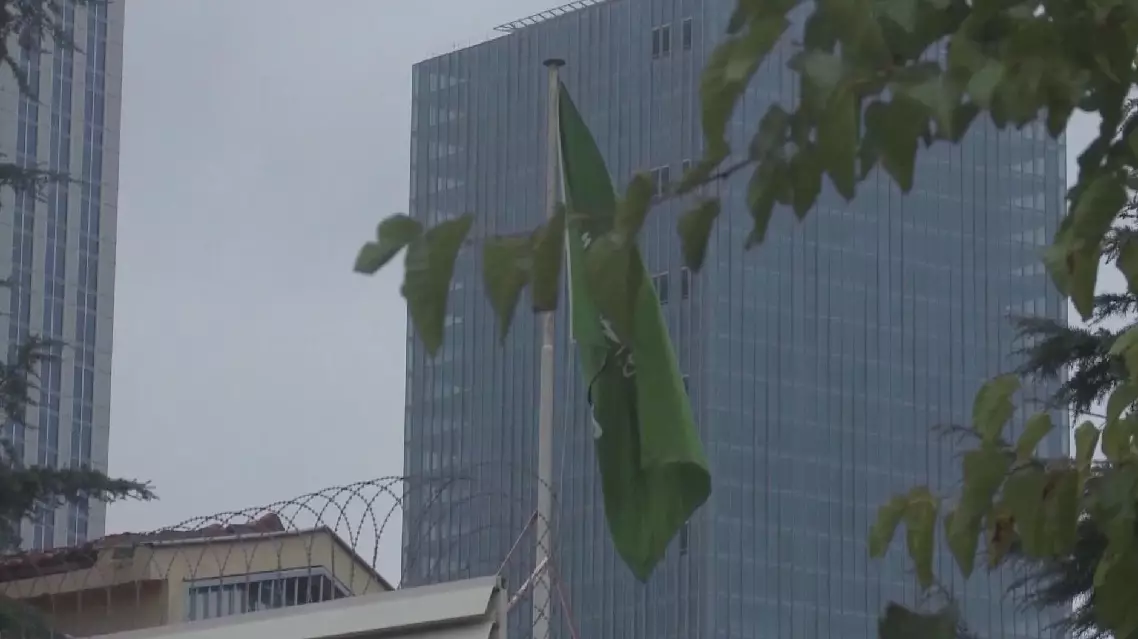
Saudi Arabia and Pakistan have reaffirmed that they will not seek normalization of ties with Israel, rejecting U.S. President Donald Trump's call for the two countries to join the Abraham Accords.

Saudi Arabia's position on the Palestinian issue remains unchanged, a Saudi source told Al Arabiya TV on Monday.

The source affirmed the need for "an irreversible pathway to a Palestinian state".

The remarks came after U.S. President Donald Trump urged Muslim-majority and regional countries to normalize relations with Israel and join the Abraham Accords before the U.S. reaches a peace agreement with Iran.

Saudi Arabia has repeatedly said it would not normalize relations with Israel without the establishment of a Palestinian state.

Pakistani Defense Minister Khawaja Asif said on Tuesday that Pakistan will not join any agreement to normalize ties with Israel, adding that the country will not accept any deal that "conflicts with its fundamental ideologies".

Trump on Monday urged Saudi Arabia, Qatar, Egypt, Jordan, Turkey and Pakistan -- countries involved in mediating U.S.-Iran talks -- to immediately join the Abraham Accords, warning that otherwise they should not participate in the mediation.

He added that if a U.S.-Iran deal is reached, Iran should also join the agreement.

The Abraham Accords, brokered by the United States in 2020 during Trump's first term, were established between the Israeli government and Arab countries including the United Arab Emirates, Bahrain, Sudan and Morocco, aimed at rapidly advancing the normalization of relations between Israel and Arab countries.

Before the outbreak of the latest round of Israeli-Palestinian conflict in October 2023, the United States had been pushing for normalization between Saudi Arabia and Israel.

After the conflict erupted, Saudi Arabia suspended normalization talks with Israel.

Saudi Arabia, Pakistan reject Trump's Abraham Accords demand

Saudi Arabia, Pakistan reject Trump's Abraham Accords demand

Recommended Articles