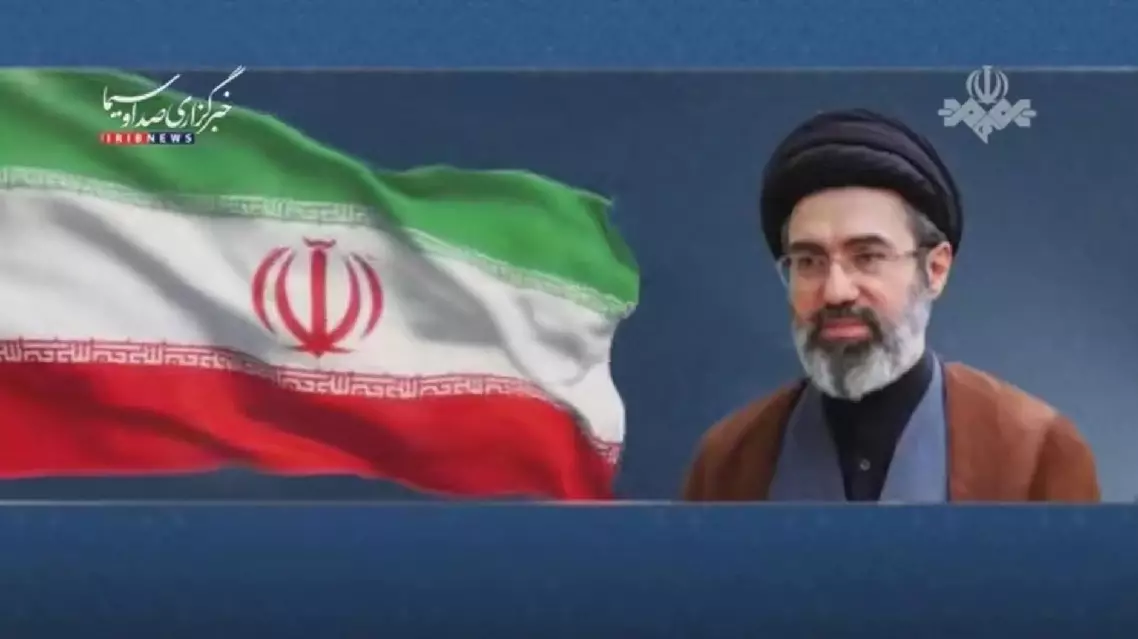
Iran's Supreme Leader Mojtaba Khamenei has said that the nations and territories in the Middle East will no longer serve as "shields" for U.S. military bases, adding that "the hands of time will not turn back," the Iranian media reported on Tuesday.
Khamenei made the remarks in a message carried by Iranian media on the Day of Arafah, the second day of the Hajj pilgrimage.
He said that the Muslim world and countries in the Middle East have considerable capacities and common interests that will shape the new order and geometry of the region and the world.
Khamenei called on Islamic states to promote friendship and cooperation to advance the Muslim world and resolve its problems.
"The United States, in addition to not having any safe place for malice and establishment of its military bases in the region, is growing more distant from its former status day by day," he said.
Khamenei added that Israel has got close to the end of its "sinister" life, stressing that the future belongs to the Muslim world and modern Islamic civilization.
He said that Iran managed to make Israel "miserable under its heavy blows, give the aggressive United States a hard slap, and prevent the enemy from forcing it to surrender" during the 12-day war in June last year, stressing that Iran and the resistance groups, especially Hezbollah, achieved victory against the U.S. and Israeli armies, "which were armed to the teeth," during the 40-day war that started in late February.
On Feb. 28, Israel and the United States launched joint attacks on Tehran and other Iranian cities, killing Iran's then-Supreme Leader Ali Khamenei, senior commanders, and civilians. Iran responded with waves of missile and drone strikes targeting Israel and U.S. assets in the Middle East. A fragile ceasefire was brokered between the warring parties that took effect on April 8.
Iran's supreme leader says regional nations no longer serve as "shields" for U.S. bases
Hong Kong's first astronaut lifted off into space on Sunday, sparking a wave of enthusiasm for space exploration in the special administrative region, while inspiring a new generation to look to the stars.
The Shenzhou-23 crewed spaceship, atop a Long March-2F carrier rocket, blasted off from the Jiuquan Satellite Launch Center in northwest China at 23:08 (Beijing Time) on Sunday. The crew members include Lai Ka-ying, the first astronaut and payload specialist from Hong Kong to join a national space mission, whose achievements have motivated many Hong Kong residents.
"I feel so happy and thrilled. This is the first time a Hong Kong astronaut has gone to space, and to see a true Hong Konger, who is also a mother of three, just really touches my heart," said Chow, a local resident.
The successful spaceflight of Lai has especially captivated the younger generation to dream bigger about the future.
"I want to be an astronaut, because I want to discover more things about space," said a young student surnamed Chow.
"I have seen things related to spaceflights of astronauts. I hope when I grow up, I could receive training and go to space myself," said another student surnamed Koo.
To meet public expectations, the Hong Kong Space Museum has updated its space-themed exhibition with the latest development of the Shenzhou-23 mission, extending the display until July 6. Parents are seizing the moment to enrich their children's knowledge.
"At his age, I want him to be exposed to a wide range of information. With all the recent astronaut news, I brought him here specially to see for himself. We will also check out a film about space knowledge at the planetarium. I hope he can get more out of this from an early age," said Cheung, a father.
"We just watched the Shenzhou-23 launch at home with my son last night, and decided to take him to the Space Museum," a mother surnamed Chun shared.
"I saw on TV that so many people were cheering for the launch. When the rocket was launched, fire burst out from its body. I was really happy they succeeded," said Chun's son.
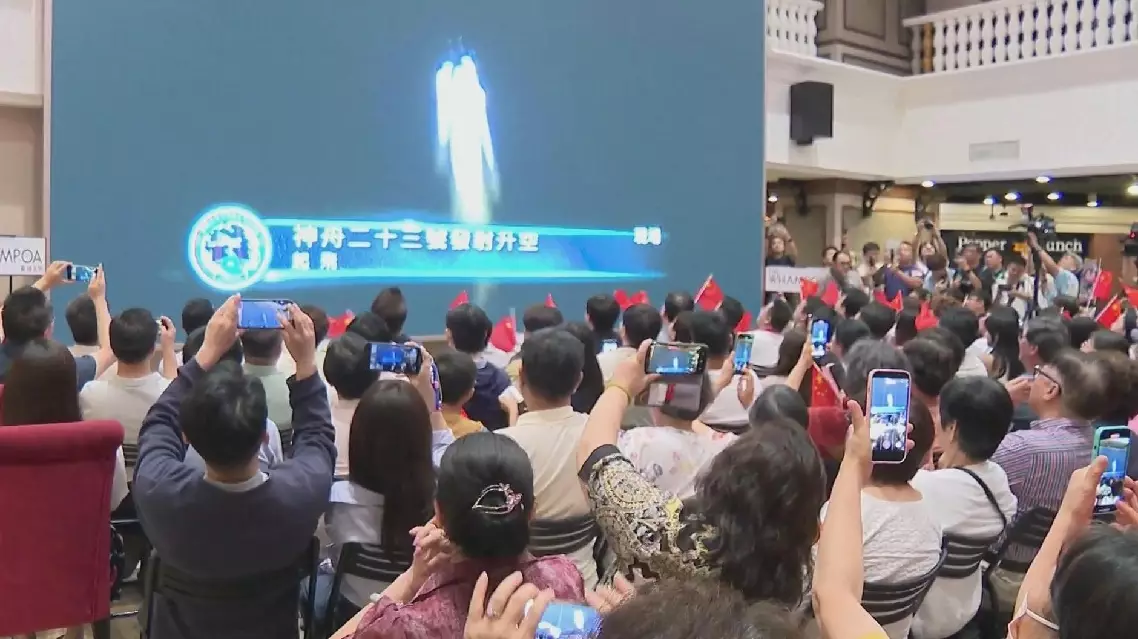
Hong Kong's first astronaut ignites citywide enthusiasm over space exploration