BOCA RATON, Fla. (AP) — There won’t be millions of people from Curaçao cheering on their national team in the World Cup, because Curaçao doesn’t have millions of people.
Not even close.
Click to Gallery
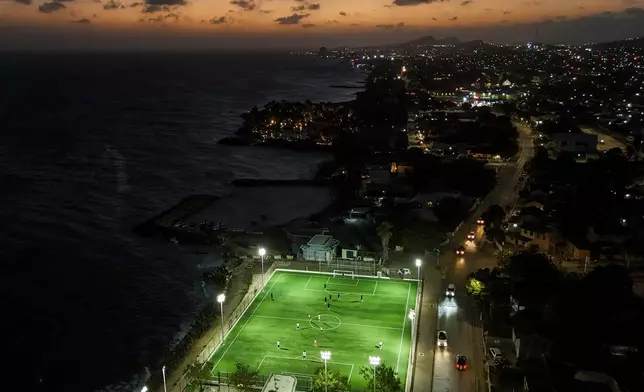
People play soccer in Willemstad, Curacao, Saturday, May 16, 2026. (AP Photo/Matias Delacroix)
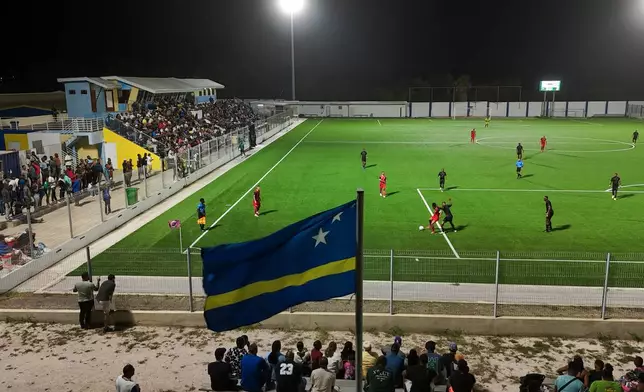
Inter Willemstad and Centro Dominguito play a local league soccer match in Willemstad, Curacao, Friday, May 15, 2026. (AP Photo/Matias Delacroix)
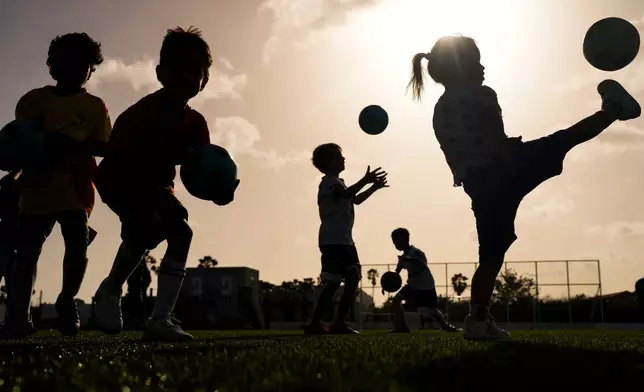
Children train at the C-Stars United soccer academy in Willemstad, Curacao, Friday, May 15, 2026. (AP Photo/Matias Delacroix)
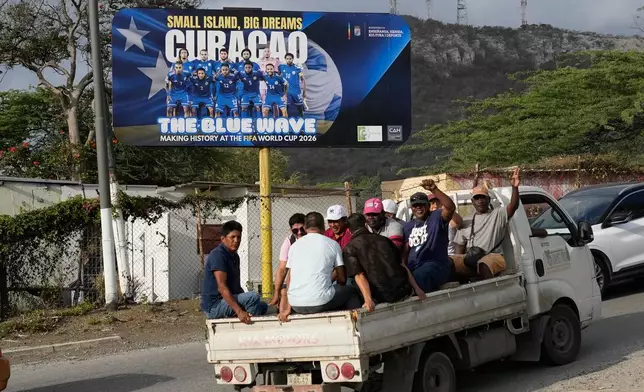
Commuters drive past a billboard displaying the Curacao national soccer team in Willemstad, Curacao, Friday, May 15, 2026. (AP Photo/Matias Delacroix)
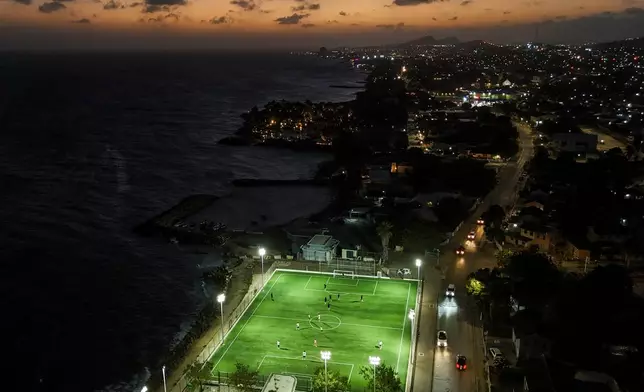
People play soccer in Willemstad, Curacao, Saturday, May 16, 2026. (AP Photo/Matias Delacroix)
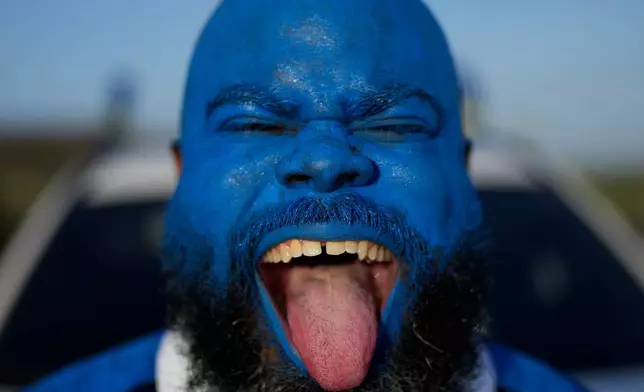
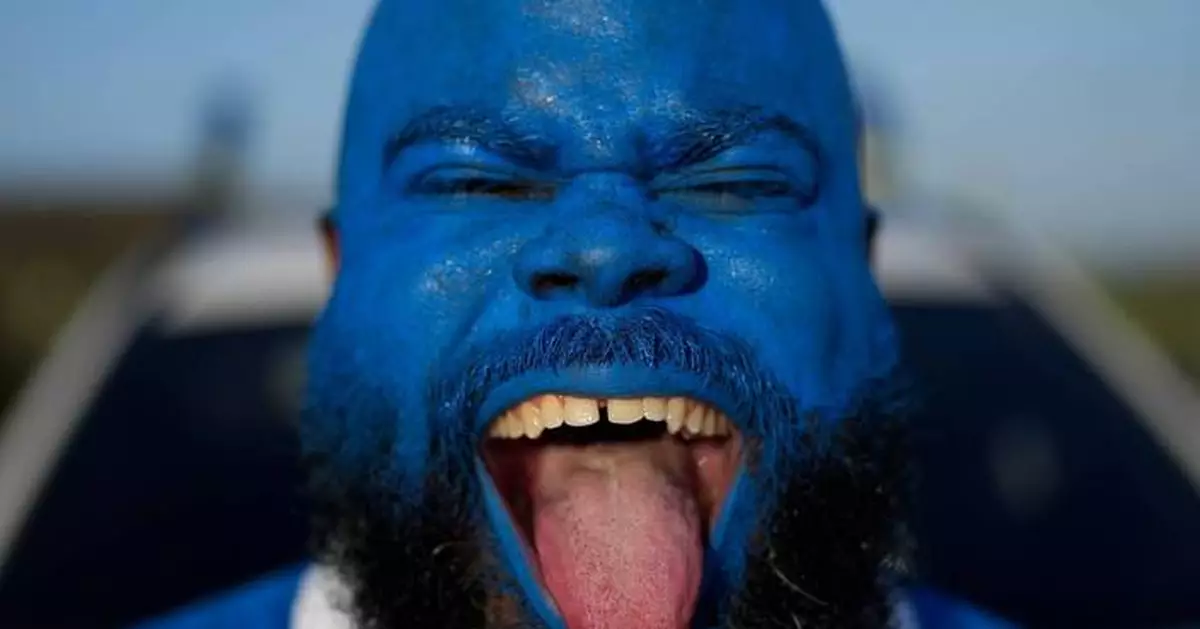
Brenton Balentien, known as Blue Face, a leader of soccer fans of Curacao's national soccer team, cheers in Willemstad, Saturday, May 16, 2026. (AP Photo/Matias Delacroix)
Before the tournament even begins, Curaçao has already crafted a story like none other in World Cup history. A tiny island country — autonomous territory, if you prefer — of about 156,000 residents in the Caribbean is now the smallest, both in terms of population and land mass, to make it to soccer’s biggest stage. And if that wasn’t enough, it's doing so under a coach in Dick Advocaat who, at 78, is about to become the oldest the tournament has ever seen.
They know what the world is probably thinking: Their country is too small, their coach is too old, they don’t have a chance.
They heard all that through the qualifying process as well — and here they are.
“We have made history,” Curaçao defender Sherel Floranus said. “We are writing our own history, for this island.”
The way they see it, they’ve already won.
They rolled through qualifying, going 4-0-0 against Haiti, Saint Lucia, Aruba and Barbados in their opening round, then going 3-0-3 against Jamaica, Bermuda and Trinidad and Tobago in the next round to grab their spot — one of three that were available for 32 teams who went to qualifying from North America, Central American and the Caribbean.
Just how small is Curaçao? Its first World Cup stop — a June 14 match against Germany in Houston — is to a city with 15 times as many people as the island. The stadium in Houston could hold about one-half of Curaçao’s entire population.
It has been a perfect storm to get here. First, the three host nations for this World Cup — the U.S., Mexico and Canada — were exempt from qualifying and already were in the tournament field. And this inaugural edition of an expanded 48-team tournament made it inevitable that there would be some surprise teams getting to the World Cup.
Like, for example, Curaçao. Surprise! With odds of +250000 at some sportsbooks, Curaçao is the longest of long shots in the field. And on the island, they do understand the reality of what that means.
“We know there is a big chance that we don’t win the World Cup, but that we (made it) there ... for Curaçao, a very, very, very good moment,” said Remko Bicentini, a former pro player and Curaçao’s former national team head coach. “We are proud of that.
“It is a party for the whole Curaçao. It’s a big level and all the players ... we worked years, for years, for years, very hard to become where we now are.”
The island was part of the Netherlands Antilles until October 2010, when it became a more autonomous “constituent country” of the Netherlands. The Dutch monarchy still reigns, the citizens remain Dutch nationals and the Netherlands government oversees defense and foreign affairs. And this week, Curaçao’s World Cup preparations are happening in the Netherlands — a nine-hour direct flight away, but a place where the team was greeted with “welcome home” signage.
The sense is clearly that the results at the tournament won't mean much. Winning a match would be magical. Tying one would be cause for celebration. Just being there, for those from Curaçao, is a victory in itself.
“I always saw other countries play the World Cup,” said Michael Stokkel, a policeman. “I was a fan of Brazil, but now I will be a fan of my own country. It’s an incredible feeling.”
He’s going to the World Cup, but by himself. It's just too expensive to bring others, he said.
It's not unheard of for athletes from Curaçao to compete on the international stage. The rare part here is that they're doing it actually as “Curaçao.” There have been unsuccessful attempts for the nation to be recognized as its own Olympic team; athletes compete in the Summer Games either for the Netherlands or independent athletes. At the World Baseball Classic earlier this year, players played for the Netherlands.
Ozzie Albies of the Atlanta Braves, a native of Willemstad — the island's capital and biggest city — said his nation getting to the World Cup is "history for the guys and the accomplishment is super special for Curaçao.”
“Soccer has always been a sport we play but never made it to the World Cup," said Albies, one of three Curaçao natives currently on a Major League Baseball roster. "So, to be able to do it is very, very, very special.”
The Dutch are a World Cup contender with their own national team. Curaçao, which will have its base camp at Florida Atlantic University in Boca Raton, Florida, when it shifts its full operation to the U.S. in the coming days, is simply savoring its moment.
“I think it’s been amazing for the whole island,” said Tahith Chong, one of the national team’s top players. “Just seeing how the island has lived with it and just knowing, I think that a lot of people don’t know about Curaçao. It loves football and it’s quite big here. So, to be present this year at the World Cup is obviously something amazing for the island.”
The hope, politically, is that the team will be a unifying force.
At 171 square miles, Curaçao has roughly as much land mass as New Orleans. There are at least 125 U.S. cities with larger populations than the entire island. Its population is about the same as Hollywood — no, not the one in California, but the city in Florida that sits between Miami and Fort Lauderdale.
Curaçao’s Prime Minister, Gilmar Pisas, sees this World Cup as an opportunity. The team known as the Blue Wave — a nod to the shimmering turquoise water that surrounds the island — and blue is a theme for everything in the country, right down to the Blue Curaçao liquor that is popular around the world (even though it has an orange flavor).
For the next few weeks, Pisas wants the nation to be Blue Nation as well.
“We will become part of something larger than ourselves, something that, despite our differences, brings us together,” Pisas said. “We share a single anthem and a single flag ... rather than being divided into separate camps. We are, finally, truly united. It is a project dedicated to the construction of a nation. It acknowledges that your people, and you yourself, are an integral part of this collective mission — the ‘Blue Nation.’”
This will not require Brenton Balentien to change much about his regular day-to-day routine.
If you see a bald, bearded, muscular man with his head and face painted blue for Curaçao games, you’ve likely found Balentien — simply known around the island as “Blue Face.” He’s a longtime soccer fan who took notice of how fans in Brazil, Colombia and other places would show up at matches in wigs and elaborate costumes.
“I said, ‘Curaçao needs that,’” Balentien said. “Curaçao is a very passive island. We watch the games and clap, sure, but we’re not the kind of fans who go out there and scream for the full 90 minutes. And I said, ‘No, we have to change that.’”
So, in 2015, Blue Face — someone who began chanting in largely empty stadiums and now has a huge following — was born. He applies the paint himself before every match. He’s basically a national mascot; a bartender, influencer and event organizer in real life, a soccer superfan when the paint comes out. He’s become a motivational speaker, someone whose home overlooking Willemstad has Curaçao’s flag waving in the wind and whose car has two more flags attached to that.
“We do this for this island,” Balentien said, “so the world knows who we are.”
If the world doesn’t know yet, they’ll see soon enough.
Curaçao, currently ranked No. 82 in FIFA’s global rankings, opens World Cup play against global power and 10th-ranked Germany. It then plays No. 23 Ecuador in Kansas City on June 20 and finishes group stage play against No. 34 Ivory Coast on June 25 in Philadelphia.
It will be underdogs in all three matches, barring something very unusual.
No problem. The Blue Wave is coming, the pressure is off and confidence is high.
“For us, this is the biggest World Cup because our flag will be there in America,” said Ricardo Martinez, a radio broadcaster who calls the matches. “Germany, watch out. Curaçao is coming. We are small — but giants in the World Cup.”
AP Sports Writer Charles Odum in Atlanta and AP video journalist Juan Arraez in Willemstad, Curaçao, contributed to this story.
AP World Cup: https://apnews.com/hub/fifa-world-cup
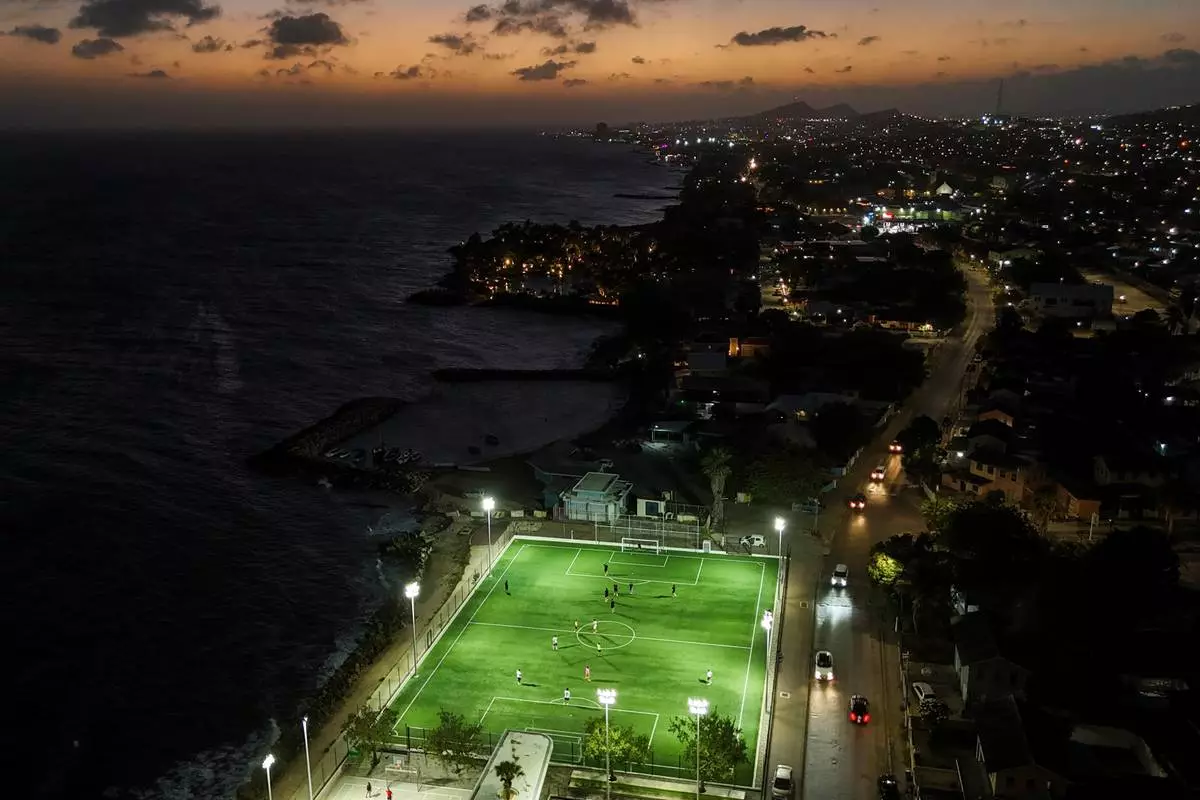
People play soccer in Willemstad, Curacao, Saturday, May 16, 2026. (AP Photo/Matias Delacroix)
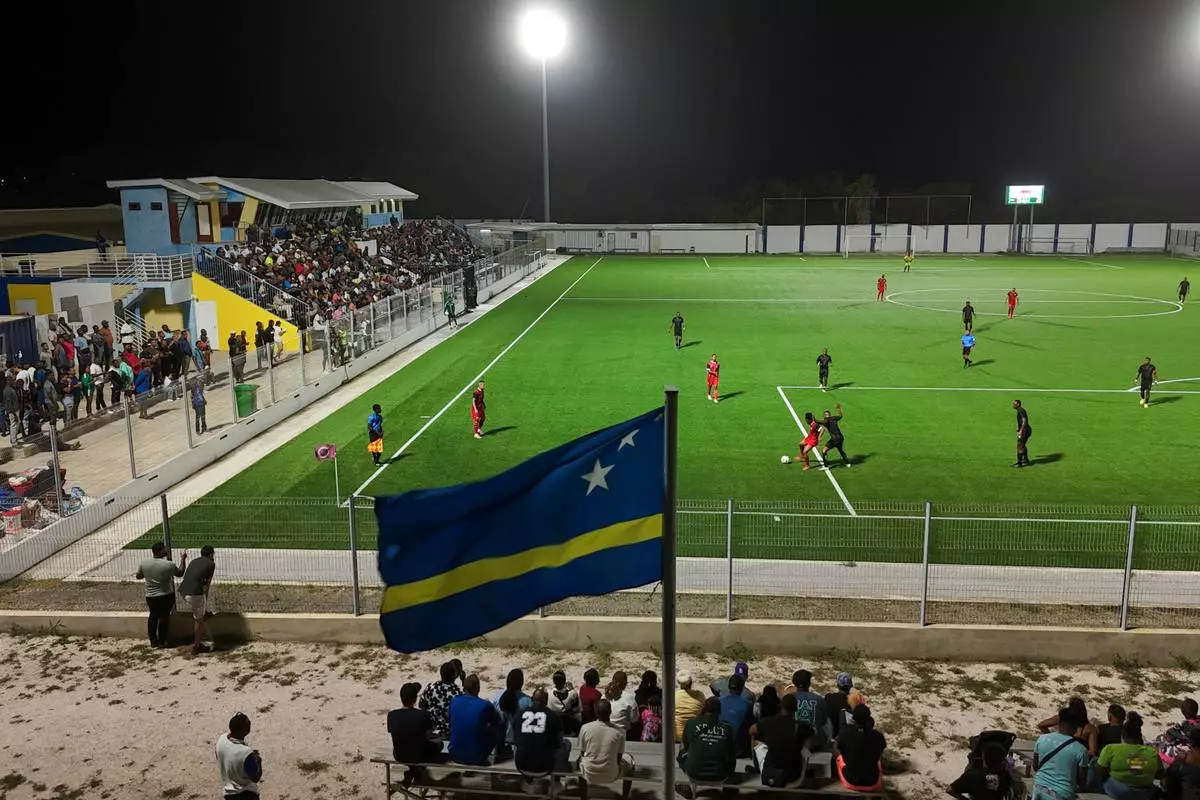
Inter Willemstad and Centro Dominguito play a local league soccer match in Willemstad, Curacao, Friday, May 15, 2026. (AP Photo/Matias Delacroix)
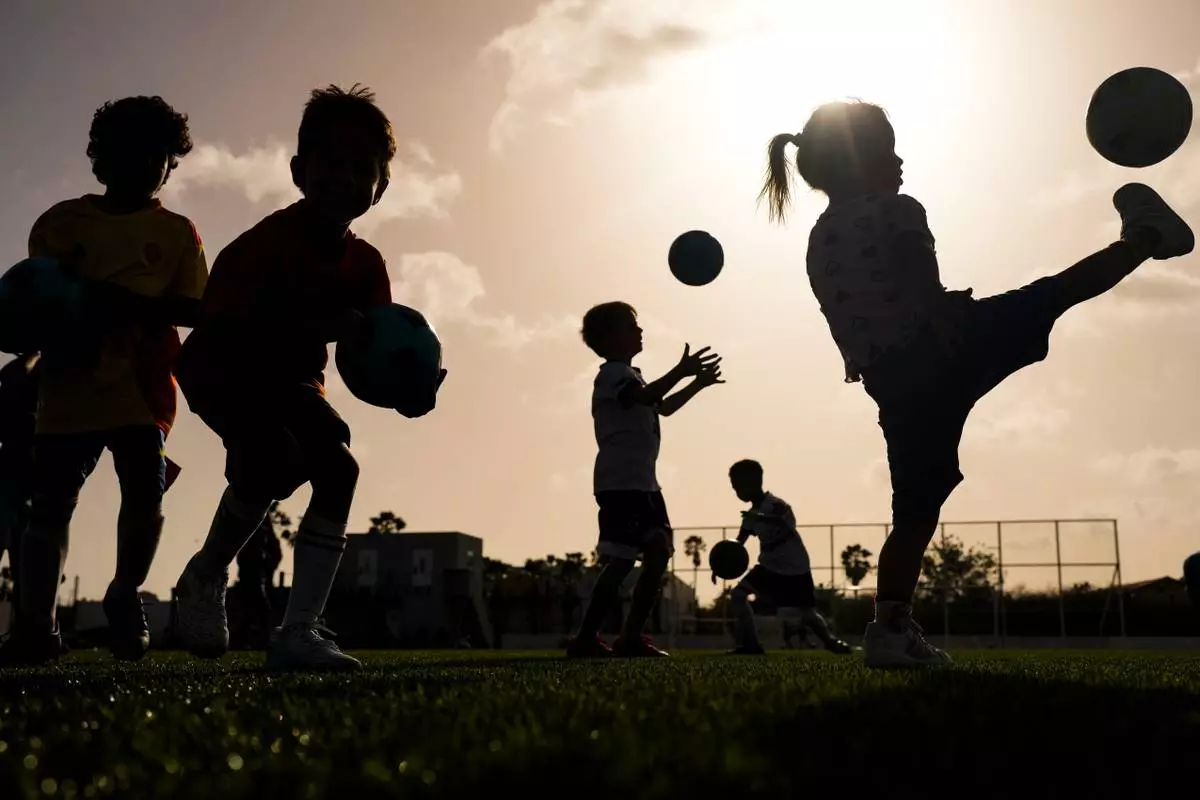
Children train at the C-Stars United soccer academy in Willemstad, Curacao, Friday, May 15, 2026. (AP Photo/Matias Delacroix)
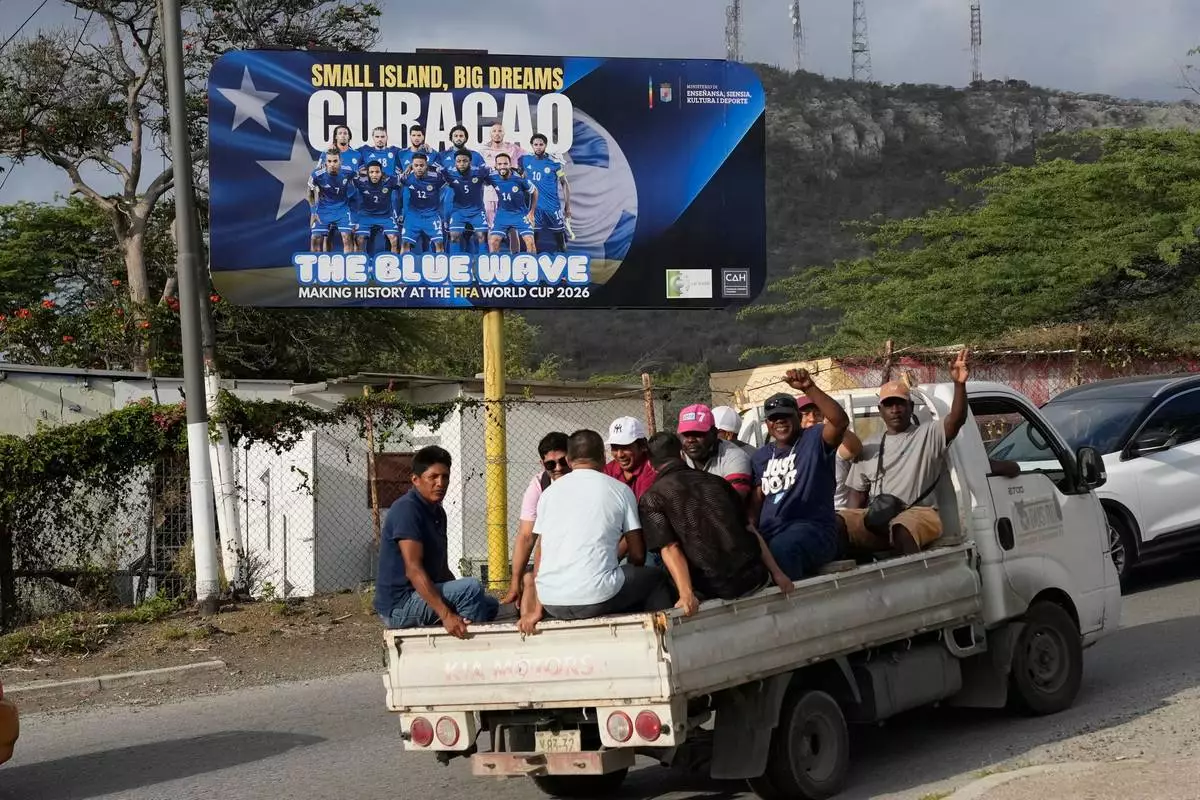
Commuters drive past a billboard displaying the Curacao national soccer team in Willemstad, Curacao, Friday, May 15, 2026. (AP Photo/Matias Delacroix)
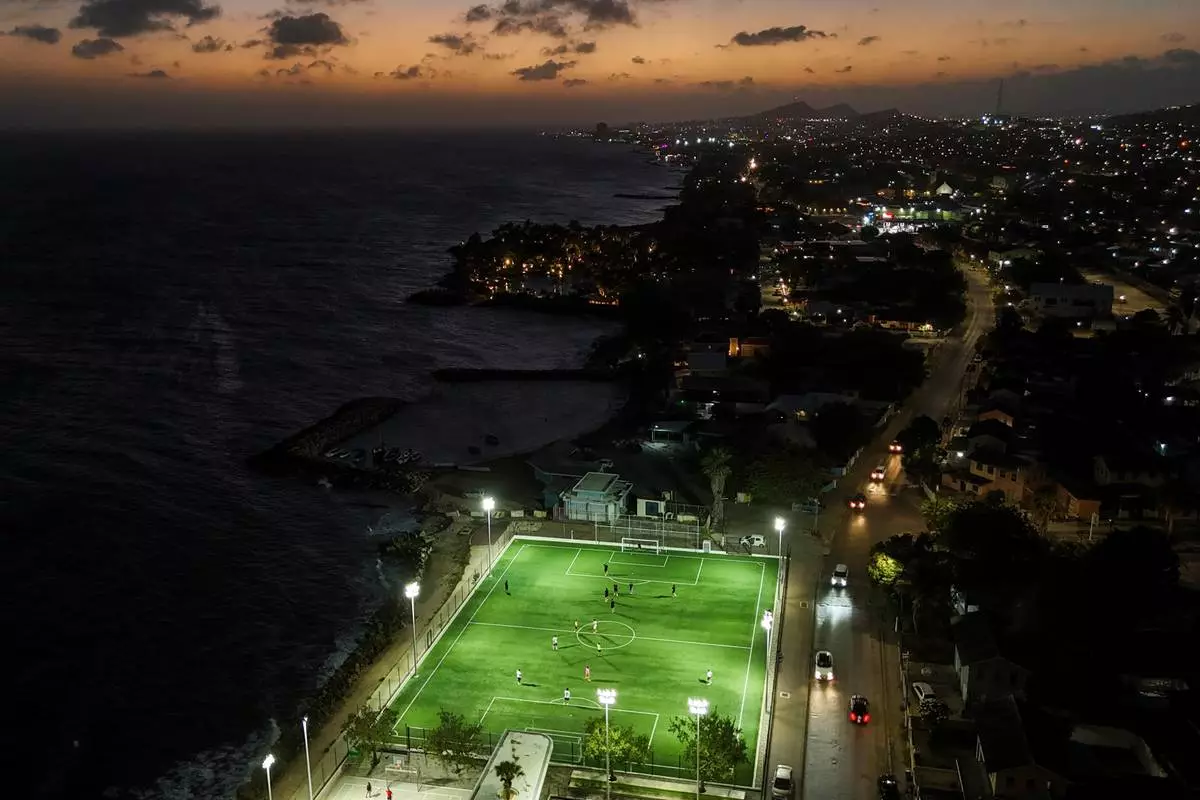
People play soccer in Willemstad, Curacao, Saturday, May 16, 2026. (AP Photo/Matias Delacroix)
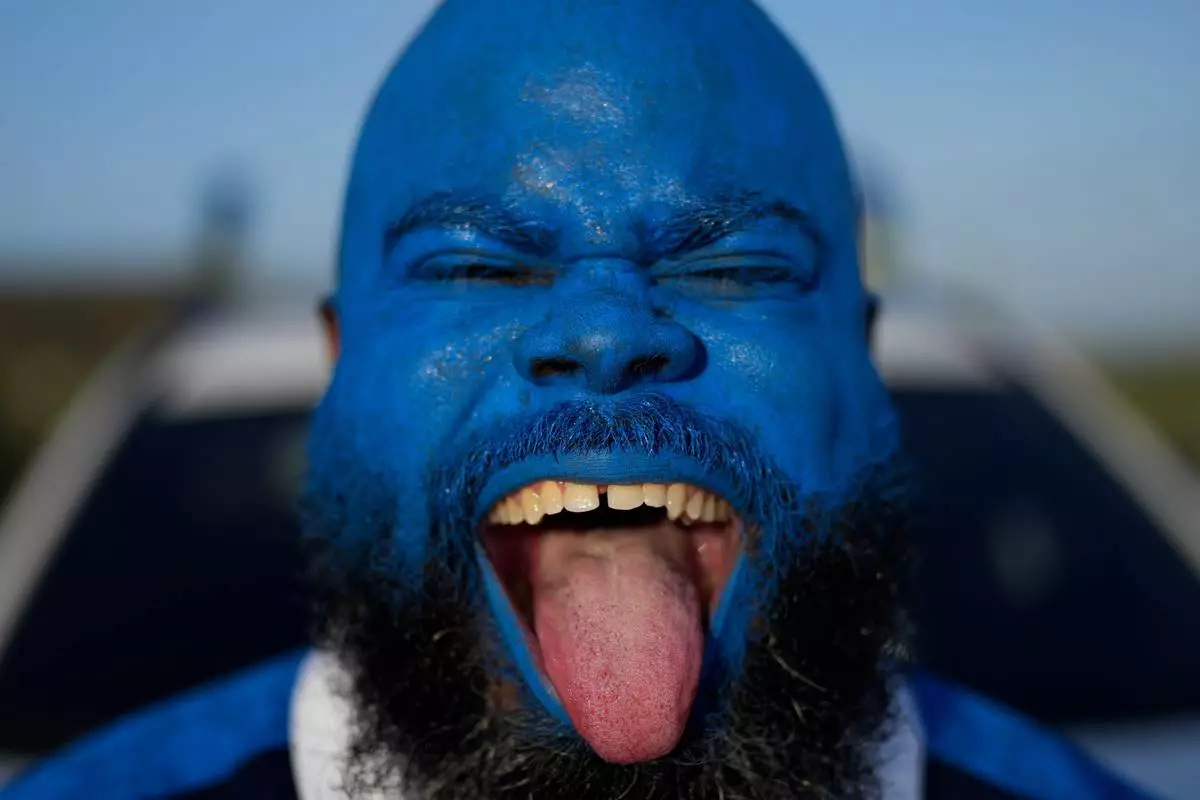
Brenton Balentien, known as Blue Face, a leader of soccer fans of Curacao's national soccer team, cheers in Willemstad, Saturday, May 16, 2026. (AP Photo/Matias Delacroix)