DETROIT--(BUSINESS WIRE)--May 27, 2026--
Inbolt, the robot intelligence company that turns digital twins into live robot control, is launching two new capabilities that complete the company’s AI vision model for robot guidance: Inbolt Robot Programming and an expanded Inbolt Robot Control. The launch pad is Booth #1675 at Automate 2026 in Chicago, June 22-25.
This press release features multimedia. View the full release here: https://www.businesswire.com/news/home/20260527207353/en/
"Robot deployment still takes weeks because the digital twin never matches the real factory floor, engineers hand-tune every trajectory during commissioning," said Rudy Cohen, CEO and Co-founder of Inbolt. "With Robot Programming, the Vision Model, and Robot Control on a single platform, that gap closes; Engineers build the program from the CAD, our vision model locates the real part, and the robot executes the planned path. One platform from perception to motion, on the robots manufacturers already own. That's AI perception built for the factory floor."
Inbolt Robot Programming for one shot automation
With Robot Programming and Robot Control, Inbolt covers the full path from virtual commissioning to adaptive robot motion control, for stationary and moving-line applications.
Up until now, deploying a robot on a factory floor often takes weeks as engineers carefully build digital twins of the production line, then spend the commissioning window touching up trajectories point by point because the virtual environment never fully matches reality. If the robot is anchored 2mm off, or parts arrive in unrepeatable positions, every path gets re-taught and tuned by hand.
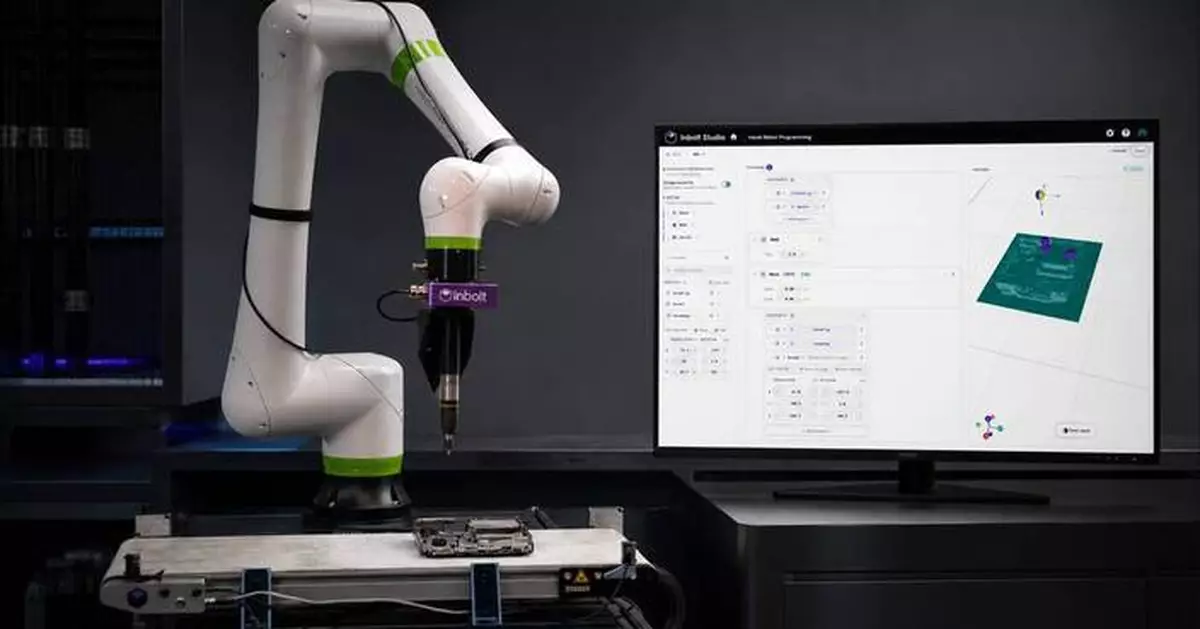
The latest release of Inbolt Robot Programming, the programming capability inside Inbolt Studio, removes that step entirely. Engineers build the program directly on the CAD model, in the part's own reference frame. At runtime, the Inbolt Vision Model locates the real part and adjusts the robot's motion to execute the planned path exactly. “No teach pendant. No iterative tuning. No separate workflow for moving lines,” said Cohen. “Weeks of commissioning now works in one shot. The digital twin and the factory floor are the same thing.”
The CAD-based release is available today for FANUC, Universal Robots and Yaskawa on dynamic (moving line) applications, with broader brand coverage on the roadmap. Two of Inbolt’s four booth demonstrations will run it live, so visitors can watch the system go from CAD to executable robot motion in front of them.
Building on US momentum
Inbolt’s 20x20 ft Automate booth marks the company’s largest US showcase to date. “Automate in Chicago is where we plant our flag in the US,” said Albane Dersy, COO and Co-founder of Inbolt. “Four live demos, two product launches, a deep integration with FANUC and NVIDIA on the show floor, and a panel on the future of physical AI. Our US footprint has expanded across Stellantis, GM, and Toyota plants this year, our team has doubled, and the US contingent doubles again by year-end.”
Inbolt Robot Control adds Yaskawa
Inbolt’s second product release is an expansion of Robot Control, the real-time robot motion execution component of the platform, now running natively on Yaskawa, joining FANUC, KUKA, ABB, Universal Robots, and Comau. Robot Control streams corrected joint commands directly into the robot’s servo loop at native control frequency, closing the loop between what the vision model sees and how the robot moves. The Yaskawa expansion brings Inbolt’s native robot brand coverage to six, giving manufacturers a single intelligence layer for real-time execution across the brands they already own.
Updates to the Inbolt Vision Model
Inbolt has also released updates to the Inbolt Vision Model with improved global part localization models. The model now tracks a wider variety of parts, and the Inbolt Studio dashboard exposes part position, detection status, and live performance tests for each use case. Robotics engineers can troubleshoot and evaluate Inbolt’s performance on their specific station inside Inbolt Studio.
Four live demos at Booth #1675
Inbolt’s booth runs four live demonstrations at Automate, covering the most common automation challenges on the factory floor today:
Real-time bolt tightening at FANUC’s main booth and cobot booth
Inbolt’s technology will also run on FANUC’s main booth, where a CRX-20iA/L collaborative robot performs real-time bolt tightening on a moving engine block. The application combines Inbolt’s robot intelligence with NVIDIA® Jetson AGX Orin™ processing. As parts travel along a bi-directional conveyor, the robot tracks the motion and tightens without stopping the line. It’s a concrete view of continuous, vision-guided assembly running in production conditions. Inbolt will also be featured on FANUC’s Cobot Booth, running a joint demonstration with integrator partner GCG.
Albane Dersy moderates panel on next era
Inbolt Co-founder and COO Albane Dersy will moderate the panel titled The Next Era of Industrial Automation: AI, Robotics, and Flexible Manufacturing on Monday, June 22, 12:15- 12:45 PM. The discussion covers physically accurate simulation, synthetic data, simulation-to-real skill transfer in robot development, and how industrial and collaborative robots are pushing factories beyond fixed automation toward adaptive production.
Download image s: Here
About Inbolt
Inbolt gives industrial robots the intelligence to see and adapt to the live factory floor. From real-time perception to digital twin-based robot programming and motion control, Inbolt enables robots to locate parts on the fly and execute planned paths, without fixtures, re-teaching, or custom integration. Programs are built from CAD in minutes and run natively on FANUC, ABB, KUKA, Yaskawa, Comau, and Universal Robots. Inbolt is deployed on 200+ robots across 100+ factories on three continents, and trusted by Stellantis, Toyota, Ford, GM, Beko, and Renault. www.inbolt.com
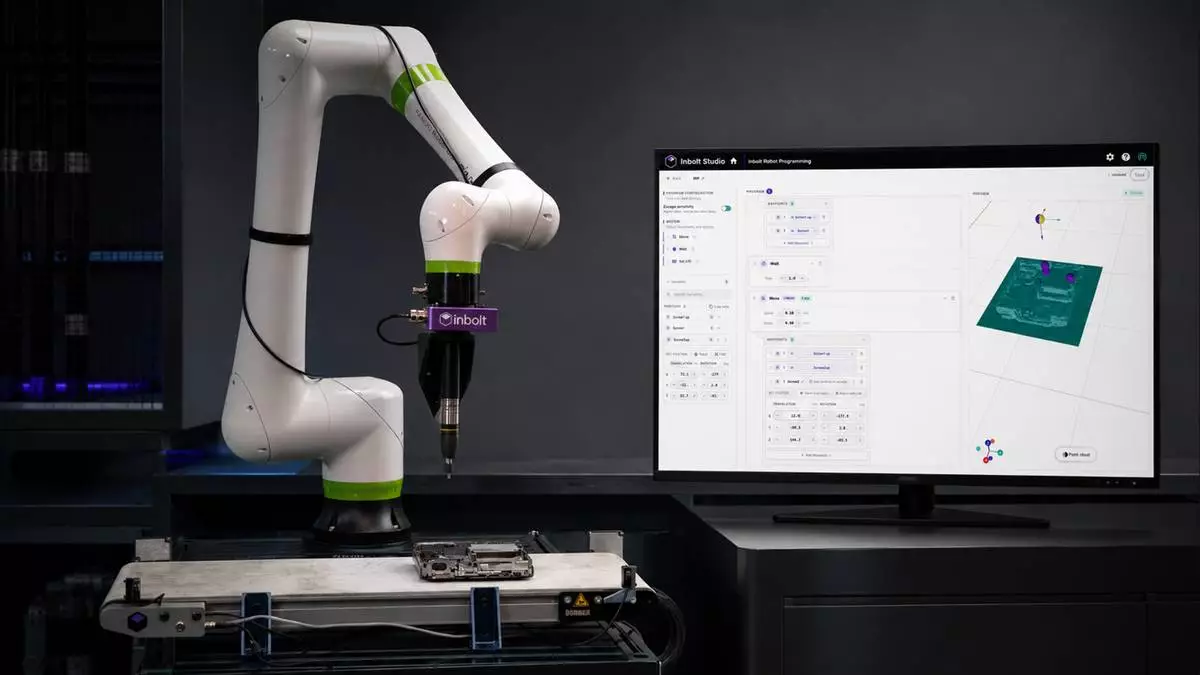
Inbolt's Robot Programming release is available today for FANUC, Universal Robots, and Yaskawa robots with broader brand coverage on the roadmap.
ATLANTA (AP) — After hitting into two double plays during the Atlanta Braves' loss to the Philadelphia Phillies on Wednesday, Michael Harris II was eager for an opportunity to make amends.
He didn't have to wait long.
Harris hit a three-run homer in the first inning, Chris Sale came out of the bullpen on one day of rest to get the final four outs and the Braves beat the Phillies 6-2 on Thursday night in the decisive Game 3 of their National League Wild Card Series.
Surprise starter Ray Kerr threw 3 1/3 scoreless innings for Atlanta, and Ozzie Albies launched a two-run homer in the fourth. Matt Olson added a solo shot in the seventh as the Braves advanced to a best-of-five Division Series against the Los Angeles Dodgers.
“I told our guys, `Man, all year long when the stakes have been the highest, when the challenges have been the toughest, we’ve been at our absolute best.' So it doesn’t surprise me that we played the way we did tonight,” Atlanta manager Walt Weiss said.
Harris has hit .426 with two homers and five RBIs in his first eight career postseason games, but he wanted to move past the two double plays in Wednesday’s 4-3 loss in 10 innings that forced Thursday night’s game.
“Just found one pitch to put my best swing on and hopefully we got some runs out of it, and we did,” said Harris, who connected off Aaron Nola.
The Braves took a postseason series for the first time since winning the 2021 World Series and earned their first playoff series win against the Phillies. Philadelphia beat Atlanta in the 1993 NL Championship Series and the 2022 and 2023 NLDS.
“Definitely feels amazing to win against the Phillies because they were the ones that sent us home previous years, and especially at home,” Albies said.
After winning the NL East by six games over Philadelphia this year, the Braves came out on top in their postseason matchup, too.
“Those guys kind of went start to finish in this division,” Phillies interim manager Don Mattingly said. “Over the course of the 162 (games), they were the best team in our division.”
Nola was pulled after allowing three runs in 1 2/3 innings. He walked Ronald Acuña Jr. and Olson with one out in the first before giving up the homer to Harris,
Kerr made his postseason debut in only his fourth career start. Weiss wanted a left-hander to face Phillies left-handed hitters Kyle Schwarber and Bryce Harper at least once.
Mattingly acknowledged that Kerr pitching long enough to face Schwarber and Harper twice was a perfect script for a Braves win.
“Obviously, it’s nice,” Mattingly said. “When you’re in that situation where you can run through your lefties again at the top is probably the best-case scenario, and he was able to do that.”
Kerr allowed only one hit — to Schwarber in the first — and one walk — to Schwarber in the fourth. Right-hander Grant Holmes followed Kerr and allowed one run in two innings to earn the win.
Kerr left to a standing ovation from the sellout crowd and acknowledged the cheers by lifting up his arm as he approached the dugout.
“Hopefully, Ray Kerr became a bit of a household name tonight,” Weiss said. “He deserves it.”
The 37-year-old Sale, who started Atlanta's 5-3 win in Tuesday's series opener, struck out Harper to end the eighth and closed out the series in the ninth by striking out Bryan De La Cruz and pinch-hitter Otto Kemp.
The ace left-hander threw 95 pitches over 6 1/3 innings Tuesday. Two days later, he threw 21 pitches in his first relief appearance of the year.
Phillies right-hander Zack Wheeler, the winning pitcher in Sunday's 7-3 victory over Tampa Bay that clinched the wild-card spot, walked Austin Riley in the fourth before giving up Albies' homer to right field that gave Atlanta a 5-0 lead. Wheeler allowed two runs in four innings. Jonathan Bowlan, Philadelphia's fourth pitcher, gave up Olson's homer to center field.
Kerr, 32, flourished in the postseason spotlight. He pitched in only nine games after being recalled by Atlanta on Aug. 16. He underwent Tommy John surgery in 2024 and didn’t pitch in 2025.
Kerr said he was told Wednesday he would start on Thursday.
“It was fun. It was a journey," Kerr said of his path back to the majors. “I’ve dreamed about stuff like this. For it to actually happen, I still haven’t even processed yet.”
Philadelphia's 2022 World Series loss to Houston began a streak of five straight postseason appearances with progressively quicker exits — the NL Championship Series, two NLDS exits and now the Wild Card Series loss.
“If you don’t win the last game, it’s a crash landing no matter what. It doesn’t matter where it is,” Mattingly said.
The game drew a sellout of 41,731 after the Braves fell short of sellouts in the first two games of the series, with school and work conflicting with the 2:15 p.m. first pitch for many fans. Afternoon starts also hurt attendance in other Wild Card Series games this week.
The announced attendance at Truist Park was 30,127 on Tuesday and 37,150 on Wednesday.
Edmundo Sosa remained in the Phillies' starting lineup at third base after he appeared to aggravate a groin injury running to first base and left Wednesday's game in the ninth inning. Weiss said Braves right-hander Tyler Mahle, who allowed only one run in seven innings on Wednesday despite feeling an abdominal pull in pregame warmups, was “feeling pretty good” on Thursday.
The Braves will play at Dodger Stadium on Saturday in the opening game of their Division Series against the two-time defending World Series champions.
See AP’s full MLB coverage here
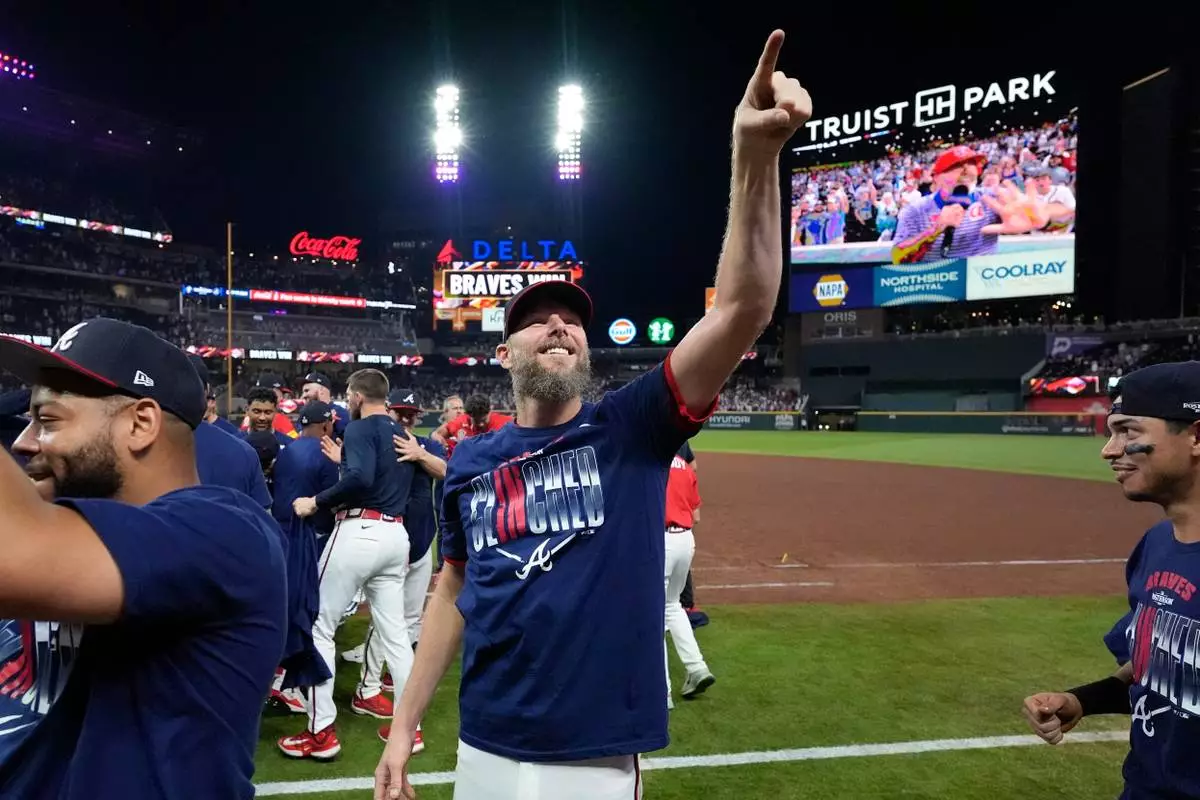
Atlanta Braves pitcher Chris Sale points ot the crowd after Game 3 of baseball's NL Wild Card Series against the Philadelphia Phillies, Thursday, Oct. 1, 2026, in Atlanta. (AP Photo/Brynn Anderson)
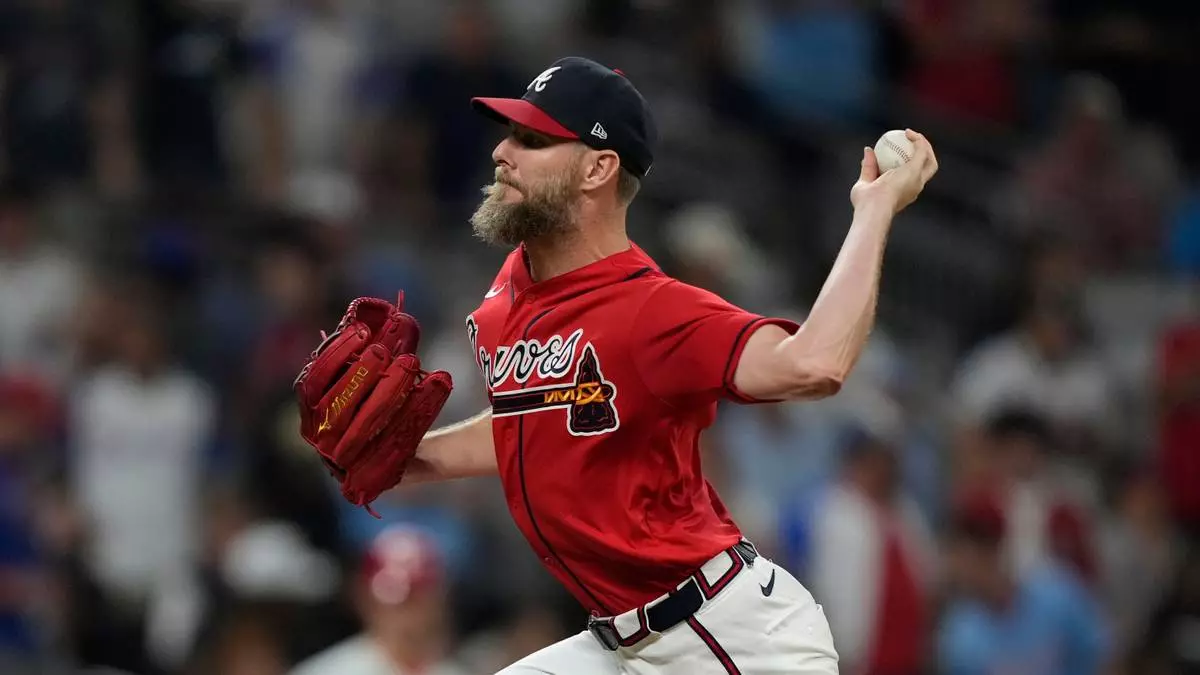
Atlanta Braves pitcher Chris Sale throws against the Philadelphia Phillies in the ninth inning during Game 3 of baseball's NL Wild Card Series, Thursday, Oct. 1, 2026, in Atlanta. (AP Photo/Brynn Anderson)
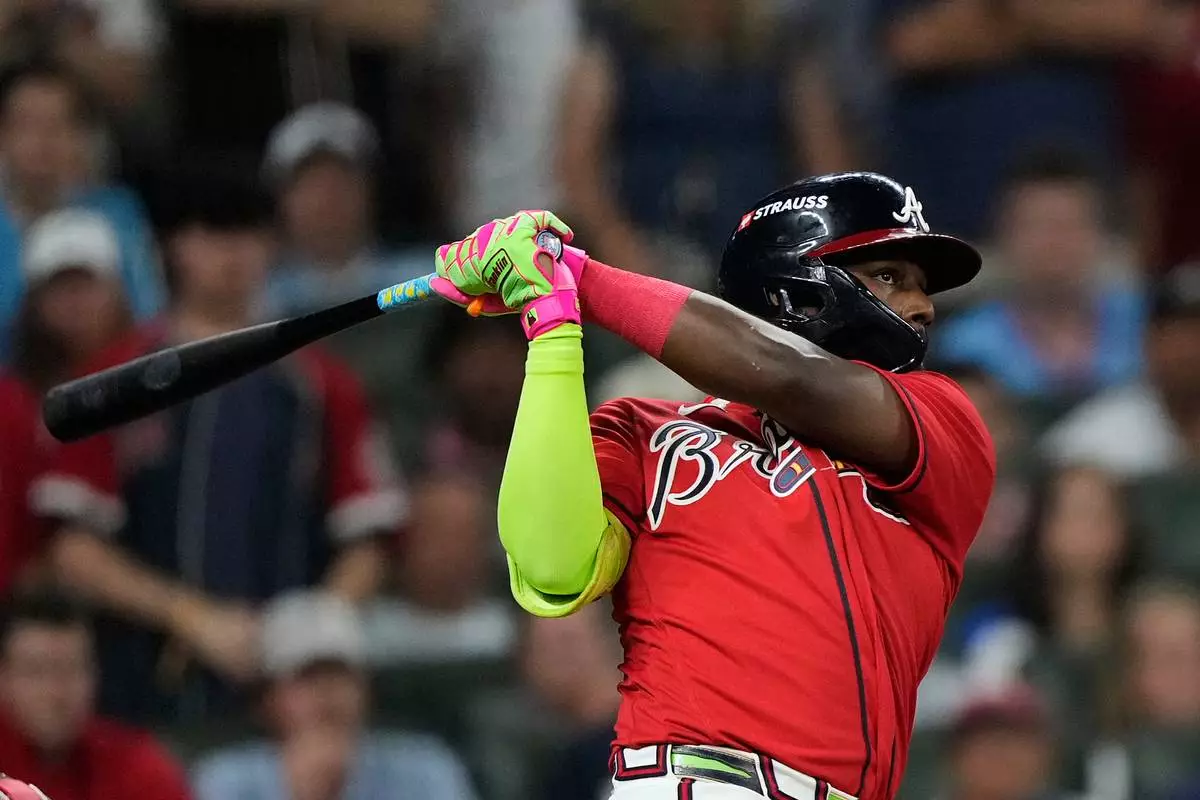
Atlanta Braves' Michael Harris II hits a three-run home run against the Philadelphia Phillies in the first inning during Game 3 of baseball's NL Wild Card Series, Thursday, Oct. 1, 2026, in Atlanta. (AP Photo/Brynn Anderson)
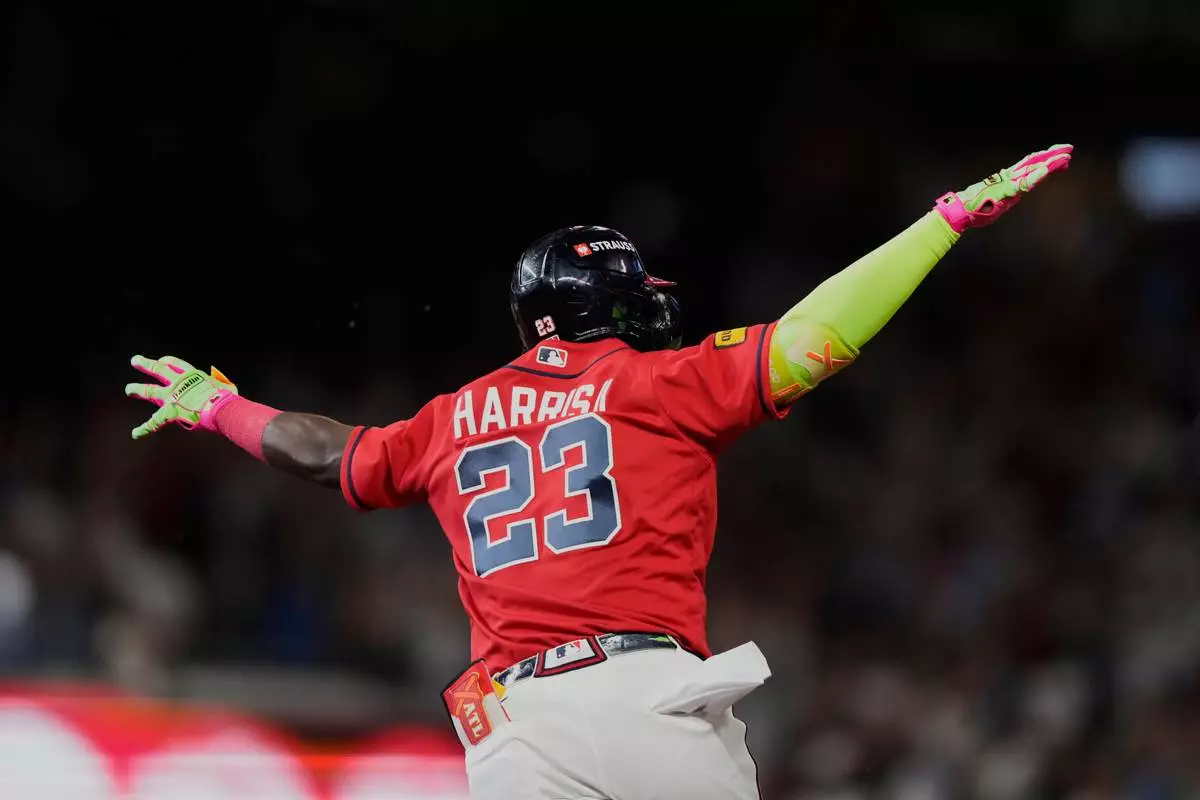
Atlanta Braves' Michael Harris II celebrates his three-run home run against the Philadelphia Phillies in the first inning during Game 3 of baseball's NL Wild Card Series, Thursday, Oct. 1, 2026, in Atlanta. (AP Photo/Brynn Anderson)
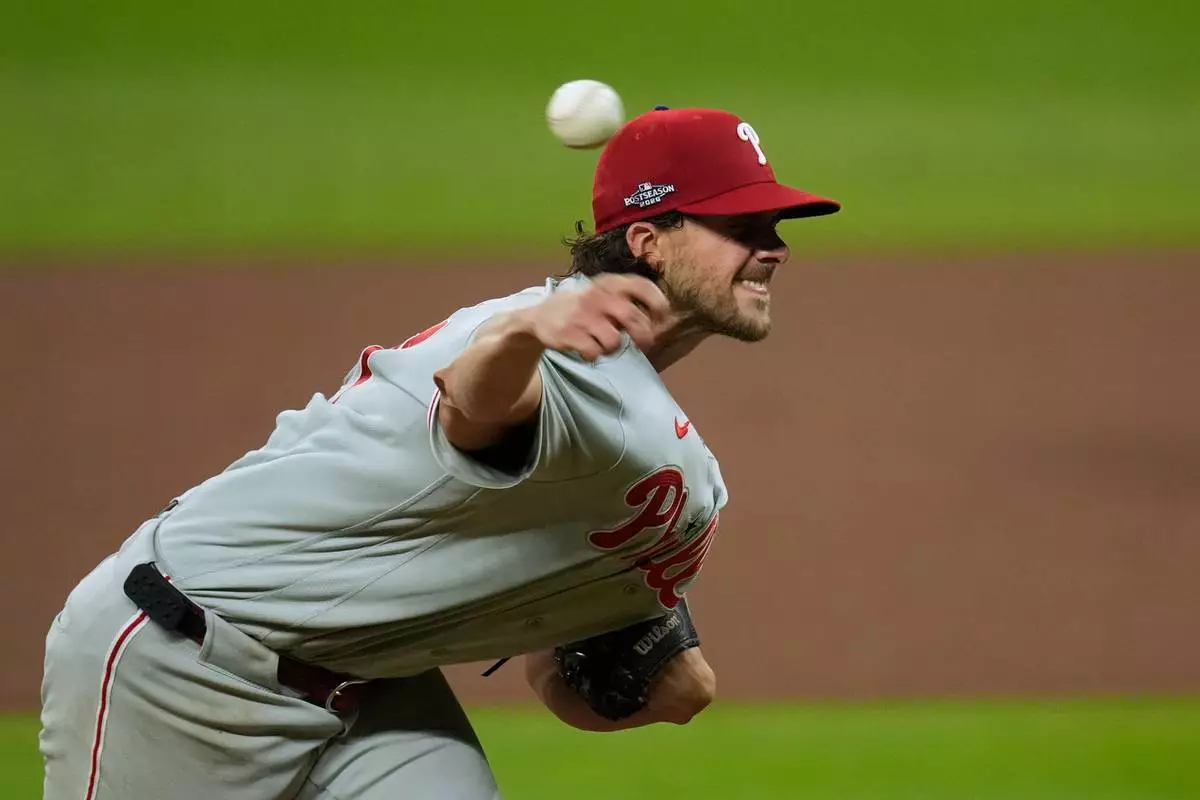
Philadelphia Phillies pitcher Aaron Nola throws against the Atlanta Braves in the first inning during Game 3 of baseball's NL Wild Card Series, Thursday, Oct. 1, 2026, in Atlanta. (AP Photo/Mike Stewart)
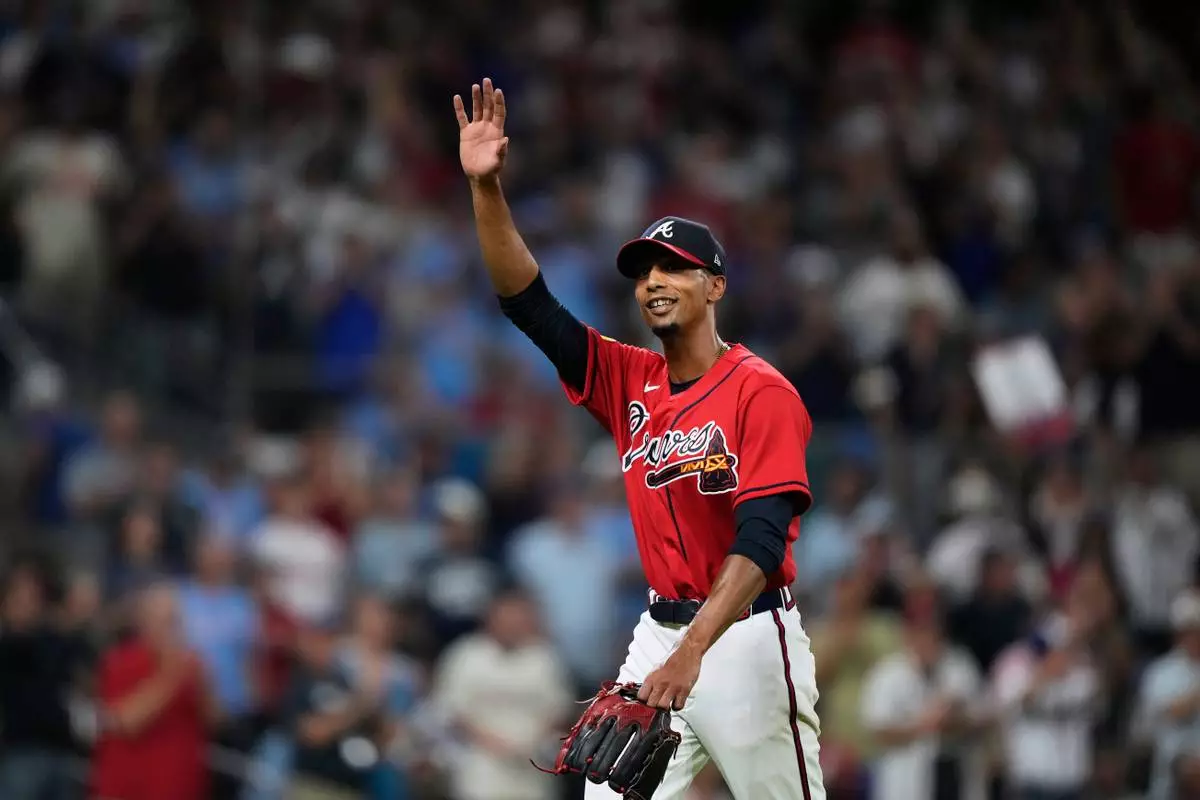
Atlanta Braves pitcher Ray Kerr waves as he walks to the dugout against the Philadelphia Phillies in the fourth inning during Game 3 of baseball's NL Wild Card Series, Thursday, Oct. 1, 2026, in Atlanta. (AP Photo/Brynn Anderson)
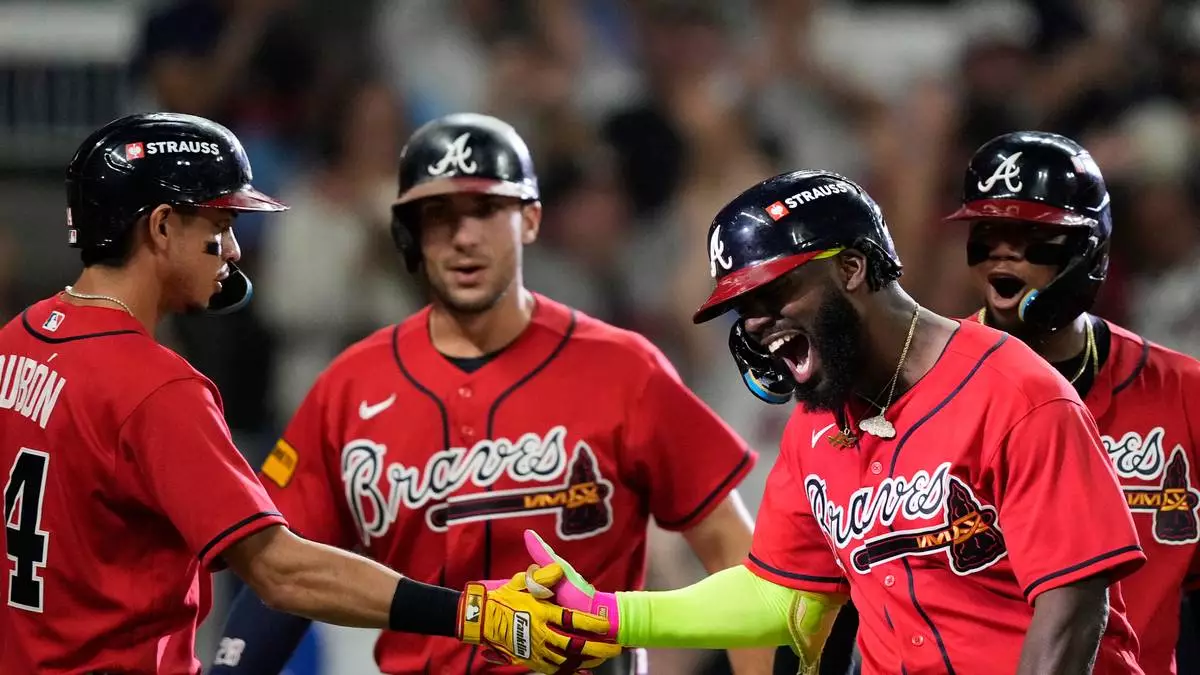
Atlanta Braves' Michael Harris II, third from left, celebrates his three-run home run with Mauricio Dubón (14), Matt Olson, second from left, and Ronald Acuña Jr., right, against the Philadelphia Phillies in the first inning during Game 3 of baseball's NL Wild Card Series, Thursday, Oct. 1, 2026, in Atlanta. (AP Photo/Brynn Anderson)