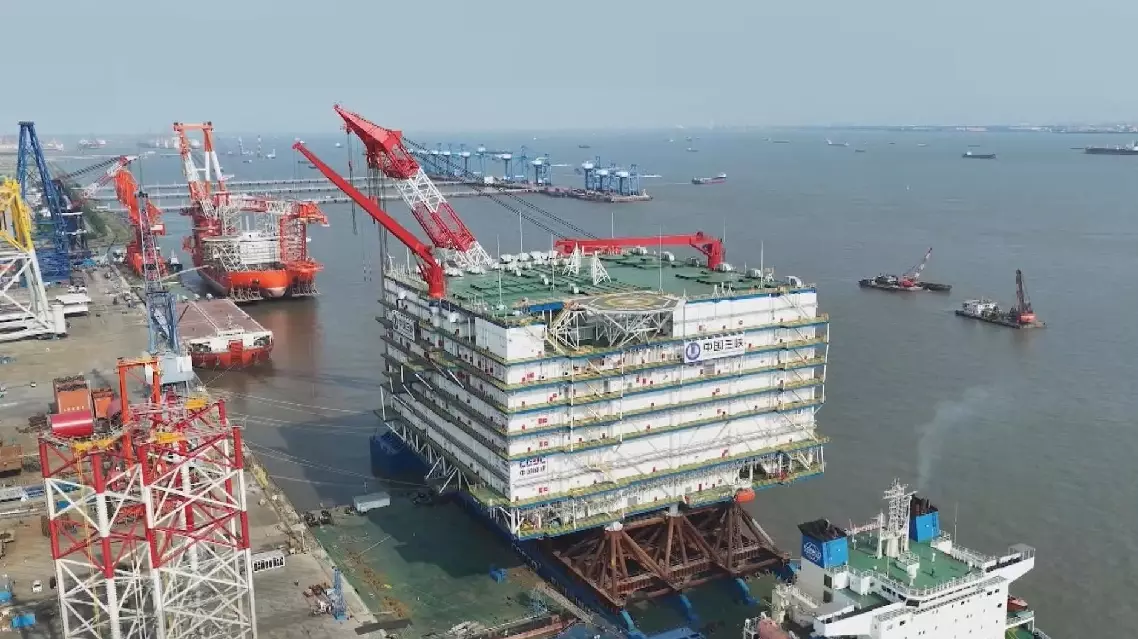
China launched the world's largest offshore converter station, "Heart of Offshore Wind", from Nantong, east China's Jiangsu Province, on Wednesday, marking the entry of the ultra-high voltage direct current transmission era for the country.
Weighing 25,000 tons, the platform set sail to an offshore wind farm in Yangjiang City in south China's Guangdong Province for installation.
An offshore converter station serves as the "heart" of an offshore wind farm, collecting and stepping up the alternating current generated by individual wind turbines, converting it to high-voltage direct current, and then transmitting it to the onshore grid via subsea cables.
With a length of 85.5 meters, a width of 82.5 meters, and a height of 44 meters, the station's floor area is equivalent to that of a standard football pitch, and its height is roughly equivalent to a 15-story residential building.
"This is the world's first flexible direct-current offshore converter station rated at plus or minus 500 kilovolts and 2,000 megawatts, adopting a domestically pioneering modular and compact) power transmission system. Under limited space and weight constraints, through compact design, the electrical energy from all wind turbines across both wind farms is fully collected into this single substation, where voltage step-up and power conversion are completed. This significantly reduces the overall project cost while also saving offshore area," said Yang Bin, manager of the "Heart of Offshore Wind" project for the Guangdong branch of China Three Gorges Corporation.
World's largest offshore converter station sets sail for installation
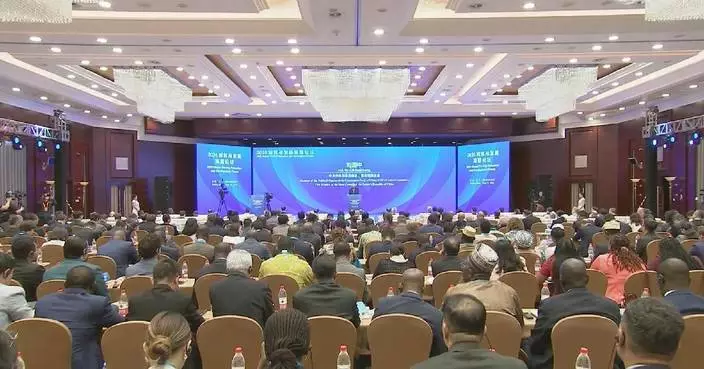
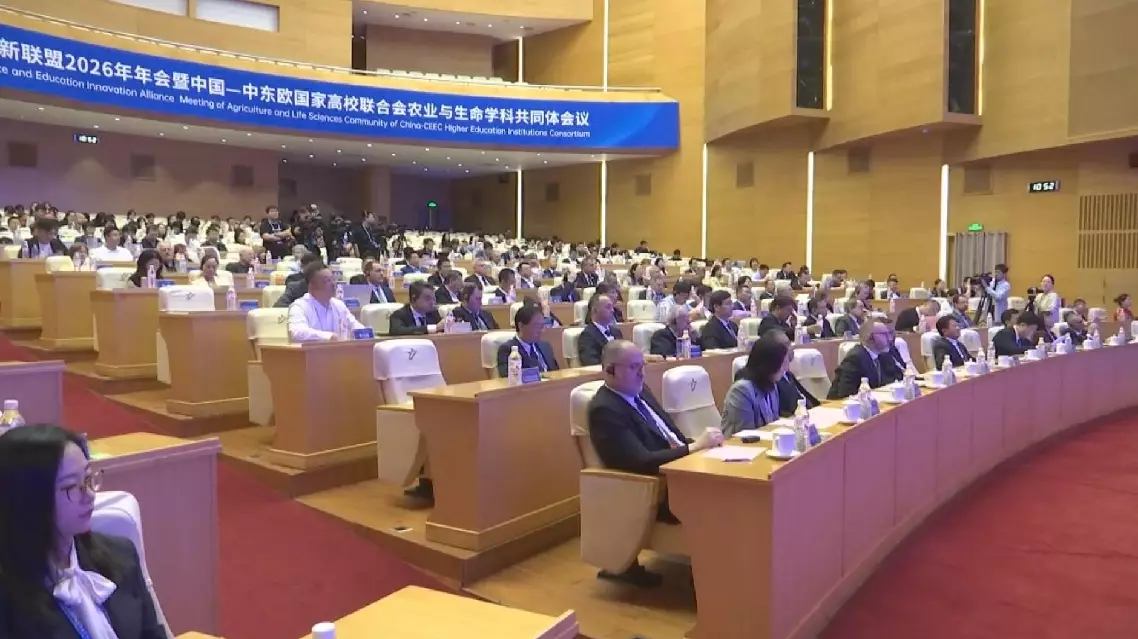
Delegates at the 7th Local Leaders' Meeting of China and Central and Eastern European Countries (CEEC) have said they are looking to deepen practical cooperation in sectors such as artificial intelligence, green energy, digital economy and smart industry.
The opening ceremony of the 7th China-CEEC Local Leaders' Meeting and 2026 Shandong International Friendship Cities Cooperation and Exchange Week were held in Jinan, east China's Shandong Province, on Tuesday. It brought together approximately 400 participants from 44 countries, including incumbent and former political leaders, provincial and municipal governors, diplomats, and representatives from sister cities, business councils and enterprises.
Specialty agricultural products from Europe, including Bulgarian rose oil, Slovak chocolate and Polish dairy products, were displayed at the meeting venue, alongside high-end equipment and intelligent manufacturing products from Shandong.
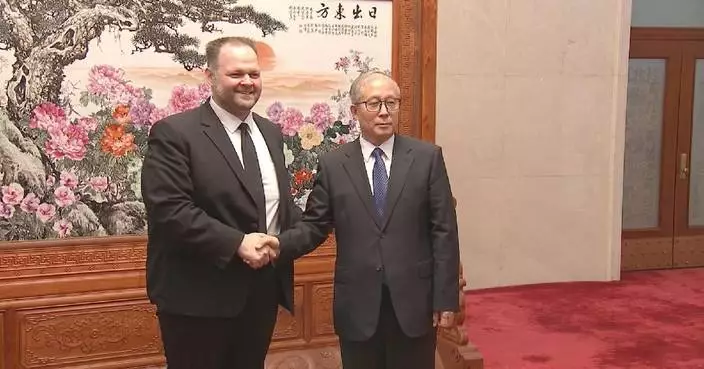
During the event, Greece's Ionian Islands region in the west of the country formalized friendly cooperation relations with Shandong and Savas Koulouris, the deputy governor of the Ionian Islands, was happy to show off a symbolic product at his region's booth.
"The most famous fruit is kumquat. Kumquat is someone from China, too many years ago, bring this fruit to Greece, and the only place it grow up it was Corfu," he said.
The event featured a range of activities including governor dialogues, business matchmaking, and discussions focused on cooperation in different sectors.
"As Confucius said, 'To establish oneself, one must also help others establish themselves; to succeed, one must also help others succeed.' This principle is especially important in today's world facing many economic and global challenges. Cooperation is no longer an option but a necessity," said Izet Mexhiti, Deputy Prime Minister and Minister of Intercommunity Relations of North Macedonia.
The China-CEEC cooperation mechanism was launched in 2012 as a cross-regional practical cooperation platform jointly initiated by China and CEEC and aimed at enhancing bilateral cooperation and promoting common development.
Local leaders from China, CEE nations seek deeper practical cooperation