LAKE OZARK, Mo. (AP) — An Associated Press investigation finds that private, for-profit residential treatment centers that care for adopted kids at exceptionally high rates are often funded by taxpayer dollars, but are subject to little oversight and few consequences after allegations of abuse and neglect.
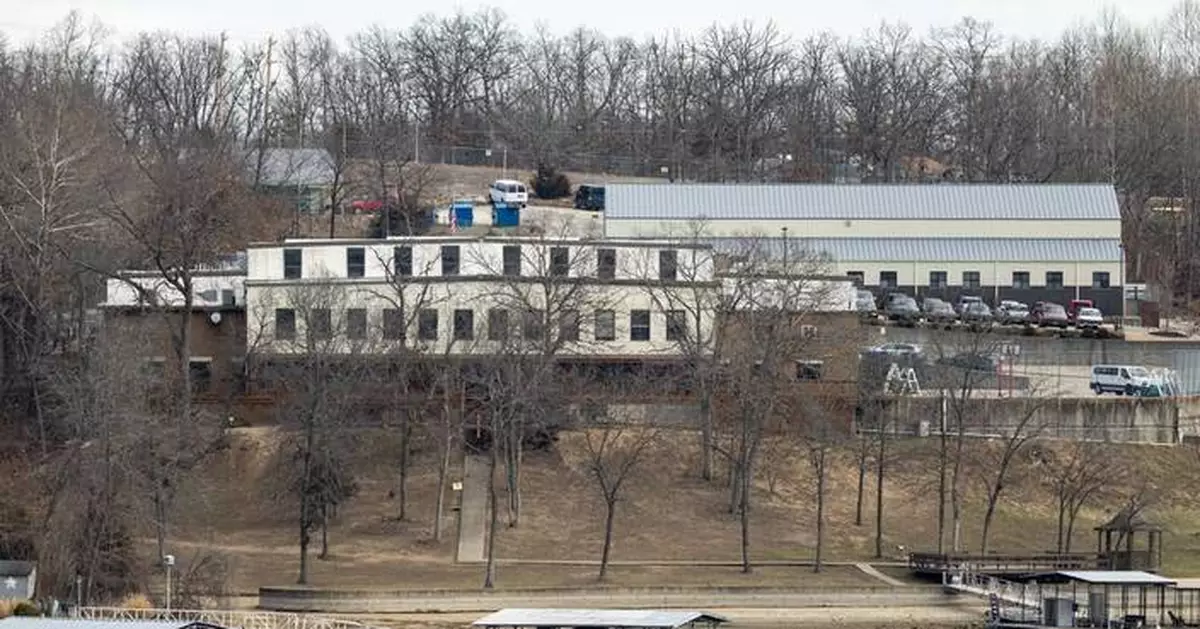
The investigation looks deeply at a facility in rural Missouri called Calo Programs, or Change Academy at Lake of the Ozarks, which costs as much as $20,000 a month and attracts families from all over the country, who send their children across state lines to the facility.
Calo promises relief for desperate parents whose adopted kids are struggling — a lakeside, summer camp-like academy where kids can heal by bonding with golden retrievers, where caring employees “create joy.”
But the AP report paints a more complicated and less idyllic picture.
Law enforcement is often called to Calo to investigate assaults or track down runaways. State agencies that pay to send kids there have questioned its operations, training and transparency. Parents and former employees say there is minimal treatment and barely any schooling, with only young, poorly trained staff to supervise the kids. Two mothers described it as something out of “Lord of the Flies.”
In emailed statements, Calo denied allegations of wrongdoing, and said student outcomes prove the strength of their approach: “For nearly two decades, Calo has provided innovative treatment and critical mental health services for young people who have been failed by the system. Over and over again, parents across the country have come to us in their moment of need, and we are proud of the track record we’ve established helping treat their children and return them to their families with the skills and tools they need to get ahead.”
The AP obtained troves of state data and documents through public records requests, and interviewed young adults who recently attended, parents who sent their children there, former employees and lawyers engaged in more than a dozen lawsuits against the company.
You can read the full story here. Here are the takeaways:
Hundreds of pages of Camden County Sheriff’s Office reports documenting calls to the facility from 2020 to the fall of 2025 show that children in Calo’s care have been alleged victims, witnesses and perpetrators.
There was the free-for-all last summer when escaping girls ran toward the woods and jumped into the lake to swim away, employees chasing them and returning them, only to see them escape again. (Calo said none of them were injured.)
Just before that, sheriff’s deputies wrote that two kids had reportedly gotten high on methamphetamine that a Calo employee brought in her purse. (Calo said the employee was fired and the substance was never confirmed to be meth.)
Not long before that, deputies called to Calo were told that staffers were outnumbered as teens “stormed” a room to attack another student. One boy climbed onto the roof and jumped, landed on rocks below and had to be airlifted to the hospital. (Calo said altercations happen among troubled kids, that the staff followed protocol in calling for help, and the boy who jumped sustained a sprained ankle.)
A mother from Illinois reported in 2024 that her daughter and another girl had been sexually assaulted by another child. She said Calo didn’t notify them, the state or law enforcement. She alleged Calo covered it up.
Her daughter’s stay there was paid for by the state of Illinois, through a little-known program called the Family Support Program run by the Illinois Department of Healthcare and Family Services that is designed to fund behavioral health care. She and other Illinois parents told AP that they believed the state had vetted the program because it paid for so many kids at Calo.
That agency and the Illinois State Board of Education both list Calo among approved residential treatment programs they fund. Over the last decade, the two Illinois agencies have spent more than $35 million sending kids to Calo, according to data obtained by AP.
Last year alone, the Board of Education paid more than $1.6 million to send 13 kids there for special education services; Healthcare and Family Services’ spent $1.2 million for 19 kids. Some families used money from both.
Bill Hayden said he also used Illinois education money to send his daughter, who was adopted from Russia, to Calo a decade ago. The retired doctor was among families that Calo asked be interviewed. Hayden told AP he believes Calo changed his daughter’s life.
“I felt that they were dedicated professionals who were trying to do their best with about the toughest group of kids you could probably ever house,” Hayden said.
Calo is part of the so-called troubled teen industry, a sprawling network of loosely regulated, for-profit residential centers, boarding schools and wilderness programs that have been quietly institutionalizing adopted children at extraordinarily high rates.
Calo opened in 2007 with 40 beds and has expanded greatly since, with a capacity of 144 this year. It specializes in adoption trauma and says 90% of its clients are adopted.
Calo was acquired around 2011 by a private equity firm led by the Stanford-graduate Alex Stavros, who over the next 13 years expanded the business by merging with other treatment centers to become the parent company Embark Behavioral Health. Stavros, who stepped down in 2024, did not respond for comment.
Stavros claims in his LinkedIn profile that he built Embark to 38 programs across 20 states and achieved a remarkable 40-fold increase in revenue, to $180 million. Under his leadership, Calo shifted its business model “from entirely private pay to majority third party reimbursed,” including both private health insurance and Medicaid, and a range of government programs.
In the thick of the Covid-19 pandemic, as residential programs struggled with enrollment, Embark called on dozens of industry people to talk business strategies. “DOING EPIC SH$T” was printed on the cover of the August 2020 “Embark Academy Sales & Marketing Conference” handbook. It featured a session on how to “overcome objections” with sales tactics to “build your client base and keep your pipelines full!”
In a session that touted admissions as a vital part of the treatment team, the handbook noted: “The admissions person sells hope when the family is at their lowest and most hopeless, scary, and vulnerable time.”
The company defends its marketing efforts aimed at families in distress.
“It is a common misconception that for-profit entities are more expensive or less ethical than non-profit organizations,” Calo said in a statement. “Reaching them through thoughtful outreach and advertising helps break down the mental health stigma that keeps people from seeking treatment …”
Some officials have expressed skepticism about Calo’s business model.
Stacy Roberts, who runs the local juvenile detention center, said his agency is frustrated by Calo and processes as many as a dozen cases each year involving Calo kids who live out of state.
Many families have decried the conditions at Calo as jail-like. Roberts rejects that comparison — because traditional juvenile detention centers like his are held to a higher standard, he said. Unlike Calo, Roberts answers to the public, a judge and the juvenile justice system, which monitors children’s stays within his facility.
“It’s a business,” Roberts said. “They’re not doing this because they want to help. They’re making money off these kids.”

AP Illustration / Marshall Ritzel
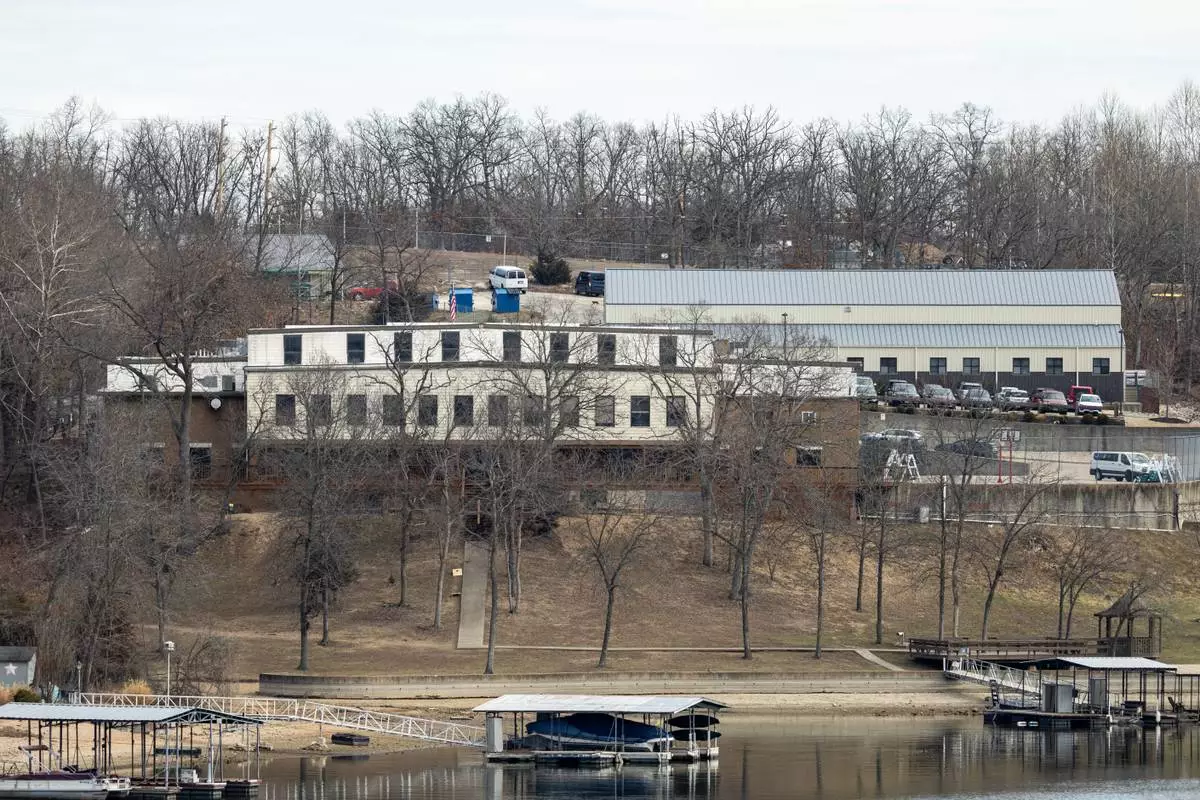
The Calo Programs Residential Treatment Center is seen on Feb. 25, 2026, in Lake Ozark, Mo. (AP Photo/Austin Johnson)
A federal judge has temporarily blocked any payouts from the Trump administration’s $1.8 billion “anti-weaponization” settlement fund.
Meanwhile, former Attorney General Pam Bondi is testifying before House lawmakers investigating Jeffrey Epstein’s sexual abuse cases, a long-awaited appearance that brings fresh scrutiny of the administration’s botched release of the Epstein case files.
Here's the latest:
A federal judge has temporarily blocked Trump’s administration from paying any claims through a new $1.776 billion settlement fund for Trump allies who believe they were victims of a weaponized government.
U.S. District Judge Leonie Brinkema in Alexandria, Virginia, on Friday also barred the government from moving forward with the fund’s creation while litigation is pending to challenge it.
The judge scheduled a June 12 hearing for arguments on whether to extend the order blocking payouts from an “Anti-Weaponization Fund,” which the government created to resolve Trump’s lawsuit against the Internal Revenue Service over the leak of his tax returns.
The fund has created a fierce backlash since it was announced last week, with even Republicans pressing acting Attorney General Todd Blanche over the eligibility considerations and the possibility that even violent rioters at the U.S. Capitol on Jan. 6, 2021, would be free to seek compensation.
▶ Read more
The former attorney general is appearing before House lawmakers as they investigate how the government has handled the investigations into Jeffrey Epstein.
Bondi was ousted as attorney general last month, but her in her previous testimony to Congress she has been defiant in the face of lawmakers’ questions about how the Department of Justice handled the release of case files on Epstein. She is also accompanied today by Department of Justice officials — an arrangement Democrats have criticized.
Several survivors of Epstein’s abuse also appeared outside the House office room where the interview is happening behind closed doors. They pressed the committee chair, Republican Rep. James Comer, to closely question Bondi.
“We want justice for the survivors, we do,” Comer told them.
Democrats may be in a more celebratory mood than usual as they gather Friday in South Carolina, a state led almost entirely by Republicans.
The party is holding events days after the GOP-led state Senate shot down an effort backed by President Donald Trump to redraw House district lines to help Republicans this fall. That move was aimed at ousting longtime Rep. Jim Clyburn, the state’s lone congressional Democrat and a party powerbroker who’s been in office since 1993.
Friday’s gatherings kick off with the Blue Palmetto Dinner, an annual party fundraiser that typically showcases potential presidential contenders and the party’s national figures. Kentucky Gov. Andy Beshear will be the headliner.
▶ Read more
Former Attorney General Pam Bondi is testifying before House lawmakers investigating Jeffrey Epstein’s sexual abuse cases, a long-awaited appearance that brings fresh scrutiny of the administration’s botched release of the Epstein case files.
Bondi was defiant in previous public testimony when she was confronted by lawmakers about the Epstein investigation. It’s unclear whether she’ll bring the same approach Friday, now that she is no longer in charge of the Justice Department. The session will be held behind closed doors.
The transcribed interview will give lawmakers a chance to dig for information on the Trump administration’s handling of the Epstein files and other related matters, including the prison sentence of his former girlfriend and confidant, Ghislaine Maxwell. The Justice Department moved Maxwell to a prison camp in Texas last August.
“I think she absolutely could clear up many missing pieces if she wanted to,” said Rep. Yassamin Ansari, an Arizona Democrat on the House Oversight Committee. “Now it’s a question of whether or not she is willing to be transparent.”
▶ Read more
A federal judge has declined to halt Trump’s executive order creating a federal voter list and limiting mail voting, clearing the way for potential sweeping changes in how American elections are run shortly before this year’s midterm elections.
U.S. District Judge Carl Nichols, a Trump appointee in Washington, late Wednesday rejected the request by Democrats and civil rights groups that had argued Trump’s order would likely be found unconstitutional because the states and Congress, not the president, have the power to set election rules. Nichols agreed with the Republican Trump administration’s contention that it was too early to block the order because it has yet to be implemented.
Nichols’ ruling leaves the door open for further challenges when the Trump administration moves to implement the president’s directive. A separate lawsuit seeking to block the executive order is underway in Boston. No matter how rapidly the administration acts, no voting changes are expected during primary elections, which continue into next month.
▶ Read more
Treasury Secretary Scott Bessent said Thursday that his department has prepared the design for a $250 bill featuring Trump, anticipating the passage of stalled legislation in Congress to put the president on a new denomination of legal tender.
Bessent said at the White House that authorizing the new currency will be up to lawmakers on Capitol Hill, but that “we’ve created the bill” because “we have to be prepared.”
The secretary downplayed the idea that the administration is pushing the matter, despite Trump’s penchant for infusing his name and likeness across the nation’s capital and into the observances of the 250th anniversary of the Declaration of Independence. Yet he also insisted there is nothing inappropriate about Trump’s visage being part of the seminal national celebration.
▶ Read more
The top federal prosecutor in Chicago denied Thursday evening that his office had opened an investigation into E. Jean Carroll, the longtime advice columnist who has said Trump sexually assaulted her 30 years ago, hours after multiple news organizations reported that the Justice Department was investigating whether she had lied during the course of civil litigation against Trump.
The Associated Press and other news organizations, citing anonymous sources, reported that the federal prosecutors’ office in Chicago had opened an investigation into Carroll.
But Andrew Boutros, the U.S. attorney for the Northern District of Illinois, issued a statement roughly 24 hours after the first report was published saying that his office “has not opened — and has never opened — a criminal investigation into E. Jean Carroll.”
A person familiar with the matter, who spoke on condition of anonymity to discuss an ongoing investigation, initially told the AP on Thursday morning that investigators were focused on Carroll but later clarified that the actual focus was on a nonprofit that had helped fund her case.
▶ Read more
U.S. and Iranian negotiators reached a tentative agreement Thursday to extend the ceasefire in the 3-month-old war by 60 days and start a new round of talks on Iran’s nuclear program, according to a U.S. official familiar with the matter.
Iran did not immediately confirm any deal. Vice President JD Vance on Thursday evening confirmed there was a tentative agreement, but said it was unclear if Trump would approve it.
“It’s hard to say exactly when or if the president’s going to sign,” Vance told reporters.
He added: “We’re going back and forth on a couple of language points.”
The emerging memorandum of understanding came as the fragile ceasefire in the war between the U.S. and Iran appeared to be wavering. The latest flare-up in fighting happened less than a day earlier, when Kuwait intercepted missiles fired from Iran, according to U.S. Central Command.
▶ Read more
— Aamer Madhani, Jon Gambrell, Michelle L. Price and Sam Metz

Equipment is seen being constructed on the South Lawn of the White House, Thursday, May 28, 2026, in Washington for a future UFC mixed martial arts fight to be held on June 14 as part of America 250 celebrations. (AP Photo/Manuel Balce Ceneta)

President Donald Trump speaks during a Cabinet meeting at the White House, Wednesday, May 27, 2026, in Washington. (AP Photo/Jacquelyn Martin)

President Donald Trump departs Walter Reed National Military Medical Center, Tuesday, May 26, 2026, in Bethesda, Md. (AP Photo/Alex Brandon)