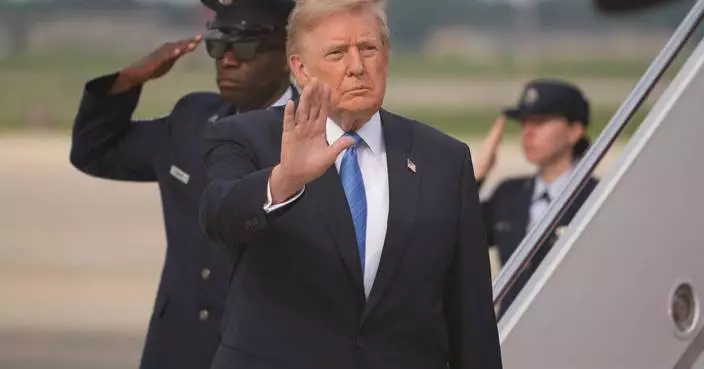
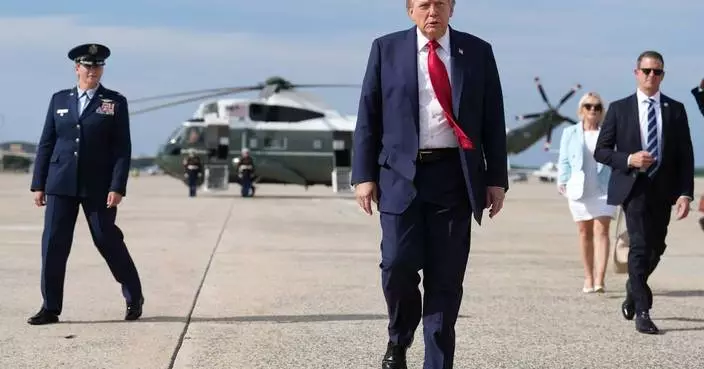
WASHINGTON (AP) — President Donald Trump on Friday gave his endorsement to a January study by the Department of Health and Human Services that calls for cutting the number of vaccines recommended for every American child.
An executive order from Trump directs federal agencies to align their policies behind the study, which recommended an overhaul long called for by Health Secretary Robert F. Kennedy Jr. The study found that the United States recommends more childhood vaccines than many peer nations.
The Trump administration previously moved to narrow the number of recommended childhood vaccines in response to the report, but the move was blocked by a federal judge in Massachusetts. The administration is appealing the decision.
The study recommends vaccinating all children against 11 diseases. Several others would be recommended only for high-risk groups or when doctors recommend them in what’s called “shared decision-making.” That includes vaccines for flu, rotavirus, hepatitis A, hepatitis B, some forms of meningitis and RSV.
Trump's order adds weight behind the study at a time when the administration had appeared to be trying to shift focus away from Kennedy's more contentious vaccine policies and toward more mainstream topics like healthy eating.
The order directs the Centers for Disease Control and Prevention to review the study and “take any appropriate steps” to update its vaccine recommendations. It says the CDC should “provide maximum flexibility to parents and doctors" and directs agencies to make sure all actions, regulations and funding are aligned with the study.
The order adds that any changes should ensure that Americans retain their current access to vaccines.
States, not the federal government, have the authority to require vaccinations for schoolchildren. While CDC requirements often influence those state regulations, some states have begun creating their own alliances to counter the Trump administration’s guidance on vaccines.
Trump directed HHS to carry out the study in December.
Kennedy is a longtime activist against vaccines and has sought ways to inject his skepticism about the shots into national guidance. Last year, he announced the CDC would no longer recommend COVID-19 vaccines for healthy children and pregnant women, a move questions by public health experts who saw no new data to justify the change.
Last June, he fired a 17-member CDC vaccine advisory committee and later installed several of his own replacements, including multiple vaccine skeptics.
The January report found that vaccine recommendations for American children had increased in recent decades. It also highlighted countries where no vaccines are required to attend school.
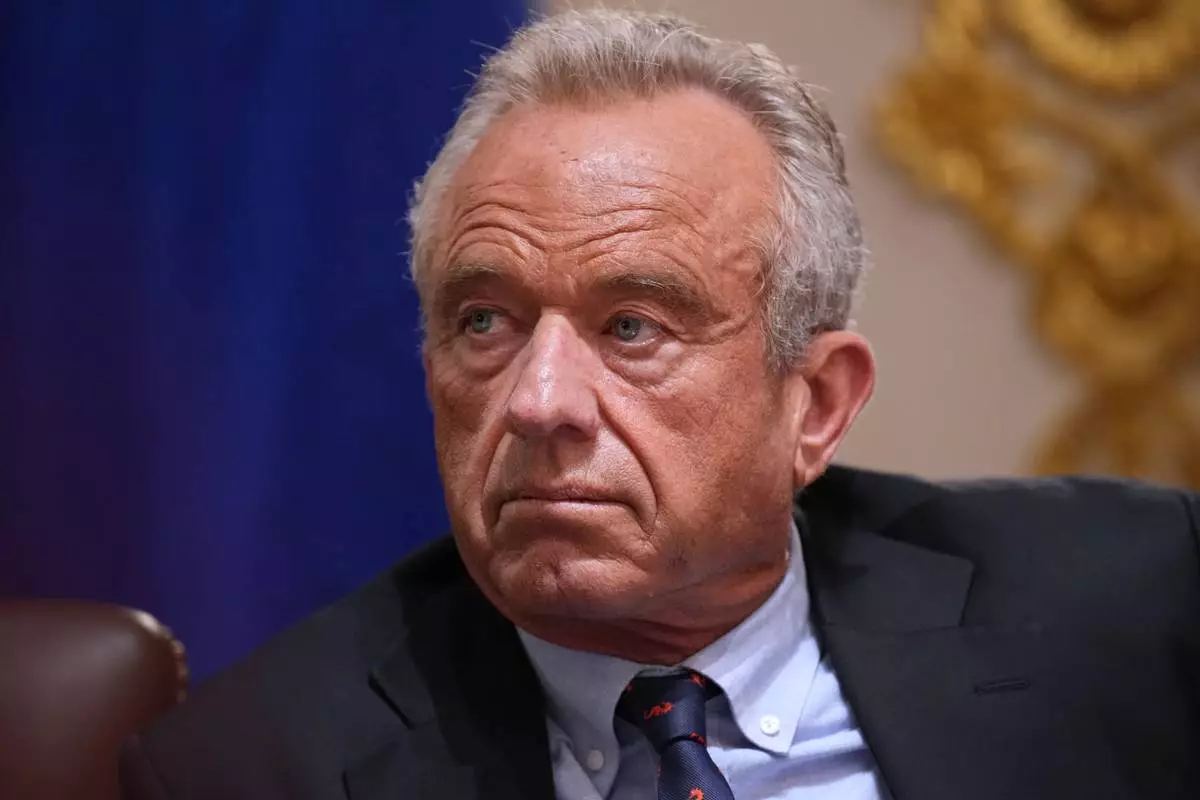
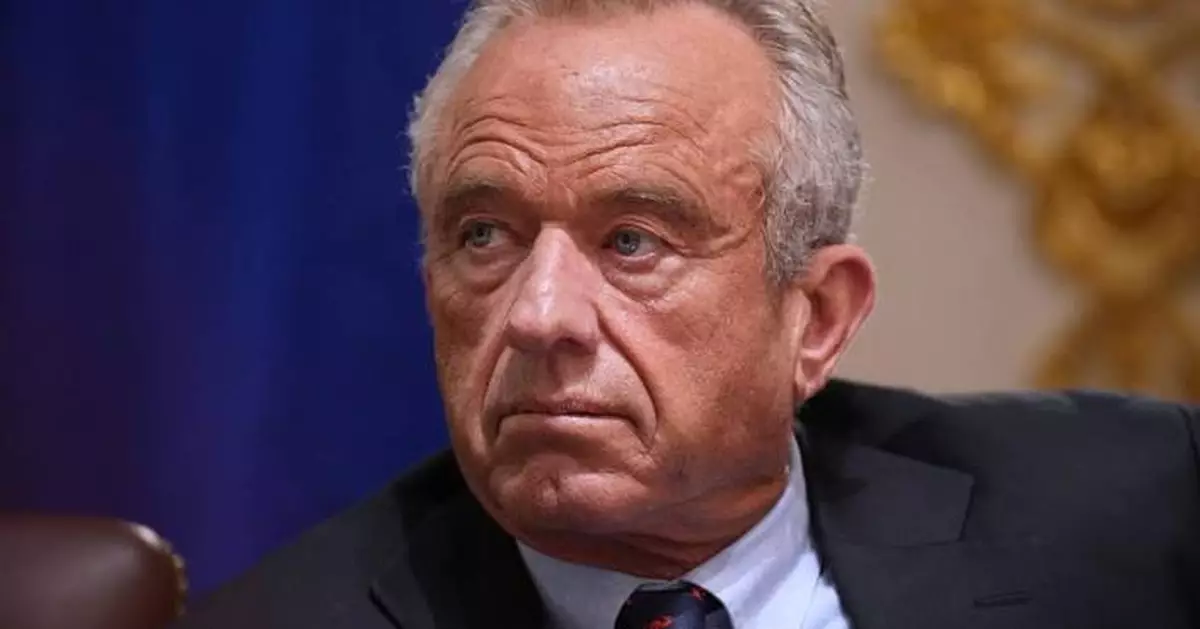
Secretary of Health and Human Services Robert F. Kennedy Jr., listens during a Cabinet meeting at the White House, Wednesday, May 27, 2026, in Washington. (AP Photo/Jacquelyn Martin)
OTTAWA (AP) — Canada’s public broadcaster said Friday it is making an exception to its policy of not labeling specific attacks as terrorism for the 9/11 attacks after coming under fire over a memo restating it.
Like other news outlets including The Associated Press, CBC/Radio-Canada's standards normally don't allow reporters to describe events as terrorist attacks unless they are quoting someone else's words.
But the director of the FBI, the U.S. ambassador to Canada, Republican members of Congress and Canada's Conservative party all criticized the CBC following media reports about a memo reminding journalists of the policy sent to staff ahead of the 25th anniversary of the Sept. 11 attacks.
Basem Boshra, senior director of journalistic standards and public trust, said in a blog post late Friday afternoon that CBC would make an exception to the rule for the 9/11 attacks.
He said a “leaked excerpt” of its language policy had raised questions that the public broadcaster must now answer.
“We are doing so to remove what has unfortunately (and unintentionally) become an impediment to clarity and public understanding,” he said.
“At the same time, as new acts of politically or ideologically motivated violence occur in our world, we will continue to follow the journalistically sound practice of attributing causes and motivations to officials and experts.”
Canada's Culture Minister Marc Miller praised the move on social media, calling it a “welcome change to what was a piece of pedantic and foolish guidance that caused legitimate anger.”
Boshra’s post was published less than an hour after Public Safety Minister Gary Anandasangaree issued a press release saying the Canadian government “has always recognized 9/11 as the deadliest terrorist attack in history, and we unequivocally condemn terrorism in all its forms.”
In the post, Boshra said CBC News “has never said what happened on Sept. 11, 2001, was not terrorism, as some commentators have stated in recent days. We have reported fully and accurately on the reasons and motivations for those attacks as determined by police, governments and an independent commission. We’ve just made sure to do it with attribution.”
The fracas began after Toronto Sun columnist Warren Kinsella reported on a memo, in which he said CBC News staff were told “do not refer to the Sept. 11 attacks as terrorist attacks.”
That led to a wave of criticism in the United States.
“Any agency in Canada that doesn’t publicly reject this bastardization of history, and an insult to the souls lost during our largest terrorist attack in U.S. history will no longer have friend in this FBI,” FBI Director Kash Patel said an online post late Thursday.
A group of Republican representatives in Congress also posted earlier in the day: “What possible motive could there be for sanitizing the worst terrorist attack on American soil? Care to explain, @Canada?”
On Friday, U.S. Ambassador to Canada Pete Hoekstra weighed in, sharing Patel’s post and saying the FBI has been responsible or instrumental in disrupting terrorist and violent criminal organizations operating in Canada multiple times this year.
Hoekstra added: “Failure to recognize and confront radical and terrorist ideologies significantly endangers our efforts to establish and harmonize a shared national and economic security partnership.”
CBC spokesperson Kerry Kelly told the The Canadian Press that it was the public broadcaster’s practice to use “extreme caution” in using the words terrorism or terrorist.
She said the memo “was a reminder of the long-standing practice that favors the use of these terms with attribution in our reporting, a practice shared by many of the world’s top journalistic organizations.” Kelly did not provide a copy of the memo.
She pointed to a 2023 blog post in which CBC editor-in-chief Brodie Fenlon wrote that the outlet often uses the word terrorist, but with attribution.
“Attribution of the word ‘terrorist’ has been our policy for decades — mirrored by other news organizations such as the BBC, AP, AFP and Reuters, among many others,” Fenlon wrote.

FILE - The Canadian Broadcasting Corporation logo is projected onto a screen on May 29, 2019, in Toronto. (Tijana Martin/The Canadian Press via AP,File)