EL SEGUNDO, Calif. (AP) — At 0-7, the Los Angeles Chargers are nowhere near where they thought they would be this season.
Rookie edge rusher Akheem Mesidor might have best reflected the chasm between expectations and reality for the reeling club as he struggled to sum up what went wrong in a 24-9 loss to the Rams on Sunday.
“I don’t know,” Mesidor said. “I don’t know what to say. Everybody in this locker room wants to win, and we’re doing what it takes every week, the preparation to do so. But I don’t know. I wouldn’t know how to explain what happened.”
As the 22nd pick in the NFL draft, Mesidor was brought in to provide immediate help to a team with Super Bowl aspirations. That was nothing new after he dealt with championship expectations during his last two seasons at Miami.
Mesidor had played in nothing but meaningful games for two full years with the Hurricanes, who lost their finale in 2024 to miss out on a berth in the College Football Playoff before reaching the national championship game last season.
Now, Mesidor and the Chargers would need to close the season with an incredible 10-game winning streak to have much hope of reaching the playoffs.
“Just it’s all mental, really,” Mesidor said of his approach. “You just got to come to work and you just try to be happy, keep a positive mindset. That’s all you really can do, can control is your mindset.”
Even as he said the right things, Mesidor seemed shell-shocked. That same disbelief was everywhere in the Chargers' usual SoFi Stadium setup despite being the visiting team against the Rams, and it extends well beyond that space.
There has been no indication the front office will go into fire-sale mode to move players on expiring contracts who could offer value to contending teams, with 35-year-old edge rusher Khalil Mack being the most obvious example.
The plan appears to be for coach Jim Harbaugh's team to try and turn things around and hope for something that has never happened in NFL history. But for a team and organization seemingly stuck in an unending daze, hope seems to be all the Chargers have left.
The defense continues to show progress, particularly in the first half before the lack of offensive support caught up to them. They held the Rams without a first down on five straight possessions to start the game, allowing 14 net yards, and yielding just a field goal after Justin Herbert’s first interception handed the Rams the ball in the red zone.
Coming off a bye week with the chance to self-scout and simplify — or change their scheme or play-caller — the Chargers had arguably their most disappointing offensive performance of the season against the Rams. The Bolts have now gone 27 possessions without a touchdown across nine quarters.
Practice squad CB Isas Waxter led the team with six tackles. The undrafted rookie from Villanova looks to be a real player, and not just a body helping the secondary get through its injury crisis. Waxter was especially impressive in twice stopping Rams star wideout Puka Nacua for a loss on screen passes.
The running back trio of Kimani Vidal, Omarion Hampton and Keaton Mitchell combined for 49 yards on 21 carries (2.3 yards per attempt), and the constant shuffling seems to be doing none of them any favors. Harbaugh indicated Monday it might make sense to reduce the rotation and give somebody the opportunity to build a rhythm.
CB Deane Leonard is still in the concussion protocol. Rookie WR Brenen Thompson (quad/hamstring) is unlikely to practice this week. TE David Njoku will likely return to practice this week; he is on injured reserve after sustaining a leg injury against the Raiders on Sept. 20.
10 — The Chargers have lost 10 straight games dating to last season, counting their AFC wild-card loss to the New England Patriots. That's the franchise’s longest skid since dropping 11 straight to start the disastrous 2000 campaign, when the Chargers went 1-15 under coach Mike Riley in Harbaugh’s last season as a player.
The Chargers host one of the runners-up for the title of most disappointing team in football, the 2-5 Houston Texans, on Sunday.
See AP’s full NFL coverage here
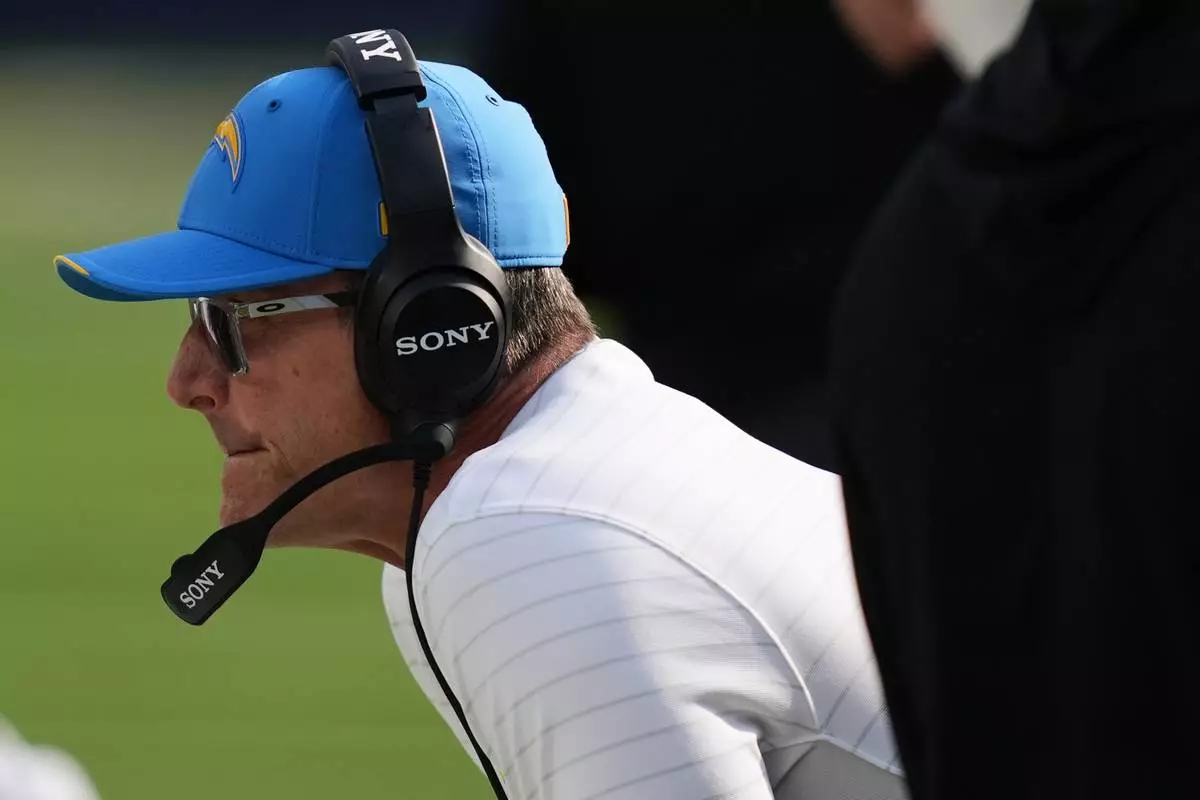
Los Angeles Chargers head coach Jim Harbaugh watches from the sideline during the first half of an NFL football game against the Los Angeles Rams in Inglewood, Calif., Sunday, Nov. 1, 2026. (AP Photo/Gregory Bull)
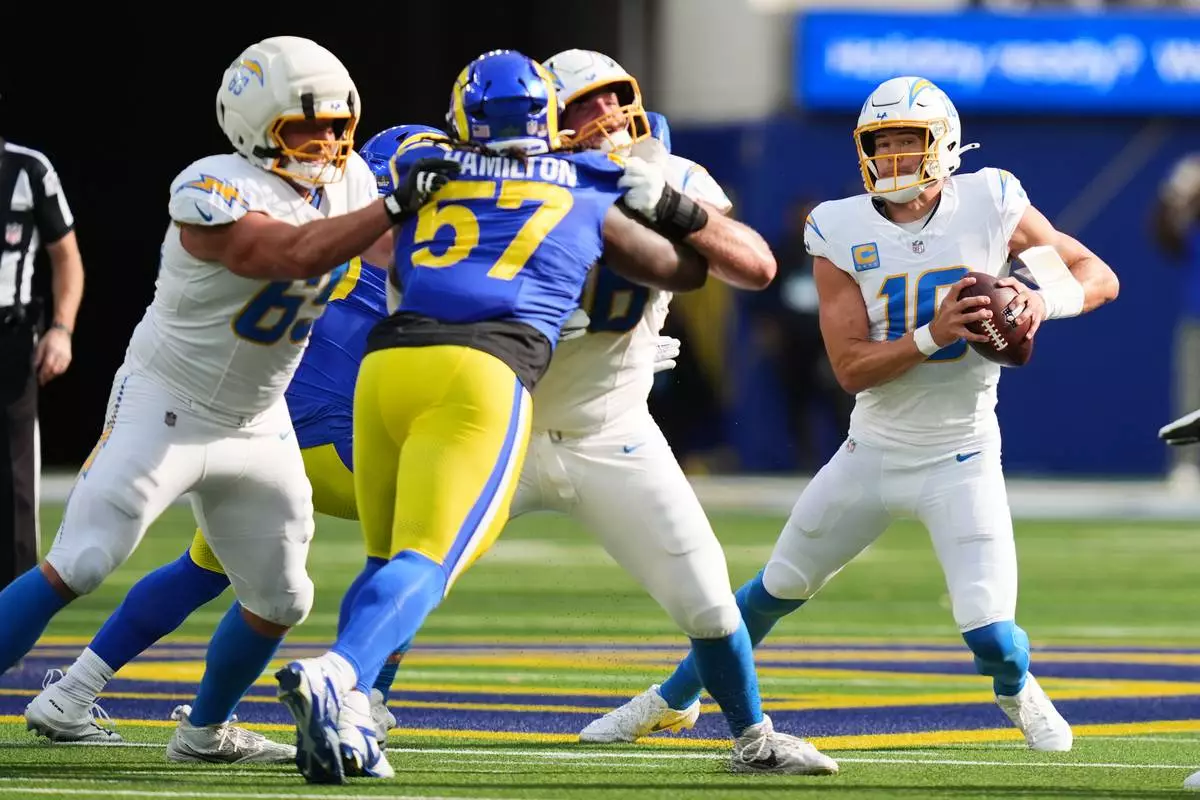
Los Angeles Chargers quarterback Justin Herbert (10) scrambles out of the pocket during the first half of an NFL football game against the Los Angeles Rams in Inglewood, Calif., Sunday, Nov. 1, 2026. (AP Photo/Gregory Bull)
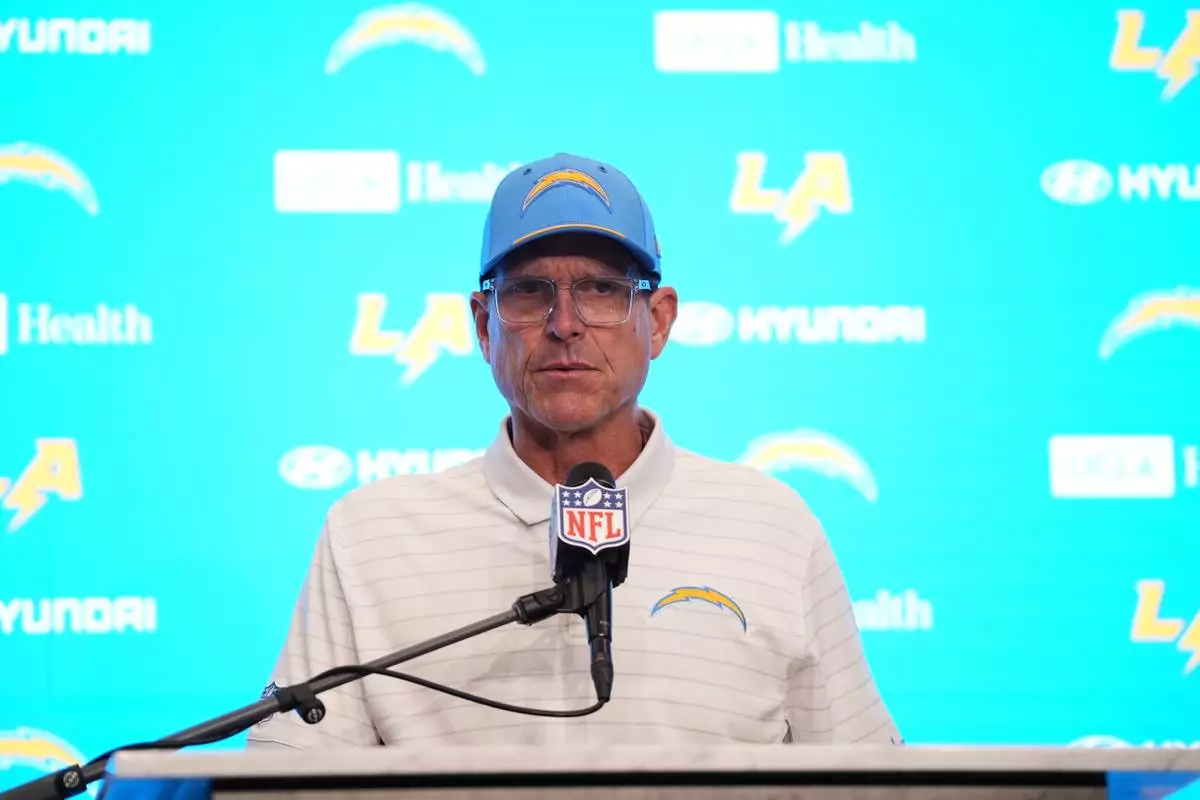
Los Angeles Chargers head coach Jim Harbaugh answers questions after an NFL football game against the Los Angeles Rams in Inglewood, Calif., Sunday, Nov. 1, 2026. (AP Photo/Gregory Bull)
WASHINGTON (AP) — The Supreme Court on Monday rejected the Trump administration’s push to force California to set aside thousands of ballots from people the federal government claims are noncitizens, a decision that came hours before the final day of voting in the pivotal midterm elections.
The high court refused to immediately intervene in a case involving 20,000 people the Republican administration flagged as likely noncitizens on the largely Democratic state’s voter rolls.
The swift rejection capped a string of losses for the president’s effort to intervene in the election before the counting of ballots to decide who controls Congress in the last two years of his second term. No justices publicly dissented.
“The Court rejected Trump’s emergency request without even asking the other side to respond,” California Gov. Gavin Newsom, a Democrat, posted on X. “Democracy won.”
Several lower courts also rejected the Justice Department's push to set aside the challenged California ballots until the voters’ citizenship status could be verified. And in a case that revolved around the future certification of Alaska's election results, a judge did not even hold a hearing before dismissing a Trump-ordered suit to prevent a possible Democratic Senate win.
The high court did not detail its reasoning in the California ballot case, as is common in emergency decisions. The justices previously rejected Trump’s push to restrict mail ballots around the country in September, even though the justices have sided with his administration in a series of other emergency docket appeals.
California Attorney General Rob Bonta, also a Democrat, noted the administration's legal losing streak in a statement.
“Courts have now rejected the Trump Administration’s attempts to interfere in California’s elections not once, not twice, not three times, but four times — from the district court to the Ninth Circuit to the U.S. Supreme Court,” Bonta said. “This latest decision should put an end to the Administration’s attempt to disrupt California’s elections through emergency court orders."
The Republican administration has prioritized identifying noncitizen voters this year, despite it being a rare problem. California officials said the administration's list appeared to be filled with errors and said setting the ballots aside could effectively disenfranchise legal voters.
Also on Monday in Washington, another federal judge ruled against the administration’s efforts to make last-minute demands of California election officials, finding they violated the U.S. Constitution.
“The Executive Branch has likely violated the Constitution’s Elections Clause, which commits authority over election rules to the states and Congress alone,” Chief Judge James Boasberg wrote.
Later Monday, ruling in a separate case, Boasberg declined to issue yet another order against the administration to cease the demands. He ruled that Democratic groups that sued did not have legal standing and that the issue already had been dealt with by states and the courts.
The administration, for its part, said segregating the ballots was a modest request that would eventually allow legal votes to still be counted.
Its push has faced not only the remarkable series of losses in court, but criticism for waiting until a few weeks before the election to make its demands of California election officials with a list that even the Department of Justice admits is not entirely reliable.
During a hearing over whether to lift her order forbidding the administration from threatening to prosecute election workers who let potentially illegal voters cast ballots, U.S. District Court Judge Trina Thompson drilled down on reports of widespread inaccuracies in the Justice Department's data.
“Would you agree there's a high error rate?” the San Francisco-based judge asked Kenneth Kao, a Justice Department attorney.
“That's a fair statement,” Kao said. “That's why we ask for the registrars' aid in verifying these are all valid voters.”
At the same time, Bill Essayli, the federal prosecutor running the Justice Department's Los Angeles office, said at a news conference he was highly confident the people on the list were not entitled to vote.
“This isn’t speculation. This isn’t a theory,” Essayli said, later conceding there may be errors on the list.
Voting has been underway in California, a largely Democratic state, since early October. Each of the state’s roughly 23 million registered voters is mailed a ballot, and more than 6 million have already been returned, according to Associated Press elections data.
“The DOJ’s baseless challenge was yet another attempt at federal overreach and voter suppression,” Kristen Clarke, the NAACP's general counsel, said in a statement in reaction to the Supreme Court decision. "We will not stand for the Trump Administration’s bullying campaign, and we will continue to use every tool at our disposal to ensure the American people’s voices are not silenced.”
California election officials have said that finding and setting aside the challenged ballots now would be logistically impossible.
Lower courts swiftly sided with the state, with a district judge warning last week that segregating ballots would “wreak havoc” on the midterm elections and erode trust in the democratic process.
“If the Executive can discount votes and threaten an ongoing election due to unproven allegations, then our democracy is in danger,” wrote U.S. District Judge David O. Carter, who was nominated by President Bill Clinton, a Democrat.
A 2-1 appeals court panel upheld his order, with one judge appointed by Trump and another appointed by President Joe Biden, a Democrat, voting in favor. The third judge on the panel, also appointed by Trump, argued in a dissent that California’s unwillingness to separate the ballots encourages the “violation of federal law.”
Associated Press writers Sophie Austin in Sacramento, California, and Safiyah Riddle in Los Angeles contributed to this report.
Follow the AP's coverage of the U.S. Supreme Court at https://apnews.com/hub/us-supreme-court.
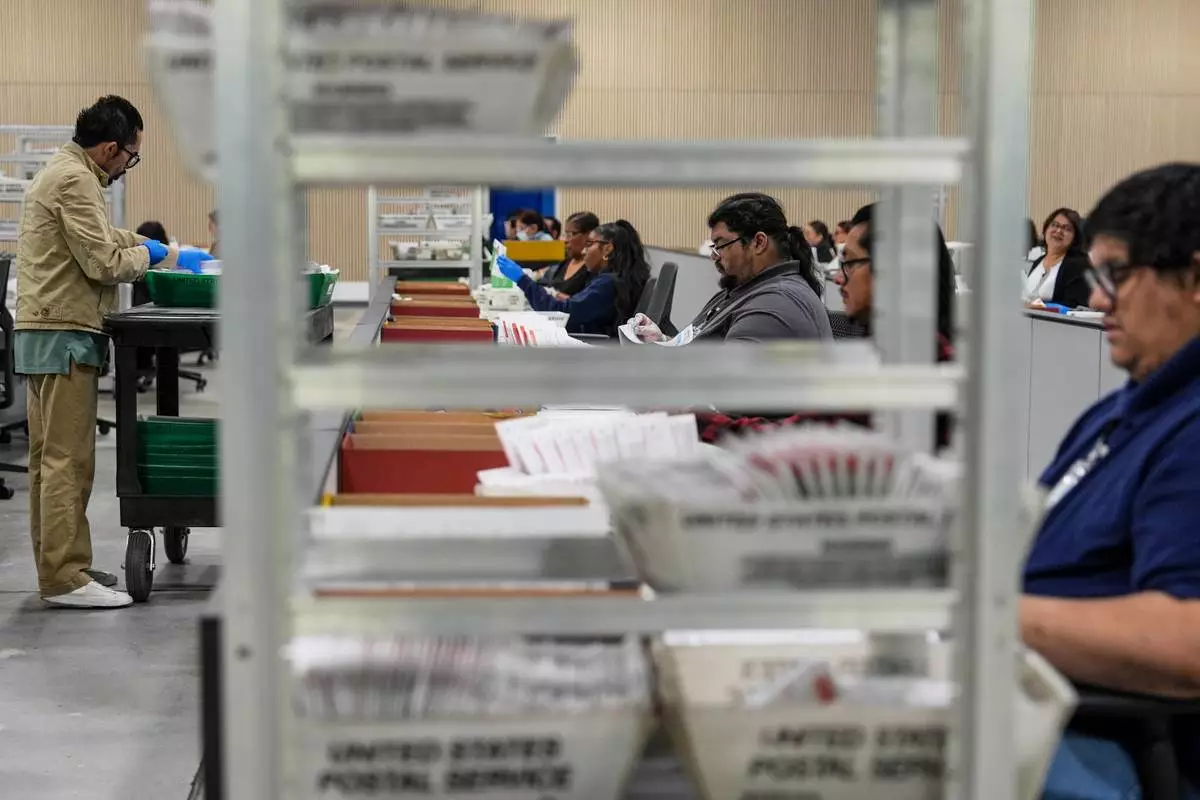
FILE - Ballots are inspected the day after California's primary election at the Los Angeles County Ballot Processing Center, June 3, 2026, in City of Industry, Calif. (AP Photo/Jae C. Hong, File)