Delegates from around 40 countries gathered in east China's Shandong Province this week for the China-CEEC Local Leaders' Meeting to explore how local cooperation can transform dialogue into real-world partnerships.
From May 25 to 29, the forum brought together cities, universities and businesses from China, Central and Eastern European Countries (CEEC), and other regions. While high-level diplomacy often dominates headlines, organizers emphasized that local ties are frequently tested through business people-to-people exchanges and practical cooperation that directly impacts daily life.
Arpad Branyi, regional director of Pannon Trade Kft. and a second-generation Hungarian businessman, spoke at the forum about agricultural cooperation. On the sidelines, he highlighted food safety as a key area for enhanced cooperation.
"There is a huge opportunity for researchers, academics, plant breeders, and looking for all those connections working together to answer all these questions regarding climate change, regarding increasing the population, the food safety," said Branyi.
Bilateral agricultural trade between China and CEEC grew at an average annual rate of 8.8 percent from 2012 to 2025. Yet collaboration extends beyond commerce. Professor Nenad Magazin, dean of the Faculty of Agriculture at the University of Novi Sad in Serbia, has visited Shandong multiple times as his faculty maintains close ties with Shandong Agricultural University.
"We want to establish a joint laboratory that will make available different technologies from breeding new resistant cultivars to fighting diseases," the professor said.
Beyond panel discussions, delegates visited Shandong's Linyi and Jinan Cities to assess business opportunities firsthand. Overseas mayors examined products they might introduce to their home markets.
"Yesterday we had an important experience with a large company that can provide us with technology applied to agriculture," said Mario Gonzalez, mayor of Padre Las Casas, Chile.
Officials from the Chilean city aimed to bring Chinese technology home, particularly in security and agriculture.
"We have certain goals, like in my case, agriculture is very important. So all the technology and greenhouses, AI systems to work with sensors inside the greenhouses, all the robotics is able to work the soil," said Gabriel Mercado Elgueta, director of local development for the Municipality of Padre Las Casas.
Much of the cooperation took shape through direct engagements and site visits rather than formal declarations, aiming to form an expanding network of local connections across sectors and borders.
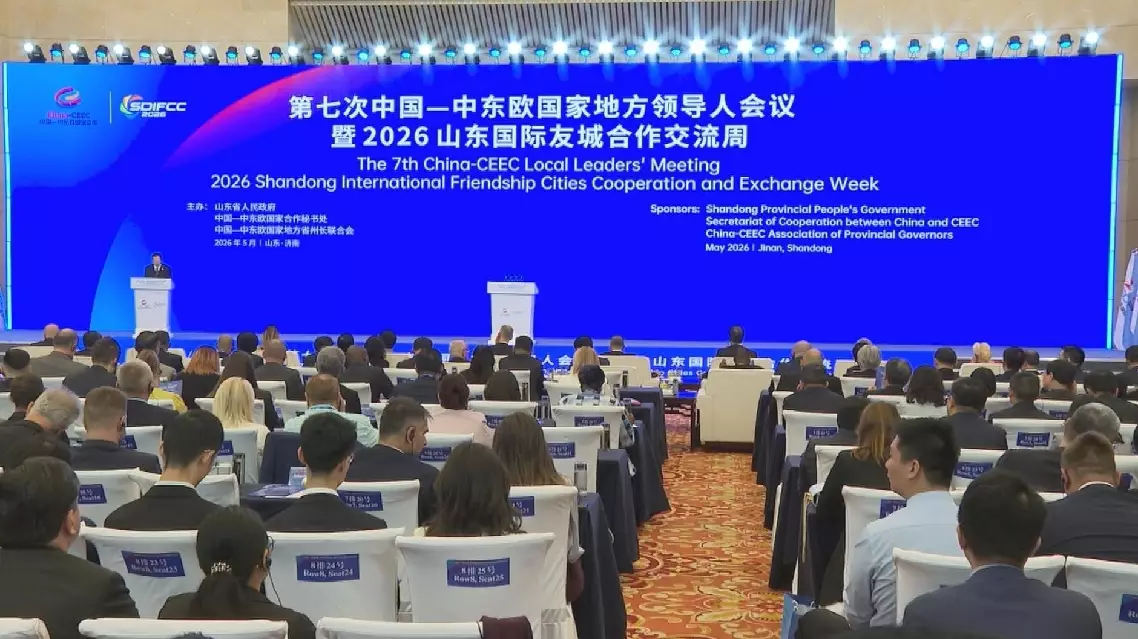
Delegates explore how local cooperation takes shape on ground at China-CEEC meeting