Japan's ethylene plant operating rate fell to its lowest level on record in April, as shipping disruptions in the Strait of Hormuz severely curtailed imports of oil and its key derivative naphtha, a vital feedstock for petrochemicals.
In April, ethylene output dropped 37.1 percent from a year earlier to 283,500 tonnes, while utilization fell to 67.3 percent, the lowest since comparable data began in 1996, according to figures released earlier this month by Japan Petrochemical Industry Association.
Japan relies on the Middle East for about 80 percent of its naphtha supply. Major chemical producers have shifted procurement to domestic sources and regions outside the Middle East, raising costs and pushing up retail prices of consumer goods, according to Kyodo News.
Naphtha is steam-cracked to yield basic chemical feedstocks such as ethylene, propylene, and butadiene. Ethylene, in particular, is widely used in the production of detergents, pharmaceuticals, and paints.

Japan ethylene output hits record low in April amid Hormuz disruption
China has announced a stricter steel capacity swap plan to curb overcapacity and stabilize supply and demand, with the toughest measures since the swap system was established in 2014
Under the new plan, all new iron- and steel-making projects nationwide must follow a 1.5:1 nationwide replacement ratio, meaning that at least 1.5 metric tons of old steel capacity needs to exit to build one ton of new capacity. Projects involving substantive mergers and reorganizations may apply a 1.25:1 ratio. Regional differences have been scrapped, as a unified national standard is now in place.
The 2026 rules, issued by the Ministry of Industry and Information Technology, raise replacement ratios and restrict capacity transfer between companies to accelerate the exit of inefficient production capacity. The policy aims to shut down outdated, high-energy consuming, high-pollution and low-profit smelting lines, optimize industrial layout, and encourage mergers to boost industry concentration.
"The replacement ratio has been raised to 1.5:1 across the country. Regardless of the province, adding every ton of new capacity requires the exit of 1.5 tons of old steel capacity. The new policy eliminates the differentiated ratios under the previous rules, marking the reduction effort unprecedented in intensity," said Zhang Longqiang, president of the China Metallurgical Information and Standardization Institute.
Implementation of the replacement plan is valid for only 24 months, meaning projects must break ground within two years after they are approved, or they will risk cancellation -- a move aimed at curbing speculative hoarding of capacity, Zhang said.
The rules also tighten oversight of special processes, capping induction furnaces used for stainless steel production to prevent disguised capacity expansion.
The rules stipulate that after two years, companies will no longer be able to trade capacity quotas directly, and will only be able to obtain them through substantive mergers and restructuring.
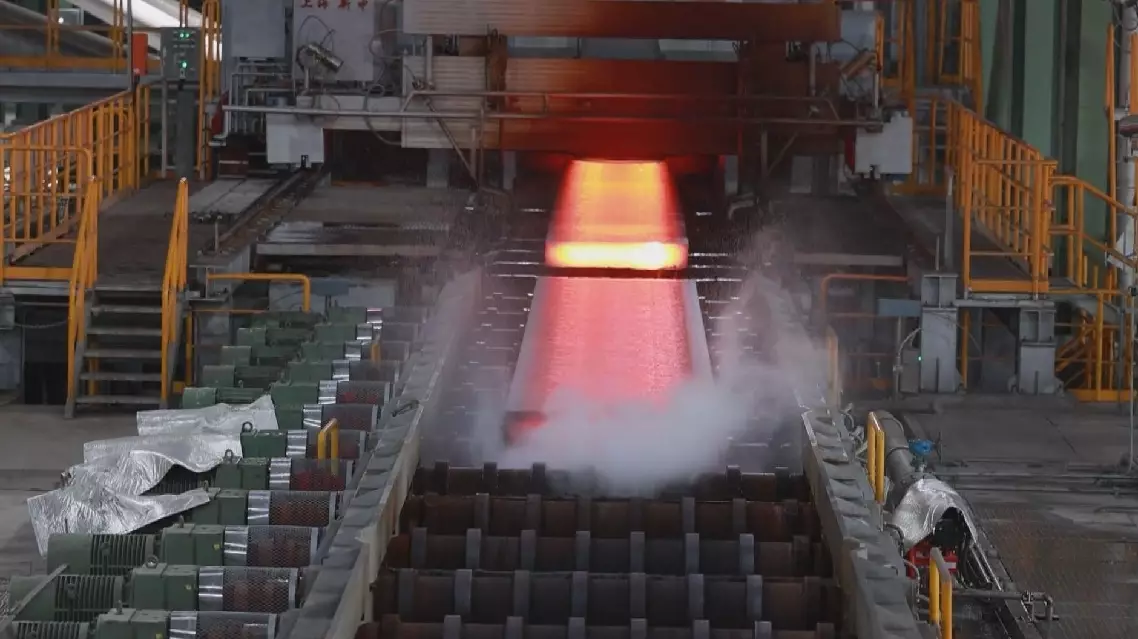
China releases stricter steel capacity swap plan to curb overcapacity