Hamas spokesperson Hazem Qassem on Saturday condemned Israeli Prime Minister Benjamin Netanyahu's announcement of expanding control over 70 percent of the Gaza Strip and accused Israel of failing to adhere to an October 2025 ceasefire agreement.
In a press statement, he also appealed to the international community, including the UN Security Council, to intervene and support the implementation of the ceasefire terms, warning that continued escalation could worsen the humanitarian and security situation in Gaza.
At a conference in the West Bank on Thursday, Netanyahu said he had directed Israel's military to take over another 10 percent of Gaza with 60 percent of the enclave now fully controlled by Israel, drawing criticism from various parties, including the United Nations.
The Foreign Ministry of Malaysia on Saturday condemned the Israeli plan, calling the move illegal, politically unacceptable, and an egregious violation of international law, the UN Charter, as well as numerous UN Security Council and General Assembly resolutions.
"Malaysia calls on the international community and the UN to unequivocally reject the plan, warning that any attempt to alter the territorial reality of Gaza will further undermine prospects for peace and justice," said the statement issued by the ministry.
It added that the move is calculated to deprive the Palestinian people of their legitimate and inalienable rights, including their right to an independent and sovereign state on their own territory.
Israel has intensified airstrikes across the enclave in recent days, targeting residential buildings, tents sheltering displaced people, and other locations, according to Palestinian sources.
Gaza-based health authorities said that 929 Palestinians have been killed since the ceasefire took effect in October 2025, bringing the total death toll in Gaza to 72,938 since Oct 7, 2023.
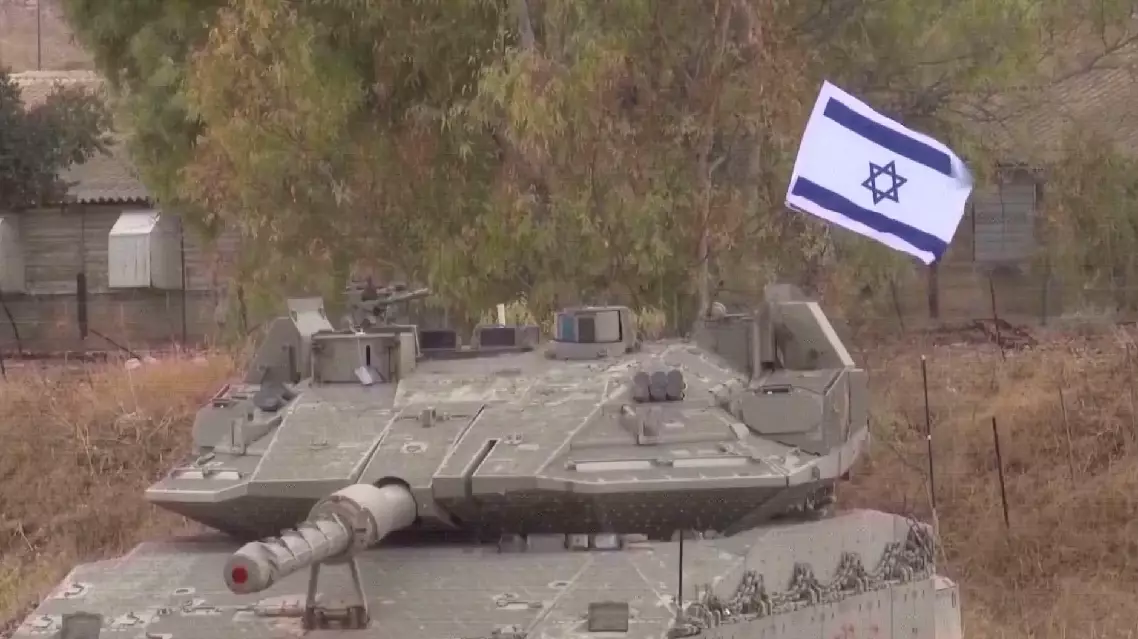
Hamas condemns Israeli plan to expand control over Gaza
A senior Chinese military scholar on Saturday called on the international community to jointly inject positive energy into safeguarding global strategic stability.
Meng Xiangqing, head of the Chinese People's Liberation Army expert delegation and a professor at China's National Defense University said at a session at the Shangri-La Dialogue 2026 in Singapore that global strategic stability faces multiple challenges.
Against this backdrop, China has put forward the Global Security Initiative and the Global Governance Initiative, advocating a vision of common, comprehensive, cooperative and sustainable security, Meng said in a speech at the session.
The initiatives uphold multilateralism and the rule of law in international affairs, providing important ideas and solutions for addressing global challenges, he said.
Meng also said that all countries should firmly safeguard the post-war international order and strengthen the political foundation for strategic stability. He emphasized the need to remain alert to any resurgence of militarism and to uphold the outcomes of World War II and the post-war international order.
"For a country that has never thoroughly eradicated the specter of militarism, is it qualified to discuss defense cooperation on the international stage? Can it win the trust of the international community, especially the Asian countries it once invaded? I have serious doubts. The lessons of the past are not far behind us. Today, the world once again stands at a new crossroads. We must remain vigilant against any attempt to revive militarism, and earnestly safeguard the achievements of World War Two and the post-war international order," said Meng.
On nuclear issues, Meng reiterated China's long-standing position.
He said that China's stance is consistent and clear. China remains committed to peaceful development, adheres to a nuclear strategy of self-defense, and pursues a policy of no-first use of nuclear weapons.
China supports a comprehensive ban and eventual elimination of nuclear arms, and this policy has never changed, he added.
Since its launch in 2002 by the British think tank the International Institute for Strategic Studies (IISS), the Shangri-La Dialogue, officially known as the Asia Security Summit, has been held annually except in 2020 and 2021 with the support of the Singaporean government.
As Asia's premier defense and security summit, the Shangri-La Dialogue 2026 opened Friday in Singapore amid growing geopolitical tensions.
The three-day event, which focuses on major security challenges facing the region, brought together 550 delegates from over 40 countries and regions. It features six plenary sessions, two ministerial roundtables, three special sessions, and a special address.
Chinese scholar calls for positive energy in maintaining global stability