Iranian military advisor Mohsen Rezaee said on Sunday that Iran has no intention of making concessions or compromises to the U.S., nor will it put itself in a disadvantaged position.
Speaking in a media interview the same day, Iranian Foreign Minister Seyed Abbas Araghchi said negotiations and information exchange with the U.S. are still ongoing.
He said until a clear conclusion is reached, everything that is being said now is just speculation.
The statements come as Iran and the United States are reportedly working to finalize a memorandum of understanding on ending the war that started on Feb 28 with joint attacks launched by the U.S. and Israel against Iran.
The two sides reached a temporary ceasefire on April 8. Over the past weeks, they have exchanged several proposed plans outlining conditions for ending the conflict through Pakistani mediation.
CBS News reported on Sunday that the U.S.-Iran negotiations are continuing through Pakistani mediation.
It said U.S. President Donald Trump raised concerns over parts of the draft, including the release of Iran's frozen assets, and wanted tougher terms in the MoU, especially on Iran's nuclear material.
The United States made a third round of amendments to a draft agreement with Iran before sending the revised version back to Tehran on Friday, and is waiting for a response from the Iranian side, according to the report.
An Iranian official on Sunday dismissed reports about the purported resignation of President Masoud Pezeshkian, accusing certain foreign media outlet of rumor-mongering.
In a post on X, Seyed Mehdi Tabatabaei, the Iranian presidency's deputy head of communications and information, said President Pezeshkian will continue to perform his duties and serve the Iranian people.
On the same day, Pezeshkian said during a cabinet session that he would continue in office "as long as I have life in my body".
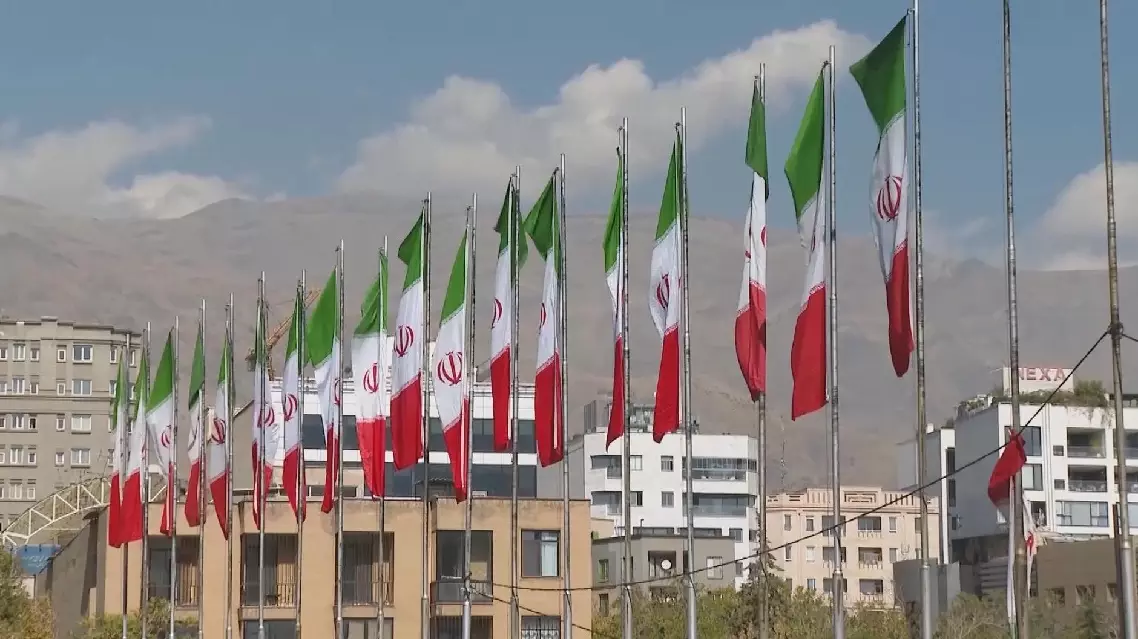
Iran does not intend to make concessions or compromises to US: official
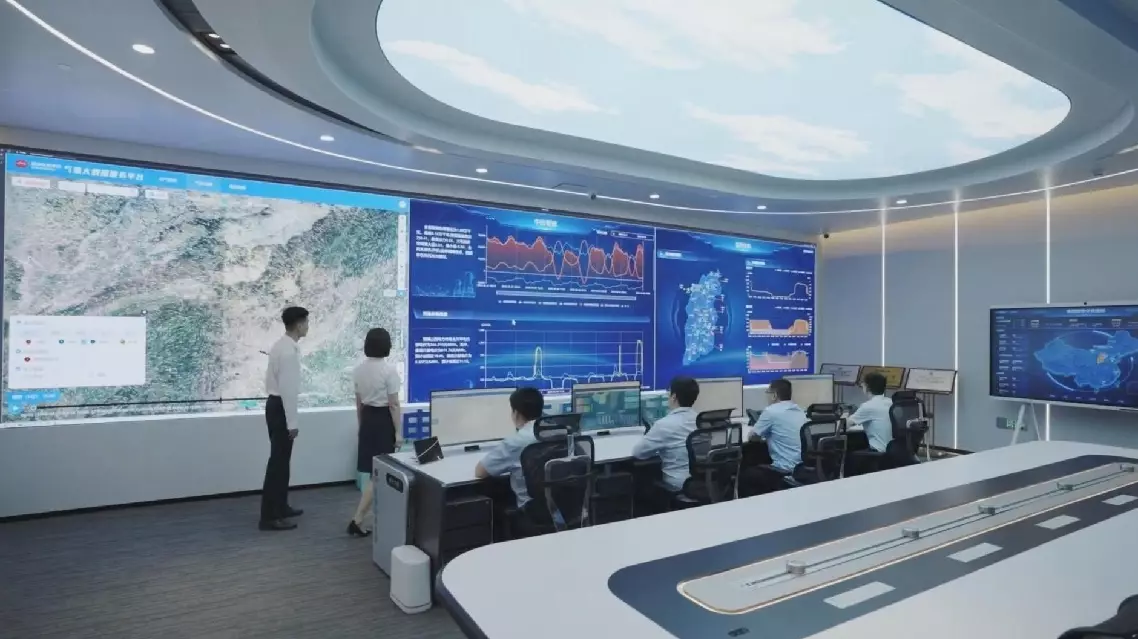
China is vigorously pushing forward the integrated development of artificial intelligence (AI) and energy this year, with dozens of industry-specific large language models now in operation across the energy sector, including power grid, oil and gas, coal, and new energy.
An example is the Kunlun large model released by China National Petroleum Corporation (CNPC), the country's largest oil and gas producer and supplier.
As the first officially-registered large model in China's energy and chemical industry, Kunlun has entered a stage of active intelligence, featuring six advanced AI capabilities, with an average daily token call volume of 48.5 billion.
It's also the first large model in China's energy and chemical industry to achieve systematic and large-scale deployment across the entire industrial chain, covering 152 application scenarios including oil and gas exploration and extraction, refining, technical services, and financing.
"The Kunlun large model is being applied to every key link of the industrial chain. We have set 27 AI standards in areas such as dataset models, embodied intelligence, and AI governance, transforming the model's practical experience into industry consensus," said Qiao Hui, assistant general manager of the CNPC.
In addition, China Energy Investment Group has launched Qingyuan, a large model for power generation, which has been applied in four major areas: safety and environmental protection, power trading, production coordination, and equipment maintenance.
In the power grid sector, China Southern Power Grid has developed Big Watt, which is now mainly applied in production. It provides professional power knowledge retrieval and specialized services for defect detection in power transmission and distribution, power dispatch, grid planning, and safety supervision.
"We are forming a virtuous cycle in which the energy industry creates scenarios, AI solves problems and raises requirements, and then the energy industry optimizes its supply," said Wang Hongzhi, head of the National Energy Administration (NEA).
Last month, the NEA announced 51 AI+ high-value scenarios in the energy sector, aiming to explore a new scalable and replicable paradigm for integrated development of AI and energy, and to promote the intelligent transformation of the energy sector.
China accelerates AI application in energy sector