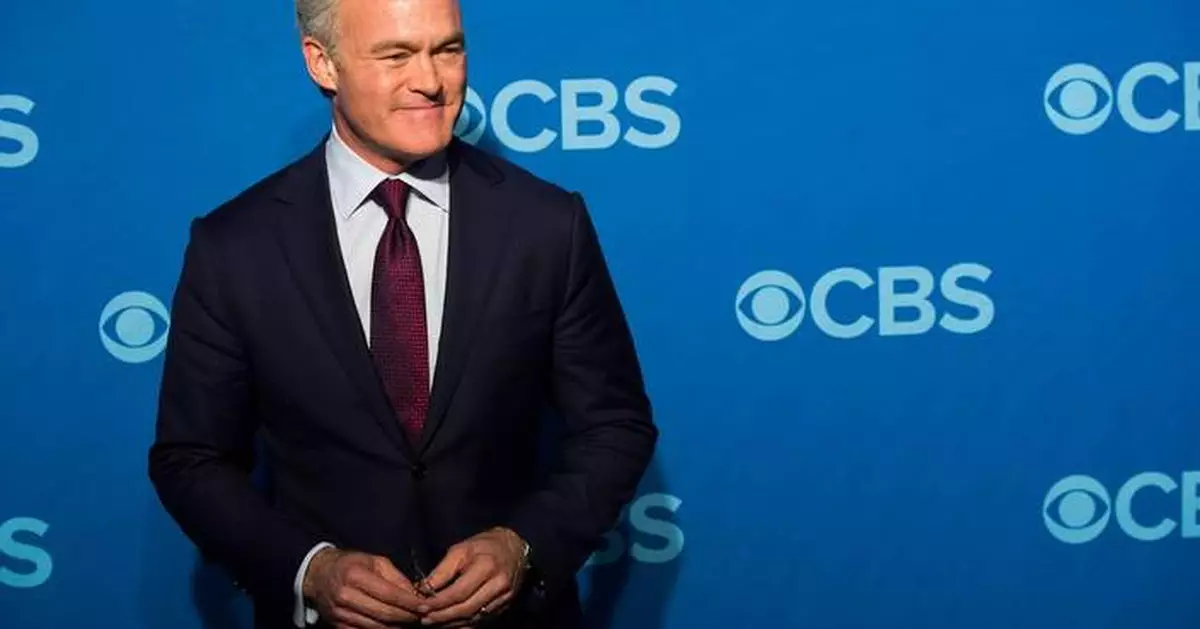
NEW YORK (AP) — In a remarkable sign of the turmoil at CBS’s top-rated “60 Minutes,” correspondent Scott Pelley said CBS News head Bari Weiss of “murdering the show” and accused its new producer of having “slender qualifications” for the job, according to reports.
Pelley made his accusations in an introductory meeting Monday between the newsmagazine’s staff and Nick Bilton, the new executive producer named by Weiss last week, according to a detailed report on the Status website, which said it had heard a recording of the meeting. Weiss herself was not present, according to the report. Status specializes in media news and analysis.
Status reported that Pelley, the longtime “60 Minutes” correspondent, began grilling Bilton at the 10 a.m. meeting about the firings last week of Bilton's predecessor, Tanya Simon, and correspondents Sharyn Alfonsi and Cecilia Vega. Status also reported that Pelley told Bilton, a former technology journalist and filmmaker with no traditional broadcast news experience, that his qualifications for the position were “slender."
Pelley also charged, according to Status, that Weiss herself had “no qualifications for her job,” and said the changes she had made to “CBS Evening News,” which Pelley once anchored, “have been catastrophic.”
It added that Bilton insisted that “Bari loves this institution” and “she loves ’60 Minutes'" — to which Pelley countered, “She’s murdering ‘60 minutes.’ She does not love this place. She was brought in to kill it and she’s doing exactly that.”
Two spokespeople for CBS News did not immediately respond to a request for comment.
But a person close to CBS News leadership, speaking on condition of anonymity, told The Associated Press that both Weiss and Bilton had tried to reach out to Pelley late last week when the changes rocked the 57-year-old show to tell him that he was an integral part of “60 Minutes” and wanted him to remain so.
The person said Weiss and Bilton felt it was disappointing that Pelley's accusations were being aired publicly despite efforts to engage with him privately.
The New York Times, which also reported that it had listened to a recording of Monday's meeting, noted that Pelley's “newscaster's baritone” was shaking during the exchange. The newspaper also quoted an unnamed executive at the meeting as saying Weiss had been prepared to come, but “we asked her not to.”
Reports about the contentious meeting came four days after Weiss, who has become a polarizing figure in the media world since taking the reins at CBS last October, told staff in a memo that it was time for a “new approach” at the top-rated newsmagazine.
In the memo, Weiss and CBS News president Tom Cibrowski said their goal was “building a show that thrives in the 21st century.”
“That requires a new approach,” they wrote, defining that approach as “expanding ‘60 Minutes’ beyond a one-hour television broadcast, deepening its role across CBS News, and holding everything we produce to the ambition, fairness, and fearlessness that have defined ‘60 Minutes’ at its best.”
Bilton, they said, “embodies the energy and ambition that animated the founders of the show. We cannot imagine a better fit.”
The Status report noted that Pelley was applauded multiple times by other staffers during the meeting. It said Pelley focused on the firings last week, calling them cruel.
Bilton reportedly replied that he was not intimidated. “I have been a journalist for 25 years, Scott," Status quoted him as saying. "I have sat and talked with incredibly powerful people like you have. None of it intimidates me, OK? So you are not going to intimidate me in front of this group of people.”
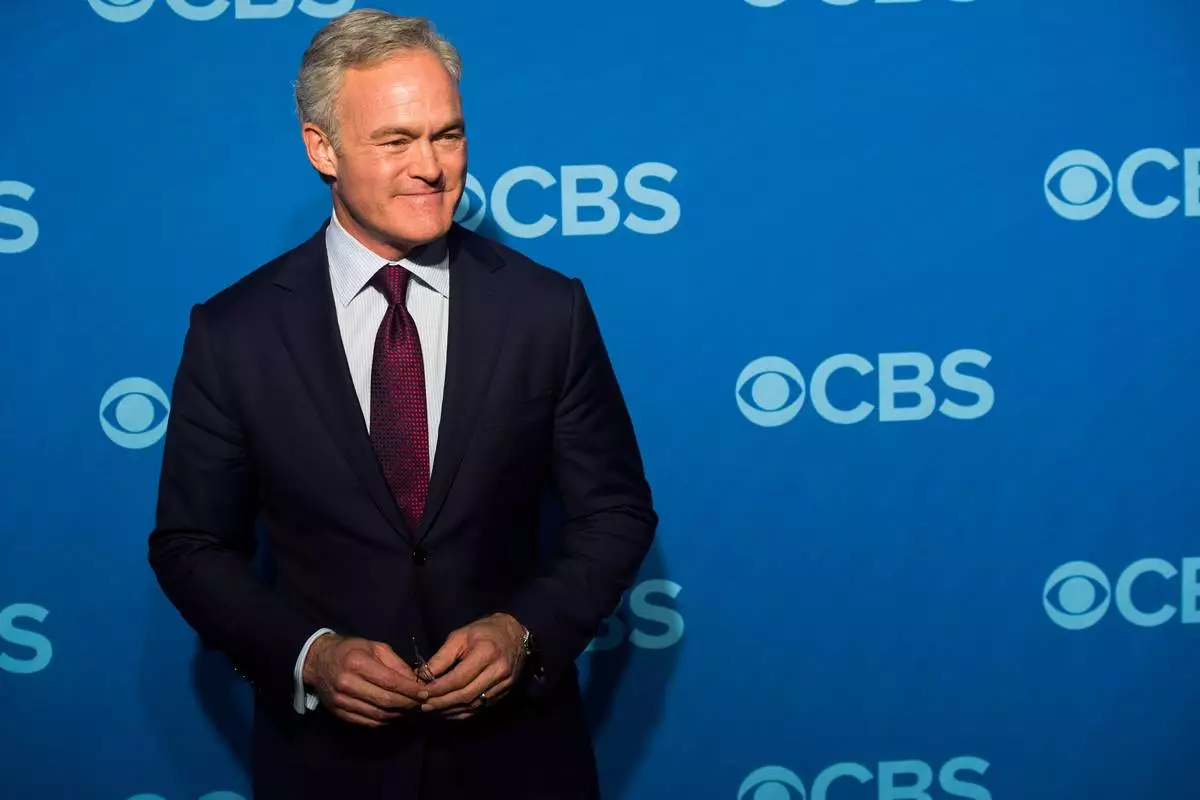
FILE - Scott Pelley, anchor of "CBS Evening News," at the CBS Upfront in New York, May 15, 2013. (Photo by Charles Sykes/Invision/AP, File)
NEW YORK (AP) — Oil prices rose Monday following the latest fighting to threaten the U.S.-Iran ceasefire, but Wall Street isn’t very worried, and U.S. stocks ticked to more records.
The S&P 500 added 0.3% to its prior all-time high set on Friday. The Dow Jones Industrial Average rose 46 points, or 0.1%, and the Nasdaq composite climbed 0.4% to likewise set records.
A slight majority of U.S. stocks actually fell, including companies with big fuel bills hurt by higher oil prices. United Airlines lost 2.6%, and Alaska Air Group fell 3.3% after the price for a barrel of Brent crude oil climbed 4.2% to settle at $94.98. That clawed back a chunk of Brent’s loss from last week and means it’s still well above its price of roughly $70 from before the war.
Expensive oil has already sent inflation higher, which increases not only bills for households but also yields in the bond market. High yields worldwide recently have threatened to slow economies and undercut prices for stocks and all kinds of other investments.
But yields regressed during the day after oil prices came off their highest levels. That eased some of the pressure on Wall Street, and the Russell 2000 index of the smallest U.S. stocks went from a loss of 1.3% back to roughly even before finishing with a dip of 0.5%. Small companies can feel the pinch of higher borrowing costs in particular because of the need for many to borrow to grow.
Hope, meanwhile, seems to remain on Wall Street that the United States and Iran will ultimately reach an agreement to reopen the Strait of Hormuz, allow deliveries of oil to resume from the Persian Gulf and ease the upward pressure on inflation.
Strength from several market heavyweights also helped to power Wall Street.
Nvidia was the strongest force lifting the market and rose 6.2% after CEO Jensen Huang announced several product updates at a conference. What Nvidia does matters immensely for the U.S. stock market because it’s the biggest in terms of overall market value. That means the movements for its stock carry more weight on the S&P 500 than any other’s.
And Wall Street’s biggest companies have been growing so much that they’re dominating the market. The top 10 stocks control nearly half the S&P 500’s total market value, a 40-year high, according to Thomas Carroll, equity market strategist at Stifel.
That worked well as Big Tech stocks shot higher thanks to exuberance around artificial intelligence. But it could also weigh on the index if the market’s leadership broadens, Carroll warns. Even if most stocks end up rising in such a rotation, stagnation or declines for Big Tech heavyweights could drag on S&P 500 index funds.
A key indicator Carroll follows about market breadth “is signaling a rotation is coming,” he wrote in a report.
Elsewhere on Wall Street, Science Applications International Corp. jumped 10.4% after becoming the latest U.S. company to report bigger profit for the latest quarter than analysts expected. SAIC also raised forecasts for upcoming financial results.
A cavalcade of such better-than-expected profit reports has helped the U.S. stock market push to records despite the uncertainty created by the war with Iran.
Berkshire Hathaway fell 0.9% after saying it would buy homebuilder Taylor Morrison Home for $6.8 billion. It’s one of the first big acquisitions announced by the company since Greg Abel took over as its leader from famed investor Warren Buffett. Taylor Morrison Home jumped 22.3%.
MGM Resorts International leaped 16.1% after People Inc., Barry Diller’s business that was formerly known as IAC, offered to buy the rest of the company it doesn’t already own for $48.30 per share in cash.
All told, the S&P 500 rose 19.90 points to 7,599.96. The Dow Jones Industrial Average added 46.42 to 51,078.88, and the Nasdaq composite rose 114.19 to 27,086.81.
In the bond market, Treasury yields climbed with oil prices and after a report said growth in U.S. manufacturing accelerated by more last month than economists expected. The yield for the 10-year Treasury briefly approached 4.52% before regressing to 4.46%, up from 4.45% late Friday.
High yields have already forced the average long-term U.S. mortgage rate to its most expensive level in nine months, and they could curtail companies’ borrowing to build the AI data centers that have supported the U.S. economy’s growth recently.
In stock markets abroad, indexes fell in Europe following a stronger finish in Asia.
Tokyo’s Nikkei 225 rose 0.9% to an all-time high. SoftBank Group, the investment company that focuses heavily on AI, soared 21.2% and surpassed Toyota to become Japan’s most valuable listed company.
In South Korea, the Kospi index jumped 3.7% to a record after data showed the country’s exports surged 53% in May from a year earlier, buoyed by global demand for semiconductors.
AP Business Writers Chan Ho-him and Matt Ott contributed.
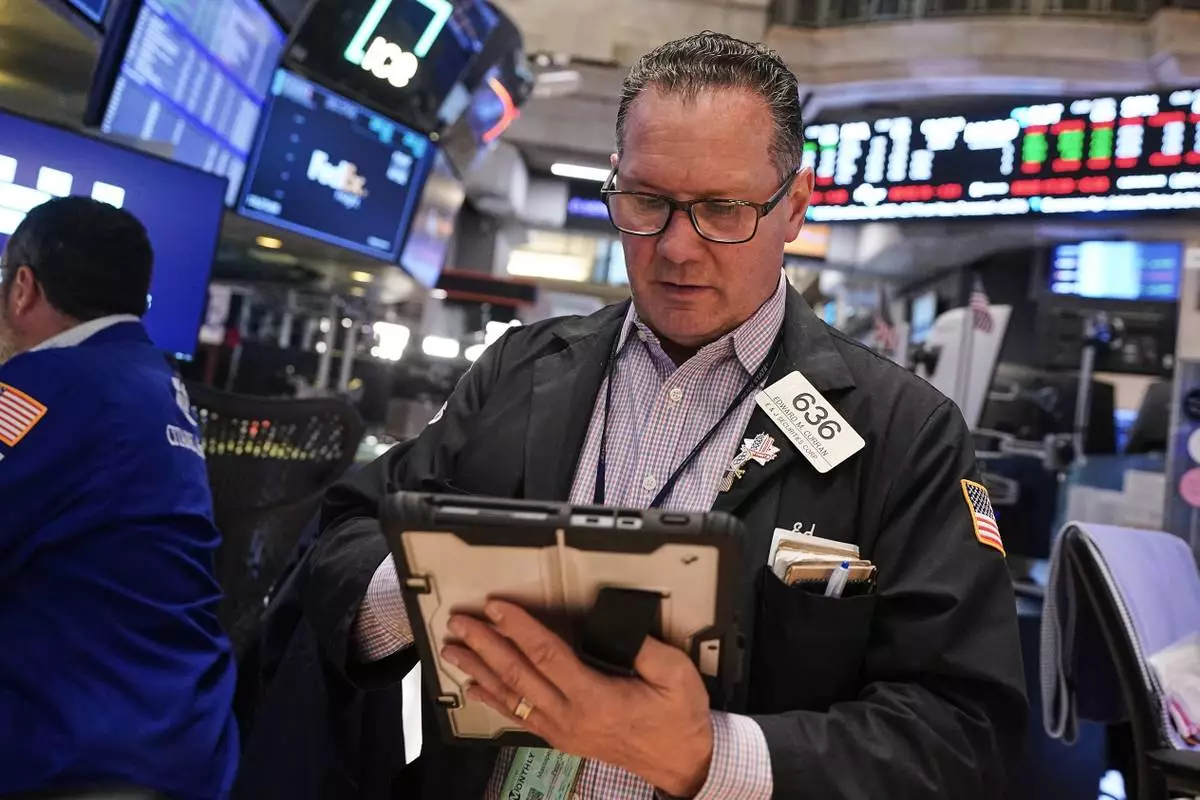
Trader Edward Curran works on the floor of the New York Stock Exchange, Monday, June 1, 2026. (AP Photo/Richard Drew)

Specialists Philip Finale, left, and Meric Greenbaum work on the floor of the New York Stock Exchange, Friday, May 29, 2026. (AP Photo/Richard Drew)
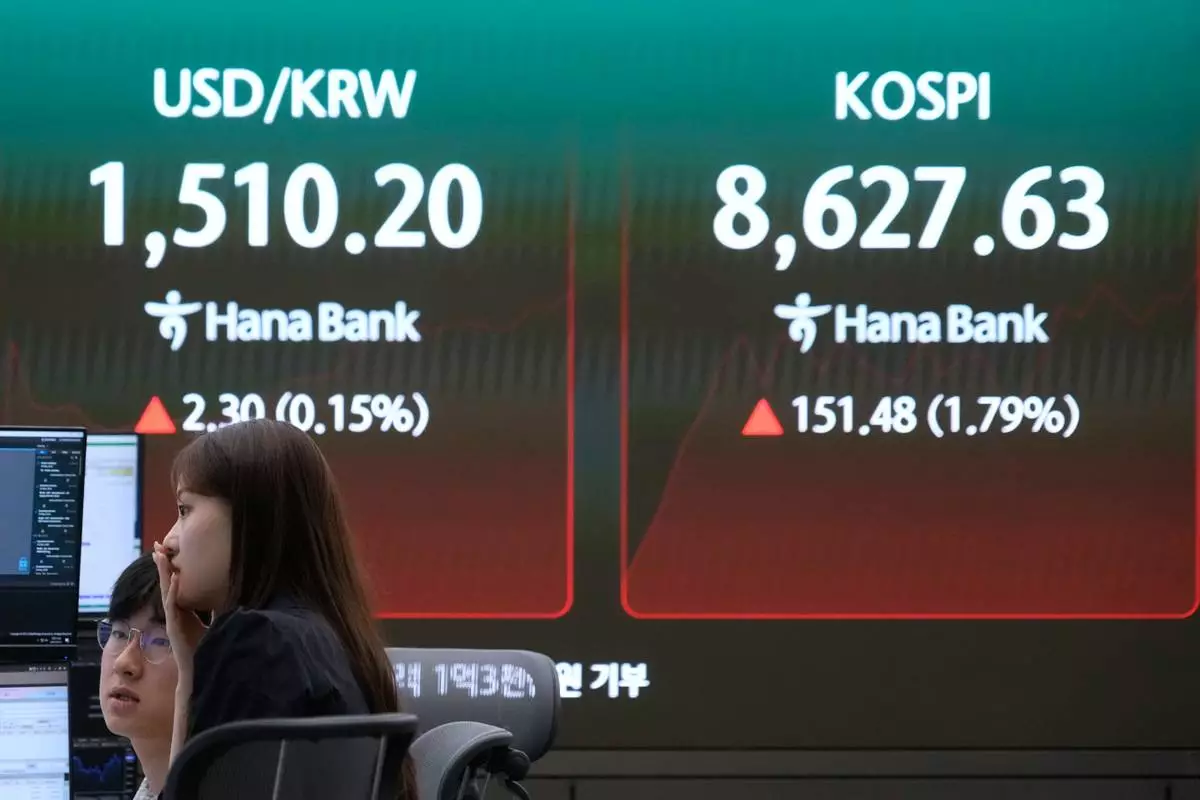
Currency traders watch monitors near a screen showing the Korea Composite Stock Price Index (KOSPI) and the foreign exchange rate between U.S. dollar and South Korean won at the foreign exchange dealing room of the Hana Bank headquarters in Seoul, South Korea, Monday, June 1, 2026. (AP Photo/Ahn Young-joon)

Currency traders work near a screen showing the Korea Composite Stock Price Index (KOSPI) and the foreign exchange rate between U.S. dollar and South Korean won at the foreign exchange dealing room of the Hana Bank headquarters in Seoul, South Korea, Monday, June 1, 2026. (AP Photo/Ahn Young-joon)

A currency trader talks on the phone at the foreign exchange dealing room of the Hana Bank headquarters in Seoul, South Korea, Monday, June 1, 2026. (AP Photo/Ahn Young-joon)