Skip to Content Facebook Feature Image

AccurKardia Granted Patent for AI-Driven ECG Detection of Cardiac Amyloidosis

Business

AccurKardia Granted Patent for AI-Driven ECG Detection of Cardiac Amyloidosis
Business

Business

AccurKardia Granted Patent for AI-Driven ECG Detection of Cardiac Amyloidosis

2026-06-02 19:06 Last Updated At:19:31

NEW YORK--(BUSINESS WIRE)--Jun 2, 2026--

AccurKardia, Inc., an ECG analytics software company focused on establishing ECG as a broad biomarker, today announced that it has been granted US Patent No. 12,620,488 for the company's proprietary machine-learning-based system for identifying cardiac amyloidosis from a standard, routinely performed 12-lead ECG.

This press release features multimedia. View the full release here: https://www.businesswire.com/news/home/20260602774381/en/

Cardiac amyloidosis is a serious, often fatal heart disease in which abnormal proteins build up in heart tissue, causing the heart muscle to stiffen and eventually fail. Only recently recognized as a leading cause of heart failure in older adults, the condition remains widely underdiagnosed. Most patients are identified only after permanent damage to the heart has already occurred. The stakes of earlier detection are high and concrete: it impacts which treatments patients receive and how long they live. In heart failure clinics, studies estimate that roughly 13-15 percent of patients have undiagnosed cardiac amyloidosis. i Catching it sooner steers patients away from standard heart failure treatments that may be ineffective or even harmful for this condition, and toward therapies proven to improve survival.

"Cardiac amyloidosis hides in plain sight, and because the symptoms are quite similar to other causes of heart failure, we have historically relied on expensive, late-stage imaging to diagnose what is already advanced disease, often after conventional medical therapy has failed to improve symptoms," said Dr. Jason Lazar, executive vice dean, chair of the Department of Medical Education and Director of Non-invasive Cardiology at SUNY Downstate. “A reliable ECG-based screening signal, leveraging information the human eye simply cannot extract, has the potential to redefine when and how we intervene, particularly as therapeutic options continue to expand. Simply put, earlier diagnosis leads to much better outcomes.”

"Disease-modifying amyloidosis therapies are among the most important advances in cardiology in a generation, but their impact is gated by our ability to find the right patients in time," said Juan C. Jimenez, co-Founder and CEO of AccurKardia. "This patent establishes the foundation for closing that gap. We are turning a test that is already performed millions of times per year globally into a screening biomarker, deployable without new hardware or procedures, seamlessly integrating our capabilities into existing workflows."

A distinguishing feature of AccurKardia's approach is its use of explainable, feature-based machine learning, built on annotated ECG parameters, rather than a “black box” model. The design supports interpretability for clinicians, transparency for regulators, and adaptability for downstream deployment at scale.

About AccurKardia

AccurKardia is an ECG-led diagnostics software company focused on transforming ECG data into a more powerful diagnostic tool and broad biomarker to improve patient outcomes and save lives globally. With initial applications in cardiology, the company offers transformative, cloud-based diagnostic tools, including AccurECG™ 2.0, an FDA-cleared Class II software as a medical device (SaMD) for fully automated, near real-time ECG interpretation. AccurKardia is also advancing an investigational pipeline of ECG-based biomarkers, including AK+ Guard™ for hyperkalemia risk assessment using Lead I ECG, and AK-AVS™ for aortic stenosis risk assessment, both of which have received FDA Breakthrough Device Designation. For more information, please visit www.accurkardia.com.

Disclaimers:

The cardiac amyloidosis detection algorithm is currently for research use only and has not been cleared by the U.S. FDA for use in the United States. For detailed technical AccurECG 2.0 requirements, relevant disclosures, and approved indications for use, please refer to the U.S. FDA 510(k) K252361 summary and product labeling. AK-AVS and AK+ Guard are currently for research use only and have not been cleared by the U.S. FDA for use in the United States. This technology is under development and intended solely for investigational purposes.

i See, ASY, Ho, JS, Chan, MY, et. al. Prevalence and Risk Factors of Cardiac Amyloidosis in Heart Failure: A Systematic Review and Meta-Analysis. Heart Lung Circ. 2022 Nov;31(11):1450-1462. doi: 10.1016/j.hlc.2022.08.002. Epub 2022 Sep 20. PMID: 36137915.
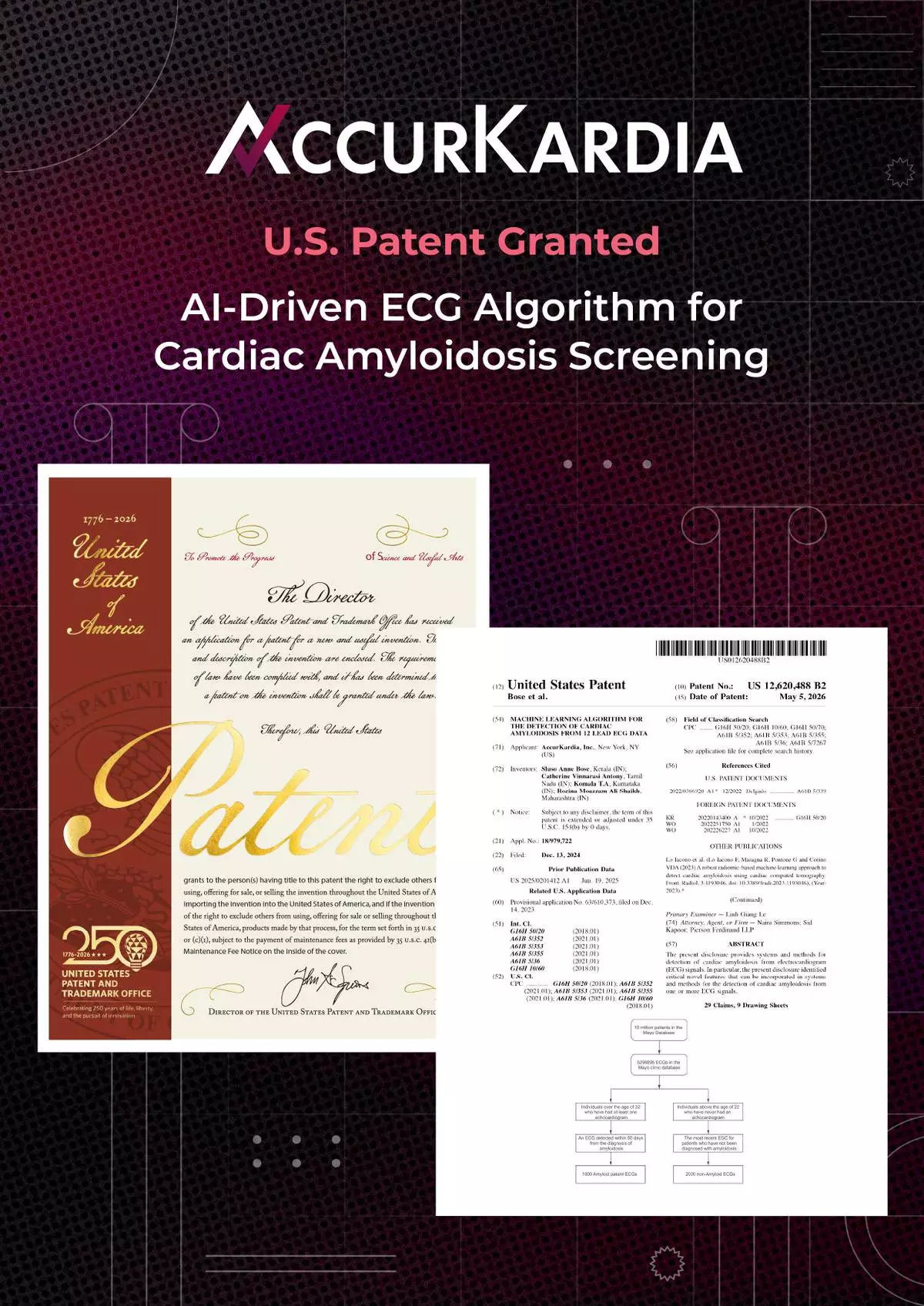
AccurKardia’s patent establishes its intellectual property foundation across all major amyloidosis subtypes, including AL amyloidosis and wild-type and hereditary ATTR amyloidosis. It joins a growing pipeline of AccurKardia AI-ECG biomarkers that includes FDA Breakthrough Device-designated algorithms for aortic stenosis (AK-AVS™) and hyperkalemia (AK+ Guard™), alongside the company's FDA-cleared automated ECG interpretation platform, AccurECG™ 2.0.

AccurKardia’s patent establishes its intellectual property foundation across all major amyloidosis subtypes, including AL amyloidosis and wild-type and hereditary ATTR amyloidosis. It joins a growing pipeline of AccurKardia AI-ECG biomarkers that includes FDA Breakthrough Device-designated algorithms for aortic stenosis (AK-AVS™) and hyperkalemia (AK+ Guard™), alongside the company's FDA-cleared automated ECG interpretation platform, AccurECG™ 2.0.
WASHINGTON (AP) — Acting Attorney General Todd Blanche is set to return to Capitol Hill on Tuesday after the Trump administration signaled it was pausing contentious plans to move forward with a nearly $1.8 billion fund that could compensate allies of President Donald Trump who believe they have been unjustly investigated and prosecuted.

The hearing before the House Appropriations Committee was scheduled for discussion of the Justice Department's budget, but lawmakers will almost certainly focus their questioning on the creation of a fund that has provoked outrage over the mere possibility that violent pro-Trump rioters who stormed the U.S. Capitol on Jan. 6, 2021, could be eligible for payouts.

The Republican president is now reconsidering whether to move forward with the fund established to resolve his lawsuit against the Internal Revenue Service over the leak of his tax returns, a person familiar with his thinking said on Monday, in the face of Republican backlash and legal setbacks. The Justice Department also said Monday it would comply with a Virginia court temporarily blocking the administration's “Anti-Weaponization Fund,” effectively agreeing to pause the plan for at least two weeks.

Another judge in Florida raised the prospect of reopening the IRS lawsuit because of “grievous allegations” of improper dealing made against the administration by settlement critics.

The Trump administration has defended the fund as an appropriate measure to make up for what officials insist was a weaponized Justice Department during President Joe Biden's Democratic administration, a claim the Biden administration strongly denied. Though some Trump supporters, including participants in the Capitol riot, have celebrated the announcement, the reaction among Republicans in Congress has been decidedly more hostile, forcing Blanche to try to assuage a GOP constituency that generally operates in close alignment with the administration.

The furor has especially complicated matters in the Senate, where Republicans defiantly left town 10 days ago without passing legislation to fund Trump’s immigration enforcement agencies. Republicans who returned to Washington on Monday said they won’t have the votes to pass the Homeland Security spending bill until the White House works with them to place parameters on the fund. Many have pushed the administration to impose limits or scrap the idea altogether.

At a Senate budget hearing last month, Blanche refused to rule out the possibility that those who carried out violence on Jan. 6 could be eligible for payouts and has repeatedly said in interviews that anyone who feels persecuted by the criminal justice system is free to apply. Payouts will be decided by a five-member commission appointed by Blanche.

But he has apparently struck a more conciliatory tone in private when confronted by Republican anger.

Blanche encountered a groundswell of opposition last month at a tense private meeting with GOP senators, with more than half raising concerns, including by shouting at the Justice Department's top official, Republican Sen. Ted Cruz of Texas said in a recent episode of his podcast.

“There were fireworks at an epic level — and I've got to say, it's one of the roughest meetings I've seen in my entire time in the Senate," Cruz said.

Behind closed doors, Blanche was “adamant” that no one who assaulted police at the Capitol would receive compensation, according to Cruz.

“He said not just ‘no,’ but ‘hell no,’” the senator recalled.

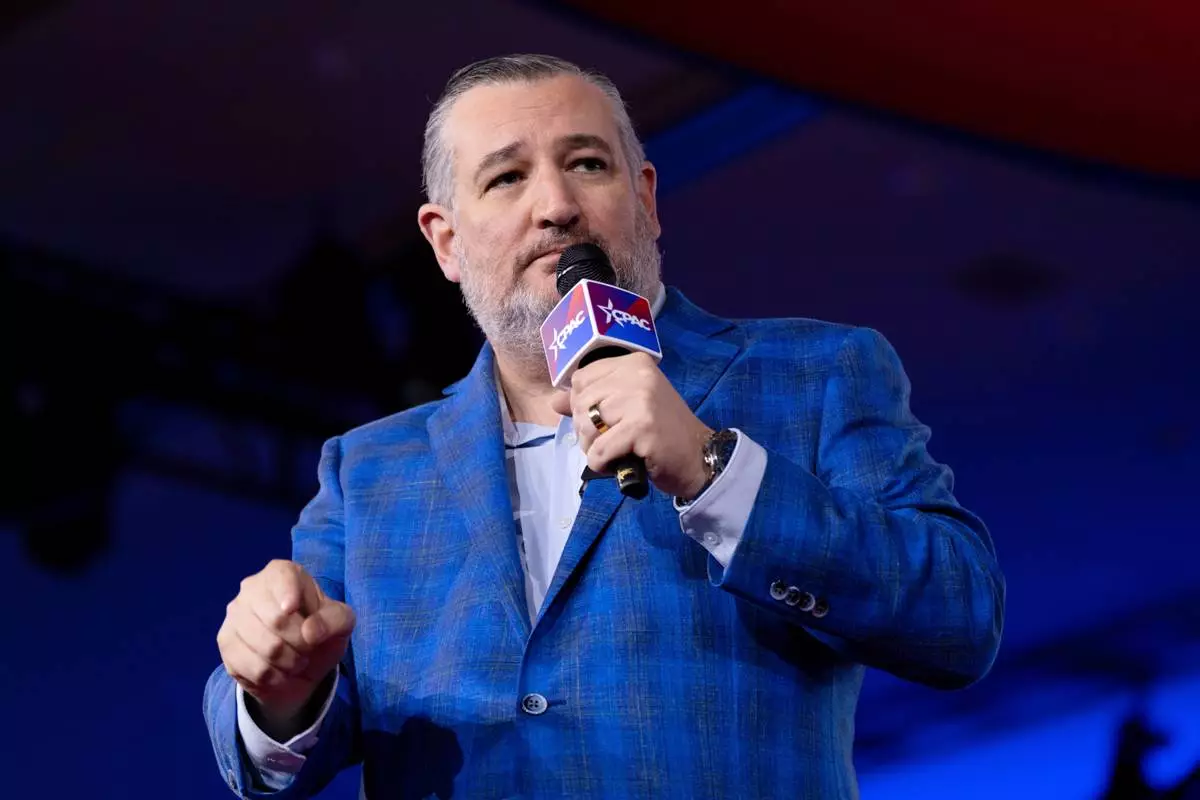
FILE - Sen. Ted Cruz, R-Texas, speaks at the Conservative Political Action Conference (CPAC) in Dallas, March 28, 2026. (AP Photo/Gabriela Passos, File)

FILE - Sen. Ted Cruz, R-Texas, speaks at the Conservative Political Action Conference (CPAC) in Dallas, March 28, 2026. (AP Photo/Gabriela Passos, File)

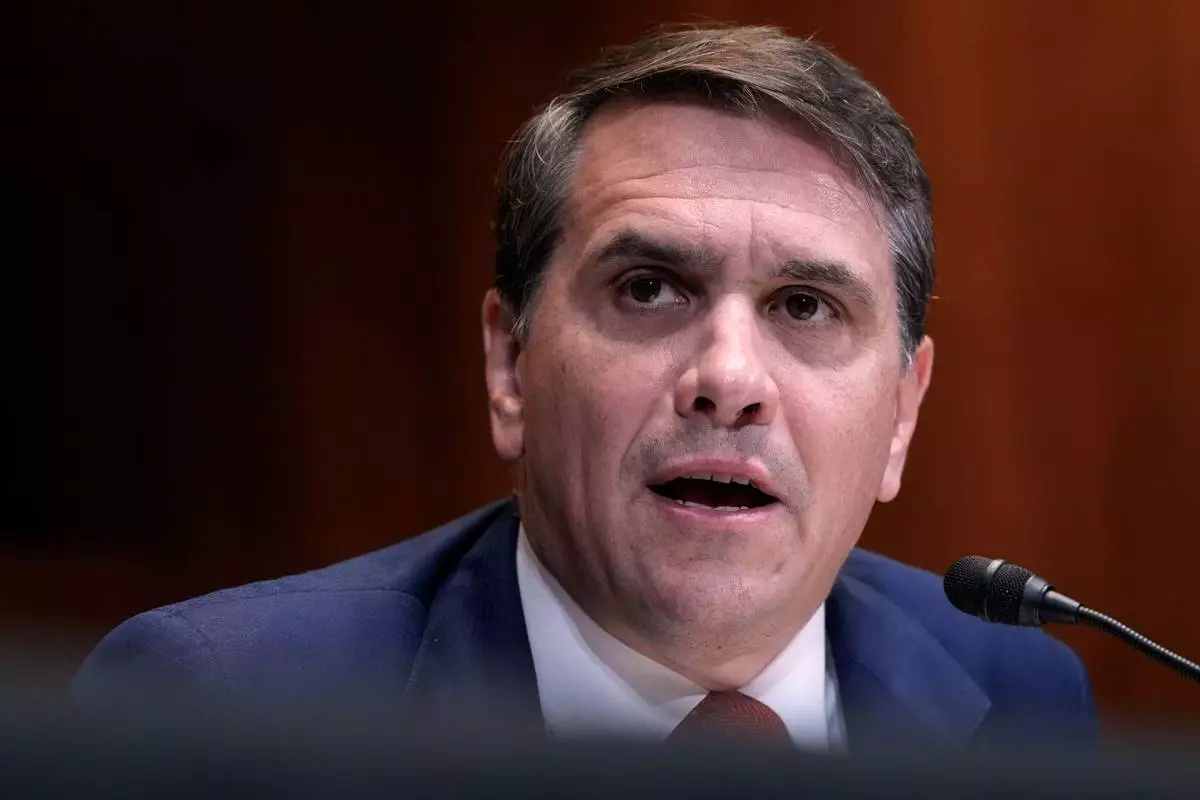
Acting Attorney General Todd Blanche testifies during a Senate Committee on Appropriations subcommittee hearing to address the Trump administration's budget request for the Justice Department, Tuesday, May 19, 2026, on Capitol Hill in Washington. (AP Photo/Mariam Zuhaib)

Acting Attorney General Todd Blanche testifies during a Senate Committee on Appropriations subcommittee hearing to address the Trump administration's budget request for the Justice Department, Tuesday, May 19, 2026, on Capitol Hill in Washington. (AP Photo/Mariam Zuhaib)

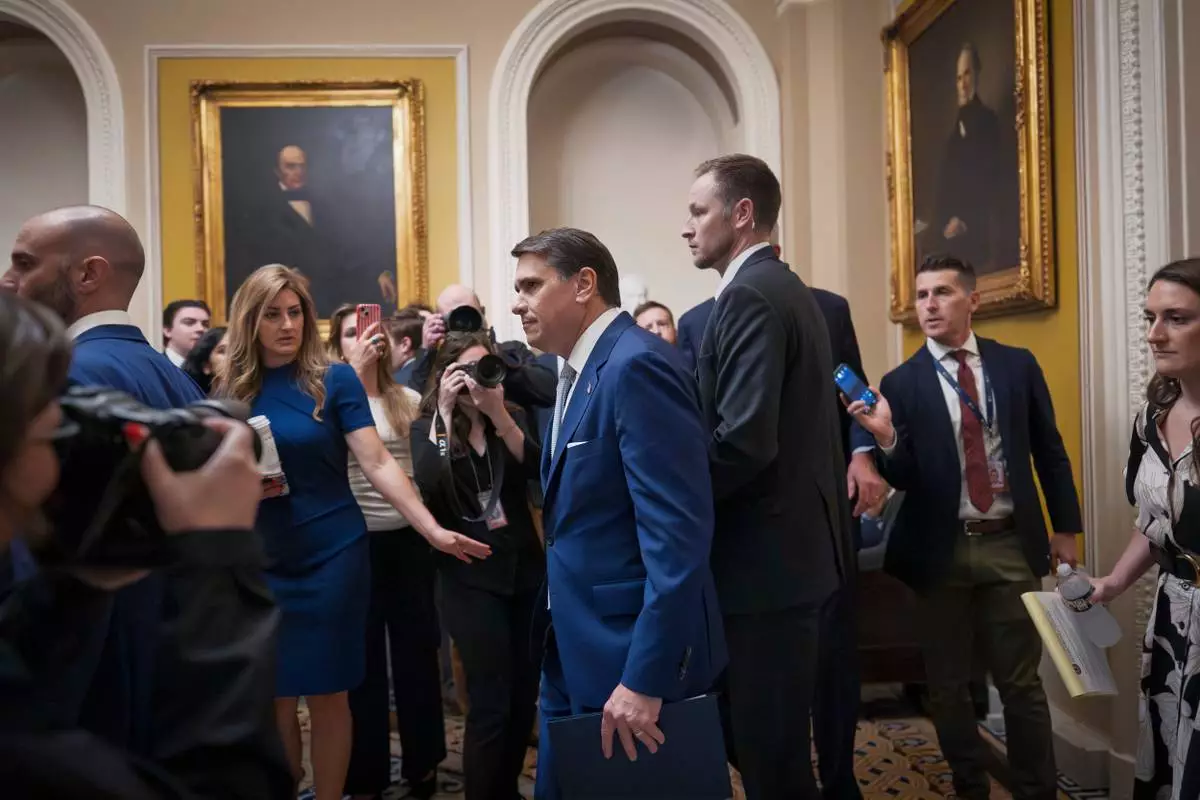
Acting Attorney General Todd Blanche arrives for a closed-door meeting with Republican senators who are expected to abandon a proposal for $1 billion in security money for the White House complex and President Donald Trump's ballroom after it has failed to win enough party support, at the Capitol in Washington, Thursday, May 21, 2026. (AP Photo/J. Scott Applewhite)

Acting Attorney General Todd Blanche arrives for a closed-door meeting with Republican senators who are expected to abandon a proposal for $1 billion in security money for the White House complex and President Donald Trump's ballroom after it has failed to win enough party support, at the Capitol in Washington, Thursday, May 21, 2026. (AP Photo/J. Scott Applewhite)

Acting Attorney General Todd Blanche speaks to a reporter outside the White House, Wednesday, May 27, 2026, in Washington. (AP Photo/Mark Schiefelbein)

Acting Attorney General Todd Blanche speaks to a reporter outside the White House, Wednesday, May 27, 2026, in Washington. (AP Photo/Mark Schiefelbein)

FILE - Acting U.S. attorney general Todd Blanche speaks during a news conference at the Justice Department, May 4, 2026, in Washington. (AP Photo/Julia Demaree Nikhinson, File)

FILE - Acting U.S. attorney general Todd Blanche speaks during a news conference at the Justice Department, May 4, 2026, in Washington. (AP Photo/Julia Demaree Nikhinson, File)

Recommended Articles