PARIS (AP) — Youth easily prevailed over experience at the French Open on Tuesday when teenager Mirra Andreeva thumped Sorana Cirstea 6-0, 6-3 to reach the semifinals for the second time.
After a week of hot weather, rain arrived in Paris and play started under the closed roof of Court Philippe-Chatrier. Competing in the quarterfinals for the first time in 17 years, Cirstea struggled to find her rhythm against her 19-year-old rival.
The 36-year-old veteran from Romania, playing the final season of her career, immediately dropped her serve. She was broken again in her next service game as the eighth-seeded Andreeva punished a weak delivery with a forehand return winner to open a 3-0 lead.
The Russian was in total control, securing another break of serve before comfortably holding to wrap up the opening set.
Cirstea, seeded 18th, finally got on the board by holding for 1-0 in the second set when Andreeva’s backhand sailed long. She then began to move Andreeva around more effectively with greater variety in her shot-making, while cutting down on unforced errors.
But Andreeva’s deep, accurate groundstrokes and charges to the net took a toll on Cirstea, who dropped her serve again in the fifth game. She managed to break back in the next game, yet the improvement was short-lived, as Andreeva broke again twice to close out the match.
Andreeva will take on the winner of an all-Ukrainian contest between Elina Svitolina and Marta Kostyuk, who is undefeated on clay this season.
In men's play, up-and-coming Rafael Jodar of Spain faces a tall order against second-seeded Alexander Zverev. Jakub Mensik of the Czech Republic takes on Joao Fonseca of Brazil in the night session.
AP tennis: https://apnews.com/hub/tennis
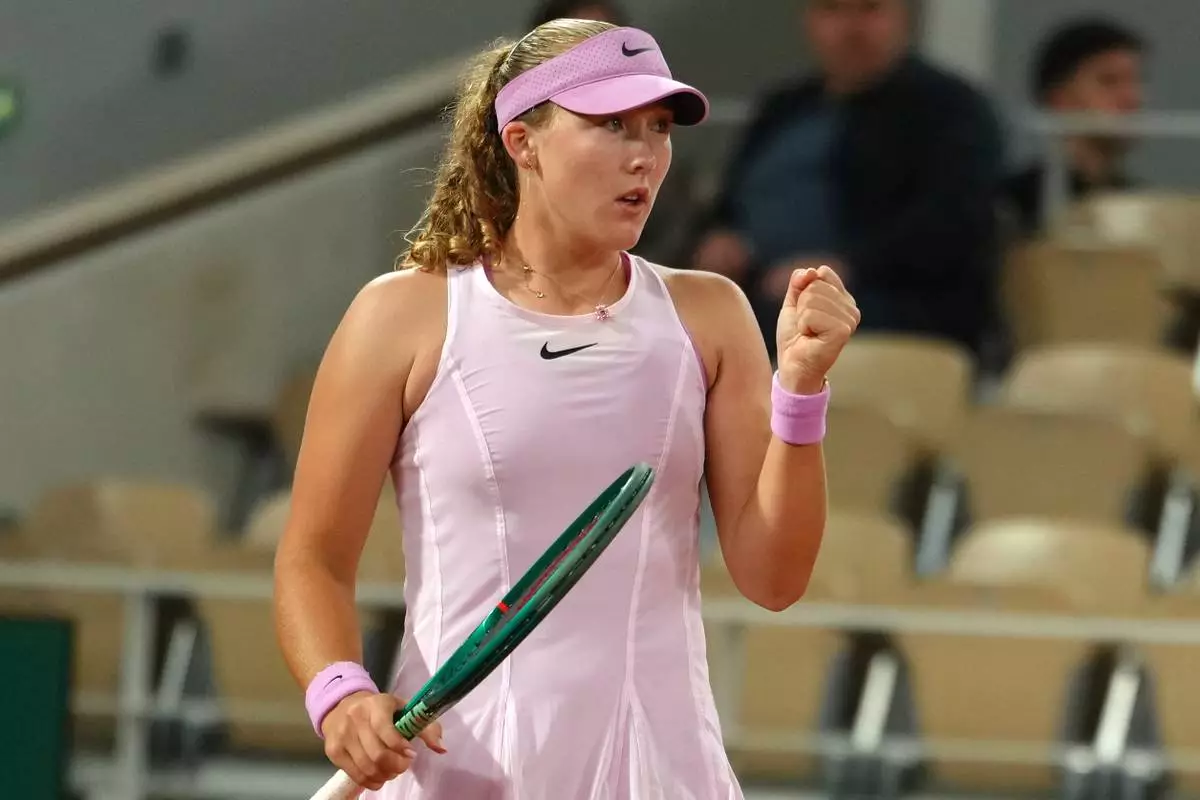
Russia's Mirra Andreeva reacts during the quarterfinal tennis match against Romania's Sorana Cirstea at the French Open in Paris, Tuesday, June 2, 2026. (AP Photo/Aurelien Morissard)

Romania's Sorana Cirstea returns to Russia's Mirra Andreeva during the quarterfinal tennis match at the French Open in Paris, Tuesday, June 2, 2026. (AP Photo/Aurelien Morissard)

Russia's Mirra Andreeva retruns to Romania's Sorana Cirstea during the quarterfinal tennis match at the French Open in Paris, Tuesday, June 2, 2026. (AP Photo/Aurelien Morissard)
BUNIA, Congo (AP) — Arlette Basekawike, a volunteer for the United Nations food agency in Bunia, the heart of Congo's Ebola outbreak, spends most of her time in a small shed outside a health facility preparing meals for patients and health workers.
Her hair covered by a pink bonnet, she prepares porridge, omelets and bread for breakfast for patients at the Evangelical Medical Center. The lunch and dinner menus might include fresh fish with fufu, a starchy staple made of mashed plantains, finished off by fruit.
“Even though the patients have this disease, they still feel better when they eat, and the doctors have the energy to treat the sick and give them medication,” Basekawike told The Associated Press on Monday as she prepared vegetables and potatoes with goat meat in a large cooking pot. “I’m here for them like a parent, preparing food so they feel comfortable.”
Her contribution may appear, on the surface, like a simple task, but it has become one of the critical supports for the region as it grapples with the rapidly spreading rare Bundibugyo virus, the species of Ebola confirmed in eastern Congo in May.
As of Tuesday, 321 cases of the Ebola disease and 48 deaths had been confirmed in the Central African nation’s three eastern provinces of Ituri, North and South Kivu, according to the World Health Organization. Neighboring Uganda has had nine cases and one death confirmed, according to the WHO, prompting Uganda to close its border with Congo.
Before the outbreak, the beleaguered region already faced one of the world's most severe food crises due to an ongoing conflict that has displaced millions of people as government forces fight rebels. The spreading virus has added another layer of complexity that the United Nations warns might complicate the efforts to manage the spread of the virus among an already wary population.
“We are in a region where we already have large segments of the population suffering from acute food insecurity linked to either war or displacement,” said Olivier Nkakudulu, who heads the World Food Program in Ituri province. “So there are already needs and Ebola is an additional crisis on top of a crisis.”
The resource-strapped agency, the World Food Program, is facing a critical choice as aid cuts from the U.S. and other major partners have disrupted operations in the vulnerable region. Efforts to contain the disease, which the World Health Organization has deemed a global health emergency, have been hampered by a lack of funds as global partners either withdrew or reduced pledges.
Also, attacks by suspicious residents on health workers and the slow delivery of aid due to the ongoing conflict have made it difficult to slow the spread of the disease.
Despite the challenges, the agency and health workers say they have ensured patients' nutritional demands are met so far.
“Today we need to increase the amount because the number of patients has gone up,” Esther Bao, a nurse and one of the volunteers, said. There are also patients who, because of their health situation, "don't eat just any meal,” she said.
The Bundibugyo virus has no approved vaccine or treatment. However, treatment has targeted symptoms and five people have recovered.
The outbreak continues to spread, from the three health zones affected at the onset to 22 as of this weekend, according to Congo's Ministry of Health.
On Sunday, 120 meals were served through four health facilities, bringing the total to 404 since the food assistance began on May 28, according to Nkakudulu. But the financial situation has not been easy, he said.
“Without more funding, we might not be able to prioritize every suspected case,” Nkakudulu said. "We might have to focus on some and not have food to give to others."
Adetayo reported from Lagos, Nigeria.
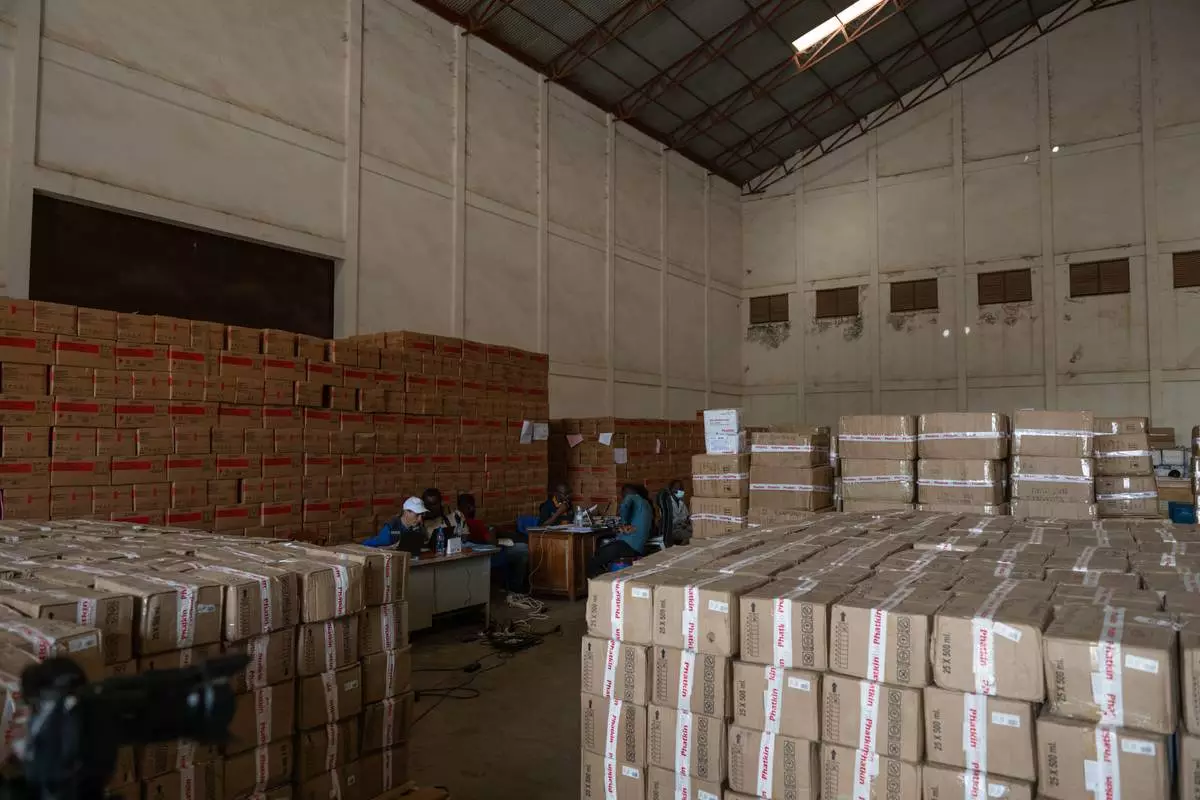
People work at the World Food Programme (WFP) warehouse where supplies for the Ebola response are kept in Bunia, Congo, Monday, June 1, 2026. (AP Photo/Moses Sawasawa)
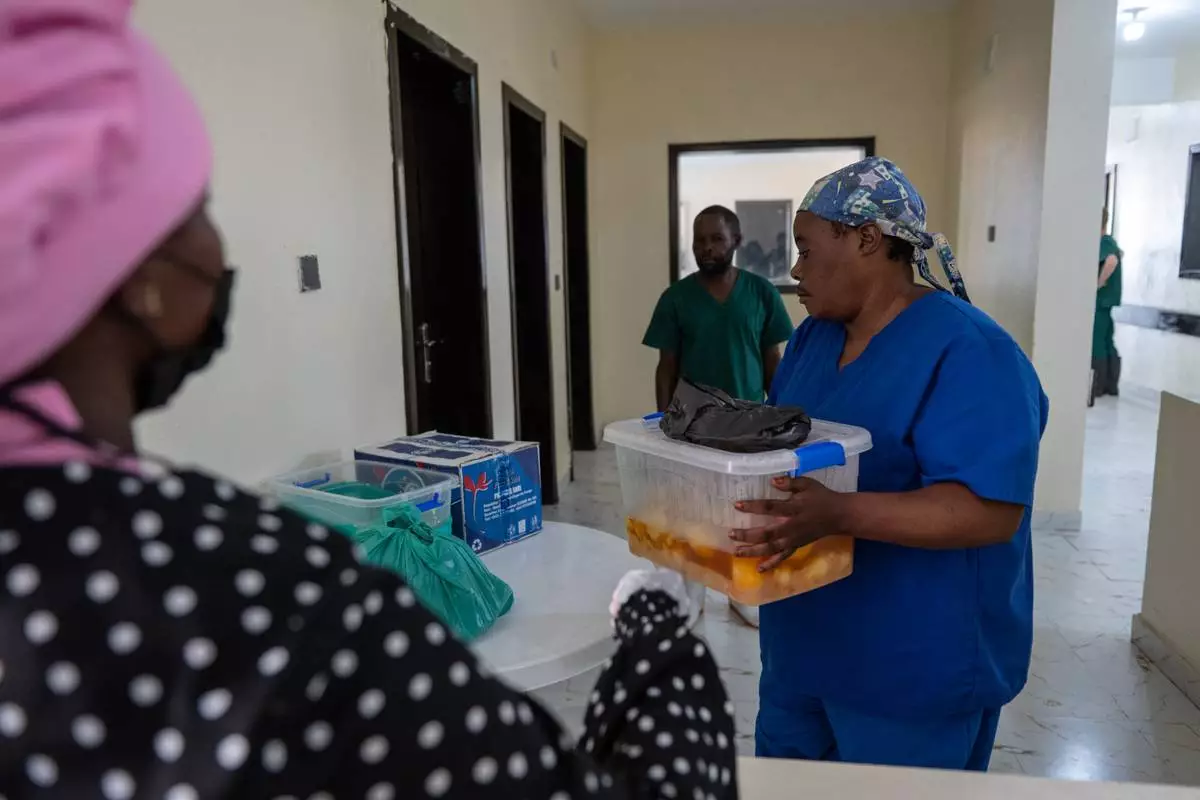
A health worker receives food for medical staff and Ebola patients at the Evangelical Medical Center (CEM) in Bunia, Congo, Monday, June 1, 2026. (AP Photo/Moses Sawasawa)
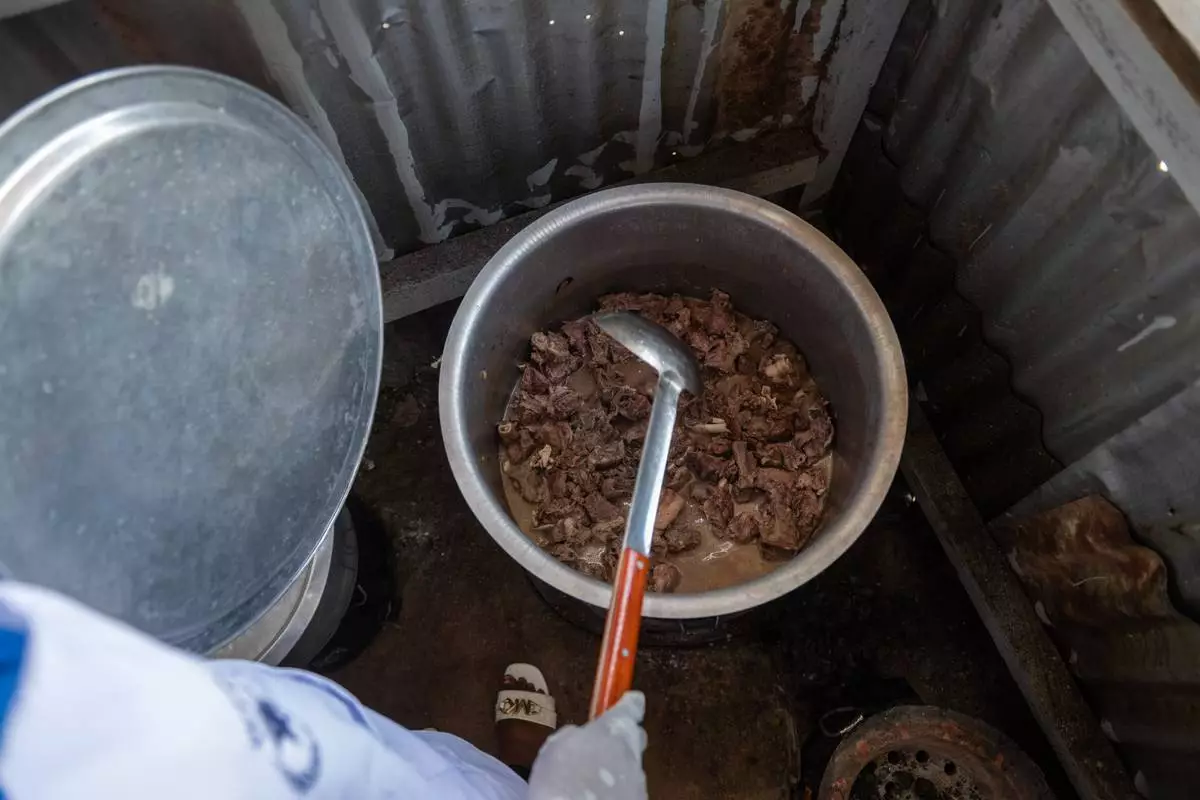
Arlette Basekawike prepares meals for Ebola patients at the Evangelical Medical Center (CEM) in Bunia, Congo, Monday, June 1, 2026. (AP Photo/Moses Sawasawa)
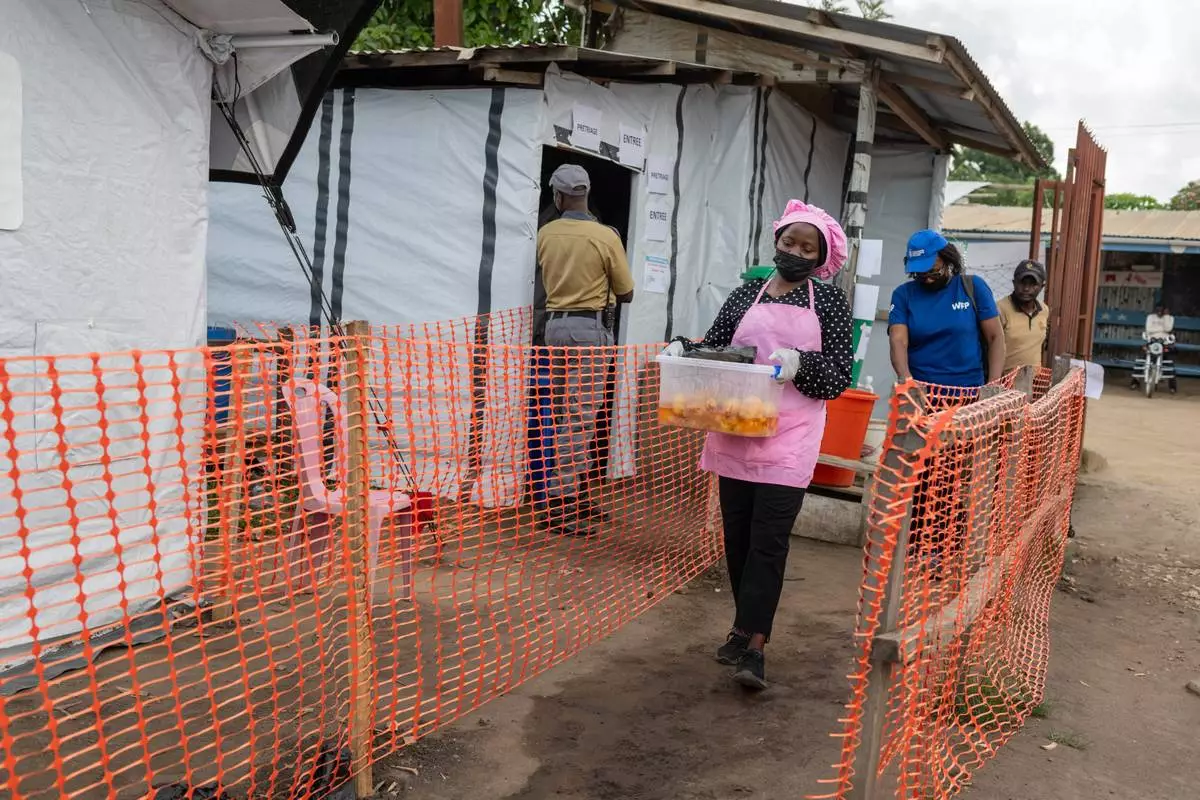
Kavugho Hortense, a cook, delivers meals to the medical staff and Ebola patients at the Evangelical Medical Center (CEM) in Bunia, Congo, Monday, June 1, 2026. (AP Photo/Moses Sawasawa)
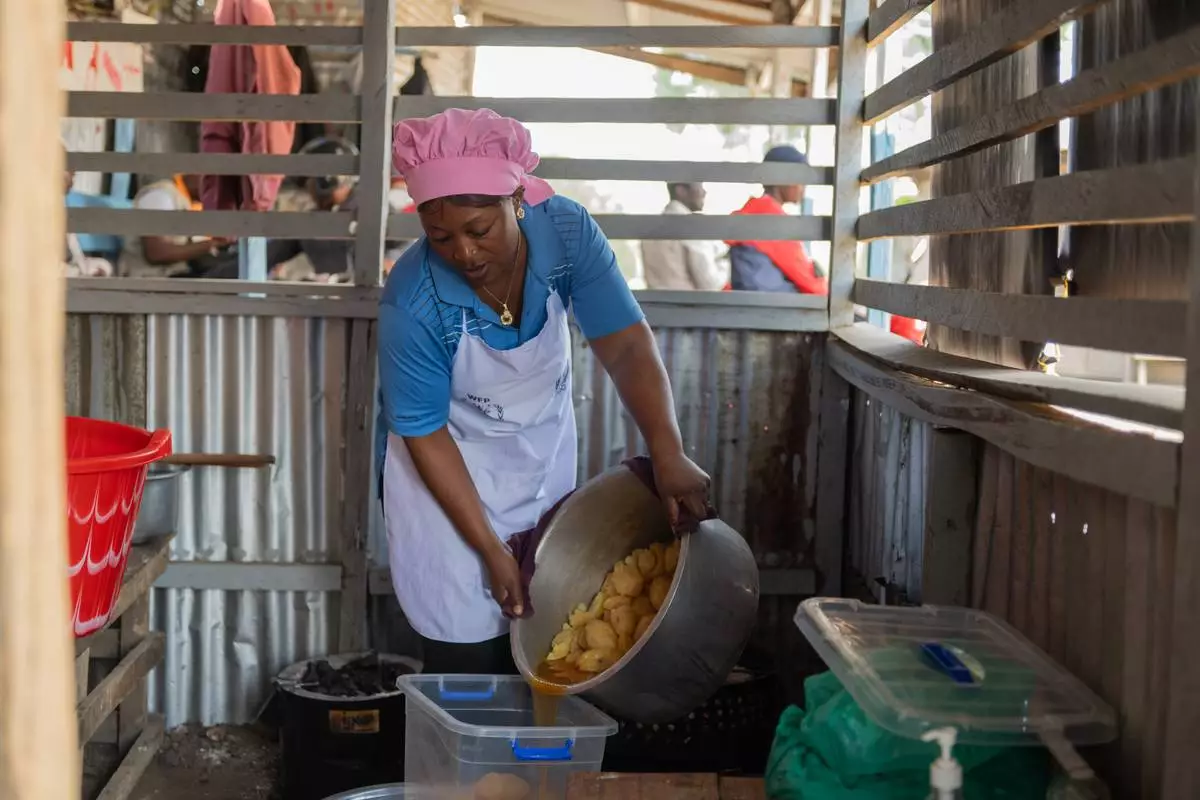
Arlette Basekawike prepares meals for Ebola patients at the Evangelical Medical Center (CEM) in Bunia, Congo, Monday, June 1, 2026. (AP Photo/Moses Sawasawa)