Skip to Content Facebook Feature Image

After escaping the Taliban and years in exile, the Afghan women's soccer team rises again

News

After escaping the Taliban and years in exile, the Afghan women's soccer team rises again
News

News

After escaping the Taliban and years in exile, the Afghan women's soccer team rises again

2026-06-02 18:03 Last Updated At:18:41

WELLINGTON, New Zealand (AP) — Fatima Yousufi escaped the Taliban, arriving in Australia with a backpack and a burning ambition to play international soccer.

Through their own determination and courage, and with family support, Yousufi and others like Mona Amini had been able to study, to play soccer for clubs and for the Afghanistan women’s team. But when the Taliban returned to power in 2021 it shut down all women’s sports, and the players of the Afghan team went into hiding.

More Images
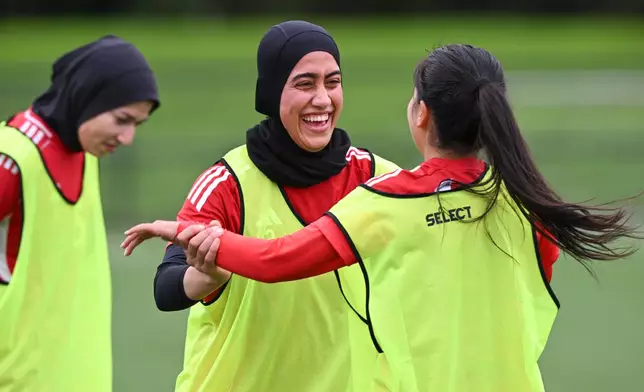
Afghan women's soccer player Khursand Azizi, center, reacts with teammates during a training session in Auckland, New Zealand, Tuesday, June 2, 2026. (Andrew Cornaga/Photosport via AP)
Afghan women's soccer player Khursand Azizi, center, reacts with teammates during a training session in Auckland, New Zealand, Tuesday, June 2, 2026. (Andrew Cornaga/Photosport via AP)
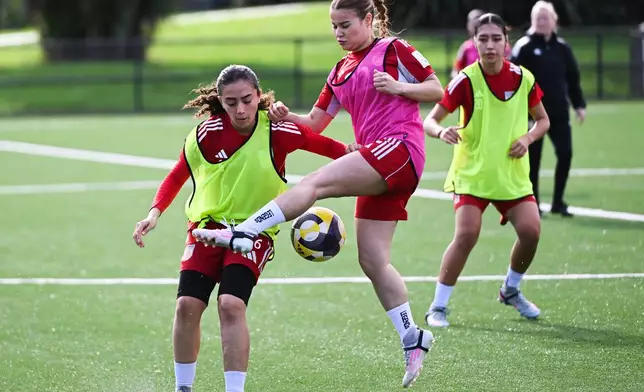
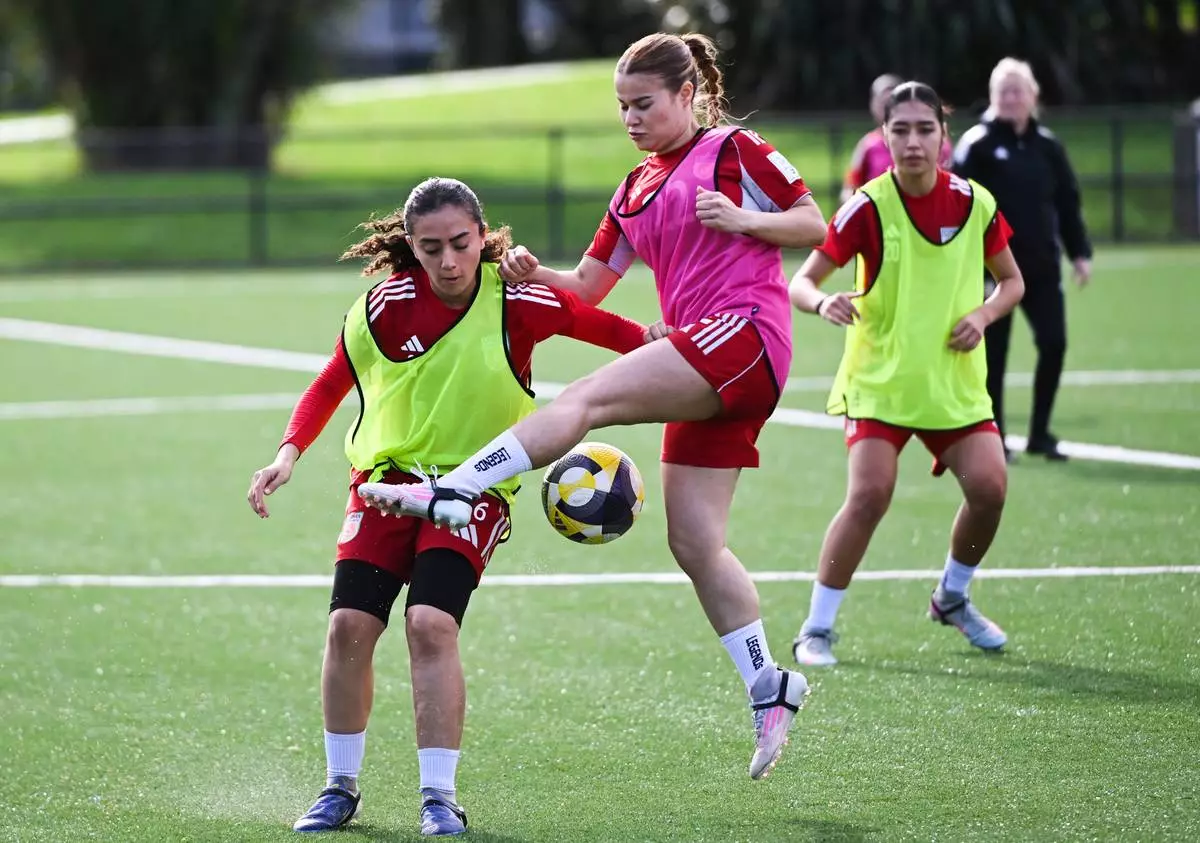
Afghan soccer players Mona Amini, left, and Sosan Mohammadi compete for the ball during a training session in Auckland, New Zealand, Tuesday, June 2, 2026. (Andrew Cornaga/Photosport via AP)
Afghan soccer players Mona Amini, left, and Sosan Mohammadi compete for the ball during a training session in Auckland, New Zealand, Tuesday, June 2, 2026. (Andrew Cornaga/Photosport via AP)
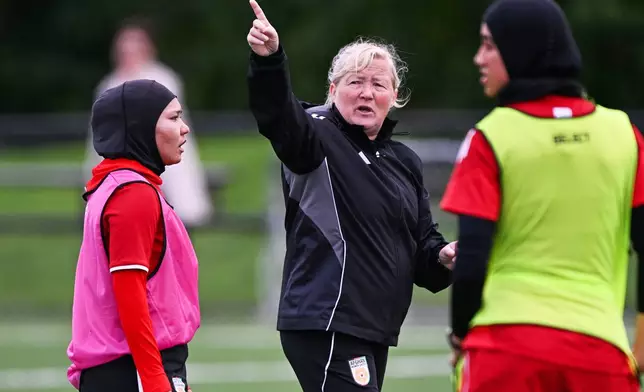
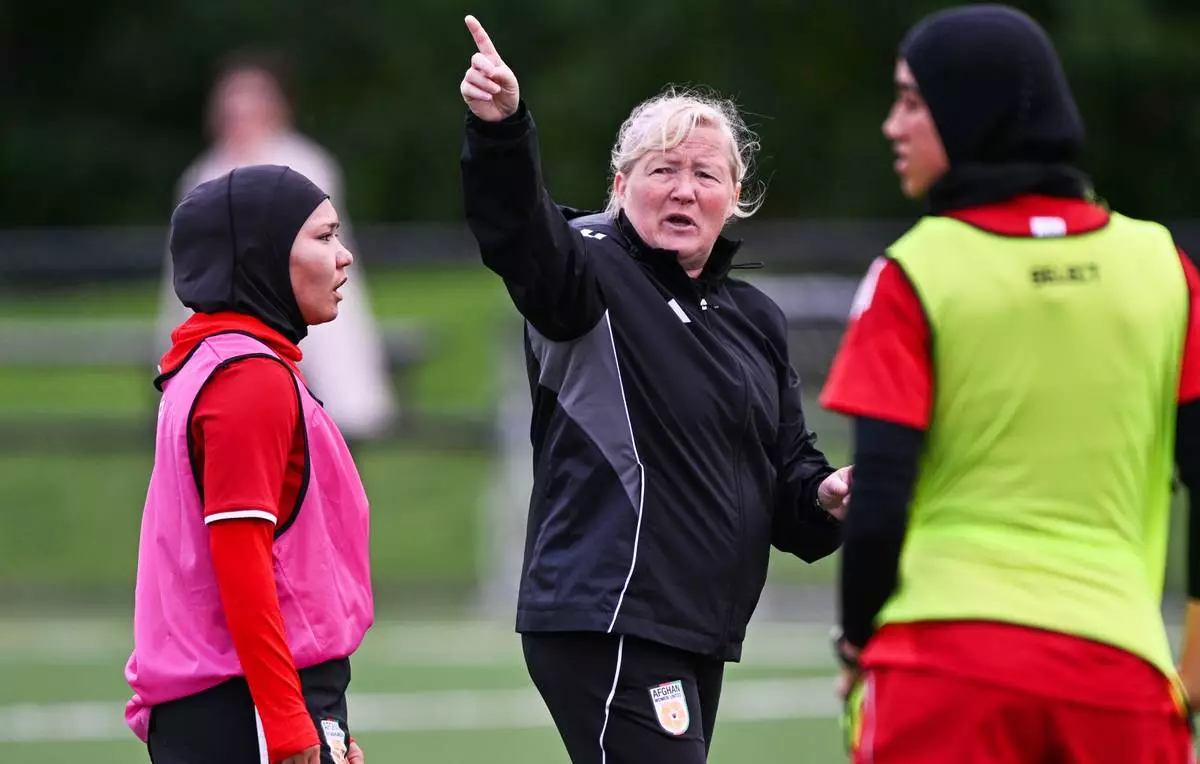
Afghan women's soccer team head coach Pauline Hamill, center, gestures to players during a training session in Auckland, New Zealand, Tuesday, June 2, 2026. (Andrew Cornaga/Photosport via AP)

Afghan women's soccer team head coach Pauline Hamill, center, gestures to players during a training session in Auckland, New Zealand, Tuesday, June 2, 2026. (Andrew Cornaga/Photosport via AP)

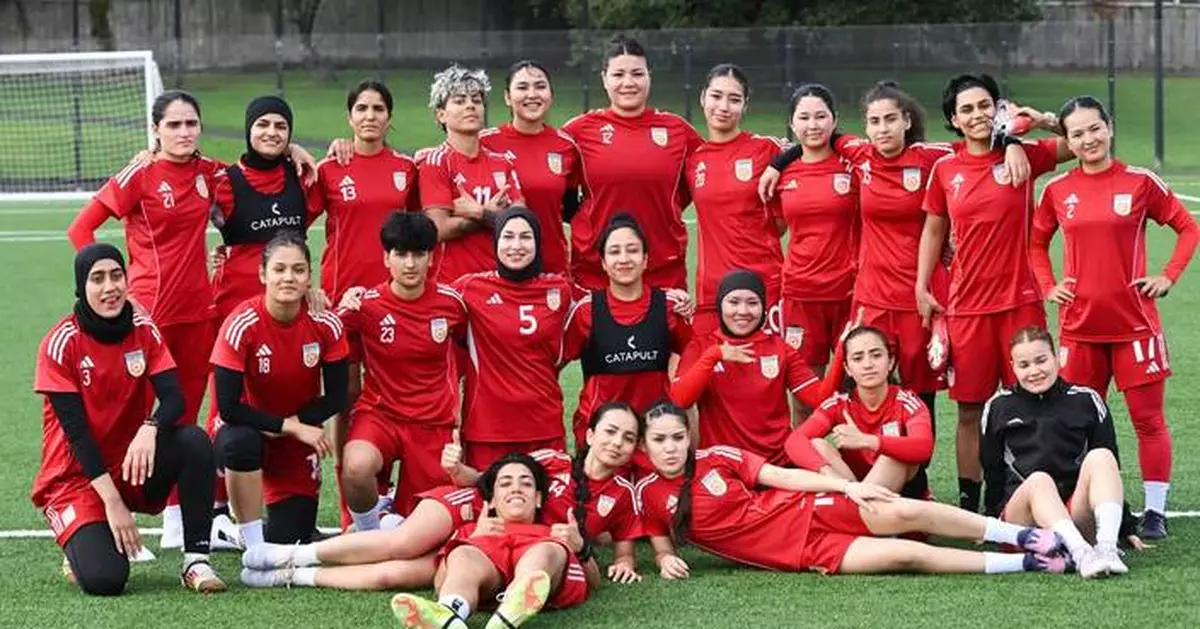
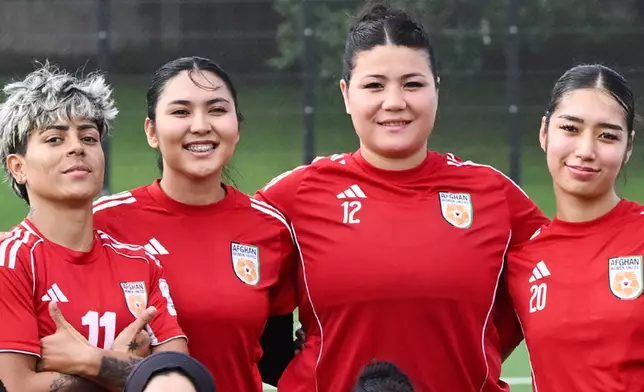
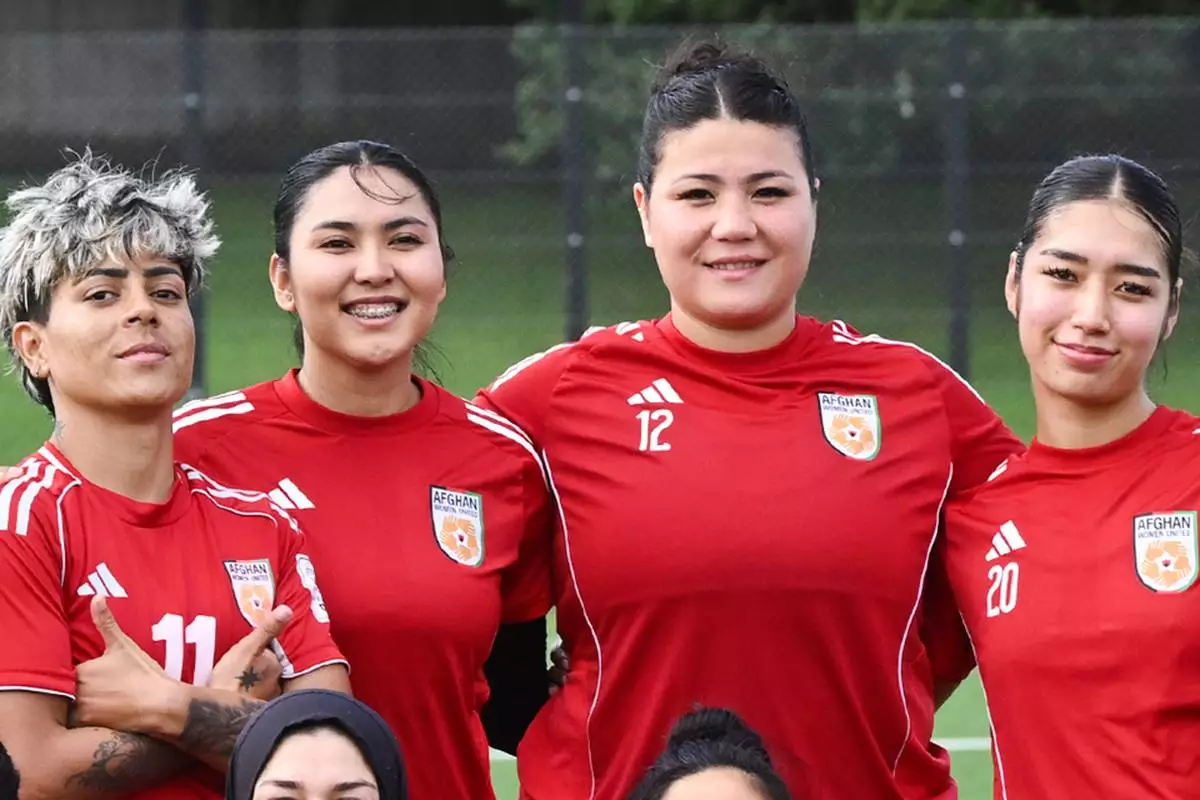
Afghan women's player Fatima Yousufi, second right, stands with teammates in a team photo following a training session in Auckland, New Zealand, Tuesday, June 2, 2026. (Andrew Cornaga/Photosport via AP)

Afghan women's player Fatima Yousufi, second right, stands with teammates in a team photo following a training session in Auckland, New Zealand, Tuesday, June 2, 2026. (Andrew Cornaga/Photosport via AP)

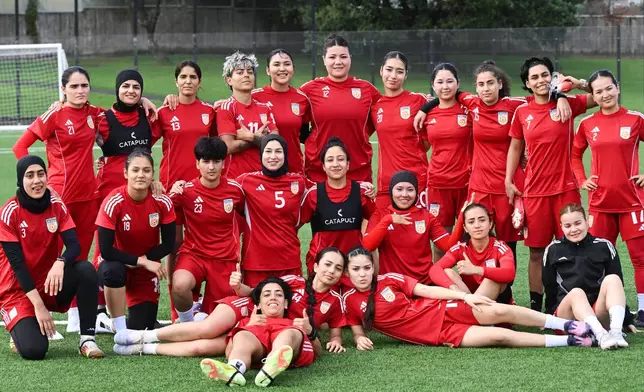
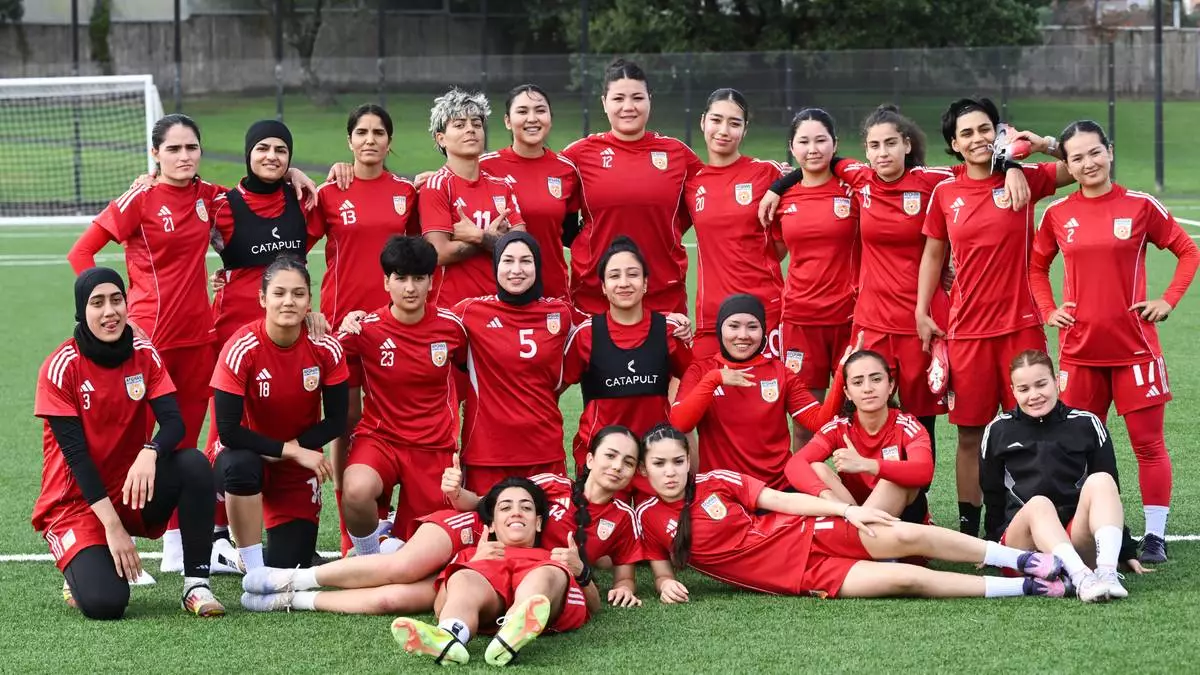
Afghan women's players pose for a team photo during a training session in Auckland, New Zealand, Tuesday, June 2, 2026. (Andrew Cornaga/Photosport via AP)

Afghan women's players pose for a team photo during a training session in Auckland, New Zealand, Tuesday, June 2, 2026. (Andrew Cornaga/Photosport via AP)

After a frantic evacation, 13 of the players settled in Australia where for five years they lived, played and trained in the hope of once again being allowed to represent their country.

The Afghanistan soccer federation doesn’t recognize the women’s team. But in April, soccer’s world governing body granted the Afghan women’s team eligibility for international competition.

This week, 23 members of the Afghan Women United program are in a training camp in Auckland, New Zealand and will play games against a team from the Cook Islands.

“It was a special day that we heard that Afghanistan can represent again our flag in international tournaments," Amini, a midfielder, told The Associated Press in a Zoom call Tuesday. “This is the result of hard work that we did in the past four or five years.”

Seven months ago, the Afghan women played in the so-called “Unite” tournament in which they achieved a win over Libya.

“It was a very special moment because we played in an international friendly tournament, and after three years we heard our anthem,” Amini said. “That was amazing for me.”

FIFA’s subsequent recognition was another important milestone on a long and perilous journey.

Yousufi, a Melbourne-based goalkeeper, remembers her reaction vividly.

“We’re going to have the national team! That’s the greatest thing ever that could have happened to the team," she said. “It was super important to us, especially thinking of the time when we arrived in Australia and we had lost everything: family, our childhood memories and that national team.”

Yousufi said she left home with one backpack, “to be safe and to continue to be alive.”

“When we came here the most important part of our life was to be a soccer player and to be a soccer team,” she said. "When we we saw we could not be (officially) a national team and we could not represent our country ... it was like I lost the game.”

While many ended up in Australia, there are Afghan players spread across Europe and some in the United States. Coach Pauline Hamill holds talent identification camps and helps pull the squad together for games.

Memories of their darkest days remain a strong part of the team’s motivation to succeed, and to represent women and girls still in their homeland. The Afghan women’s team played its last official competitive match in 2018.

“We couldn’t play freely in Afghanistan," Amini said. “Going out from home was tough because there was the risk of the Taliban seeing us and finding that we were playing soccer. "It was a very tough time and I’m pretty sure every one of the girls, every single one of us, fought hard to create this team and we are very happy right now to stay with each other.”

Yousufi was a student and a soccer player, and she said it was difficult even before the Taliban returned to power “for a girl to play football in Afghanistan with such difficulties as family barriers and difficulties of the society to accept a woman in sport.”

“We were thinking of any other outcomes like the danger we were facing, everyday dangers in Afghanistan like bomb explosions. Considering all those things — and it was the same for the other girls — we took all those risks to be part of the national team and to be a football player.”

Then life became even more difficult.

“The only thing humans want is freedom, and the Taliban took our freedom,” Amini said. “It is really difficult that you cannot educate, you cannot play sport, you cannot go outside or you cannot do what you love ... (or) follow your dreams.”

Amini said the refugee players now were determined to represent all women and girls in Afghanistan.

“We are here and we are going to be trying our best to do something for them, to be the voice of them so that we could have a new generation for the future for the Afghanistan women’s national team,” she said.

Yousufi said she was among a group of players “adopted by the Australian government,” and “we’re now living our life and continuing our journey with football, with our education and also being a voice for all those girls who are in Afghanistan.”

“Our team might be the one to change the way the people think and also the way that things are happening towards the girls and women in Afghanistan," she said. “We're all trying our best show that women and girls can be part of the society and can be someone who is in education or in sport, that women also have the right to do that.”

AP soccer: https://apnews.com/hub/soccer
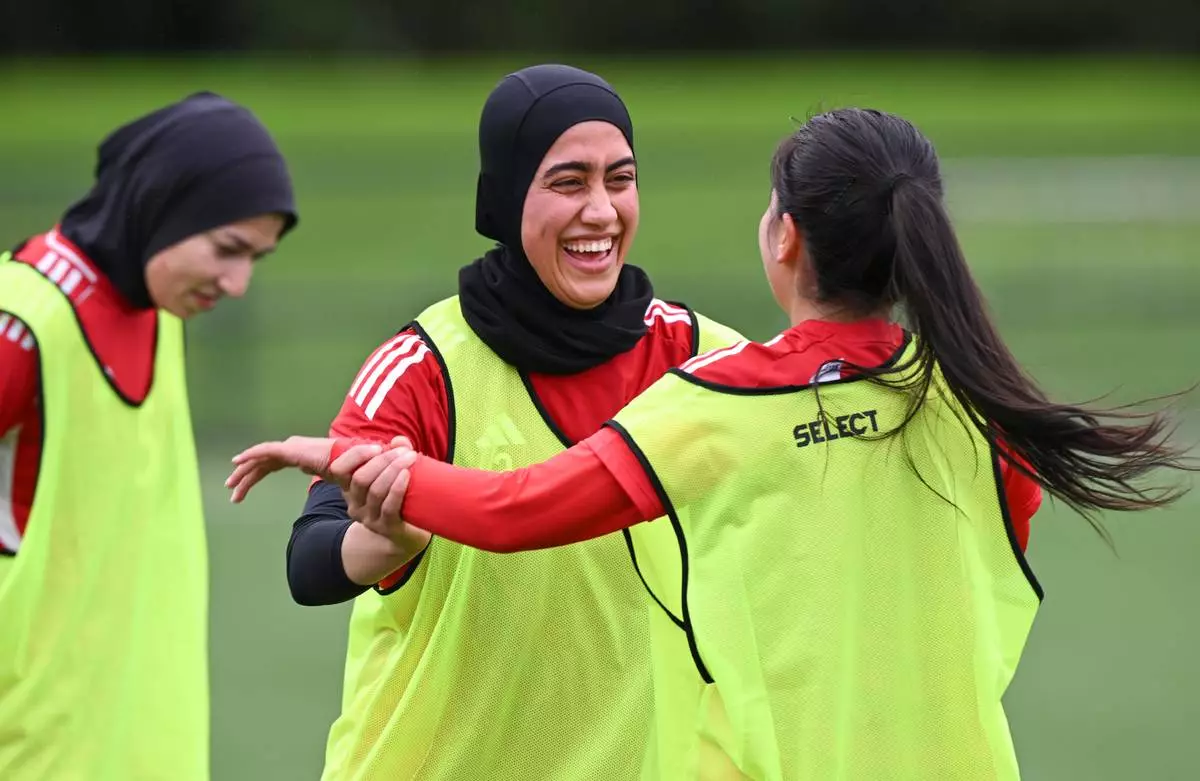
Afghan women's soccer player Khursand Azizi, center, reacts with teammates during a training session in Auckland, New Zealand, Tuesday, June 2, 2026. (Andrew Cornaga/Photosport via AP)
Afghan women's soccer player Khursand Azizi, center, reacts with teammates during a training session in Auckland, New Zealand, Tuesday, June 2, 2026. (Andrew Cornaga/Photosport via AP)
Afghan soccer players Mona Amini, left, and Sosan Mohammadi compete for the ball during a training session in Auckland, New Zealand, Tuesday, June 2, 2026. (Andrew Cornaga/Photosport via AP)
Afghan soccer players Mona Amini, left, and Sosan Mohammadi compete for the ball during a training session in Auckland, New Zealand, Tuesday, June 2, 2026. (Andrew Cornaga/Photosport via AP)
Afghan women's soccer team head coach Pauline Hamill, center, gestures to players during a training session in Auckland, New Zealand, Tuesday, June 2, 2026. (Andrew Cornaga/Photosport via AP)

Afghan women's soccer team head coach Pauline Hamill, center, gestures to players during a training session in Auckland, New Zealand, Tuesday, June 2, 2026. (Andrew Cornaga/Photosport via AP)
Afghan women's player Fatima Yousufi, second right, stands with teammates in a team photo following a training session in Auckland, New Zealand, Tuesday, June 2, 2026. (Andrew Cornaga/Photosport via AP)
Afghan women's player Fatima Yousufi, second right, stands with teammates in a team photo following a training session in Auckland, New Zealand, Tuesday, June 2, 2026. (Andrew Cornaga/Photosport via AP)
Afghan women's players pose for a team photo during a training session in Auckland, New Zealand, Tuesday, June 2, 2026. (Andrew Cornaga/Photosport via AP)
Afghan women's players pose for a team photo during a training session in Auckland, New Zealand, Tuesday, June 2, 2026. (Andrew Cornaga/Photosport via AP)
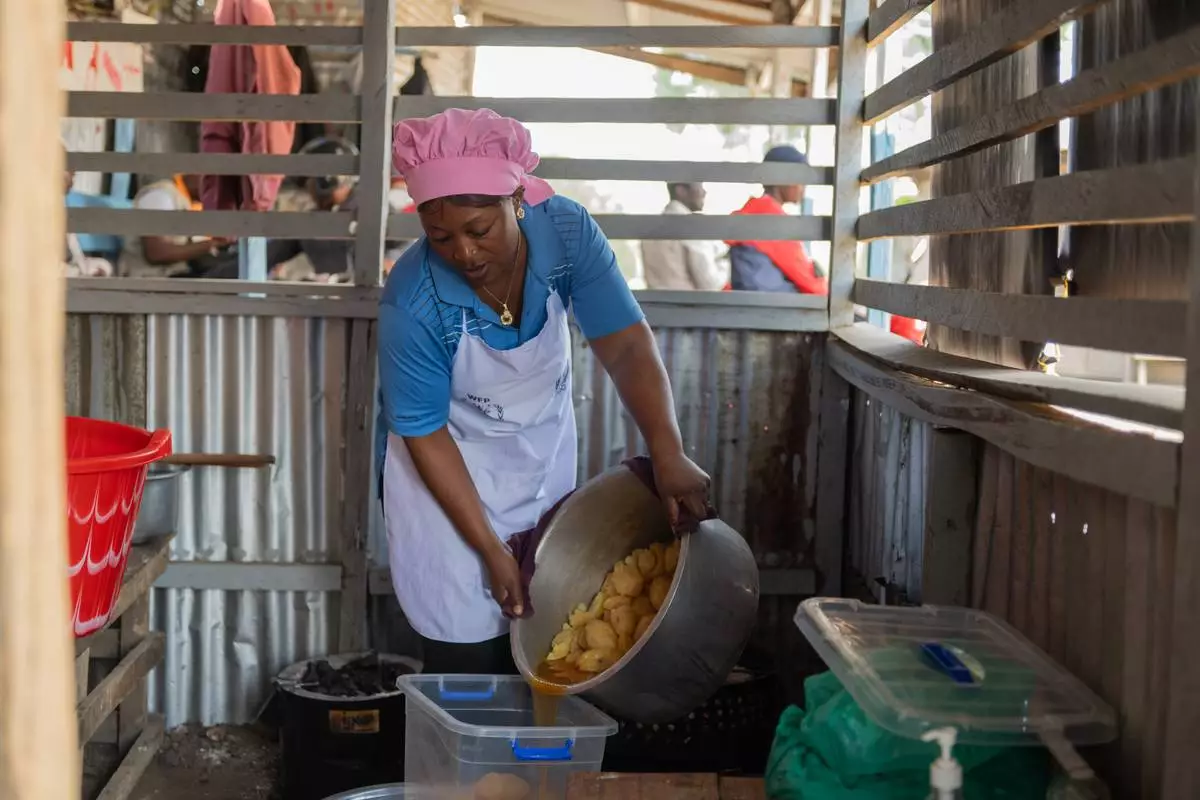
BUNIA, Congo (AP) — Arlette Basekawike, a volunteer for the United Nations food agency in Bunia, the heart of Congo's Ebola outbreak, spends most of her time in a small shed outside a health facility preparing meals for patients and health workers.

Her hair covered by a pink bonnet, she prepares porridge, omelets and bread for breakfast for patients at the Evangelical Medical Center. The lunch and dinner menus might include fresh fish with fufu, a starchy staple made of mashed plantains, finished off by fruit.

“Even though the patients have this disease, they still feel better when they eat, and the doctors have the energy to treat the sick and give them medication,” Basekawike told The Associated Press on Monday as she prepared vegetables and potatoes with goat meat in a large cooking pot. “I’m here for them like a parent, preparing food so they feel comfortable.”

Her contribution may appear, on the surface, like a simple task, but it has become one of the critical supports for the region as it grapples with the rapidly spreading rare Bundibugyo virus, the species of Ebola confirmed in eastern Congo in May.

As of Tuesday, 321 cases of the Ebola disease and 48 deaths had been confirmed in the Central African nation’s three eastern provinces of Ituri, North and South Kivu, according to the World Health Organization. Neighboring Uganda has had nine cases and one death confirmed, according to the WHO, prompting Uganda to close its border with Congo.

Before the outbreak, the beleaguered region already faced one of the world's most severe food crises due to an ongoing conflict that has displaced millions of people as government forces fight rebels. The spreading virus has added another layer of complexity that the United Nations warns might complicate the efforts to manage the spread of the virus among an already wary population.

“We are in a region where we already have large segments of the population suffering from acute food insecurity linked to either war or displacement,” said Olivier Nkakudulu, who heads the World Food Program in Ituri province. “So there are already needs and Ebola is an additional crisis on top of a crisis.”

The resource-strapped agency, the World Food Program, is facing a critical choice as aid cuts from the U.S. and other major partners have disrupted operations in the vulnerable region. Efforts to contain the disease, which the World Health Organization has deemed a global health emergency, have been hampered by a lack of funds as global partners either withdrew or reduced pledges.

Also, attacks by suspicious residents on health workers and the slow delivery of aid due to the ongoing conflict have made it difficult to slow the spread of the disease.

Despite the challenges, the agency and health workers say they have ensured patients' nutritional demands are met so far.

“Today we need to increase the amount because the number of patients has gone up,” Esther Bao, a nurse and one of the volunteers, said. There are also patients who, because of their health situation, "don't eat just any meal,” she said.

The Bundibugyo virus has no approved vaccine or treatment. However, treatment has targeted symptoms and five people have recovered.

The outbreak continues to spread, from the three health zones affected at the onset to 22 as of this weekend, according to Congo's Ministry of Health.

On Sunday, 120 meals were served through four health facilities, bringing the total to 404 since the food assistance began on May 28, according to Nkakudulu. But the financial situation has not been easy, he said.

“Without more funding, we might not be able to prioritize every suspected case,” Nkakudulu said. "We might have to focus on some and not have food to give to others."

Adetayo reported from Lagos, Nigeria.

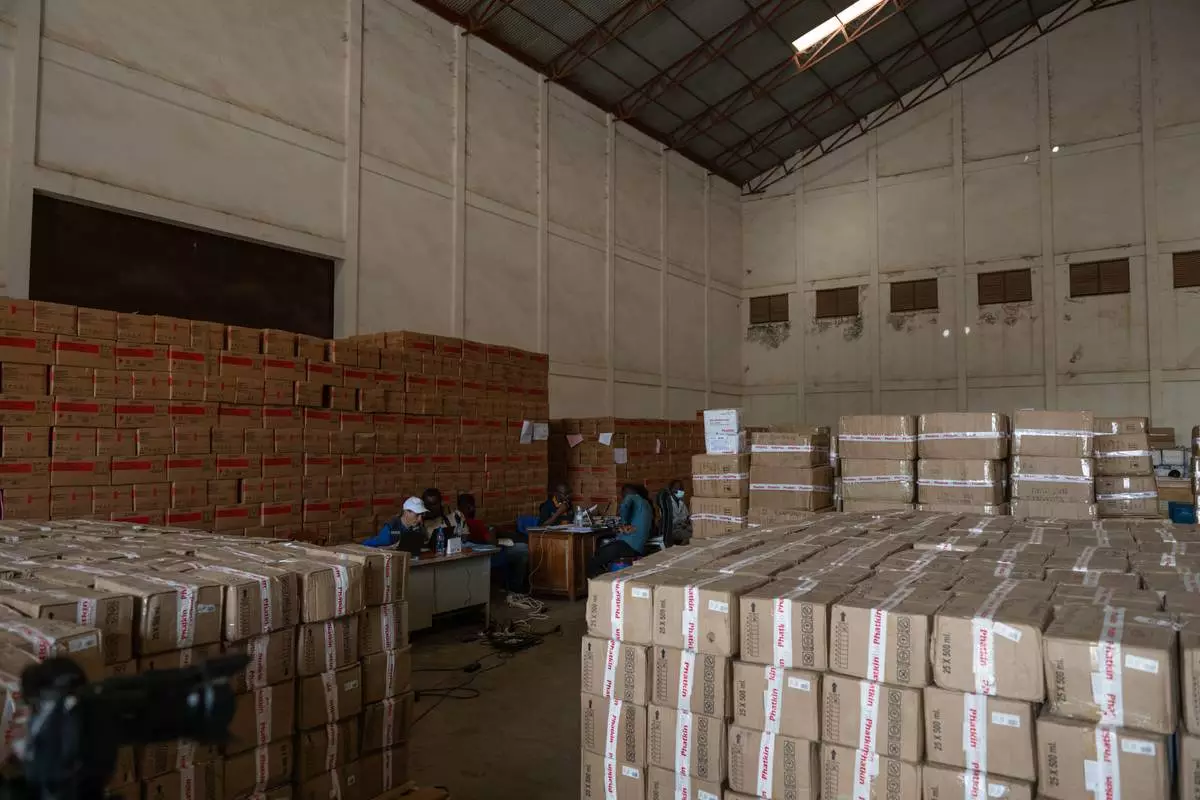
People work at the World Food Programme (WFP) warehouse where supplies for the Ebola response are kept in Bunia, Congo, Monday, June 1, 2026. (AP Photo/Moses Sawasawa)

People work at the World Food Programme (WFP) warehouse where supplies for the Ebola response are kept in Bunia, Congo, Monday, June 1, 2026. (AP Photo/Moses Sawasawa)

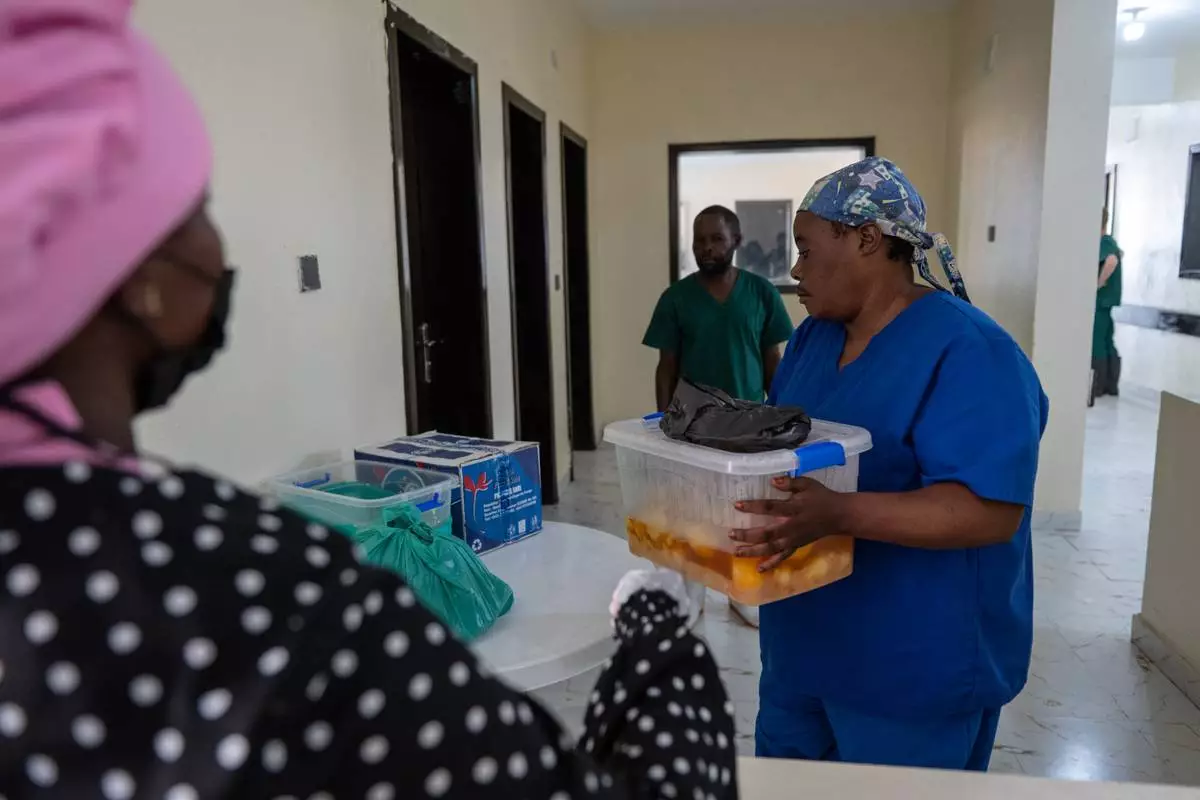
A health worker receives food for medical staff and Ebola patients at the Evangelical Medical Center (CEM) in Bunia, Congo, Monday, June 1, 2026. (AP Photo/Moses Sawasawa)

A health worker receives food for medical staff and Ebola patients at the Evangelical Medical Center (CEM) in Bunia, Congo, Monday, June 1, 2026. (AP Photo/Moses Sawasawa)

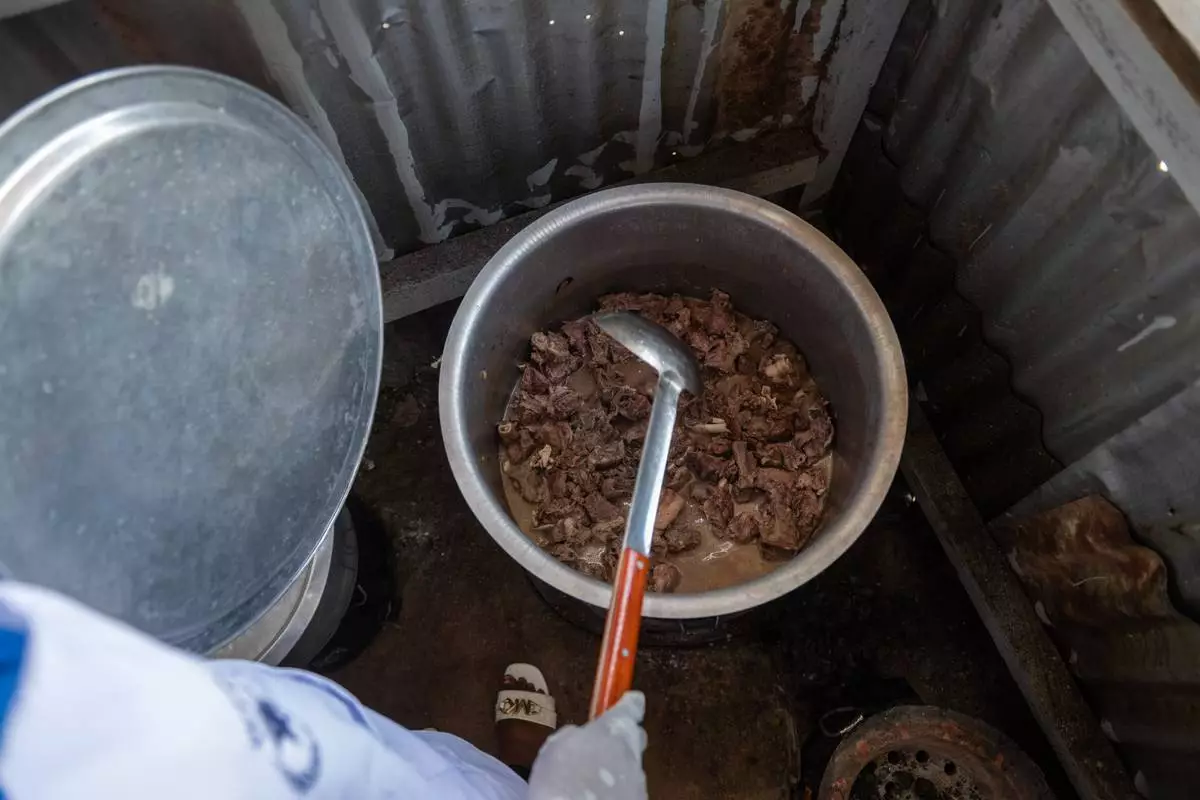
Arlette Basekawike prepares meals for Ebola patients at the Evangelical Medical Center (CEM) in Bunia, Congo, Monday, June 1, 2026. (AP Photo/Moses Sawasawa)

Arlette Basekawike prepares meals for Ebola patients at the Evangelical Medical Center (CEM) in Bunia, Congo, Monday, June 1, 2026. (AP Photo/Moses Sawasawa)

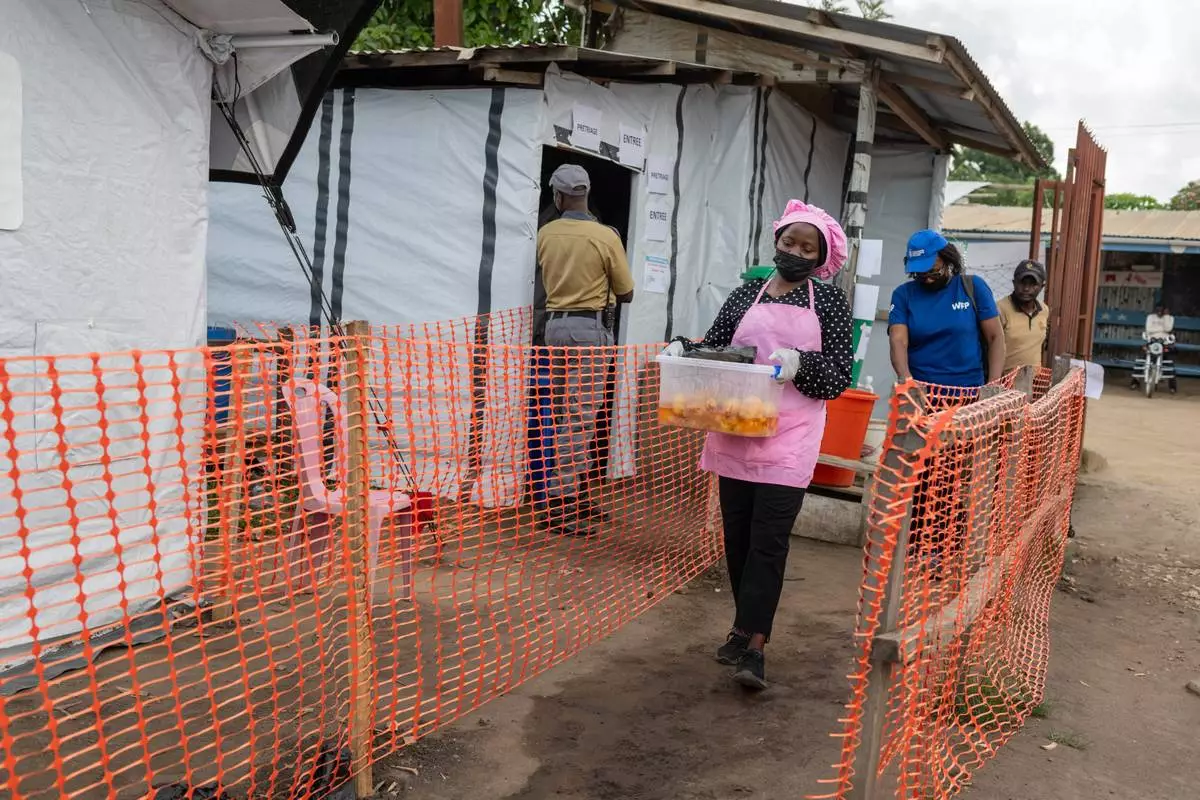
Kavugho Hortense, a cook, delivers meals to the medical staff and Ebola patients at the Evangelical Medical Center (CEM) in Bunia, Congo, Monday, June 1, 2026. (AP Photo/Moses Sawasawa)

Kavugho Hortense, a cook, delivers meals to the medical staff and Ebola patients at the Evangelical Medical Center (CEM) in Bunia, Congo, Monday, June 1, 2026. (AP Photo/Moses Sawasawa)

Arlette Basekawike prepares meals for Ebola patients at the Evangelical Medical Center (CEM) in Bunia, Congo, Monday, June 1, 2026. (AP Photo/Moses Sawasawa)

Arlette Basekawike prepares meals for Ebola patients at the Evangelical Medical Center (CEM) in Bunia, Congo, Monday, June 1, 2026. (AP Photo/Moses Sawasawa)

Recommended Articles